
Typhoon Bavi Poses Multi-Nation Challenge Across East Asia
Typhoon Bavi Poses Multi-Nation Challenge Across East Asia The Scale and Trajectory of Typhoon Bavi Typhoon Bavi, spanning 1,000km at its widest point, is advancing across the Pacific toward Taiwan and beyond. The storm's size, comparable to the width of France, distinguishes it as one of the largest systems in recent decades. Forecasts indicate it will bring heavy rainfall to
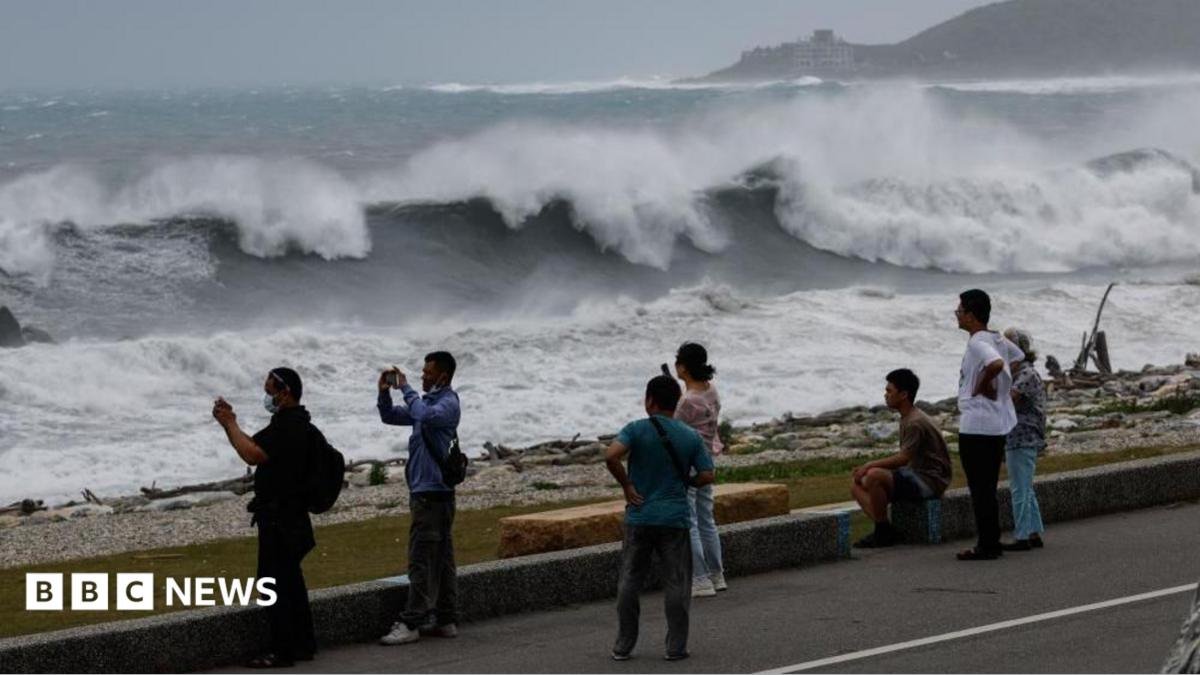
The Scale and Trajectory of Typhoon Bavi
Typhoon Bavi, spanning 1,000km at its widest point, is advancing across the Pacific toward Taiwan and beyond. The storm's size, comparable to the width of France, distinguishes it as one of the largest systems in recent decades. Forecasts indicate it will bring heavy rainfall to Taiwan's north and east before affecting a chain of remote Japanese islands and making landfall in south-eastern China. Authorities across the region have responded with flight cancellations and school suspensions, reflecting the storm's anticipated reach.
Landslide Fatalities and Immediate Effects in the Philippines
In the southern Philippines, particularly on Mindanao, landslides triggered by intense rainfall have killed at least 15 people. Families were buried overnight, and rescue operations continue for those missing. These events underscore the vulnerability of areas with steep terrain to prolonged heavy precipitation associated with such large typhoons. The Philippines serves as an early point of impact in the storm's path, highlighting the sequential nature of East Asian weather threats.
Taiwan's Defensive Posture and Historical Benchmarks
Taiwanese authorities have issued warnings of up to 1m of rainfall in affected areas. Some 29,000 soldiers stand ready for relief efforts, coordinated through the island's defence ministry. Taiwan's Central Weather Administration has noted that Bavi represents the largest storm by size to approach the island since 1987. Farmers have worked to secure crops ahead of the weather shift, while local voices, including fishermen, have cautioned against complacency during the current calm.
China's Preparations and Regional Disparities in Experience
China has warned of significant impact from the typhoon, which is projected to strike south-eastern Fujian province before potentially moving northward. Remnants and outer rainbands could extend toward Jiangsu, Anhui, and the Bohai Sea region. Ma Jun, director of China's Institute of Public and Environmental Affairs, has emphasised that northern provinces possess less experience with typhoons than southern areas and should strengthen preparations accordingly. Some forecasts suggest the possibility of multiple landfalls within China. Parts of southern China continue recovery from Typhoon Maysak earlier in the week, which caused at least 39 deaths and the evacuation of more than 130,000 people, mostly in Guangxi.
Japanese Islands and Broader Aviation Disruptions
Residents on Japan's remote Sakishima Islands remain on high alert. Airlines have cancelled numerous flights, with Japan Airlines grounding more than 100 services for Friday and Saturday, affecting nearly 20,000 passengers. All Nippon Airways has cancelled over 160 flights through Sunday, impacting a similar number of travellers. Thai Airways and Malaysia Airlines have also suspended routes to and from Taipei, illustrating the interconnected effects on regional mobility.
Strategic Implications for Food Security and East Asian Stability
The timing of Bavi coincides with critical harvest periods, prompting farmers throughout the affected zones to protect crops. Disruptions to agricultural output carry second-order consequences for food supply chains across East Asia. China's emphasis on northern preparedness reflects ongoing efforts to address uneven domestic capacities in disaster response. The storm's trajectory also intersects with cross-strait dynamics, as Taiwan and the mainland coordinate separate yet parallel protective measures. Such events test the resilience of regional infrastructure and supply networks at a moment when climate variability adds pressure to established patterns of seasonal weather.
Climate Vulnerabilities and Long-Term Regional Calculus
East Asian societies face recurring exposure to intense tropical cyclones, with Bavi exemplifying the challenges of large-scale systems that affect multiple jurisdictions in sequence. The contrast between southern China's accumulated experience and northern provinces' relative exposure points to the need for adaptive strategies. While specific policy linkages remain subject to further official clarification, the episode reinforces the importance of coordinated monitoring and resource allocation. For the wider region, including ASEAN partners and beyond, these storms influence perceptions of stability and the capacity to maintain economic continuity amid environmental pressures.
By Prof. Marcus Chen, Staff WriterThis article was produced with AI-assisted research and editorial support. Reporting is based on sources cited in the article.
What's Your Reaction?
 Like
0
Like
0
 Dislike
0
Dislike
0
 Love
0
Love
0
 Funny
0
Funny
0
 Wow
0
Wow
0
 Sad
0
Sad
0
 Angry
0
Angry
0

World Politics Analyst at Global1.News. Based in Beijing, covering US-China relations, global trade, and geopolitical strategy. Brings deep analytical perspective to the power dynamics shaping international affairs.















Comments (0)