
Thai-Cambodian Border Fence Reaches 45% Completion
Border Security Efforts Advance in Chanthaburi The House committee on national security, border affairs and national reform conducted an inspection this week at the Thailand-Cambodia border in Pong Nam Ron district, Chanthaburi province. Chairman Monthian Songpracha led the visit to the construction site where the Thai-Cambodian border fence project has reached 45 percent compl
Border Security Efforts Advance in Chanthaburi
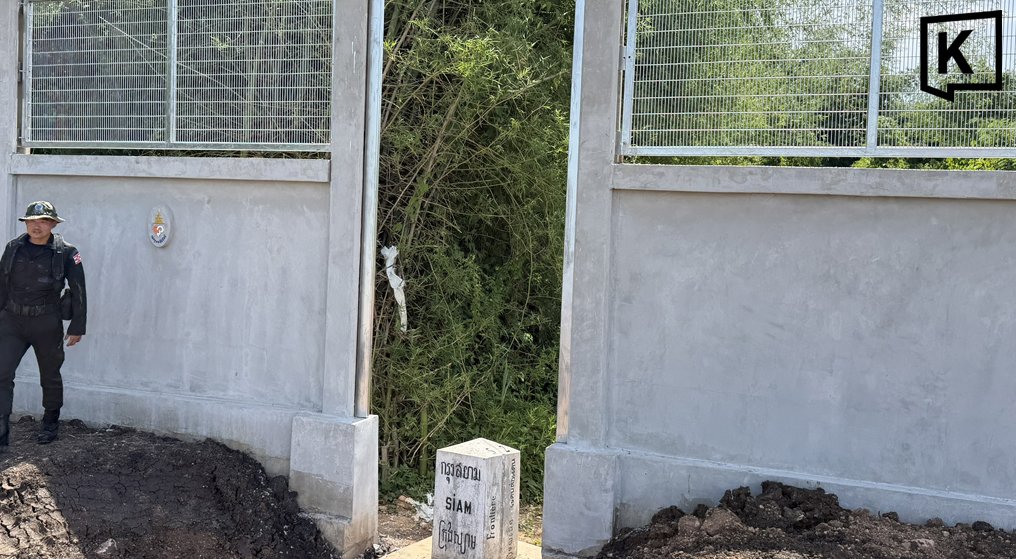
The House committee on national security, border affairs and national reform conducted an inspection this week at the Thailand-Cambodia border in Pong Nam Ron district, Chanthaburi province. Chairman Monthian Songpracha led the visit to the construction site where the Thai-Cambodian border fence project has reached 45 percent completion. Officials from the Chanthaburi Marine Task Force confirmed that Cambodian representatives received invitations to observe every stage of the work, ensuring full transparency under international procedures.
All border checkpoints in the area remain fully closed, consistent with current government directives and Royal Thai Navy policy. The project draws funding from the Hathaitip Fund and proceeds under the direction of the Army Development Command. These measures reflect Thailand's commitment to orderly border management in the eastern provinces, where local communities depend on stable boundaries for daily life and trade.
First Phase Construction Details
The initial phase covers a 1.3-kilometre stretch between boundary markers 52 and 54, an area previously agreed upon through the Joint Boundary Commission. Construction here stands at 45 percent, with concrete walls rising to 1.95 metres before the addition of barbed wire that brings the total height to 4.3 metres. Roadwork for the second phase, extending from markers 54 to 59 across roughly seven kilometres, has already begun.
The complete project will span 8.3 kilometres along the border. Military officials emphasised that Thailand follows established bilateral channels rather than acting alone. This approach protects the interests of Thai residents in Chanthaburi while maintaining respectful coordination with Cambodian counterparts on shared boundary matters.
Clarifying Temporary Gaps and Boundary Markers
Public concerns about visible gaps in the fence received direct responses during the inspection. The structure near boundary marker 52 originates from the French colonial-era agreement and remains jointly recognised by both nations. The current opening serves ongoing Joint Boundary Commission procedures and will later receive a hinged panel system that permits joint inspections by Thai and Cambodian teams.
Authorities stated clearly that no permanent opening will exist once work finishes. They also addressed circulated images claiming removed boundary markers, confirming those visuals had been edited. These clarifications help Thai communities in the area understand that the fence strengthens security without altering long-standing agreements.
Parallel Road on Cambodian Side
Lawmakers examined a road running parallel to the fence on the Cambodian side during their visit. Military officials reported that Cambodia constructed this road independently with its own budget, positioned approximately three metres from the Thai fence line. The separation maintains clear distinctions between the two countries' infrastructure projects.
Such details matter for residents along the Chanthaburi border who rely on accurate information about developments on both sides. Clear communication from the House committee reduces uncertainty and supports peaceful coexistence in this eastern Thai province known for its agricultural communities and cross-border ties.
Restoration Work at the K. Kai Area
The committee also visited the K. Kai area in Ban Phakkat, a natural boundary zone encircled by Khlong Takhian canal. In 2020, roughly three rai of land became separated, raising concerns that the boundary line could shift if the situation remained unresolved. Thai border defence forces lodged a formal protest at the time, noting the change appeared man-made rather than natural, while Cambodian authorities described it as a waterway shift.
Thai military personnel and local communities later collaborated to restore the land by filling the canal with more than 200 truckloads of soil. This effort reconnected the territory and allowed the Thai flag to be raised once again. Around 15 kilometres of access roads have since been built across the K. Kai and U-shaped zones through public contributions, demonstrating community dedication to maintaining Thai sovereignty in the region.
Future Upgrades and Regional Importance
Lawmakers indicated they will work with relevant agencies to secure government budget for asphalt upgrades on the community-built roads, ensuring these routes do not go unused. The coordinated approach highlights how border security projects in Chanthaburi connect directly to the daily needs of Thai citizens living near the frontier.
For Thailand and Southeast Asia, steady progress on the fence supports broader ASEAN goals of stable borders and mutual respect among neighbours. The involvement of the Joint Boundary Commission and the transparent process followed by the Chanthaburi Marine Task Force set an example of how bilateral cooperation can address practical concerns while protecting national interests. Thai readers in provinces like Chanthaburi and beyond recognise that such measures safeguard both security and the cultural harmony that defines life along the eastern border.
By Ann Srisawat, Staff WriterThis article was produced with AI-assisted research and editorial support. Reporting is based on sources cited in the article.
What's Your Reaction?
 Like
0
Like
0
 Dislike
0
Dislike
0
 Love
0
Love
0
 Funny
0
Funny
0
 Wow
0
Wow
0
 Sad
0
Sad
0
 Angry
0
Angry
0

Southeast Asia Correspondent at Global1.News. Based in Bangkok, covering Thai and Southeast Asian politics, economy, technology, and culture. Deep regional perspective on one of the world's most dynamic regions.












Comments (0)