
China's Assurance Eases Thai Concerns Over Cambodian Tanks
In a significant development for regional stability, Chinese President Xi Jinping has assured Thai Prime Minister Anutin Charnvirakul that tanks destined for Cambodia will not pose a threat to Thailand. This assurance comes amid ongoing border tensions and highlights China's pivotal role in fostering peace across Asia.
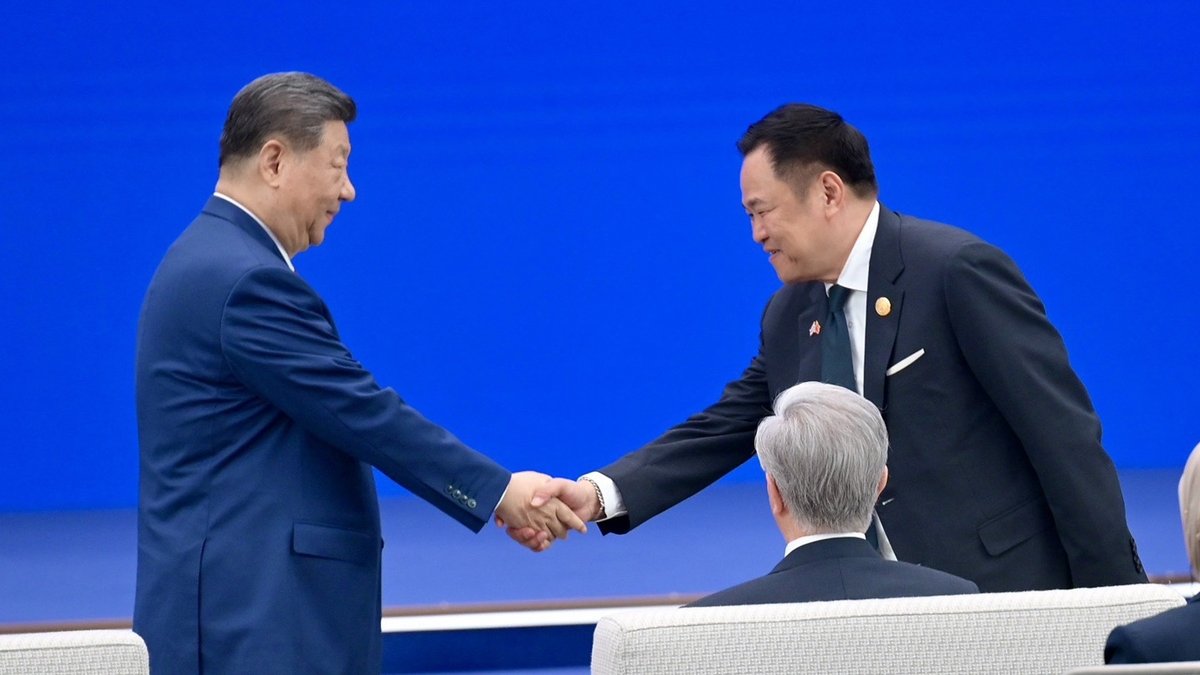
China's Assurance Eases Thai Concerns Over Cambodian Tanks
SHANGHAI — During his official visit to China, Prime Minister Anutin engaged in crucial talks with President Xi that addressed both immediate security worries and long-term partnership goals, setting a constructive tone for the entire trip.
China Provides Clear Assurance on Military Deliveries
Prime Minister Anutin Charnvirakul received direct confirmation from Chinese President Xi Jinping during bilateral talks in Shanghai on Friday that Chinese-made tanks bound for Cambodia will not be used against Thailand.
Chinese officials explained that the tank procurement contract had been finalized well before recent border tensions between Thailand and Cambodia began.
China delayed the actual delivery of the equipment during the height of the conflict due to the sensitivity of the situation but stated it remained obligated to complete the original agreement.
Anutin conveyed that the assurance covers the specific terms between China and Cambodia, ensuring the military hardware causes no harm to Thailand or its people.
Thailand Raises Sovereignty Concerns Directly with Beijing
Thailand has monitored Cambodia's receipt of Chinese-made T59D tanks since June 2026 amid ongoing border tensions that started in 2025 and included several skirmishes.
During the Shanghai meeting, Anutin highlighted both government and public concerns over how such equipment might affect Thailand's eastern border areas and the safety of communities living there.
Thailand maintains it does not seek conflict yet holds a clear responsibility to protect national sovereignty and the well-being of its citizens.
The discussion took place as part of Anutin's official visit to China scheduled from July 16 to 20, with Deputy Prime Minister and Minister of Foreign Affairs Sihasak Phuangketkeow also present.
The 2025-2026 border conflict with Cambodia escalated sharply after initial skirmishes in December 2025, when Thai forces conducted ground operations and F-16 air strikes against Cambodian positions along the frontier. Civilian communities in Sa Kaeo, Surin, Buriram, and Sisaket provinces endured repeated disruptions, including temporary evacuations, damaged infrastructure, and halted cross-border trade that normally sustains thousands of local livelihoods. These provinces, home to mixed Thai-Cambodian populations, saw schools and markets close intermittently as artillery exchanges and troop movements intensified.
Thailand's decision to raise these issues directly in Shanghai reflects deeper historical sensitivities dating back to earlier territorial disputes, now compounded by the arrival of Chinese-made T59D tanks in Cambodia since June 2026. Public anxiety in eastern Thailand centers on how such hardware could alter the balance along a border already strained by overlapping claims. Anutin emphasized that while Bangkok seeks no escalation, it must safeguard sovereignty and citizen safety amid ongoing regional arms dynamics.
Regional reactions from neighboring ASEAN states have been measured, with several quietly urging restraint to avoid broader instability. Economic data shows that even brief flare-ups have cost Thai border provinces millions in lost tourism and agricultural exports, underscoring why direct assurances from Beijing carry weight beyond immediate military concerns.
These exchanges illustrate how Thailand balances firm sovereignty concerns with a desire for continued regional harmony, a stance that resonates deeply with communities along the eastern frontier who value both security and stable cross-border ties.
Xi Reaffirms Broad Cooperation Across Security and Development
President Xi Jinping used the Friday meeting to restate China's commitment to expanding cooperation with Thailand in security, economic development, technology transfer, and personnel training.
These areas align with the existing "community with a shared future" partnership between the two countries, which builds on 50 years of diplomatic relations marked by the King's five-day state visit to China in November 2025.
For Thai readers, such commitments matter because they support steady economic ties and practical exchanges that benefit communities across the kingdom while maintaining open channels on security issues.
The talks occurred while Xi attended the World AI Conference in Shanghai, allowing both leaders to address immediate regional concerns alongside longer-term partnership goals.
The "community with a shared future" framework, reinforced during the King's November 2025 state visit marking 50 years of diplomatic ties, envisions Thailand and China aligning on long-term strategic interests rather than transactional exchanges. For Thailand, this translates into concrete technology transfers in space cooperation, artificial intelligence, and the digital economy, areas highlighted at the World AI Conference backdrop in Shanghai. Thai firms stand to gain from joint ventures that could modernize agriculture through AI-driven precision farming and expand satellite capabilities for disaster monitoring in flood-prone regions.
Economic benefits extend to specific sectors such as automotive components, renewable energy, and logistics, where Chinese investment has already helped Thailand maintain its position as China's fourth-largest ASEAN trading partner. Communities in industrial zones near Bangkok and the eastern seaboard anticipate new training programs and supply-chain linkages that could create skilled jobs while reducing reliance on single export markets. These commitments also include personnel exchanges that strengthen institutional capacity in cybersecurity and infrastructure planning.
Deeper analysis reveals that such cooperation provides Thailand with leverage in balancing relations with multiple powers, ensuring that security dialogues remain open even during periods of regional friction. The partnership's emphasis on mutual development helps mitigate domestic political pressures by delivering visible economic gains to ordinary citizens.
China Offers to Host Regional Meeting to Ease Tensions
China proposed hosting the upcoming Lancang-Mekong Cooperation leaders' meeting in its territory instead of Thailand to prevent any awkward positioning for member states, particularly Cambodia, during the current bilateral strains.
This step reflects China's willingness to adjust arrangements so that dialogue among Thailand, Cambodia, and other Mekong partners can continue without added pressure.
The Lancang-Mekong framework directly involves Thailand and Cambodia alongside China, making smooth cooperation essential for addressing shared river management and border stability issues that affect daily life in border provinces.
Anutin welcomed the offer as a practical way to keep regional mechanisms functioning while Thailand and Cambodia work toward calmer relations.
The Lancang-Mekong Cooperation framework, encompassing China, Thailand, Cambodia, Laos, Myanmar, and Vietnam, has become a vital platform for managing the Mekong River's shared resources since its formalization. For Thailand, participation ensures influence over upstream dam operations that directly affect downstream agriculture, fisheries, and water security in provinces bordering the river. Cross-border river management under this mechanism addresses seasonal flooding, sediment flow, and navigation rights that impact millions of livelihoods across the basin.
Economic cooperation among the six nations has accelerated infrastructure projects, including rail links and power grids, fostering trade volumes that reached record levels before recent tensions. By offering to host the upcoming leaders' meeting, China signals willingness to insulate these practical benefits from bilateral disputes, allowing dialogue to proceed without forcing Cambodia or Thailand into uncomfortable venues.
Regional reactions indicate broad support for continued LMC engagement, as disruptions could stall joint initiatives on sustainable development and connectivity. Analysts note that the framework's success hinges on maintaining open channels, particularly when localized border issues threaten to spill over into wider Mekong governance challenges.
Xi Accepts Invitation for Future State Visit to Thailand
Anutin delivered a personal message from King Maha Vajiralongkorn inviting President Xi and his wife Peng Liyuan to make an official state visit to Thailand at a mutually convenient time.
Xi accepted the invitation in principle and indicated he would travel when schedules on both sides allow.
Such royal invitations carry deep cultural weight in Thailand and underscore the personal dimension of the relationship between the two nations.
The acceptance signals continued high-level engagement that Thai communities value for its role in sustaining stable ties across Southeast Asia.
China Proposes Facilitating Dialogue Between Thailand and Cambodia
During the Shanghai talks, Xi offered to help arrange dialogue between Thailand and Cambodia aimed at restoring good relations and reaching a solution acceptable to both sides.
Anutin noted that Thailand remains open to such efforts provided they respect the country's core position on sovereignty and public safety.
For readers across Thailand and ASEAN, China's facilitation role matters because stable Thai-Cambodian ties support smoother cross-border trade, tourism flows, and overall regional security within the wider Southeast Asian framework.
The proposal builds on existing mechanisms like the Lancang-Mekong Cooperation and reflects China's interest in preventing localized disputes from disrupting broader cooperation.
China's offer to mediate reflects its evolving role as a regional stabilizer, leveraging economic leverage and existing frameworks to prevent disputes from escalating. Within ASEAN, reactions vary: Vietnam and Laos have expressed cautious optimism about external facilitation that could complement bloc mechanisms, while Indonesia and Malaysia emphasize the need to preserve ASEAN centrality in conflict resolution. This mediation dynamic tests whether China's involvement strengthens or fragments collective Southeast Asian responses to shared security concerns.
The proposal carries implications for ASEAN unity, as prolonged Thai-Cambodian friction risks diverting attention from wider priorities like South China Sea stability and post-pandemic recovery. Stable bilateral ties directly support cross-border trade and tourism that benefit the entire region, with Thailand's economy particularly exposed to any prolonged instability along its eastern frontier.
Deeper analysis suggests that successful Chinese facilitation could set precedents for future interventions, provided outcomes respect sovereignty principles and deliver tangible de-escalation. For Thai communities, such dialogue offers a pathway to normalized relations that safeguard both security and economic interdependence across the Mekong subregion.
By Ann Srisawat, Staff Writer
This article was produced with AI-assisted research and editorial support. Reporting is based on sources cited in the article.
What's Your Reaction?
 Like
0
Like
0
 Dislike
0
Dislike
0
 Love
0
Love
0
 Funny
0
Funny
0
 Wow
0
Wow
0
 Sad
0
Sad
0
 Angry
0
Angry
0

Southeast Asia Correspondent at Global1.News. Based in Bangkok, covering Thai and Southeast Asian politics, economy, technology, and culture. Deep regional perspective on one of the world's most dynamic regions.













Comments (0)