
Emails Reveal Canadian Officials Scrambled After Trump's Gordie Howe Bridge Post
Newly released Canadian government emails detail the swift diplomatic response to U.S. President Trump’s February 2026 social-media post questioning the Gordie Howe International Bridge financing. Officials coordinated across departments, briefed provincial partners, and secured a toll-revenue-sharing deal that preserves the 2012 agreement. The bridge is now set to open July 27 with Canada retaining operational control and cost recovery through tolls.
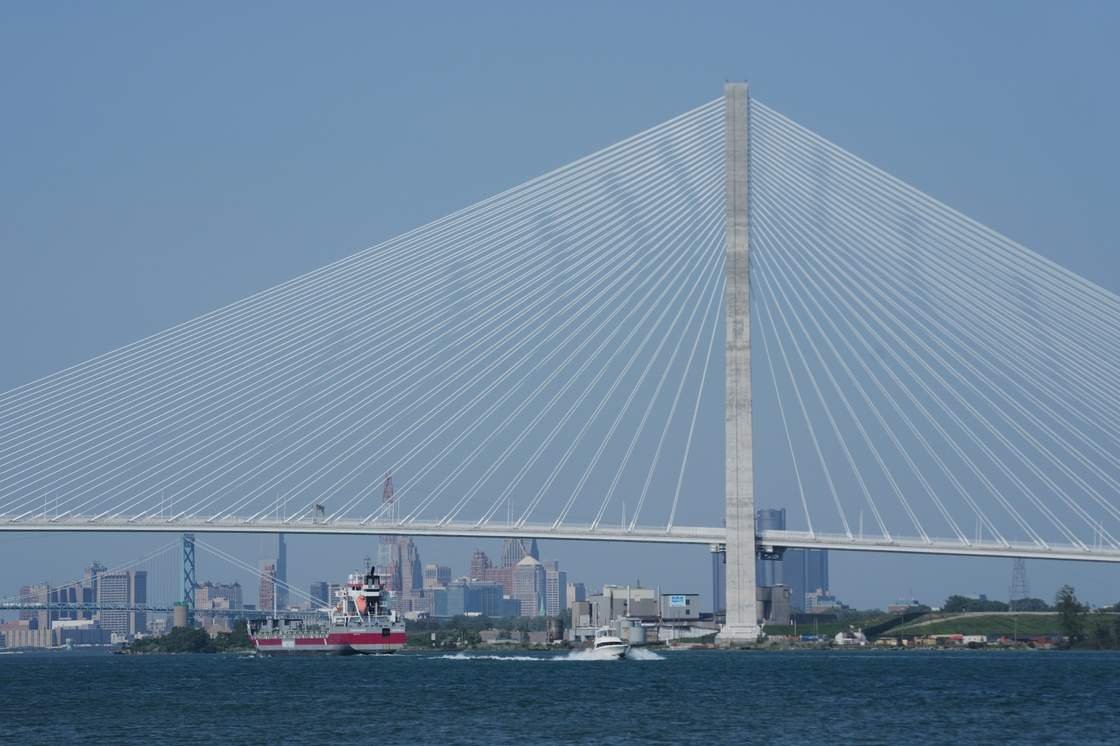
Newly released government emails have shed light on the rapid diplomatic response in Ottawa after U.S. President Donald Trump questioned the financing of the Gordie Howe International Bridge on social media earlier this year. The records reveal coordinated efforts across multiple departments to protect Canada’s substantial investment in the project while preserving stable cross-border trade. The correspondence also underscores how quickly federal officials moved to engage American counterparts and prepare for potential political fallout.
Windsor, Ontario – July 17, 2026 — Newly released emails obtained by The Canadian Press show Canadian officials moved quickly to address concerns after U.S. President Donald Trump’s Feb. 9, 2026 social media post about the Gordie Howe International Bridge. The messages detail internal discussions and coordination across departments as authorities assessed the implications for the cross-border project.
Diplomatic Scramble Revealed in Emails
Hundreds of pages of correspondence obtained by The Canadian Press illustrate the pace of activity in Ottawa and Windsor following Trump’s post. Officials tracked developments, prepared briefing materials, and organised responses across multiple departments. The records indicate a structured effort to maintain continuity on the file while engaging American counterparts.
Global Affairs Canada took the lead in drafting rapid assessments of the Feb. 9 post, while Transport Canada coordinated technical briefings on bridge operations and the Windsor-Detroit Bridge Authority. The Prime Minister’s Office maintained close oversight, circulating daily summaries to ensure consistent messaging across departments. Internal correspondence revealed a measured yet urgent tone, with officials scheduling early-morning calls to align positions before media inquiries intensified.
An American diplomat had raised questions about the bridge in a phone call shortly before Trump’s social media post appeared. Canadian records note the timing and content of that exchange as part of the sequence of events that prompted the subsequent activity. Several messages also referenced potential ripple effects along broader trade corridors, noting that any perceived instability at the Windsor-Detroit crossing could affect supply-chain confidence across North America.
The emails flagged the need to brief provincial counterparts in Ontario, underscoring how federal-provincial coordination would be essential to protect long-term trade flows. Analysts within Global Affairs warned that prolonged uncertainty might prompt Michigan legislators to revisit related infrastructure funding, complicating future binational projects.
The February 9 Post That Changed Everything
President Trump stated in the Feb. 9 post that the United States would receive absolutely nothing from the project and called for full compensation. The message directly referenced the opening of the new crossing between Windsor, Ontario, and Detroit, Michigan. Prime Minister Mark Carney later described his phone conversation with President Trump as positive. The exchange occurred in the days following the post and formed part of the initial diplomatic contact on the matter. Canadian officials continued to monitor public statements and private communications while preparing options for further discussion. The emails reflect repeated internal reviews of the project history and financing structure during this period.
Canada’s $4.7 Billion Investment
The Gordie Howe International Bridge is a $4.7 billion project that connects Windsor, Ontario, and Detroit, Michigan. Under the 2012 binational agreement, Canada provided the full construction funding. The Windsor-Detroit Bridge Authority, a Canadian Crown corporation, operates the crossing, while an international body with representatives from Canada and Michigan provides oversight. Canada is scheduled to recover its costs through toll revenues until the financing debt is repaid. This arrangement was established in the original agreement and remained the framework referenced by officials throughout the 2026 discussions. The project has been labelled a major infrastructure undertaking for the region, with construction spanning several years before the planned opening. Records show Canadian authorities consistently pointed to the 2012 terms when addressing questions about cost recovery and operational control. The Gordie Howe project dwarfs many recent Canadian undertakings, exceeding the $3.9-billion price tag of Toronto’s Eglinton Crosstown LRT and approaching the scale of the $5.5-billion Site C hydroelectric dam in British Columbia. Unlike those domestically funded initiatives, the bridge required Canada to assume full construction costs because repeated attempts to secure matching American appropriations collapsed amid Michigan legislative gridlock and resistance from the Moroun family, owners of the aging Ambassador Bridge. Construction finally began in 2018 after years of environmental reviews and land acquisition, with the first piers rising on the Canadian side while U.S. political delays persisted. By front-loading the entire investment, Ottawa secured operational control through the Windsor-Detroit Bridge Authority and ensured the new span would replace the privately held Ambassador Bridge, whose tolls had long enriched a single American family rather than serving public interest. This arrangement reflected a pragmatic recognition that Canadian exporters could no longer tolerate chronic congestion at the continent’s busiest commercial gateway.
Road to the July 27 Opening
After months of negotiations, the two sides reached a deal on toll revenue sharing. President Trump subsequently confirmed that the bridge would open on July 27, 2026. The announcement followed the period of bilateral talks that began after the February social media post. On July 17, 2026, Prime Minister Carney stated that the underlying 2012 agreement remains unchanged. The remark came days before the scheduled opening and reaffirmed the original financing and governance terms. Canadian officials continued to track preparations for the opening date, including coordination with the Windsor-Detroit Bridge Authority and the international oversight body. The emails indicate ongoing attention to operational readiness and public communications in the lead-up to July 27.
What This Means for Canada-U.S. Trade
The Gordie Howe International Bridge serves as a vital trade corridor and is the busiest Canada-U.S. border crossing for commercial traffic. Any uncertainty around its opening carried potential implications for the movement of goods between Ontario and Michigan. Throughout the period covered by the emails, Canadian authorities emphasised the importance of maintaining reliable border infrastructure. The resolution of the revenue-sharing discussions allowed planning for the July 27 opening to proceed without further delay. Trade statistics regularly highlight the volume of commercial traffic at this location. Officials noted that stable operations at the new bridge would support existing patterns of cross-border commerce once toll collection began under the agreed terms. Daily two-way Canada-U.S. trade averages $2.4 billion, with roughly 30 percent of commercial truck traffic moving through the Windsor-Detroit corridor. The auto sector accounts for a disproportionate share of that volume; finished vehicles and components routinely cross the border three or four times during assembly, making even brief delays costly. Industry estimates suggest that a one-day closure at the Ambassador Bridge alone can generate losses exceeding $100 million for Ontario and Michigan manufacturers combined. Policy analysts note that the Gordie Howe Bridge’s six-lane design and dedicated truck lanes were intended to alleviate precisely these bottlenecks, yet the February uncertainty temporarily froze capital-planning decisions among logistics firms. Canadian exporters, particularly in Southwestern Ontario, watched freight contracts shift toward alternative routes through Buffalo or Sarnia, increasing transit times and fuel costs. Stable toll-sharing terms now allow shippers to model predictable expenses, supporting just-in-time production schedules that remain central to North American automotive competitiveness.
What Happens Next
With the opening date confirmed, attention has turned to the implementation of the toll revenue-sharing arrangement and the continued operation of the Windsor-Detroit Bridge Authority. The international oversight body will maintain its role in governance. Canadian officials have indicated they will monitor traffic volumes and revenue collection in the initial months after July 27. The 2012 agreement continues to set the parameters for cost recovery and project oversight. Further public updates are expected as the bridge enters service and the terms of the recent deal are applied. The Canadian Press continues to review additional records related to the file. Toll rates are expected to begin at roughly $5 for passenger vehicles and $25 for commercial trucks, with annual adjustments tied to inflation and debt-service requirements. Officials project that Canada will recover its $4.7-billion outlay within 25 to 30 years under moderate traffic-growth assumptions, after which net revenues will flow to the federal treasury. This timeline gives Prime Minister Carney a tangible infrastructure success ahead of the next federal election, reinforcing his government’s emphasis on strategic border investments. The continued operation of the Ambassador Bridge introduces direct competition that could temper initial revenue forecasts, particularly if the older span lowers its own tolls. American midterm elections scheduled for November 2026 may also influence enforcement of the revenue-sharing deal, as newly elected Michigan legislators weigh their own fiscal pressures. Canadian authorities will therefore monitor monthly traffic data closely, prepared to adjust diplomatic engagement should volumes fall short of projections or if U.S. political shifts reopen financing questions.
By Alex Thompson, Staff Writer
This article was produced with AI-assisted research and editorial support. Reporting is based on sources cited in the article.
What's Your Reaction?
 Like
0
Like
0
 Dislike
0
Dislike
0
 Love
0
Love
0
 Funny
0
Funny
0
 Wow
0
Wow
0
 Sad
0
Sad
0
 Angry
0
Angry
0

Canada Correspondent at Global1.News. Based in Toronto, covering Canadian politics, energy, trade, and US-Canada relations. Provides the Canadian perspective on North American and global affairs.












Comments (0)