
Skyroot Vikram-1 Ushers India Into the Private Orbital Age
Skyroot Aerospace's Vikram-1, India's first private orbital rocket, launches July 18 from Sriharikota. Mission Aagaman carries six payloads including debris capture tech. With 0M funding and .1B valuation, Skyroot targets the small-satellite market backed by India's 30% launch subsidy.
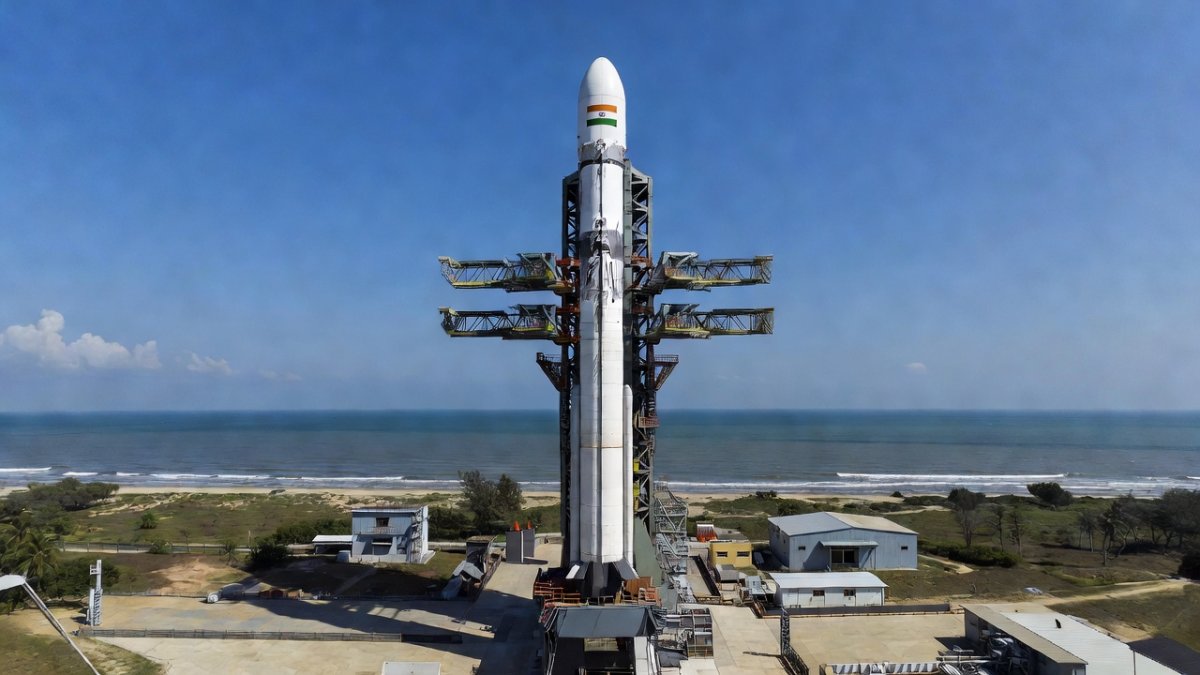
On July 18, 2026, India will witness a historic first as a privately developed rocket lifts off from Sriharikota carrying the nation's ambitions into orbit. Skyroot Aerospace's Vikram-1 is not merely another launch; it represents the moment when India's space sector transitions from state monopoly to a competitive private ecosystem capable of independent orbital flight. This single mission could redefine how the country accesses space and competes globally.
SEO Headline: Skyroot Vikram-1 Ushers India Into the Private Orbital Age
Hyderabad, Telangana – July 17, 2026 — Skyroot Aerospace will launch its Vikram-1 rocket on July 18, 2026, at 11:30 AM IST from the first launch pad at Satish Dhawan Space Centre in Sriharikota, Andhra Pradesh, marking India's first privately developed orbital flight.
Launch Schedule and Mission Parameters
The Aagaman mission targets a 450 km low Earth orbit at 60 degrees inclination. The launch window runs from July 12 to August 4, 2026. On launch day at Sriharikota, the first launch pad at SDSC-SHAR has been fully prepared for the mission. Airspace and maritime notices have been issued to support a targeted T-0 of July 18 at 11:30 AM IST. A 200-member launch team is now conducting final systems checks across the vehicle and ground infrastructure. The chosen 450 km, 60-degree orbit carries particular value because it provides coverage of mid-latitude regions, including most of India, enabling efficient access for domestic payloads. This follows the 2022 Vikram-S suborbital test that reached 88 km altitude and validated key technologies now flying on Vikram-1. Aagaman represents the first of three planned development flights. Should Vikram-1 perform as expected, Skyroot intends to conduct two additional launches in 2026 that extend beyond the initial test series, allowing the company to gather flight data, refine operations, and move steadily toward the reliability required for commercial service.
Rocket Design and Performance Specifications
The four-stage Vikram-1 stands seven stories tall and uses an all-carbon composite structure. The lower three stages employ solid motors while the fourth stage, the Orbit Adjustment Module, uses a restartable liquid-propellant engine. This configuration allows deployment of multiple satellites into different orbits. Standard payload capacity reaches 350 kg to low Earth orbit. Eighty percent of the technologies were validated during the 2022 Vikram-S flight. The upgraded Vikram-1U variant with strap-on boosters will lift 550 kg beginning in Q1 2027.
Payload Manifest and Domestic Innovation
The Aagaman mission carries six payloads that illustrate how Indian private firms are moving from component supply to end-to-end orbital capability. Skyroot's own SCOPE satellite will perform in-orbit technology validation of its avionics and propulsion interfaces, directly feeding data back to the Vikram-1 team. Cosmoserve Space's Embrace robotic arm marks India's first attempt at orbital debris capture using a soft robotic gripper; success would position the Bengaluru startup among a handful of global entities testing active removal hardware. Grahaa Space's SOLARAS S3 optical imaging satellite, built with indigenous detectors and onboard processing, targets sub-metre resolution for domestic agriculture and infrastructure monitoring. DCUBED contributes a German technology demonstration, while Cosmos Diamonds flies the Cosmic Bloom floral artwork. Artist Ajay Kumar Mattewada sends a miniature 18-karat gold rocket honouring Vikram Sarabhai, C.V. Raman, and A.P.J. Abdul Kalam. Together the stack shows India's private ecosystem spanning hardware validation, debris mitigation, Earth observation and cultural outreach within a single 500 kg-class launch.
Company Growth, Funding, and Hyderabad Operations
Founded in 2018 in Hyderabad, Telangana, by former ISRO engineers Pawan Kumar Chandana and Bharath Daka, Skyroot Aerospace now employs approximately 1,000 people. The company operates from Infinity Campus and Max-Q campus with a 55,000 sq ft rocket factory. Production capacity approaches one rocket per month across Vikram-1 and Vikram-1U variants. A $60 million funding round in May 2026 supported a $1.1 billion valuation. Two hundred employees form the dedicated Aagaman launch team. Access to ISRO facilities at Sriharikota saves Skyroot hundreds of millions in infrastructure costs and accelerates development cycles.
Policy Reforms, IN-SPACe Framework, and India's Space Economy
India opened the space sector in 2020 through the Indian National Space Promotion and Authorization Center. The 2023 space policy enabled startups to design, test, and launch independently. On July 7, 2026, the government announced a 30 percent launch cost subsidy up to $3,000 per kg for satellites flown on Indian vehicles, with Skyroot as the primary beneficiary. Minister of State Jitendra Singh stated that India's space economy stood at $8.4 billion in 2022 and is projected to reach $40 billion by the early 2030s. The global space economy, by contrast, is estimated at $630 billion in 2025, meaning India currently accounts for roughly 2% of worldwide activity. Data from IN-SPACe show only three private satellites were launched in 2023, while India had recorded zero privately developed orbital rockets before Vikram-1. Skyroot's 500 kg-class vehicle targets the small-satellite segment where global demand exceeds 1,200 launches annually through 2030. If the subsidy and regulatory sandbox succeed, analysts at the Confederation of Indian Industry project India's share could rise to 5-6% by 2035.
What This Means — India's Space Sector Inflection Point
Vikram-1's scheduled flight represents a structural shift rather than an incremental milestone. The ecosystem has grown from zero dedicated private space companies in 2018 to more than 400 startups registered with IN-SPACe by 2026. The launch follows two consecutive ISRO orbital setbacks in 2026, underscoring the need for independent backup capacity. Skyroot's hybrid model—using ISRO's launch pads and tracking network while retaining full operational control—remains unique among spacefaring nations. Industry data indicate a roughly 50% failure rate for first orbital attempts worldwide; even a partial success would yield telemetry on staging and separation systems. The rise of private space companies creates new pathways for engineering graduates from institutions across Telangana and Andhra Pradesh. Scientists previously limited to ISRO roles now move between public and private organizations, strengthening India's overall technological base and retaining talent that previously sought opportunities abroad. Strategically, repeated private launches would enhance India's autonomy in rapid constellation deployment for communications, reconnaissance and disaster management, reducing reliance on foreign providers during geopolitical contingencies.
The Bottom Line
Skyroot's approach mirrors Rocket Lab's focus on dedicated small-satellite launches. In 2025 Rocket Lab completed more than twelve missions, while Astra and Virgin Orbit encountered repeated setbacks or withdrew from the market entirely. Skyroot enters a consolidating small-launch sector but benefits from government backing that many Western startups did not receive. Sriharikota's location at 13.7°N supplies additional rotational velocity, giving Indian launches a measurable performance advantage over higher-latitude sites. Plans include up to two additional Vikram-1 flights in 2026 beyond this test series and eventual monthly cadence. Early-stage discussions for a Japan subsidiary reflect export ambitions, while reusability studies target larger vehicles. Even if the Aagaman flight encounters issues, the company retains two further development flights and $60 million in funding. The Vikram-S suborbital success in 2022 already demonstrated the team's ability to execute complex missions. Consequently, the structural impact of proving private orbital capability will remain regardless of first-flight outcome. These elements, combined with planned production scaling and a 30 percent domestic launch subsidy, position Skyroot to compete for the dedicated small-satellite market that Chandana compares to booking a cab rather than riding a train, while advancing India's broader commercial space objectives.
— By Dr. Raj Patel, Staff Writer
This article was produced with AI-assisted research and editorial support. Reporting is based on sources cited in the article.
What's Your Reaction?
 Like
1
Like
1
 Dislike
0
Dislike
0
 Love
0
Love
0
 Funny
0
Funny
0
 Wow
0
Wow
0
 Sad
0
Sad
0
 Angry
0
Angry
0

India/South Asia Correspondent at Global1.News. Analytical voice with a background in science and health journalism. Based in New Delhi, covering Indian politics, education, healthcare, technology, and policy. Breaks down complex data into clear, actionable reporting.














Comments (0)