
Saudi Aramco Helicopter Crash Near Ras Tanura Kills 14...
Keywords: Aramco helicopter crash, Ras Tanura refinery, Saudi energy security, Strait of Hormuz, Iran Saudi competition, OPEC+ supply The Crash: 14 killed, SPA confirms all Saudi citizens, investigation launched According to the Saudi Press Agency, at least 14 people lost their lives when an Aramco-operated helicopter crashed near Ras Tanura on Sunday. The energy ministry confi
The Crash: 14 killed, SPA confirms all Saudi citizens, investigation launched
According to the Saudi Press Agency, at least 14 people lost their lives when an Aramco-operated helicopter crashed near Ras Tanura on Sunday. The energy ministry confirmed that all passengers were Saudi citizens and that no survivors emerged from the wreckage. An official investigation has been initiated to establish the precise cause, with authorities emphasizing that preliminary findings rule out any immediate link to hostile action.
The Saudi Press Agency reported that the incident occurred in the eastern province, a region vital to the kingdom's petroleum infrastructure. Daily Sabah cited the energy ministry statement underscoring that the victims were all Saudi nationals employed in operations supporting the refinery complex. This detail highlights the human cost borne by the local workforce amid ongoing regional volatility.
Investigators from the energy ministry are examining flight records and maintenance logs as part of the probe. The Saudi Press Agency noted that Aramco has pledged full cooperation, reflecting standard protocol following any aviation mishap within its extensive network. Such transparency aims to reassure stakeholders about operational integrity even as output pressures mount across the Gulf.
While the Saudi Press Agency stressed the absence of evidence tying the crash to external threats, the timing coincides with heightened alerts around energy facilities. This has prompted additional security reviews at heliports serving Ras Tanura, ensuring that future flights maintain rigorous safety standards amid broader geopolitical strains.
Aramco's Aviation Operations: 60+ aircraft, 300+ heliports, corporate fleet
Aramco maintains one of the largest corporate aviation fleets in the region, operating more than 60 aircraft that include both fixed-wing planes and helicopters. The Saudi Press Agency highlighted how this fleet supports logistics across more than 300 heliports scattered throughout Saudi Arabia. These assets enable rapid transport of personnel and equipment to remote production sites, underscoring the company's self-reliance in a challenging operational environment.
Daily Sabah reported that the scale of Aramco's aviation division reflects the kingdom's vast energy geography, where many facilities lie far from urban centers. Helicopters play a critical role in shuttling crews to offshore platforms and inland refineries alike. This infrastructure has proven indispensable during periods when ground transport faces disruptions from regional conflicts.
The energy ministry confirmed that Aramco's fleet undergoes continuous modernization to meet international aviation benchmarks. Such investments ensure reliability even as Saudi Arabia sustains crude output near 10 million barrels per day. The helicopter involved in the Ras Tanura incident formed part of this extensive network dedicated to maintaining seamless energy sector mobility.
Regional analysts note that Aramco's aviation capabilities also facilitate coordination with neighboring Gulf states during joint energy initiatives. This fleet therefore serves not only domestic needs but also contributes to collective Gulf energy security frameworks that have gained urgency following recent threats to maritime routes.
Ras Tanura's Strategic Role: 550,000 bpd refinery, heart of Saudi exports
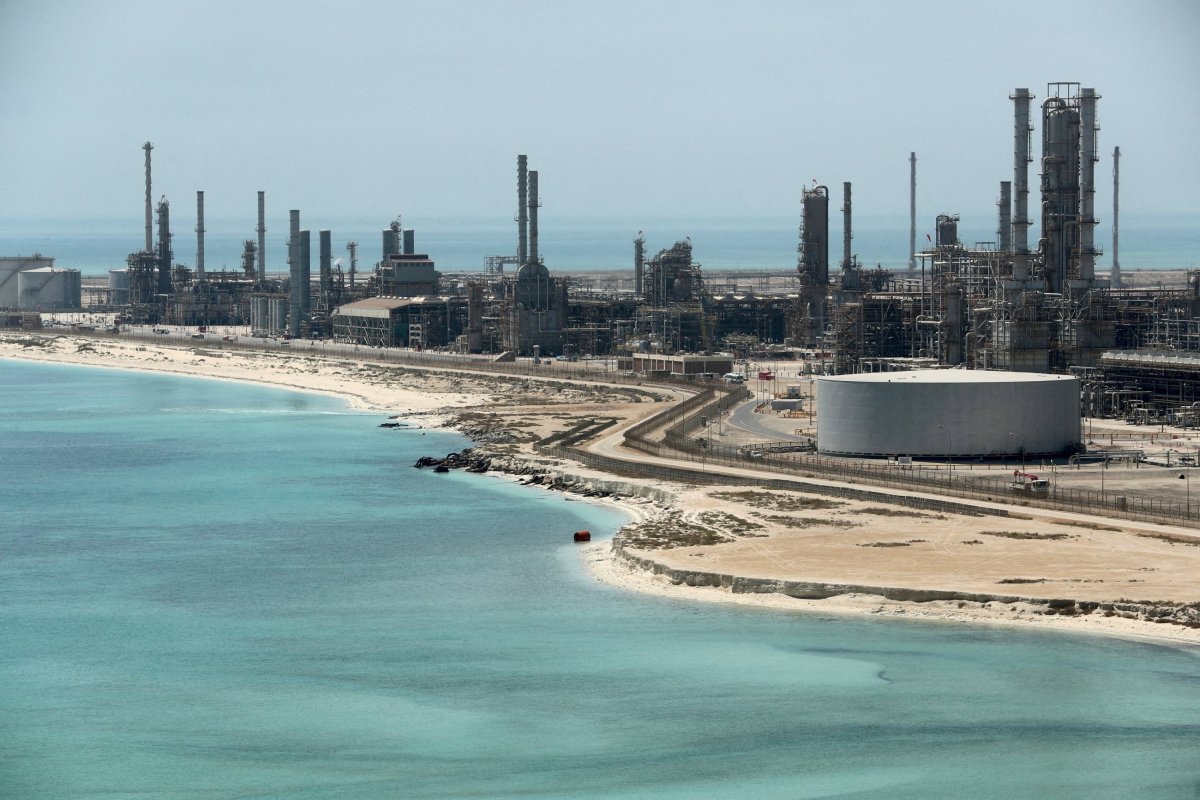
Ras Tanura hosts one of the Middle East's largest refineries, processing 550,000 barrels per day and serving as a cornerstone of Saudi export capacity. The Saudi Press Agency described the facility as critical to the kingdom's ability to meet global demand, particularly as OPEC+ members navigate production quotas. Its location on the eastern coast positions it as a primary node in the energy supply chain.
Daily Sabah cited the energy ministry's assessment that Ras Tanura's operations directly influence Riyadh's standing within global oil markets. The refinery's output feeds into both domestic consumption and international shipments, reinforcing Saudi Arabia's position as the world's leading crude exporter. Any interruption here carries immediate ripple effects across downstream industries.
The strategic importance of Ras Tanura extends beyond volume figures, encompassing its integration with pipelines and export terminals that facilitate rapid loading onto tankers. The Saudi Press Agency emphasized ongoing investments in redundancy measures to protect this capacity against both technical failures and external risks. These efforts align with broader national strategies to safeguard energy infrastructure.
Analysts observe that Ras Tanura's prominence makes it a focal point in discussions about Gulf energy resilience. Its 550,000 barrels per day throughput represents a significant share of Saudi refining capability, directly supporting the kingdom's target of maintaining production above 10 million barrels per day despite fluctuating regional conditions.
Iranian Attacks on Energy Infrastructure: Drone strike caused fire/shutdown at Ras Tanura, April attacks on multiple refineries
During the Middle East war, Iranian attacks targeted energy facilities across the Gulf, including a notable drone strike on Ras Tanura that ignited a fire and forced a partial shutdown. The Saudi Press Agency documented how this assault disrupted operations at the 550,000 barrels per day refinery, highlighting vulnerabilities in even heavily defended installations. Riyadh responded by accelerating defensive upgrades at similar sites.
Daily Sabah reported that the April wave of attacks extended beyond Ras Tanura to facilities in Jubail, Yanbu, and Riyadh. The energy ministry confirmed that these coordinated strikes caused weeks-long disruptions to several production operations, compelling Saudi Arabia to draw on strategic reserves to stabilize supply. Such incidents have intensified scrutiny of aerial threats to energy assets.
The Saudi Press Agency noted that Iranian drone tactics exploited gaps in traditional air defenses, prompting GCC states to enhance joint surveillance and rapid-response protocols. These attacks underscored the interconnected nature of Gulf energy security, where a single successful strike can affect output across multiple countries. Riyadh has since prioritized diplomatic channels alongside military preparedness.
Regional dynamics reveal that the targeting of Ras Tanura and peer refineries forms part of a broader pattern of Iran-Saudi competition over energy dominance. The Saudi Press Agency indicated that these events have reinforced the kingdom's commitment to diversifying export routes while maintaining high production levels near 10 million barrels per day.
Strait of Hormuz and Output Pressures: Closure, Gulf states ramping up, Saudi produces 10 million bpd
The closure of the Strait of Hormuz has placed immense pressure on Gulf producers to increase output through alternative pathways. Daily Sabah reported that oil-rich nations, including Saudi Arabia, are actively ramping up production to offset potential losses from this vital waterway. The Saudi Press Agency confirmed that the kingdom currently sustains output at a little over 10 million barrels per day despite these challenges.
Energy ministry statements cited by the Saudi Press Agency emphasize the need for redundancy in export infrastructure when Hormuz faces threats. Gulf states have coordinated to expand pipeline capacity and storage facilities, ensuring that crude can reach markets even if maritime traffic through the strait is curtailed. This strategic pivot has become central to regional energy planning.
The Saudi Press Agency highlighted how the Hormuz situation intersects with OPEC+ diplomacy, as members balance quota compliance against the imperative to secure global supply stability. Saudi Arabia's ability to maintain 10 million barrels per day production serves as a buffer, yet it also exposes the kingdom to heightened operational risks at facilities like Ras Tanura.
Analysts connect these output pressures directly to Iran-Saudi competition, noting that any prolonged Hormuz disruption could shift market influence toward producers with diversified routes. The Saudi Press Agency observed that Riyadh continues to advocate for collective GCC measures to mitigate such vulnerabilities while upholding its role as a reliable supplier.
Strategic Analysis: What this means for Gulf security, GCC coordination, Iran-Saudi competition
The helicopter crash at Ras Tanura, though not attributed to hostile action, occurs against a backdrop of persistent Iranian threats to Gulf energy infrastructure. The Saudi Press Agency's reporting underscores how such incidents amplify calls for enhanced GCC coordination on aviation safety and facility protection. Joint exercises and shared intelligence have emerged as priorities to deter future disruptions.
Daily Sabah analysis points to the crash as a reminder of the human and operational stakes in Iran-Saudi competition over regional energy corridors. With Ras Tanura already targeted in prior drone strikes, Riyadh has intensified efforts to secure its eastern province assets. This competition extends beyond military posturing into diplomatic maneuvering within OPEC+ forums.
The energy ministry has stressed that Gulf security frameworks must evolve to address both conventional and asymmetric threats. The Saudi Press Agency noted increased collaboration among GCC states on radar coverage and rapid deployment capabilities, aiming to safeguard the collective 10 million-plus barrels per day output that anchors global markets.
Strategic observers argue that the incident reinforces the necessity of de-escalation channels between Riyadh and Tehran. While the Saudi Press Agency maintains that the crash remains under technical investigation, the broader context of Hormuz closure risks and refinery vulnerabilities demands sustained diplomatic engagement alongside defensive enhancements.
Energy Market Implications: OPEC+ supply stability, global market effects
OPEC+ members face renewed scrutiny over supply stability following the Ras Tanura incident and ongoing Hormuz concerns. The Saudi Press Agency reported that Saudi Arabia's commitment to 10 million barrels per day production helps anchor market expectations, yet any prolonged disruption at key refineries could prompt quota adjustments. Global traders are monitoring developments closely for signs of volatility.
Daily Sabah indicated that the 550,000 barrels per day capacity at Ras Tanura represents a significant portion of regional refining output, making its operational continuity essential for downstream product availability. Energy ministry assessments suggest that swift investigation conclusions will help restore confidence among international buyers reliant on Saudi exports.
The Saudi Press Agency emphasized that OPEC+ diplomacy continues to prioritize coordinated responses to geopolitical shocks, including potential Hormuz closures. Saudi production levels near 10 million barrels per day provide a cushion, but sustained attacks on infrastructure could force collective output increases that test cartel cohesion.
Market analysts anticipate that the crash's aftermath will accelerate investments in redundant logistics, including expanded helicopter fleets and fortified heliports. The Saudi Press Agency concluded that these measures, combined with diplomatic outreach, aim to insulate global energy markets from further shocks stemming from Iran-Saudi tensions.
By Malik Hassan, Staff WriterThis article was produced with AI-assisted research and editorial support. Reporting is based on sources cited in the article.
What's Your Reaction?
 Like
0
Like
0
 Dislike
0
Dislike
0
 Love
0
Love
0
 Funny
0
Funny
0
 Wow
0
Wow
0
 Sad
0
Sad
0
 Angry
0
Angry
0

India/South Asia Correspondent at Global1.News. Analytical voice with a background in science and health journalism. Based in New Delhi, covering Indian politics, education, healthcare, technology, and policy. Breaks down complex data into clear, actionable reporting.













Comments (0)