
Chile Storms: Five Dead, Thousands Isolated as Floods Devastate Coquimbo and Atacama
Historic winter storms battered Chile's Coquimbo and Atacama regions in July 2026, killing five, leaving four missing, and isolating nearly 100,000 residents. President Kast declared a state of catastrophe as an atmospheric river and developing El Niño unleashed devastating floods, destroyed over 1,100 homes, and crippled Ovalle Hospital.
The historic winter storms that slammed Chile's Coquimbo and Atacama regions between July 15 and 20, 2026, have left at least five people dead, four missing, and nearly 100,000 residents isolated in what authorities are calling the worst flooding event in the Norte Chico region since 2015. President José Antonio Kast declared a state of catastrophe for the affected zones as an atmospheric river carrying 450-500 percent of normal moisture turned arid valleys into flood zones, triggering debris flows, destroying more than 1,100 homes, and collapsing part of a major hospital in Ovalle.
Chile's Climate Wreckage: Storms Leave Five Dead, Thousands Isolated
Santiago, Chile — The storms unleashed catastrophic rainfall across Chile's Coquimbo and Atacama regions from July 15 to 20, 2026, with Coquimbo recording 200-300 mm and Huasco province in Atacama seeing 50-100 mm. These totals represent extreme anomalies for the arid Norte Chico, where annual precipitation rarely exceeds 100 mm. Winds reached 80-100 km/h along the coast, exacerbating coastal flooding in La Serena, Punitaqui, Tambillos, Huachalalume, and Islón. In Atacama, a violent debris flow known as an aluvión struck Freirina, sweeping away infrastructure.
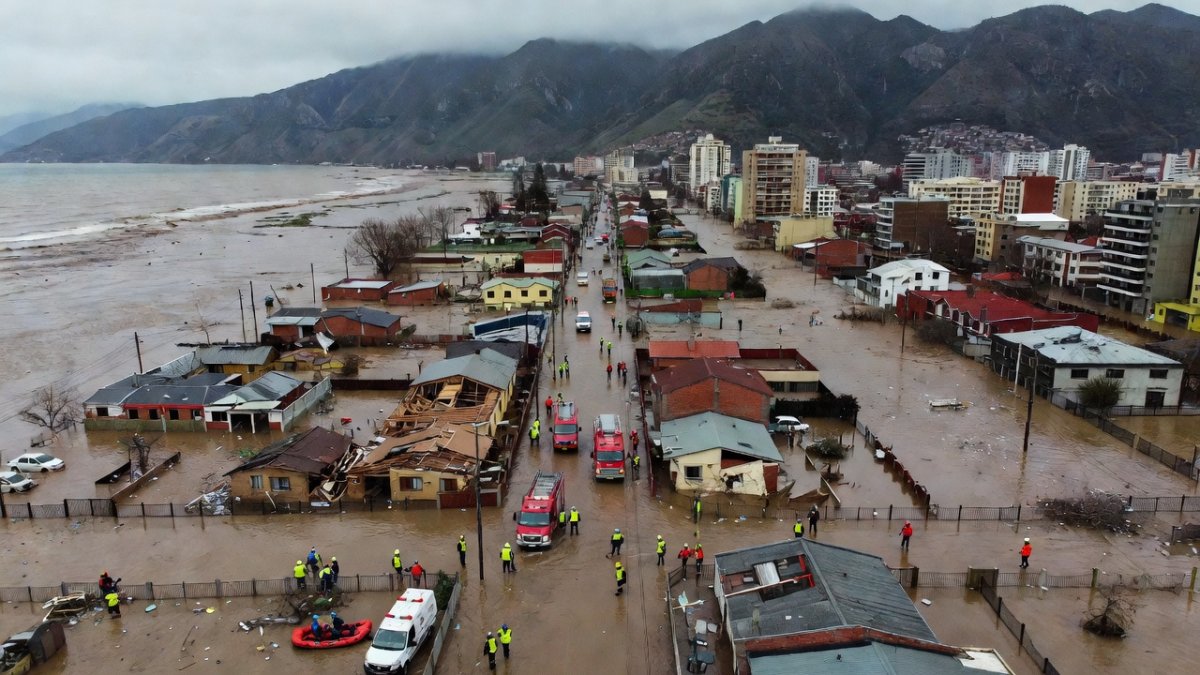 Santiago, Chile — The historic winter storms that slammed Chile's Coquimbo and Atacama regions between July 15 and 20, 2026, have left at least five people dead, four missing, and nearly 100,000 residents isolated in what authorities are calling the worst flooding event in the Norte Chico region since 2015.
Chile's Norte Chico Under Water — A Climate Emergency Unfolds
The storms unleashed catastrophic rainfall across Chile's Coquimbo and Atacama regions from July 15 to 20, 2026, with Coquimbo recording 200-300 mm and Huasco province in Atacama seeing 50-100 mm. These totals represent extreme anomalies for the arid Norte Chico, where annual precipitation rarely exceeds 100 mm. Winds reached 80-100 km/h along the coast, exacerbating coastal flooding in La Serena, Punitaqui, Tambillos, Huachalalume, and Islón. In Atacama, a violent debris flow known as aluvión struck Freirina, sweeping away infrastructure. Nearly 100,000 residents found themselves isolated, with over 33,000 cut off in remote valleys. Over 15,500 homes sustained damage and more than 1,100 were completely destroyed. The event has been compared to the devastating floods of 2015, 2017, and 1984, marking it as historic. At peak, 500,000 to 624,000 customers lost power. Recovery priorities immediately focused on reopening roads and restoring water and power services. SENAPRED coordinated with regional authorities from the outset, deploying Carabineros who rescued 30 people and 25 dogs in Tambillos alone. The Chilean Air Force delivered six tons of aid to Coquimbo within days. This disaster underscores Latin America's growing exposure to intensified winter extremes driven by shifting climate patterns across the continent.
State of Catastrophe: President Kast's Emergency Declaration
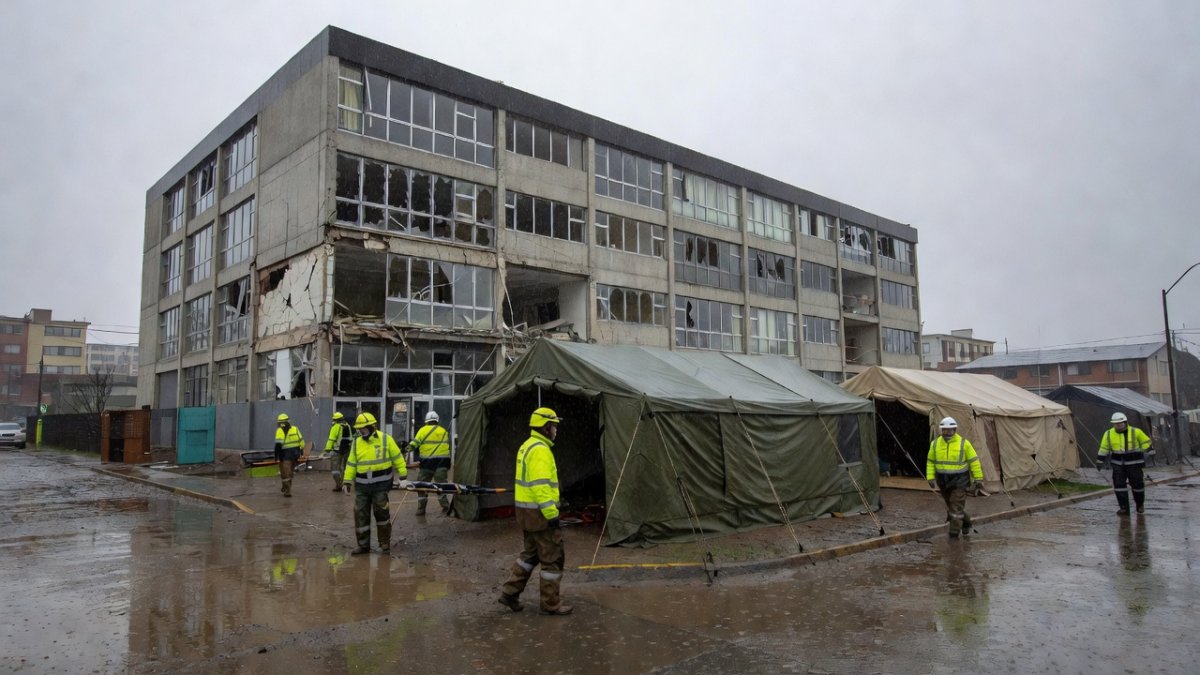
President José Antonio Kast declared a "estado de catástrofe" for the Coquimbo region and Huasco province in Atacama, unlocking emergency protocols and resources. Approximately $1.94 million pesos from the 2% emergency quota were released to support immediate relief. The Chilean Army deployed a modular field hospital within roughly 24 hours to compensate for overwhelmed facilities. Public Works Minister Louis de Grange was dispatched directly to the affected zones to oversee infrastructure assessments and repairs. SENAPRED led coordination efforts with regional governments, prioritizing the evacuation of isolated communities and distribution of supplies. Over 15,500 damaged homes required urgent attention, while 1,100 structures lay in ruins. The declaration enabled rapid mobilization of national assets, including the six tons of aid flown in by the Chilean Air Force. Critics highlighted an initially slow government response, arguing that earlier warnings could have reduced the isolation of nearly 100,000 residents. Despite these challenges, Carabineros conducted heroic rescues, saving 30 people and 25 dogs in Tambillos. The state of catastrophe remains essential for channeling funds toward reopening critical roads and restoring electricity to the 500,000-624,000 customers left in darkness at the storm's peak. This response reflects broader Latin American struggles to balance rapid disaster declarations with effective on-ground execution amid rising climate threats.
Ovalle Hospital Collapse — Health Services in Crisis
Ovalle Hospital suffered severe damage when five of its seven pavilions were rendered unusable by rain and flooding, crippling medical services for thousands. The facility, a critical hub in Coquimbo, faced inundation that destroyed equipment and forced the evacuation of patients amid ongoing storms. In response, the Chilean Army erected a modular field hospital in approximately 24 hours, restoring essential care capacity. This rapid intervention addressed immediate needs for the over 33,000 residents isolated in surrounding areas. The crisis exposed vulnerabilities in regional health infrastructure, where aging buildings proved ill-equipped for extreme precipitation events. With 15,500 homes damaged region-wide, many patients arrived with flood-related injuries, overwhelming remaining pavilions. SENAPRED coordinated medical supply deliveries alongside the six tons of aid transported by the Chilean Air Force. Public Works Minister Louis de Grange inspected the site, emphasizing the need for resilient rebuilding. The hospital's partial collapse delayed treatments for chronic conditions across Coquimbo, compounding the isolation felt by nearly 100,000 affected residents. Carabineros assisted in patient transfers during rescues that also saved 25 dogs in Tambillos. This health emergency highlights how climate-driven disasters strain Latin American public systems, where funding shortfalls leave facilities exposed to events like the 200-300 mm deluges recorded in Coquimbo.
Atmospheric River: The Science Behind the Deluge
An atmospheric river carrying tropical moisture slammed into Chile's Norte Chico, transporting 450-500% of normal precipitable water and fueling the July 15-20, 2026 storms. This phenomenon produced 200-300 mm of rainfall in Coquimbo and 50-100 mm in Huasco, shattering records for the typically dry region. Coastal winds of 80-100 km/h intensified flooding in La Serena, Punitaqui, Tambillos, Huachalalume, and Islón, while triggering the aluvión in Freirina, Atacama. The event isolated nearly 100,000 residents and damaged over 15,500 homes. Scientists link the river's intensity to broader atmospheric changes affecting Latin America, where warming oceans enhance moisture transport. Peak power outages reached 500,000-624,000 customers as infrastructure failed under the deluge. SENAPRED monitored the river's progression, issuing alerts that enabled Carabineros to rescue 30 people and 25 dogs in Tambillos. The Chilean Air Force's delivery of six tons of aid supported communities cut off by debris flows. Compared to 2015, 2017, and 1984 events, this storm demonstrated how atmospheric rivers now deliver historic volumes to arid zones. Public Works Minister Louis de Grange assessed road damage caused by the moisture surge. These dynamics position Chile and neighboring countries on the frontlines of evolving weather patterns reshaping the continent's climate resilience strategies.
El Niño Returns: Latin America on the Frontline of a Warming Planet
The July 2026 storms represent the "primer golpe" of a developing El Niño phenomenon, echoing patterns seen during the July-August 1987 event that similarly battered northern Chile. El Niño historically amplifies winter precipitation in the Norte Chico, and this occurrence delivered 200-300 mm in Coquimbo alongside 50-100 mm in Huasco through an atmospheric river with 450-500% normal precipitable water. The resulting floods killed at least five people, left four missing, and isolated nearly 100,000 residents while damaging 15,500 homes. Across Latin America, El Niño events compound vulnerabilities in countries from Peru to Argentina, where shifting ocean temperatures intensify droughts and floods alike. Winds of 80-100 km/h and the Freirina aluvión underscored the phenomenon's destructive reach. SENAPRED coordinated responses with the Chilean Army's rapid field hospital deployment and the Air Force's six-ton aid drop. President Kast's state of catastrophe declaration unlocked $1.94 million pesos for relief. Critics noted slow initial actions despite these precedents. The event aligns with 2015, 2017, and 1984 benchmarks, signaling recurring risks. As El Niño strengthens, Latin American nations face mounting pressure to integrate climate science into emergency planning, protecting communities from power losses affecting up to 624,000 customers and restoring services in devastated regions like Coquimbo and Atacama.
Voices from the Ground: Communities Left Behind
Residents in Coquimbo's flooded zones described scenes of desperation as waters rose in La Serena, Punitaqui, Tambillos, Huachalalume, and Islón. One survivor recounted losing everything when 200-300 mm of rain inundated homes, part of the over 15,500 damaged structures. In Atacama, Freirina's aluvión buried roads and isolated families amid 50-100 mm downpours. Nearly 100,000 people endured days without power or water, with 33,000 in the most remote pockets. Carabineros rescued 30 individuals and 25 dogs from Tambillos, providing rare moments of relief. Criticism mounted over the government's initially slow response, even after President Kast declared the state of catastrophe. SENAPRED worked with regional officials to distribute the Chilean Air Force's six tons of aid, yet many felt abandoned. The Chilean Army's modular hospital offered hope near Ovalle, where five pavilions failed. Public Works Minister Louis de Grange toured sites, promising road reopenings. Winds of 80-100 km/h compounded trauma for coastal communities. These accounts reveal deep inequities in Latin America's climate response, where rural populations bear disproportionate burdens from El Niño-fueled events. Recovery priorities centered on restoring services to the 500,000-624,000 without electricity, but trust in institutions remains fractured.
The Bottom Line — What Comes Next for Chile's Climate Resilience
Rebuilding Chile's Norte Chico demands urgent investment in climate-resilient infrastructure following the July 2026 storms that claimed five lives and isolated nearly 100,000 residents. Priorities include reopening roads, restoring power to 500,000-624,000 customers, and repairing 15,500 damaged homes. The $1.94 million pesos from emergency funds, combined with SENAPRED coordination, must accelerate these efforts alongside the Chilean Army's field hospital model. President Kast's state of catastrophe declaration provides a framework, yet sustained action is required to address El Niño's recurring threats, as seen in 1987 and now again. Public Works Minister Louis de Grange's presence signals commitment, but critics demand faster integration of atmospheric river forecasting to prevent future aluviones like Freirina's. Latin America watches as Chile confronts these patterns, with neighboring nations facing parallel risks from intensified moisture events carrying 450-500% normal precipitable water. The Chilean Air Force's aid deliveries and Carabineros' rescues in Tambillos demonstrate institutional strengths worth scaling. Long-term resilience hinges on protecting health facilities like Ovalle Hospital and empowering isolated communities. Without bold adaptation, the Norte Chico's historic vulnerability will deepen, leaving the region exposed to the next El Niño-driven deluge.
By Elena Vasquez, Staff Writer
This article was produced with AI-assisted research and editorial support. Reporting is based on sources cited in the article.
What's Your Reaction?
 Like
0
Like
0
 Dislike
0
Dislike
0
 Love
0
Love
0
 Funny
0
Funny
0
 Wow
0
Wow
0
 Sad
0
Sad
0
 Angry
0
Angry
0

Latin America Correspondent at Global1.News. Based in Mexico City, covering politics, economics, energy, and culture across the region. Brings an on-the-ground perspective to stories spanning from the Rio Grande to Patagonia.














Comments (0)