
Trump Auto Tariffs Hit Japan Automakers One Year On
One year after 25% U.S. auto tariffs began, six Japanese automakers absorbed over ¥2.4 trillion in costs. Toyota faces a ¥1.4 trillion operating-income hit, Honda up to ¥450 billion, and Nissan an operating loss. Firms have cut costs, shifted some production, and raised some U.S. prices. PM Ishiba reported a possible drop to 15% tariffs, lifting shares. METI continues bilateral talks. Watch quarterly guidance and production data.
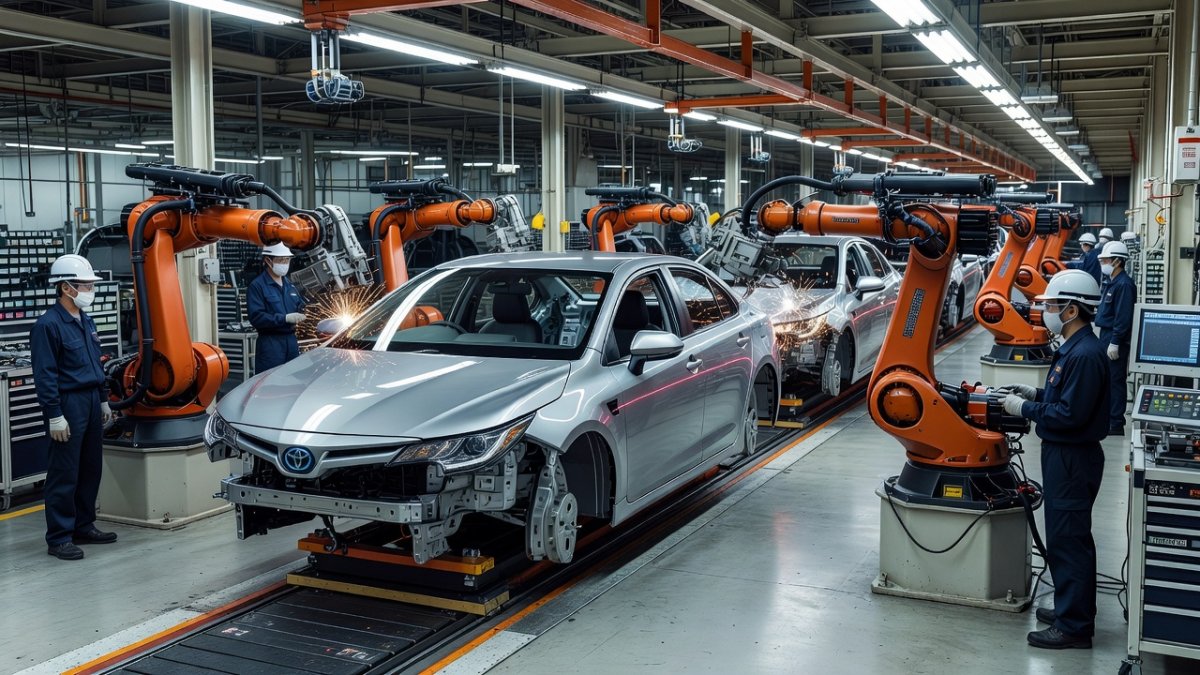
Introduction — the one-year anniversary of the tariffs and the ¥2.4 trillion blow
President Trump’s 25 percent tariffs on imported passenger vehicles took effect in early 2025. One year later, the cumulative financial pressure on Japanese automakers is clear.
According to the Japan Times report of July 20, 2026, combined tariff-related costs at six major Japanese automakers exceeded ¥2.4 trillion in fiscal 2025, which ended March 2026. A separate Nikkei Asia analysis covering April–December 2025 calculated a ¥2.1 trillion ($13.7 billion) reduction in operating income at seven major firms, equivalent to roughly 30 percent of their operating profit for the period.
The Cost Breakdown — company-by-company data
Toyota, the industry leader, stated that tariffs could reduce its operating income by ¥1.4 trillion ($9.5 billion) for fiscal 2026. The company now expects operating profit for fiscal 2025 to reach only ¥3.8 trillion and net profit to fall 35 percent year-on-year to ¥3.1 trillion.
Honda reported tariff costs of ¥122 billion in the most recent three-month period and warned that the full-year impact could reach ¥450 billion. Its operating profit for the period ending March 31, 2026, fell 76 percent year-over-year, while net profit declined 24.5 percent to ¥835.84 billion.
Nissan recorded a 94 percent plunge in operating profit and is now forecasting an operating loss for the fiscal year. Mazda faces smaller but still material exposure according to scenario modeling.
Toyota’s exposure remains the most acute given its continued reliance on Japanese production for roughly 40 percent of U.S.-bound vehicles, particularly the Camry, RAV4, and Tacoma lines. With only limited capacity at its Georgetown, Kentucky and San Antonio, Texas plants, the company absorbed the full 25 percent duty on nearly 1.1 million units shipped from Japan in fiscal 2025. This translated directly into the projected ¥1.4 trillion operating-income reduction for fiscal 2026, a figure that exceeds the entire operating profit Toyota recorded in fiscal 2019 before the pandemic. The disparity highlights how little production flexibility the firm retained despite earlier North American investments.
Nissan’s situation has deteriorated faster than peers. The company posted an operating loss of ¥154 billion for the nine months through December 2025 and now forecasts a full-year loss exceeding ¥200 billion. Its restructuring plan, announced in February 2026, includes the closure of the Oppama plant and a 15 percent global workforce reduction, measures that will affect approximately 9,000 employees in Japan. Mazda and Subaru, while smaller in absolute terms, face proportionally severe pressure: Mazda’s Hiroshima-centric production means 65 percent of its U.S. volume remains subject to tariffs, while Subaru’s reliance on the Gunma plant for the Forester and Outback leaves it with limited near-term relocation options.
The cumulative ¥2.4 trillion tariff burden across six firms equals 42 percent of their combined operating profit in fiscal 2024, a reversal from the modest 3–4 percent cost drag recorded in the years immediately preceding the tariffs. Employment data from METI’s quarterly manufacturing survey show a 4.2 percent year-on-year decline in auto-assembly jobs in Aichi, Shizuoka, and Hiroshima prefectures through March 2026, with temporary contract workers bearing the brunt of the cuts.
How Automakers Are Responding
Japanese manufacturers have pursued three main adjustments. Cost-cutting programs have been accelerated at all major firms. Some production of U.S.-bound models has been shifted to North American plants where capacity exists. Several companies have begun passing a portion of tariff costs through to U.S. consumers via higher transaction prices.
Despite these measures, profit margins remain under sustained pressure. Toyota and Honda have both indicated that further efficiency gains will be required if tariff levels do not decline.
Toyota has accelerated its capital expenditure program in the United States, committing an additional $2.8 billion to expand the Georgetown facility by 180,000 units annually and to add a second line for hybrid powertrains. Honda’s joint venture with LG Energy Solution in Ohio, originally slated for 2027, has been fast-tracked to late 2026, allowing the company to source battery packs domestically and thereby reduce the tariff-exposed content of its U.S.-market EVs. These moves, however, require two to three years to reach meaningful scale, leaving most 2026–2027 volume still exposed.
Japanese Tier-1 suppliers have begun relocating selected stamping and electronics production to Mexico and the southern United States. Denso and Aisin have each announced new facilities in Aguascalientes and Alabama, respectively, affecting an estimated 3,200 jobs that would otherwise have remained in Japan. At the dealer level, transaction prices for the Toyota Camry and Honda CR-V have risen $2,800–$3,400 since the tariffs took effect, with roughly 60 percent of the duty passed through to consumers according to J.D. Power transaction data.
Workforce measures include hiring freezes at all seven major assemblers and expanded early-retirement programs. Toyota alone has offered voluntary retirement packages to 4,500 employees aged 55 and older, while Nissan’s restructuring includes a 10 percent cut in domestic white-collar positions by March 2027. These steps have contained operating-cost growth but have not offset the tariff-driven margin compression.
METI and Government Response
The Ministry of Economy, Trade and Industry (METI) has coordinated the Japanese government’s engagement with U.S. counterparts. Prime Minister Shigeru Ishiba has led direct diplomatic efforts focused on the auto sector. No new domestic subsidy programs have been announced to date; policy emphasis remains on bilateral negotiation rather than unilateral countermeasures.
Diplomatic engagement has followed a clear sequence. After the tariffs took effect in January 2025, METI Minister Ken Saito held three rounds of technical talks in Washington through April. Prime Minister Ishiba then met President Trump on the margins of the G7 summit in June 2025, securing a commitment to review the tariff rate within twelve months. A follow-up bilateral working group convened in Detroit in October 2025 to examine rules-of-origin adjustments for hybrid components.
No direct subsidy program for assemblers has been introduced. Instead, METI has expanded the existing “Supply Chain Resilience” grant framework, allocating an additional ¥78 billion to support Tier-2 and Tier-3 suppliers that demonstrate concrete plans to diversify export markets or relocate production. This targeted assistance has reached 142 firms, primarily in the Chubu and Tohoku regions.
Japan has not initiated WTO dispute proceedings. Officials have cited both the uncertain outcome of such cases and the strategic priority of maintaining bilateral channels with the current U.S. administration. METI continues to emphasize that any lasting solution must be negotiated rather than litigated.
The Broader Trade War Context
The auto tariffs form part of the wider U.S.–Japan trade framework that also includes steel, aluminum, and agricultural issues. Japan’s vehicle exports to the United States represent a significant share of total shipments, making the sector especially exposed compared with other manufacturing industries. The Bank of Japan and corporate Japan continue to monitor the secondary effects on supply chains and employment in prefectures with heavy auto concentration.
The 25 percent auto tariffs stand in contrast to the 10 percent steel and aluminum duties applied to Japan in 2018 and the more sweeping Section 301 tariffs imposed on China. Unlike the China measures, which affected a broad range of intermediate goods, the auto tariffs target a single finished-product sector in which Japan retains a structural surplus with the United States. EU automakers have faced similar but lower 10 percent duties on selected models, allowing German exporters to maintain relatively better margins.
The direct hit to Japan’s manufacturing sector subtracted an estimated 0.4 percentage points from real GDP growth in fiscal 2025. Industrial production indices compiled by the Ministry of Economy, Trade and Industry show a 7.8 percent decline in transport-equipment output between April 2025 and March 2026, the steepest drop since the 2011 earthquake. Yen depreciation of approximately 12 percent against the dollar over the same period offset roughly one-third of the tariff cost in yen terms, yet the remaining burden still exceeded any currency gain.
Longer-term competitiveness concerns center on the pace at which Japanese firms can shift production and engineering resources to North America. If the 15 percent tariff rate is confirmed and sustained, the industry’s capital-allocation cycle could stretch into the early 2030s, potentially ceding further ground to U.S. and Korean rivals that already operate larger domestic footprints.
Outlook — the reported 15% tariff reduction talks
Prime Minister Ishiba announced that U.S. auto tariffs had reportedly been lowered to 15 percent from the current 25 percent. Toyota shares rose nearly 12 percent and Honda shares rose more than 8 percent on the news. The reduction, if confirmed and sustained, would materially ease the operating-income pressure documented in fiscal 2025 results.
What to Watch For
Key indicators for the coming year include quarterly operating-profit guidance from Toyota, Honda, and Nissan; the pace of any further production shifts to North America; and METI statements on the status of the 15 percent tariff arrangement. Currency movements between the yen and the dollar will also influence the net yen impact of any remaining tariffs.
Tags: Trump tariffs, Japan autos, Toyota, Honda, Nissan, METI, trade policy, yen impact
By Kenji Tanaka, Staff Writer
This article was produced with AI-assisted research and editorial support. Reporting is based on sources cited in the article.
What's Your Reaction?
 Like
0
Like
0
 Dislike
0
Dislike
0
 Love
0
Love
0
 Funny
0
Funny
0
 Wow
0
Wow
0
 Sad
0
Sad
0
 Angry
0
Angry
0

Japan Correspondent at Global1.News. Tokyo-based voice covering Japanese politics, technology, economy, and culture. Tracks the intersection of tradition and innovation in one of the world's most dynamic societies.













Comments (0)