
China Expresses Strong Dissatisfaction Over British Steel Nationalisation
China Expresses Strong Dissatisfaction Over British Steel Nationalisation The United Kingdom's decision to nationalise British Steel has triggered a sharp diplomatic rebuke from Beijing, exposing the fragile balance between national security priorities and longstanding bilateral investment commitments.
China Expresses Strong Dissatisfaction Over British Steel Nationalisation
The United Kingdom's decision to nationalise British Steel has triggered a sharp diplomatic rebuke from Beijing, exposing the fragile balance between national security priorities and longstanding bilateral investment commitments. China's commerce ministry has formally protested the move, warning that it undermines Chinese investor confidence and violates the 1986 China–UK Bilateral Investment Treaty. This escalation arrives at a critical juncture for incoming UK leadership, forcing a reckoning over industrial policy and relations with the world's second-largest economy.
Beijing, China — The dispute over British Steel has escalated as China's commerce ministry issued a formal protest against the United Kingdom's nationalisation of the Scunthorpe steelworks, owned by China's Jingye Group, citing violations of treaty obligations and disregard for Chinese economic contributions.
The Immediate Trigger for Nationalisation
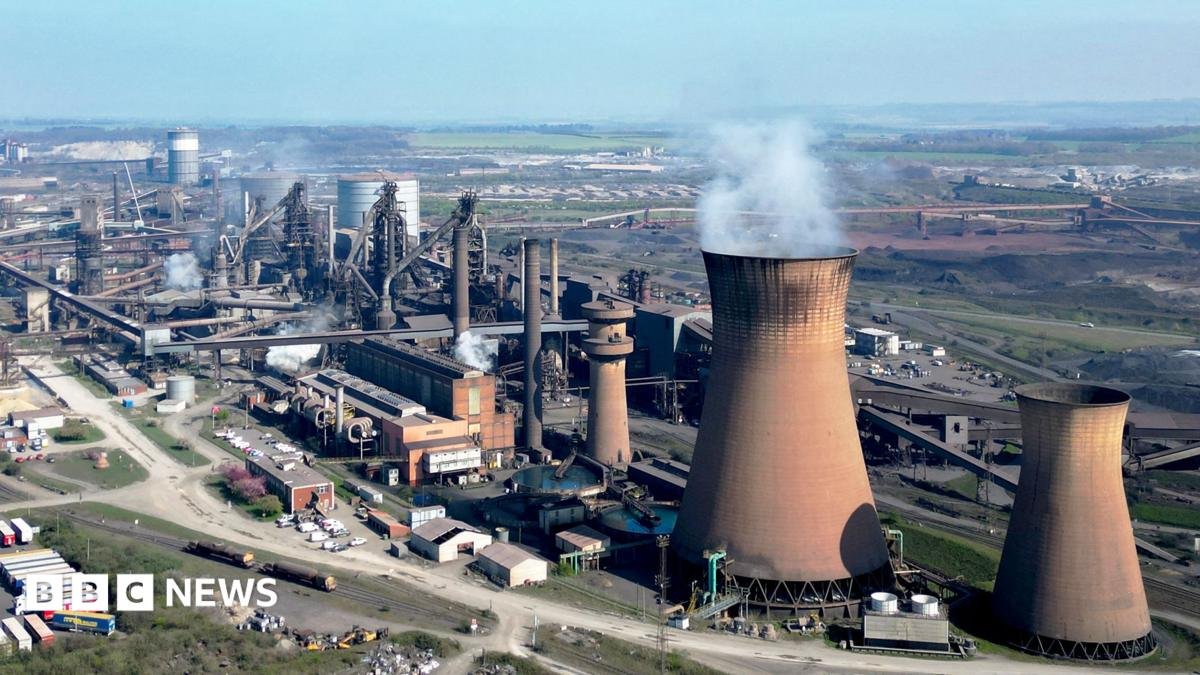
The United Kingdom government announced on Thursday that it would take British Steel into public ownership to protect jobs and maintain a vital national capability in steel production. Operations at the Scunthorpe plant had already come under government control last year, even though ownership remained with China's Jingye Group, which constrained the scope for direct policy intervention. This move followed Parliament's passage of legislation on Wednesday that permits public ownership when a public interest test is satisfied.
China's Commerce Ministry Response and Treaty Obligations
China's commerce ministry issued a statement on Friday declaring firm opposition and strong dissatisfaction with the decision. The ministry stated that the actions seriously infringed upon Jingye's legitimate rights and interests and severely undermined the confidence of Chinese companies investing in the UK. It called on Britain to faithfully fulfil its obligations under the China–UK Bilateral Investment Treaty, a legally binding agreement signed in 1986 to promote and protect investments between the two countries. The statement noted that Beijing would monitor developments closely and support Chinese firms to protect their rights without specifying further measures.
MOFCOM's statement invoking the 1986 China–UK Bilateral Investment Treaty draws directly on provisions guaranteeing fair and equitable treatment and protection against uncompensated expropriation, obligations that remain legally binding irrespective of changes in UK government. The ministry's measured language, coupled with its pledge to support affected firms through legal avenues, reflects established practice in similar cases where Beijing coordinates with the Ministry of Foreign Affairs to escalate concerns without immediate economic countermeasures. This approach preserves negotiating leverage while reminding London that treaty compliance underpins broader economic cooperation frameworks, including those supporting Belt and Road-related financing in third markets.
Comparative dynamics with the stalled EU-China Comprehensive Agreement on Investment reveal that Beijing consistently prioritises enforceable dispute-settlement mechanisms over political assurances. The current episode therefore tests whether the 1986 treaty can still anchor UK-China relations amid shifting security priorities, prompting NDRC analysts to evaluate risk premia for future European acquisitions. By foregrounding Jingye's economic contributions and the absence of agreement on taxpayer value, MOFCOM frames the nationalisation as a policy choice rather than an unavoidable necessity, signalling to other jurisdictions that Chinese overseas investments will be defended through institutional channels rather than ad hoc bilateral appeals.
Disregard for Jingye's Economic Contributions
The commerce ministry highlighted that the British side had disregarded Jingye's significant contribution to the UK economy and society by forcibly taking control in the name of national security. Jingye had reported that the business was losing £700,000 a day prior to the announcement. The UK government spokesperson confirmed that negotiations with Jingye had taken place but it was not possible to reach an agreement that represented value to the taxpayer. The government highly values its relationship with China and remains open to Chinese investment, according to the same spokesperson.
Compensation Process and Independent Valuation
Jingye is seeking compensation following the nationalisation. Small Business Minister Blair McDougall informed the House of Commons on Thursday that the government will appoint an independent valuer in the autumn to make a judgment on any compensation that is due, and that could be nil. Business Secretary Peter Kyle told the BBC that the government would need to cover the running costs for the immediate future. The National Audit Office reported in March that the Scunthorpe steelworks was costing the government about £1.3m a day.
Employment and Supply Chain Safeguards
The Scunthorpe steelworks directly employs around 2,700 people and supports thousands more jobs in the supply chain. By bringing the facility into public ownership the government gains the power to decide its future while keeping the blast furnaces operating. It is unlikely that long-term state operation will continue, given daily costs exceeding one million pounds. The plant produces types of steel required by Network Rail and the building industry that are not yet manufactured elsewhere in the country.
Strategic Calculus for Incoming Leadership
The nationalisation threatens to strain relations between London and Beijing just as Andy Burnham is set to enter Downing Street on Monday. The incoming prime minister will have to weigh his approach to the issue against the economic benefits of ties with the world's second largest economy. The UK imports most of its steel, with major suppliers including the European Union, the US, China and India. If the plant ceased producing virgin steel, the UK would become the only member of the G7 without that capability.
Andy Burnham's incoming administration must navigate the nationalisation through the lens of the 1986 China–UK Bilateral Investment Treaty, which remains a cornerstone of bilateral economic engagement despite post-Brexit recalibrations. Labour's historical approach has emphasised pragmatic commercial diplomacy, contrasting with Conservative-era fluctuations that oscillated between golden-era rhetoric and security-driven restrictions. The Ministry of Foreign Affairs in Beijing will likely engage the new Downing Street team via established channels, while the National Development and Reform Commission monitors how this precedent affects wider Belt and Road Initiative corridors linking Chinese capital to European infrastructure. Bilateral trade, running into tens of billions of pounds annually, supplies critical intermediate goods and market access that incoming policymakers cannot easily replace, forcing a calculation between short-term domestic optics and long-term supply-chain resilience.
Comparative cases such as the 2010s restructuring of other European steel assets reveal that Chinese investors frequently accept managed exits when treaty-based compensation mechanisms function transparently. Burnham's team may therefore lean on the treaty's fair-and-equitable-treatment clauses to structure an orderly valuation process, preserving space for future Chinese participation in green-steel projects. This approach aligns with Beijing's broader overseas investment protection strategy, which coordinates MOFCOM guidance with MFA diplomatic support to safeguard assets across multiple jurisdictions. The decision will also test Labour's willingness to differentiate itself from previous governments by embedding technological self-sufficiency goals within renewed UK-China dialogue rather than defaulting to exclusionary postures.
Historical Precedents and Long-Term Industrial Strategy
British Steel was last under state ownership in 1988 when it was privatised by Prime Minister Margaret Thatcher's government. Although the government's long-term strategy is for all domestically produced steel to come from electric arc furnaces, which recycle scrap metal and are less carbon-intensive, it does not want to lose production at Scunthorpe yet. The decision ensures continuity until alternatives become available, avoiding excessive reliance on imports that could prove disruptive to key sectors.
The 1988 privatisation of British Steel under Margaret Thatcher established a template of rapid divestment followed by periodic state intervention during market shocks, a pattern repeated across other UK industrial transitions such as the partial renationalisation of rail infrastructure. Today's decision echoes those episodes by temporarily restoring public control to preserve blast-furnace capacity until electric arc furnace technology matures. China, as the world's dominant steel producer, has simultaneously pursued its own capacity rationalisation and EAF conversion, aligning domestic policy with global decarbonisation commitments. This convergence creates potential for technology-transfer arrangements once the immediate ownership dispute is resolved through the 1986 treaty framework.
Comparative analysis with earlier nationalisations affecting Chinese firms in Australia and Canada demonstrates that independent valuation processes, when conducted transparently, can mitigate diplomatic fallout while allowing eventual re-entry of foreign capital. The NDRC has tracked these precedents to refine guidelines on overseas steel investments, emphasising integration with green-transition financing mechanisms under the Belt and Road umbrella. By retaining Scunthorpe's virgin-steel output in the short term, the UK avoids import dependence that could disrupt downstream sectors, yet the episode underscores the tension between national industrial strategy and the liberal investment regime China expects treaty partners to uphold.
Geopolitical Ramifications and Leverage Dynamics
From Beijing's perspective the episode tests the durability of the 1986 treaty framework and signals risks for Chinese overseas investments in strategic sectors. London seeks to balance domestic industrial resilience against broader commercial engagement with China. Second-order effects may extend to ASEAN economies that rely on stable UK-China trade flows and to the EU, which watches how Britain manages post-Brexit investment protections. The Global South may observe the case as an indicator of how Western governments recalibrate openness to state-backed acquisitions in critical materials.
China's response to the British Steel episode forms part of a coordinated strategy that deploys MOFCOM statements alongside MFA démarches to signal that arbitrary nationalisations undermine the predictability required for continued Belt and Road financing in Europe. This mirrors earlier disputes involving Huawei's 5G exclusion and stalled projects at Hinxton Genome Campus, where Beijing similarly invoked bilateral treaties to highlight risks to Chinese firms. In each instance, Chinese state-owned enterprises recalibrated their European exposure, shifting toward joint ventures or minority stakes that reduce political vulnerability while maintaining technological footholds. The Global South observes these episodes as indicators of whether Western governments will honour investment protections when strategic sectors are involved, influencing decisions on whether to deepen participation in Chinese-led infrastructure initiatives.
European state-owned enterprise investment faces heightened scrutiny as a result, prompting NDRC officials to issue internal guidance prioritising markets with stronger rule-of-law guarantees. ASEAN economies dependent on stable UK-China trade flows may accelerate diversification away from British intermediaries, while EU observers assess whether post-Brexit Britain offers a cautionary template for their own China engagement frameworks. By linking the nationalisation to treaty obligations rather than immediate retaliation, Beijing preserves diplomatic space yet establishes a precedent that future expropriations will trigger sustained institutional pushback, reinforcing the centrality of overseas investment protection within China's technological self-sufficiency drive.
By Prof. Marcus Chen, Staff Writer
This article was produced with AI-assisted research and editorial support. Reporting is based on sources cited in the article.
What's Your Reaction?
 Like
0
Like
0
 Dislike
0
Dislike
0
 Love
0
Love
0
 Funny
0
Funny
0
 Wow
0
Wow
0
 Sad
0
Sad
0
 Angry
0
Angry
0

World Politics Analyst at Global1.News. Based in Beijing, covering US-China relations, global trade, and geopolitical strategy. Brings deep analytical perspective to the power dynamics shaping international affairs.















Comments (0)