
Bundibugyo Virus: 1,926 Cases and 702 Deaths in Africa
The World Health Organization declared a Public Health Emergency of International Concern for the Bundibugyo virus outbreak on May 17, 2026, as cases explode across the Democratic Republic of the Congo and Uganda with a staggering 36 percent fatality rate. Over 1,900 confirmed infections and 702 deaths have been recorded, and the evacuation of a US humanitarian worker to Germany proves this virus won't stay contained.
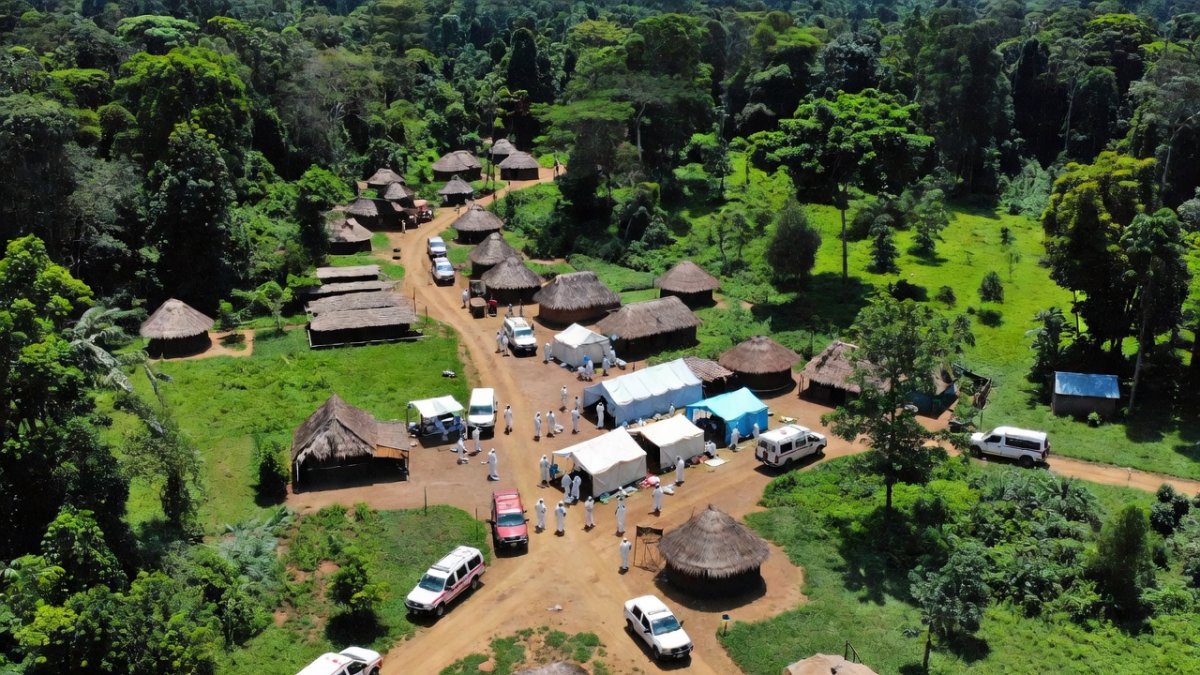
The World Health Organization declared a Public Health Emergency of International Concern for the Bundibugyo virus outbreak on May 17, 2026, as cases explode across the Democratic Republic of the Congo and Uganda with a staggering 36 percent fatality rate. Over 1,900 confirmed infections and 702 deaths have been recorded, and the evacuation of a US humanitarian worker to Germany proves this virus won't stay contained. Americans can't afford to ignore the threat as travel restrictions tighten and the risk of imported cases looms.
Bundibugyo Virus: 1,926 Cases and 702 Deaths in Africa
Atlanta, GA —
WHO Drops the PHEIC Hammer on May 17
The World Health Organization just slapped the world with a Public Health Emergency of International Concern on May 17, 2026, and they did it for damn good reason. This Bundibugyo virus outbreak is ripping through remote corners of the Democratic Republic of the Congo and Uganda right now, and the international community is scrambling like it always does when the body count climbs. Cross-border movement of cases is fueling the fire, and fruit bats sit there as the suspected natural reservoir, laughing at our borders. This is not some distant problem you can ignore while scrolling your feed. This virus means business, and the clock is ticking.
1,926 Cases, 702 Dead: The Numbers That Demand Attention
As of July 13, 2026, we are staring at 1,926 confirmed cases and 702 deaths, locking in a case fatality rate near 36 percent. That is not a statistic to shrug off. These numbers come straight from the front lines in hard-hit, isolated districts where hospitals are stretched thin and contact tracing is a nightmare. Every single death represents a family shattered and a community on edge. The outbreak is not slowing down. It is accelerating because remote terrain and weak infrastructure let the virus hop from village to village before anyone can react. This is the reality on the ground in July 2026, and pretending otherwise is pure fantasy.
These figures put Bundibugyo in a different league from the 2014 West Africa outbreak that killed over 11,000. While that epidemic exploded across three countries with weak surveillance, the current 36% case fatality rate signals a virus that kills efficiently even when caught early. The geographic spread now reaches deep into eastern DRC provinces and crosses into Uganda's border districts, hitting remote rainforest communities where roads wash out and cell service dies. Containment teams must hike days to reach clusters, turning every confirmed case into a potential super-spreader event before contact tracers arrive.
Case curves show no plateau yet. Daily incidence keeps climbing in hard-to-reach zones, driven by funeral practices and bushmeat trade that ignore official warnings. Compare that to 2014's eventual slowdown after massive international beds arrived; here the infrastructure gap means each new chain restarts the clock. The numbers demand attention because they expose how quickly a filovirus can lock down an entire region when roads, labs, and trust all sit at zero.
Bundibugyo Virus: The Sneaky Orthoebolavirus You Need to Know
Bundibugyo virus, or BDBV, is one of three Orthoebolavirus species that actually kill humans, and it is back with a vengeance. The last major hit came in Uganda’s Bundibugyo district during 2007-08, when 149 people got sick and 42 died. That outbreak should have been a wake-up call, but here we are again. This strain spreads through direct contact with bodily fluids, and the symptoms hit hard and fast. Fruit bats are the prime suspects as the reservoir, meaning the virus can jump species without warning. The Lancet just dropped a paper on July 16 analyzing fresh samples from this outbreak, confirming the virus is behaving exactly like we feared. Do not let the name fool you. This is Ebola with a different label, and it does not care about your passport.
International Response: All Talk, Not Enough Action
Let’s call it exactly as it is. The global response has been sluggish and underfunded, the same tired script we see every time an outbreak flares in Africa. WHO published diagnostic testing guidance on July 9, but guidance without rapid deployment is just paper. Relief organizations are racing to set up treatment centers in areas with almost no roads, while governments argue over funding. Cross-border movement between DRC and Uganda is turning this into a regional crisis, yet coordination remains patchy at best. The world loves to declare emergencies after the horse has bolted. We need boots on the ground, vaccines scaled up, and real money flowing now, not another round of press conferences. Anything less is negligence dressed up as diplomacy.
WHO's emergency fund sits chronically underfunded, forcing repeated appeals while MSF runs the actual isolation wards with limited beds and exhausted staff. Pledges from donor nations total under $50 million against a realistic $200 million need for full contact tracing and ring vaccination. Ervebo protects against Zaire ebolavirus but shows no cross-protection for Bundibugyo, leaving frontline workers without a licensed shot. No dedicated BDBV vaccine exists because the strain never triggered the same pharma investment as Zaire.
Treatment remains supportive care plus experimental monoclonal cocktails borrowed from other outbreaks, none proven against this orthoebolavirus. MSF crews improvise oxygen and fluid protocols in tents while governments debate coordination meetings. The gap between rhetoric and delivered resources keeps the outbreak alive long after it should have been crushed.
US Humanitarian Worker Evacuated, Travel Rules Tighten
A US humanitarian worker got pulled out of the DRC and flown to Germany, testing positive for Bundibugyo virus on July 13. That single case proves the virus does not respect distance or good intentions. CDC is on the ground responding, and no cases have shown up inside the United States yet, but the risk is real. The US is already tightening travel measures from affected regions, screening passengers and restricting non-essential movement. This is not panic. This is basic self-preservation. Americans need to understand that one infected traveler on a plane can change everything overnight. The evacuation should serve as a loud alarm bell, not background noise.
The evacuated American worked with an NGO managing Ebola treatment units in eastern DRC when symptoms appeared. Germany accepted the medevac because its high-containment facilities in Hamburg and Berlin routinely handle imported high-consequence pathogens under strict protocols. CDC raised its Travel Health Notice to Level 3, advising against nonessential travel, while major US airports added enhanced screening with temperature checks and symptom questionnaires for passengers arriving from the region.
These steps echo the 2014 Dallas case where a single missed traveler exposed dozens before isolation. Airport protocols now include rapid antigen tests on arrival for high-risk flights, yet gaps remain for connecting passengers. The evacuation and rule tightening show how one exported case forces entire systems to react, even when the overall risk to the US public stays low.
What You Are Not Being Told About the Reservoir and Borders
Here is the part officials dance around. Fruit bats are almost certainly the natural reservoir, and they do not carry passports. They fly across borders carrying the virus in their systems, seeding new clusters in remote villages where surveillance is weak. Cross-border movement of people then amplifies the spread, turning two separate countries into one connected outbreak zone. Previous outbreaks taught us this lesson, yet investment in bat surveillance and border health posts remains an afterthought. The public is fed sanitized updates while the real drivers of transmission keep operating in the shadows. That gap between what is said and what is happening is where the next surge will come from.
What This Means for Americans Right Now
Pay attention, because this outbreak is not staying in Africa. With a 36 percent fatality rate and confirmed export to Europe already, any complacency here is dangerous. CDC guidance is clear: no domestic cases yet, but vigilance is required. Travelers returning from the region face extra screening, and supply chains for personal protective equipment could tighten fast if the numbers keep climbing. The average American might think “it can’t happen here,” but history shows otherwise. One infected aid worker or traveler changes the math instantly. This is your warning to stay informed, support real preparedness funding, and stop treating global health as someone else’s problem.
Trade in Congolese minerals and agricultural goods faces potential disruption if borders close further, raising costs for electronics and specialty metals. NGOs operating in the region report staff pullouts and suspended programs, cutting local health services that already run thin. Airlines have quietly suspended routes through Entebbe and Kinshasa, forcing longer connections and higher fares for aid workers and business travelers.
US hospitals have dusted off 2014 and COVID-era PPE stockpiles and run tabletop drills, yet supply-chain lessons from the pandemic show how quickly N95s and gloves can vanish. The real takeaway is that distant outbreaks still test domestic readiness; ignoring the pattern leaves the same holes exposed when the next pathogen arrives.
Action Steps: What You Can Do Today
Stay glued to CDC and WHO updates instead of waiting for cable news to catch up. Push your representatives to fund outbreak response and border health infrastructure instead of cutting budgets. If you work in travel, healthcare, or aid, review your protocols now. Support organizations delivering diagnostics and treatment on the ground in DRC and Uganda. Demand transparency on reservoir studies and cross-border coordination instead of accepting vague assurances. This outbreak is live and lethal. The only way we blunt it is by acting like it matters before the next plane lands with another case. Get loud, stay ready, and do not look away.
By Jessica Ali, Staff Writer
This article was produced with AI-assisted research and editorial support. Reporting is based on sources cited in the article.
What's Your Reaction?
 Like
0
Like
0
 Dislike
0
Dislike
0
 Love
0
Love
0
 Funny
0
Funny
0
 Wow
0
Wow
0
 Sad
0
Sad
0
 Angry
0
Angry
0

Editor-in-Chief at Global1.News. Atlanta-based journalist who cuts through the BS and tells it like it is. Lead anchor, host, and the voice you hear when the spin stops and the truth starts.













Comments (0)