
Irreechaa: Ethiopia's Oromo Festival of Thanksgiving and Unity
In early October 2025, hundreds of thousands of Oromo people gathered at sacred lakes and rivers across Ethiopia to celebrate Irreechaa — one of Africa's most significant thanksgiving festivals. Against a backdrop of Ethiopia's evolving political landscape, the annual event offered a powerful dis...
In early October 2025, hundreds of thousands of Oromo people gathered at sacred lakes and rivers across Ethiopia to celebrate Irreechaa — one of Africa's most significant thanksgiving festivals. Against a backdrop of Ethiopia's evolving political landscape, the annual event offered a powerful display of cultural pride, spiritual devotion, and communal unity that has endured for generations.
Irreechaa: Ethiopia's Oromo Festival Celebrates Thanksgiving, Unity, and Cultural Resilience
Bishoftu, Ethiopia — Ethiopia's Oromo community, the nation's largest ethnic group, gathered by the thousands at Hora Harsadi lake in Bishoftu and Hora Finfine in Addis Ababa on October 3-4, 2025, for the annual Irreechaa festival, a thanksgiving celebration rooted in centuries-old traditions of the Waaqeffannaa faith and the UNESCO-recognised Gadaa governance system.
A Festival of Thanksgiving Rooted in Ancient Tradition
Irreechaa, also known as Irreecha or Ireecha, is the annual Oromo thanksgiving festival that expresses deep gratitude to Waaqaa, the Creator. In the Afaan Oromo language, Irreechaa means "thanksgiving," and the celebration honours the life-giving forces that sustain communities through every season.
The festival is rooted in Waaqeffannaa, the traditional Oromo monotheistic religion that centres on a single divine power. Followers see the natural world as a direct reflection of Waaqaa's generosity, and Irreechaa provides the moment to acknowledge that gift with open hearts.
Irreechaa remains closely linked to the Gadaa System, recognised by UNESCO as Intangible Cultural Heritage. This indigenous democratic institution guides social order and spiritual practice, ensuring that the festival's rituals stay true to ancestral wisdom passed down through generations.
The gathering marks the transition from the rainy season, known as ganna, to the spring season of birraa. As waters recede and new growth appears, Oromo communities come together to celebrate renewal and the promise of abundance ahead.
Participants gather at sacred lakes and rivers, with Hora Harsadi lake in Bishoftu serving as the most iconic traditional location. They arrive dressed in traditional white Oromo robes and dresses, waving green grass and flowers that symbolise peace, known as nagaa, along with fertility and renewal.
Rituals are led by Abba Gadaas, the traditional leaders, and Qaalluus, the spiritual figures who guide prayers for peace and harmony. The air fills with irreeffannaa hymns while families share communal feasting that strengthens bonds across the community.
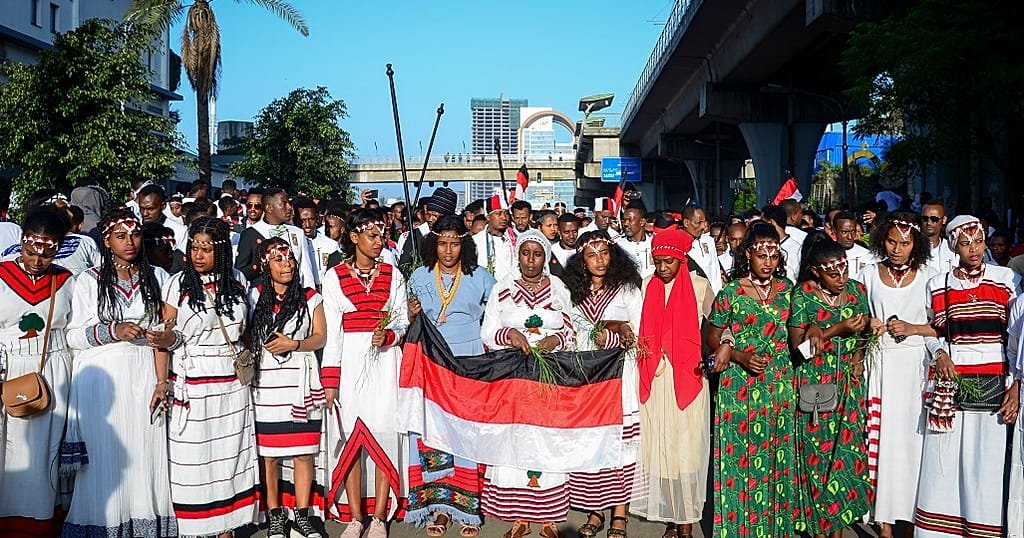
The 2025 Celebration: Hundreds of Thousands Gather at Sacred Sites
The Oromo Aba Geda Union announced the 2025 festival dates on September 18, 2025, describing Irreechaa as one of "thanksgiving, unity, love, and reconciliation." Their clear guidance helped communities prepare with anticipation and care.
Celebrations took place on October 3 at Hora Finfine in Addis Ababa and October 4 at Hora Harsede in Bishoftu. These two days allowed participants across regions to honour the same spirit of gratitude in their local sacred waters.
Deputy Prime Minister Temesgen Tiruneh posted a bilingual message on October 3, 2025, in both Amharic and Afaan Oromo. He described Irreechaa as fostering unity and gratitude, reaching many citizens through his thoughtful words.
Addis Ababa Mayor Adanech Abbiebie publicly wished celebrants well, adding an official note of support that resonated with the festive mood. Her message highlighted how the event brings people together across the capital.
Irreechaa draws hundreds of thousands of participants annually, and 2025 proved no exception. Foreign tourists participated in 2025 wearing traditional Ethiopian and Oromo attire, joining the crowds with visible respect and joy.
Vibrant scenes unfolded at the lakeside with singing, dancing, and cultural performances that lasted well into the evening. The energy reflected both deep reverence and the simple happiness of shared celebration.
The Gadaa System: UNESCO-Recognised Indigenous Democracy
The Gadaa System stands as an indigenous democratic socio-political institution recognised by UNESCO as Intangible Cultural Heritage. It provides a structured framework that has guided Oromo society for centuries with remarkable balance and fairness.
The system operates in 8-year generational cycles, during which leadership transitions occur through elections and the making of new laws. These regular changes keep governance responsive and rooted in collective wisdom.
Irreechaa rituals connect directly to the Gadaa System, as the same leaders who oversee political life also guide spiritual observances. This seamless link shows how governance and faith remain intertwined in Oromo life.
Oral traditions thrive within this framework, including poetry known as geerarsa that recounts history and values. These performances at the festival remind younger generations of their heritage in living, memorable ways.
The Oromo are Ethiopia's largest ethnic group, making up approximately 35-40% of the population. With more than 30 million speakers, Afaan Oromo ranks as the third most widely spoken language in Africa, giving the festival a broad and powerful reach.
Traditional institutions play a central role in organising the festival each year. Their steady guidance ensures that every detail, from the timing of prayers to the sharing of food, honours both ancestors and the present community.
The Gadaa System unfolds through five distinct parties or grades that rotate leadership every eight years, each carrying precise responsibilities from conflict resolution and law-making to spiritual oversight and economic stewardship. One grade might focus on defence while another nurtures community rituals, ensuring power never concentrates in a single group and every generation experiences both authority and humble service. This built-in rhythm of accountability has kept Oromo society remarkably stable across centuries of change.
Its roots trace back to the Borana Oromo highlands, where the system first took shape before spreading through migration and kinship ties to subgroups across Oromia. UNESCO recognised Gadaa precisely because it offers a living model of participatory democracy that values consensus over coercion and peaceful succession over dynastic rule, qualities that still inspire scholars and community leaders today. Younger Oromo generations absorb these lessons at Irreechaa through storytelling circles and mock assemblies, while oral historians known as chroniclers recite the names of past Abba Gadaas and the laws they enacted, keeping the collective memory alive in living voice rather than written archives.
Specific Gadaa ceremonies such as the handover rites and the blessing of new leaders feed directly into Irreechaa, turning the festival into both a spiritual thanksgiving and a civic renewal. Families watch their children learn the five-party cycle through songs and games, ensuring the system remains a practical guide for everyday life instead of a distant relic.
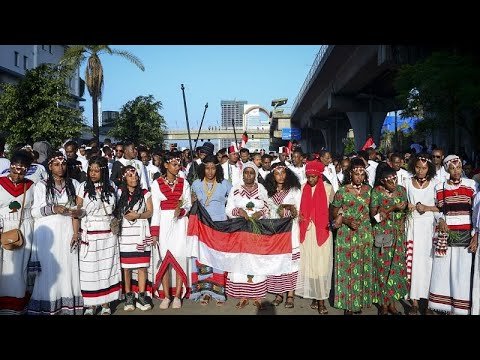
Music, Performance, and Contemporary Expressions
Cultural performances and concerts form a lively part of the festival, blending ancient rhythms with new voices. Crowds move together to songs that carry both joy and reflection across the lakeside grounds.
Oromo artist Joorj Abbuu performed wearing a full jalabia made from the Palestinian flag during his set in Bishoftu. His choice created a striking visual that expressed solidarity with Gaza and Palestine in a deeply personal way.
Joorj Abbuu became notable among Ethiopian artists for this advocacy, and videos and photos of his performance circulated widely online. Many viewers appreciated how he used the festival platform to speak from the heart.
The broader music scene at Irreechaa features traditional Oromo music and dance that blend naturally with modern expressions. Drummers and singers share the stage with younger artists who bring fresh arrangements while keeping the core spirit intact.
The festival serves as a showcase of evolving cultural identity, where elders and youth find common ground through performance. This living exchange keeps traditions vibrant rather than frozen in time.
Traditional instruments such as the krar, whose resonant strings carry longing melodies across the lakeside, the deep-voiced begenna, and the rhythmic shambiko accompany the main performances, their sounds blending with hand drums that echo older pastoral rhythms. At Irreechaa these instruments support heessa praise songs and geerarsa historical ballads, performed by elders who invite the crowd to respond in call-and-response fashion, turning every lakeside clearing into a living archive of Oromo memory and values.
Contemporary artists like Joorj Abbuu share stages with rising voices who fuse these ancient forms with modern beats, while dance troupes in handwoven cotton shawls and silver ornaments demonstrate regional styles that highlight both everyday labour and ceremonial grace. Textile traditions come alive through the bright patterns and beadwork worn by participants, each piece telling stories of lineage and craft passed from mother to daughter.
The result feels much like Senegal’s Festival International de Jazz or Kenya’s Lamu Cultural Festival, where elders and youth meet on equal ground and tradition gains fresh energy without losing its soul. Such blending keeps Irreechaa vibrant for new generations while honouring the ancestors who first sang these songs beside the same waters.
Cultural Significance in Ethiopia's Complex Political Landscape
Irreechaa holds a dual role as both spiritual celebration and platform for identity expression. Participants find space to honour their faith while quietly affirming their place within Ethiopia's diverse nation.
The 2016 Irreechaa saw a tragic stampede and security incident that left lasting memories. Since then, organisers have worked carefully to ensure safety remains a priority at every gathering.
In 2018 the Oromia government urged an apolitical celebration focused on cultural and spiritual meaning. This guidance helped the festival remain a space for unity rather than division.
Africanews published a feature on October 6, 2025, titled "Culture and identity: Oromo Festival reflects Ethiopia's complex shifts." The article captured how Irreechaa continues to mirror the country's ongoing journey.
The festival promotes peace, social cohesion, and intergenerational solidarity within Oromo communities and beyond. Its emphasis on nagaa reaches across ethnic lines, inviting others to share in the spirit of reconciliation.
The event draws Oromo diaspora from around the world, including celebrations in the US, Europe, and Australia. These gatherings abroad strengthen ties to home while spreading awareness of Oromo heritage.
Looking Ahead: Irreechaa and Oromo Cultural Heritage
The 2026 celebration is expected in late September or early October, following the established pattern that has guided the festival for generations. Communities already look forward to continuing the cycle of gratitude.
Irreechaa continues to grow as a cultural tourism draw that promotes peace and heritage. Visit Oromia and Ethiopian Tourism actively promote the event, welcoming visitors who come with respect and curiosity.
The festival holds deep significance for African cultural heritage preservation as a whole. Its survival and adaptation offer lessons for communities across the continent seeking to protect their own traditions.
Diaspora celebrations in the US, Europe, and Australia keep the spirit alive far from Ethiopia's lakes. Families gather to sing the same hymns and share the same foods, passing stories to children born abroad.
Through these efforts, the festival plays a vital role in maintaining Oromo language and traditions for younger generations. Language classes and cultural workshops often accompany the main events, ensuring continuity.
Irreechaa stands alongside other African thanksgiving and harvest festivals across the continent, each expressing gratitude in its own way. Together they form a rich tapestry of shared values that honour the land and its people.
Diaspora communities now host their own Irreechaa gatherings in Minneapolis, Toronto, London and Melbourne, where families recreate lakeside rituals beside rivers or community halls. These events mirror the Ethiopian celebrations through shared hymns and white robes yet adapt to local seasons and spaces, often incorporating host-country ingredients into the communal feasts while maintaining the same prayers for nagaa.
The economic ripple reaches Bishoftu and Addis Ababa through packed guesthouses, bustling food stalls and transport cooperatives that serve the hundreds of thousands who arrive each year. Social media platforms carry live streams and short videos to Oromo viewers worldwide, turning the festival into a global conversation that strengthens language use among young people who might otherwise drift from Afaan Oromo.
With such momentum, many hope Irreechaa itself will one day receive broader UNESCO recognition, building on the Gadaa listing to protect the full living heritage of thanksgiving, music and communal care. Through these efforts the festival continues to offer lessons in resilience that resonate far beyond Ethiopia’s lakes.
By Amara Diop, Staff Writer
This article was produced with AI-assisted research and editorial support. Reporting is based on sources cited in the article.
What's Your Reaction?
 Like
0
Like
0
 Dislike
0
Dislike
0
 Love
0
Love
0
 Funny
0
Funny
0
 Wow
0
Wow
0
 Sad
0
Sad
0
 Angry
0
Angry
0

West Africa/Sahel Correspondent at Global1.News. Dakar-based journalist covering politics, security, climate, and development across Francophone and Anglophone West Africa. Tells the stories of a region undergoing profound transformation.










Comments (0)