
Russia Duma Bill Targets Exiled Critics' Assets
Russia's State Duma is preparing to fast-track expanded legislation that would cut exiled anti-war Russians off from online banking, real estate transactions, and consular services. The measure builds on earlier restrictions and formalizes the government's reach against critics living abroad.
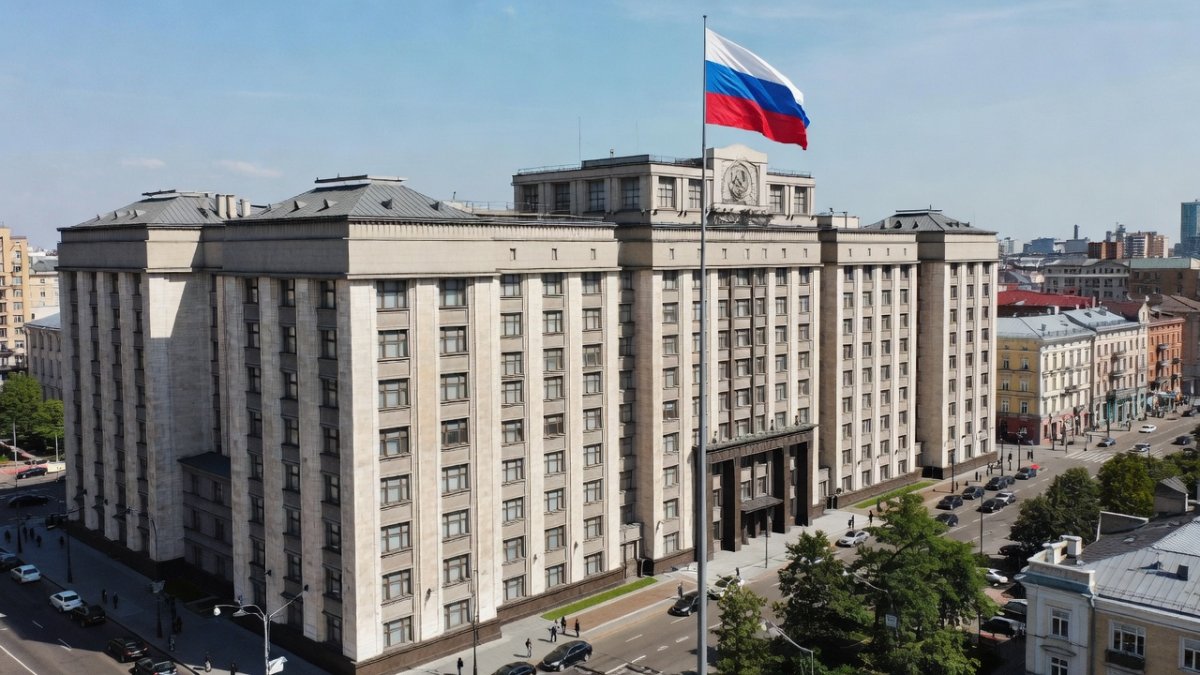
Russia Duma Bill Targets Exiled Critics' Assets
Moscow, Russia — According to the independent outlet Mozhem Obyasnit, lawmakers plan to advance the updated bill through second reading on Wednesday and a final vote on Thursday before the current convocation ends next Monday. The legislation would apply to individuals convicted in absentia of discrediting the Russian military, participating in undesirable organizations, holding foreign-agent status, or calling for sanctions or separatism. If passed by the Federation Council and signed by President Putin, the provisions would take effect immediately upon enactment.
Legislative Timeline and Fast-Track Process
The bill represents an expansion of a milder version that passed its first reading last December. That earlier draft already included asset freezes and denial of consular services. The current version adds new layers of financial isolation and accelerates the timeline for implementation.
Under Russian procedural rules, fast-track legislation in the Duma bypasses standard committee scrutiny when designated a priority by the presidential administration, allowing readings to collapse into a single week. This mechanism has been used repeatedly since 2022 to enact security-related statutes with minimal debate, reflecting the centralized control exerted over parliamentary schedules.
Parliamentary procedures allow the measure to move quickly through remaining readings this week. Observers note that the compressed schedule reflects the Kremlin’s priority to formalize restrictions on dissidents before the convocation concludes.
Targets Identified in the Legislation
The measure specifically names categories of individuals already subject to in-absentia convictions. These include journalists, activists, and former officials designated as foreign agents or members of undesirable organizations. The law also covers those accused of separatism or public calls for sanctions against Russia.
Among the journalists affected are former staff of Novaya Gazeta and Meduza, many of whom fled after receiving foreign-agent designations or charges related to military discreditation. Activists linked to the Anti-Corruption Foundation face similar exposure, as do individuals convicted for supporting sanctions or separatism, extending the law’s reach to a broad spectrum of opposition figures already tried remotely.
Independent outlet Mozhem Obyasnit reported that the provisions apply regardless of the individual’s current location outside Russia. Courts have already issued numerous fines against such figures; the new bill formalizes mechanisms to enforce those penalties through banking and property channels.
Restrictions on Banking and Financial Access
Banks would be prohibited from granting mobile-app or online banking access to covered individuals. This restriction extends to routine transactions and account management, effectively isolating targets from digital financial systems.
The human consequences are immediate for those managing mortgages on Russian properties from abroad or transferring funds to support relatives still inside the country. Legal bills arising from in-absentia proceedings become harder to settle when accounts are inaccessible, forcing exiles to rely on intermediaries who themselves risk secondary liability under the same statutes.
Funds already frozen under existing orders could be seized to cover legal costs, court-ordered damages, defamation awards, or support payments to family members remaining in Russia. The provisions create a direct pipeline from frozen assets to state or private claimants.
Property Transactions and the June 2026 Measure
Real-estate transactions would be blocked for those falling under the bill’s criteria. This prohibition prevents the sale, transfer, or mortgage of property even when the owner resides abroad.
The legislation follows a separate law signed by President Putin last month that takes effect in September. That June 2026 property confiscation measure authorizes seizure of assets belonging to Russians abroad accused of acting against Russia’s interests. The current bill complements this framework by adding service-level restrictions.
Consular Services and Cross-Border Effects
Denial of consular services forms another core element carried over from the December draft. Affected individuals would lose access to standard diplomatic assistance, including document issuance and legal support at Russian missions.
Since the full-scale invasion began, between 800,000 and one million Russians have left the country, many of them professionals whose departure has accelerated a measurable brain drain in journalism, technology, and academia. The new restrictions compound this exodus by severing practical ties to Russia, making return or even remote management of affairs increasingly untenable.
Analysts suggest these combined restrictions could complicate daily life for exiled journalists and activists who still maintain family or property ties inside Russia. The measures extend domestic legal actions into international contexts without requiring physical presence.
Broader Implications for Dissidents
The package formalizes practices that courts have applied piecemeal through fines and asset freezes. By codifying these steps, the legislation reduces ambiguity for banks and notaries while increasing pressure on critics living outside Russia.
European institutions have already flagged the bill as inconsistent with Council of Europe human-rights standards, particularly provisions that impose collective financial penalties without due-process guarantees for individuals beyond Russian jurisdiction. Such concerns echo earlier critiques of extraterritorial enforcement mechanisms deployed against political opponents.
According to the news outlet, the bill’s passage would mark a significant expansion of the state’s extraterritorial reach. It signals continued efforts to limit the operational capacity of opposition voices regardless of their physical location.
By Irina Volkov, Staff WriterThis article was produced with AI-assisted research and editorial support. Reporting is based on sources cited in the article.
What's Your Reaction?
 Like
0
Like
0
 Dislike
0
Dislike
0
 Love
0
Love
0
 Funny
0
Funny
0
 Wow
0
Wow
0
 Sad
0
Sad
0
 Angry
0
Angry
0

Russia/Eastern Europe Correspondent at Global1.News. Covering Russian politics, energy, security, and the shifting dynamics of the post-Soviet space. Provides clear-eyed analysis on one of the world's most opaque regions.













Comments (0)