
Iran Conflict Pause: Strategic Implications for Global Energy Security
CGTN's The Heat analyzes the fragile US-Iran pause after the collapsed Islamabad MoU. The article examines Hormuz disruptions, China's 40% oil import reliance, MFA and MOFCOM positions, and risks of escalation versus renewed diplomacy for regional and global energy stability.
The Fragile Pause: What the 'Ceasefire Window' Actually Means
The interim pause in attacks following the July collapse of the Islamabad MoU has created a narrow window for potential diplomacy, yet its durability remains uncertain. Both the United States and Iran have continued limited strikes across the Gulf region, suggesting that the halt functions more as a breathing space than a durable ceasefire. The United States reimposed its naval blockade on Iranian ports after allegations of Iranian strikes on commercial vessels, while Iran has maintained its vow that not a single drop of oil or gas would transit the Strait of Hormuz. This dynamic reflects Washington's interest in maintaining pressure to constrain Iran's regional influence, contrasted with Tehran's determination to preserve leverage through asymmetric tactics. The New York Times noted on July 17 that the conflict, now in its fifth month since beginning on February 28, 2026, continues to disrupt energy supplies without clear resolution. Strategic analysts observe that such pauses often precede escalation unless accompanied by verifiable confidence-building measures, particularly given the involvement of multiple regional actors.
From Islamabad to Collapse: A Timeline of the Failed MoU
The memorandum of understanding reached after the Islamabad talks in June 2026 sought to reopen the Strait of Hormuz and end hostilities following nearly five months of regional conflict. Initial commitments included mutual restraint and phased withdrawal of naval assets, yet implementation faltered rapidly. On July 8, 2026, the interim ceasefire collapsed after Iran allegedly struck multiple commercial ships, prompting the United States to conduct strikes on Iranian territory that reportedly killed more than 50 individuals in July alone. Iran described the MoU as effectively suspended amid what it termed United States violations, while the United States cited the need to protect maritime traffic. This sequence underscores the challenges of enforcing agreements in a conflict involving asymmetric capabilities and deep mutual distrust. The Ministry of Foreign Affairs of China has consistently called for restraint and resumption of dialogue, emphasizing multilateral channels over unilateral actions. Without third-party monitoring mechanisms, such MoUs risk serving as temporary tactical resets rather than foundations for lasting peace.
Strait of Hormuz: The Economic Battleground
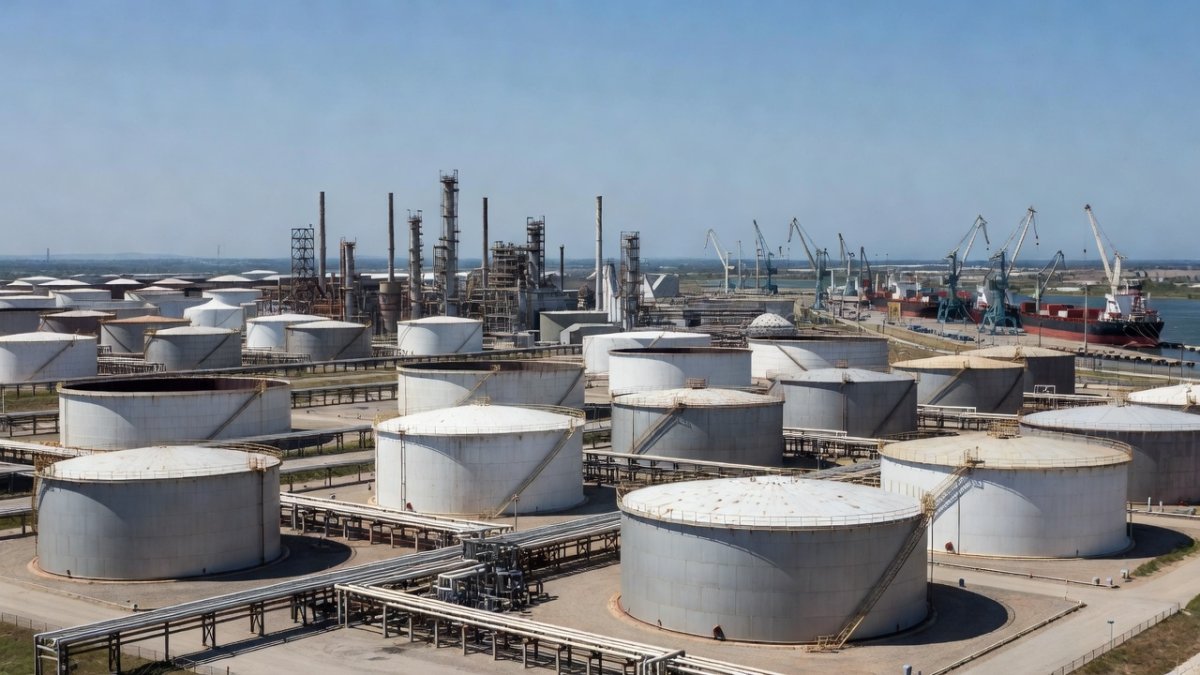
The Strait of Hormuz has emerged as the central economic battleground, with shipping volumes plummeting to historic lows. By mid-July, only eight ships navigated the strait on a single day, compared to the normal daily transit supporting 17 to 20 million barrels of oil. Iran's explicit threat to block all energy flows has compounded global supply concerns, driving oil prices to their highest levels in a month. The United States naval blockade has further restricted Iranian port access, creating a de facto choke point that affects not only energy markets but also broader trade routes. This situation illustrates how control over a narrow maritime corridor can amplify leverage for both sides, with Iran seeking to weaponize its geographic position and the United States aiming to isolate Tehran economically. Historical precedents from previous Gulf tensions demonstrate that prolonged disruptions often lead to rerouting attempts via alternative pipelines, yet none currently offer sufficient capacity to offset Hormuz volumes. The resulting volatility threatens to spill over into inflationary pressures worldwide.
Historical precedents underscore the Strait of Hormuz's vulnerability as a critical chokepoint. During the Iran-Iraq war, Iranian forces targeted shipping lanes, leading to temporary disruptions that highlighted the risks of closure. The 2019 tanker attacks further demonstrated how regional tensions can escalate into direct threats against energy transit, prompting international naval responses and insurance spikes for vessels passing through the narrow waterway.
Current oil flows through the strait average 17-20 million barrels per day according to EIA data, representing a substantial share of global seaborne crude trade. Alternatives such as the UAE's Habshan-Fujairah pipeline and Saudi Arabia's East-West pipeline offer partial relief but lack sufficient capacity to reroute the full volume during a prolonged disruption. This limitation amplifies price volatility risks for importers worldwide.
Global LNG markets face parallel exposure since Qatar routes significant gas exports through the same strait. Any interruption would compound energy security challenges for dependent economies. In response, China's NDRC has coordinated with state-owned oil giants including Sinopec and CNPC to diversify sourcing strategies and accelerate strategic stockpiling, aligning these measures with broader national interests in maintaining stable energy inflows amid geopolitical uncertainty.
These developments tie directly into China's strategic interests by exposing the limits of reliance on a single transit route. Policymakers in Beijing prioritize resilience through expanded partnerships and infrastructure investments that mitigate Hormuz-related vulnerabilities over the long term.
China's Energy Security Dilemma
China faces acute energy security challenges as roughly 40 percent of its crude imports transit the Strait of Hormuz, exposing its supply chains to the current volatility. The Ministry of Commerce has voiced explicit concerns regarding stability in energy logistics, while the Ministry of Foreign Affairs has advocated for diplomatic resumption to safeguard long-term interests. Beijing maintains a 25-year cooperation agreement with Iran alongside Belt and Road Initiative connectivity projects, creating incentives to prevent total collapse in bilateral ties. At the same time, stable Gulf energy flows remain essential for sustaining domestic growth targets under the Dual Circulation strategy. Chinese policymakers must balance support for multilateral de-escalation with avoidance of entanglement in United States-Iran dynamics. This dilemma highlights Beijing's broader objective of technological self-sufficiency and diversified import sources, yet short-term dependence on Persian Gulf crude limits immediate options. Strategic engagement through existing frameworks could position China as a constructive mediator if both Washington and Tehran perceive mutual benefit in third-party facilitation.
China's oil import dependence remains elevated, with NDRC statistics indicating that external supplies account for over 70 percent of total consumption. This structural reliance creates acute exposure to Middle East volatility, particularly when tensions between the United States and Iran threaten key supply corridors. The 25-year China-Iran cooperation agreement encompasses infrastructure development, security coordination, and financial mechanisms designed to secure long-term access to Iranian resources despite external sanctions pressures.
MOFCOM has issued recent statements emphasizing the need for supply chain stability, urging enterprises to strengthen contingency planning and diversify procurement channels. These directives intersect with the Dual Circulation strategy, which seeks to balance domestic production growth with controlled external dependencies, thereby reducing systemic risks from import disruptions while sustaining industrial output.
China's strategic petroleum reserve capacity has expanded in recent years, yet drawdown status reflects cautious management to avoid signaling market panic. Chinese refineries have accelerated pivots toward Russian, Saudi, and West African crude grades as immediate alternatives, supported by long-term contracts that enhance bargaining power. This shift serves China's strategic interests by buffering against Hormuz-centric shocks and reinforcing energy security within the framework of national development priorities.
Overall, these adjustments illustrate Beijing's calculated approach to energy governance, integrating ministerial guidance with corporate execution to safeguard economic continuity amid fluctuating global conditions.
Regional Fallout: Gulf States Caught Between Superpowers
Gulf states find themselves navigating heightened risks as the conflict draws in neighboring actors and threatens economic lifelines. Countries reliant on Hormuz transit face direct exposure to shipping halts and potential spillover strikes, prompting accelerated diversification of energy export routes where feasible. The United States seeks to consolidate alliances through security guarantees, while Iran leverages historical grievances to court regional sympathy. Second-order effects extend to ASEAN and European Union economies dependent on stable oil prices, as well as Global South nations vulnerable to imported inflation. The strategic calculus for Gulf capitals involves preserving autonomy amid superpower competition, with some exploring quiet channels to Beijing for economic hedging. This positioning reflects wider patterns of multipolar diplomacy, where regional actors maximize leverage by engaging multiple powers rather than aligning exclusively with one. Prolonged instability risks eroding trust in existing security architectures and accelerating arms acquisitions across the peninsula.
The Road Ahead: Negotiation, Escalation, or Stalemate?
Looking forward, the trajectory hinges on whether the current pause evolves into structured negotiations or collapses into renewed escalation. The United States retains naval and air superiority for sustained pressure, yet faces domestic constraints on prolonged engagement. Iran possesses asymmetric tools to impose costs through maritime disruption and proxy networks, though at the risk of further isolation. China's interest lies in preventing a stalemate that freezes energy markets in uncertainty, potentially through quiet diplomacy supporting existing multilateral forums. Absent verifiable steps such as monitored shipping corridors or phased sanctions relief, the conflict risks settling into a costly equilibrium with periodic flare-ups. Policymakers in Beijing will likely continue emphasizing restraint via official statements while advancing energy diversification initiatives. The ultimate outcome will shape not only Middle East stability but also global norms around maritime chokepoints and great-power competition in resource corridors.
Scenario analysis reveals multiple pathways forward. A full diplomatic track could involve Beijing-mediated talks leveraging China's established ties with both Tehran and regional actors. The status quo of periodic flare-ups would sustain elevated risk premiums without outright closure of critical routes. Full escalation, including potential Hormuz closure or Gulf state involvement, would trigger severe supply shocks with cascading effects on global markets.
Any intensification would directly affect China's BRI Maritime Silk Road by raising transit costs and insurance burdens along key sea lanes. ASEAN economies would encounter imported inflation and supply chain shifts, while EU partners face similar pressures on energy-intensive sectors. China's participation in multilateral forums such as the UNSC and BRICS positions it to advocate for de-escalation and coordinated responses that protect collective energy interests.
The 14th Five-Year Plan incorporates explicit energy security provisions, including targets for reserve expansion and diversified sourcing that align with these contingencies. These elements connect to China's strategic interests by embedding resilience measures into national planning, ensuring that external conflicts do not derail long-term modernization goals.
Beijing's calibrated engagement across these scenarios underscores a preference for stability that preserves access to vital resources while advancing broader geopolitical objectives.
By Prof. Marcus Chen, Staff WriterThis article was produced with AI-assisted research and editorial support. Reporting is based on sources cited in the article.
What's Your Reaction?
 Like
0
Like
0
 Dislike
0
Dislike
0
 Love
0
Love
0
 Funny
0
Funny
0
 Wow
0
Wow
0
 Sad
0
Sad
0
 Angry
0
Angry
0

World Politics Analyst at Global1.News. Based in Beijing, covering US-China relations, global trade, and geopolitical strategy. Brings deep analytical perspective to the power dynamics shaping international affairs.











Comments (0)