
US and Iran Exchange Strikes as Fragile Ceasefire Unravels
In a recent BBC News report, the United States and Iran have traded fresh military strikes in and around the Strait of Hormuz, each side accusing the other of violating the fragile ceasefire agreement signed just eleven days ago. US and Iran Exchange Strikes as Fragile Ceasefire Unravels Washington / Tehran – 28 June 2026 — The situation in the Strait of Hormuz has escalated sh
In a recent BBC News report, the United States and Iran have traded fresh military strikes in and around the Strait of Hormuz, each side accusing the other of violating the fragile ceasefire agreement signed just eleven days ago.
US and Iran Exchange Strikes as Fragile Ceasefire Unravels
Washington / Tehran – 28 June 2026 — The situation in the Strait of Hormuz has escalated sharply this week following a series of tit-for-tat military actions that directly challenge the 14-point MoU signed on 17 June 2026. Both Washington and Tehran have issued statements framing their responses as defensive measures against violations by the opposing side. CENTCOM has emphasized that commercial vessels continue to operate in the Strait despite the incidents, while Iranian officials have warned that future navigation arrangements will be enforced more strictly. The exchange began on Saturday when an Iranian one-way attack drone struck the Panama-flagged tanker MT Kiku, prompting an immediate US response involving fighter jet strikes on ten Iranian military targets. Iran then retaliated with ballistic missiles and drones aimed at US-linked facilities in Kuwait and Bahrain. This sequence follows a similar incident just two days earlier involving the Singapore-flagged MV Ever Lovely, highlighting a pattern of rapid escalation that analysts describe as managed escalation rather than full-scale war. The 60-day safe passage commitment under the MoU now faces its most serious test yet.
The Drone Attack That Broke the Truce
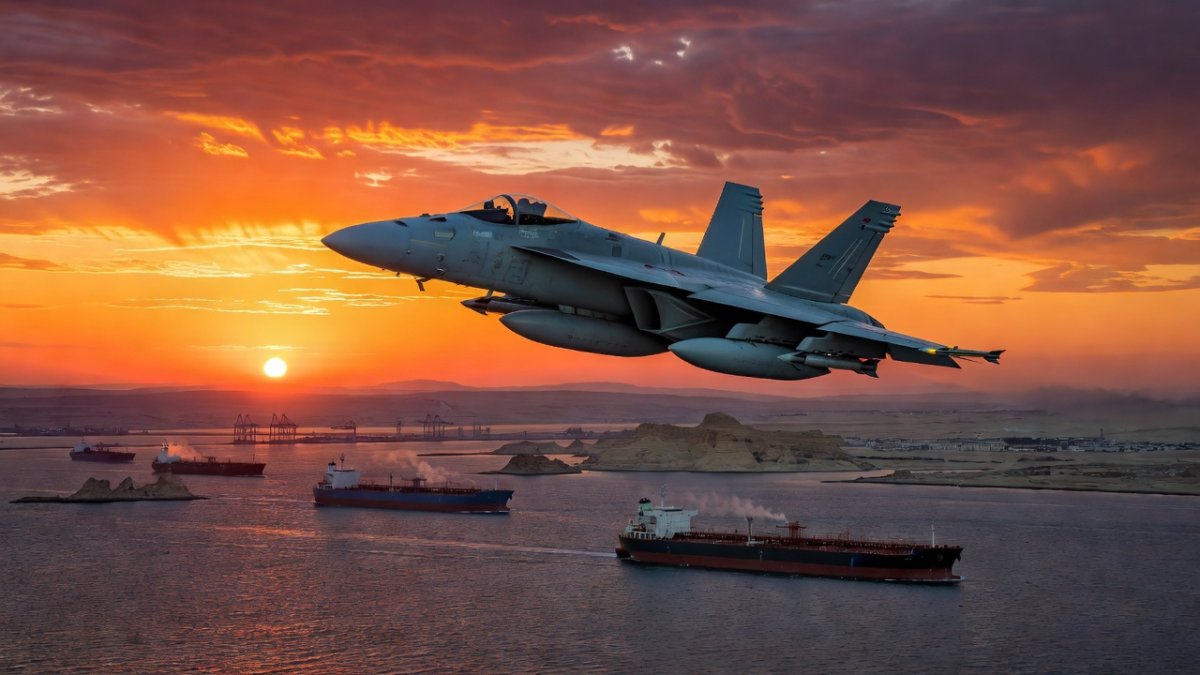
On Saturday, June 27, 2026, an Iranian one-way attack drone struck the Panama-flagged tanker MT Kiku while it was transiting the Strait of Hormuz. CENTCOM immediately characterized the strike as a clear violation of the ceasefire, stating that Iran had been given a chance to honor the agreement but chose not to when its forces launched the drone. In response, US fighter jets conducted strikes against ten Iranian military targets located at multiple sites in and near the Strait of Hormuz. These targets included military equipment, communication systems, air defense sites, and drone storage facilities. CENTCOM described the action as a direct and proportionate reply to the attack on commercial shipping. The strikes were carried out swiftly to deter further incidents, and officials noted that commercial traffic has not been halted despite the heightened tensions. This event occurred less than two days after a previous Iranian drone strike on another vessel, underscoring the rapid pace of developments in the region this week.
The IRGC countered that the United States had attacked five coastal posts under the pretext of responding to the IRGC Navy confronting the offending ship. Iranian statements emphasized that the cargo ship was using an unauthorised route through the Gulf waterway, which they argued justified their actions under existing navigation arrangements. The IRGC further warned that from now on, violating ships will be dealt with more forcefully than in the past. Any potential enemy aggression, according to the IRGC, will have a crushing response. These claims directly challenge the US narrative and place responsibility for the breakdown on American forces. The Iranian Foreign Ministry also condemned the subsequent US strikes as brutal attacks that violate the ceasefire, asserting that the United States does not place the slightest value or credibility on its commitments. This mutual exchange of accusations has intensified diplomatic friction in recent days.
Retaliation: Iran Strikes US Bases in Kuwait and Bahrain
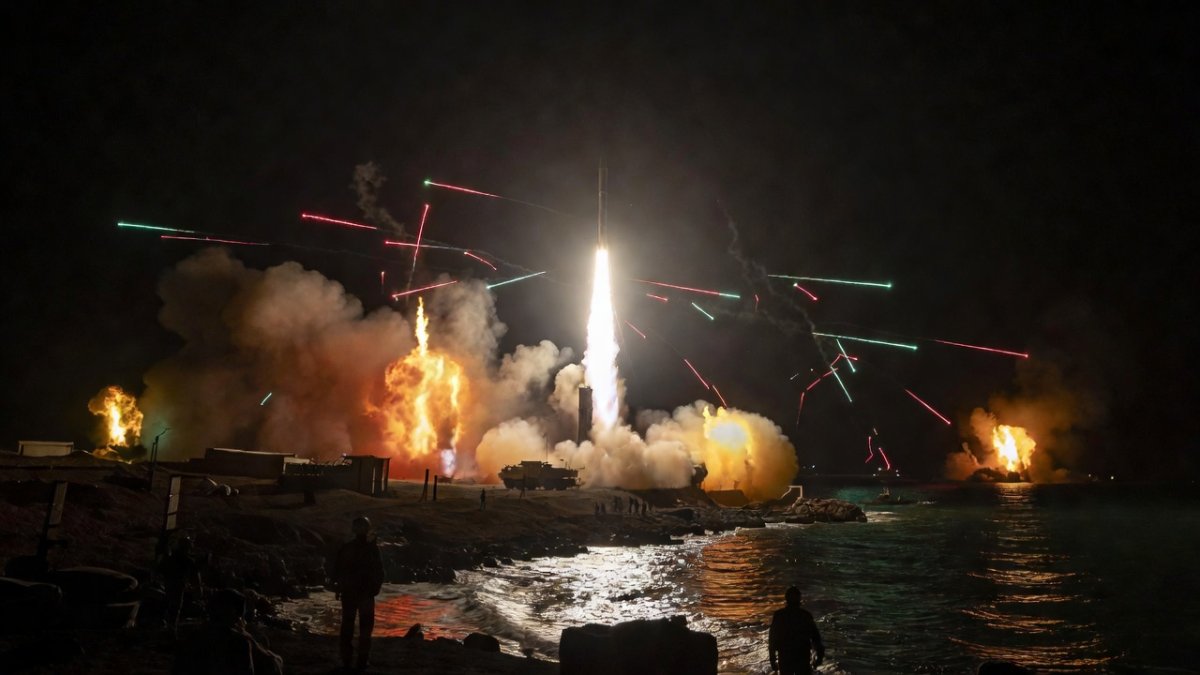
Following the US strikes on Iranian targets, the IRGC launched ballistic missiles and drones at eight key pieces of infrastructure at Ali al-Salem base in Kuwait and the Fifth Naval Fleet in Port Salman, Bahrain. The IRGC presented these actions as a necessary retaliation to restore deterrence after what it described as unprovoked American aggression. A US official told Reuters that there were no US casualties or major damage to US facilities as a result of the Iranian strikes. Kuwait and Bahrain both activated their air defense systems in response to the incoming threats. The Kuwaiti Armed Forces stated they were confronting hostile missile and drone attacks, while Bahrain's Ministry of Interior urged citizens to remain calm and head to the nearest safe place. These developments have placed additional pressure on the Gulf states, which find themselves positioned between the two confronting powers.
The activation of air defenses in Kuwait and Bahrain illustrates the regional ripple effects of the US-Iran confrontation. Although the IRGC claimed destruction of key infrastructure, the absence of reported casualties or significant damage suggests the strikes may have been calibrated to send a message without triggering broader escalation. CENTCOM has continued to affirm that commercial vessels are operating normally in the Strait of Hormuz, indicating that the immediate impact on shipping remains limited. Iranian statements, however, have stressed that any future violations will be met with stronger measures. The involvement of these two Gulf nations highlights how the conflict extends beyond direct US-Iran exchanges and affects neighboring countries that host US military assets.
Trump's Warning: "Complete the Job"
President Trump responded to the latest developments via Truth Social, stating that there may come a point when we are no longer able to be reasonable and will be forced to militarily complete the job. He added that if that happens, the Islamic Republic of Iran will no longer exist. Vice President JD Vance reinforced this position by stating that violence will be met with violence. These remarks reflect a hardening of the US stance following the Iranian retaliation against bases in Kuwait and Bahrain. The language echoes previous maximum pressure approaches and signals that further Iranian actions could lead to significantly expanded military operations.
The rhetoric from Washington has drawn attention to the potential trajectory of the crisis. While the current exchanges have remained limited in scope, the explicit threat to end the Islamic Republic raises the stakes considerably. CENTCOM has maintained that its responses are measured and aimed at restoring deterrence rather than seeking regime change. Iranian officials have interpreted the statements as evidence that the United States is unwilling to uphold the commitments made in the 14-point MoU. The combination of military strikes and strong public warnings creates a volatile environment where miscalculation remains a serious risk.
The Two-Ship Sequence: Escalation in the Gulf
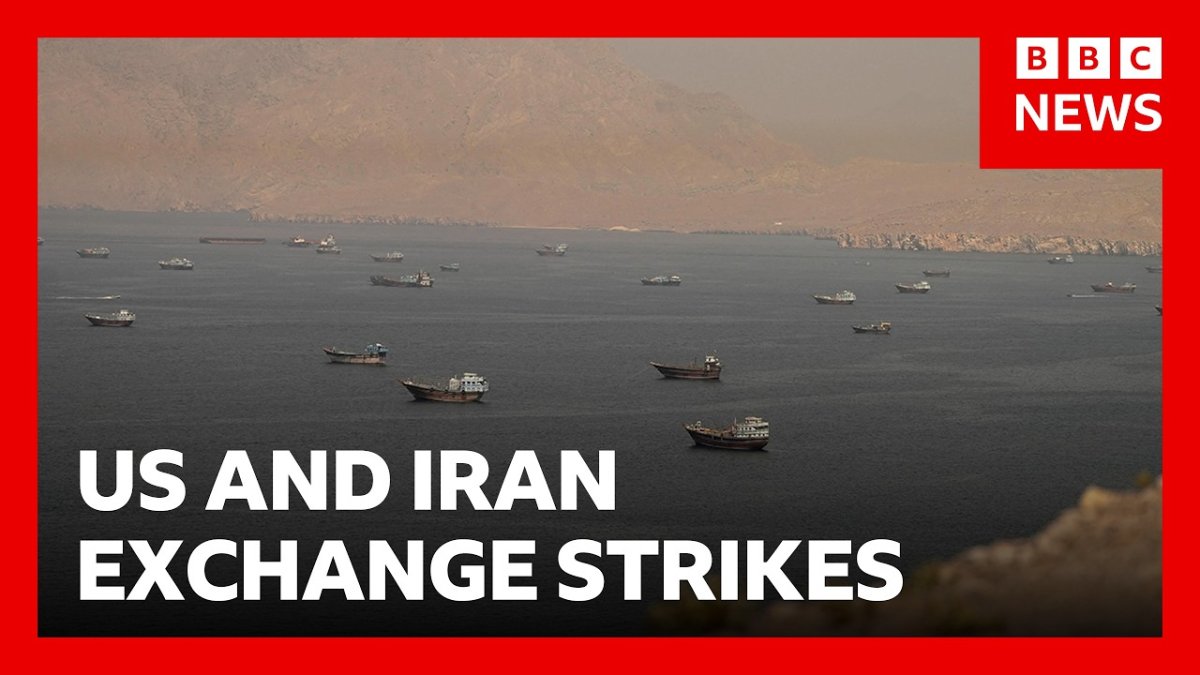
This latest exchange represents the second round of strikes in two days. On June 25, an Iranian drone struck the Singapore-flagged MV Ever Lovely, prompting a US retaliatory response less than a day later. CENTCOM described its action as a powerful response to unwarranted aggression against commercial shipping. Iran maintained that the vessel was using an unauthorised route, consistent with its position on the MT Kiku incident. The rapid succession of events demonstrates a clear pattern of tit-for-tat actions that began shortly after the signing of the 14-point MoU on 17 June 2026. Each side continues to accuse the other of initiating the violations.
CENTCOM has stated that the unwarranted aggression against commercial shipping by Iranian forces clearly violated the ceasefire. In turn, the Iranian Foreign Ministry issued a statement on Saturday blaming the treaty-breaking US regime for the breakdown. The involvement of two separate commercial vessels within such a short period has heightened concerns about the safety of navigation through the Strait of Hormuz. Despite these incidents, CENTCOM reports that commercial traffic has not ceased, suggesting that both sides are still seeking to avoid a complete shutdown of the waterway.
The Fragile MoU: A 60-Day Test
The 14-point MoU signed on 17 June 2026 established Iran's commitment to use its best efforts for the safe passage of commercial vessels with no charge for 60 days. This agreement formed the diplomatic framework that ended the previous round of US-Israeli hostilities with Iran. The recent strikes on the MT Kiku and MV Ever Lovely directly test the viability of these commitments. Iranian officials have argued that the vessels in question deviated from authorized routes, while US statements insist the attacks constituted clear violations of the truce.
The MoU also tied together broader regional issues, including arrangements involving Lebanon and Hezbollah. Iran's ambassador to the UN in Geneva has warned that repeated violations could derail broader diplomatic progress. The framework signed days earlier between Israel and Lebanon now faces additional strain as the Hormuz incidents continue. Both sides have referenced the MoU in their public statements, yet their interpretations of its terms remain sharply divergent.
Analysis: Managed Escalation or Path Back to War?
Analysts have framed the current situation as managed escalation, noting that both sides are conducting strikes while avoiding actions that would trigger full confrontation. No US casualties have been reported, and IRGC claims of destroying infrastructure appear to be posturing given the lack of confirmed damage. CENTCOM has confirmed that commercial vessels continue to operate in the Strait, which suggests that neither party is prepared to risk a complete closure of this critical waterway at present.
The risks remain significant, however. Trump's warning about completing the job introduces uncertainty about future US responses. Energy markets could face disruption if shipping through the Strait of Hormuz is further affected. Russia and China are expected to respond diplomatically, while the 60-day clock on the MoU continues to run. The framework's survival depends on whether both capitals can restrain further escalation in the coming days.
What Comes Next
The next hours and days will be critical in determining whether the ceasefire can be salvaged. If both sides stand down, the 14-point MoU may still hold. Another attack on a commercial vessel would likely restart the cycle of retaliation. Trump's explicit warning about completing the job has raised the stakes, leaving the choice between renewed diplomacy and further military action in the hands of decision-makers in Washington and Tehran. Observers will watch closely for any signs of de-escalation or additional strikes.
By Irina Volkov, Staff Writer
This article was produced with AI-assisted research and editorial support. Reporting is based on sources cited in the article.
What's Your Reaction?
 Like
0
Like
0
 Dislike
0
Dislike
0
 Love
0
Love
0
 Funny
0
Funny
0
 Wow
0
Wow
0
 Sad
0
Sad
0
 Angry
0
Angry
0

Russia/Eastern Europe Correspondent at Global1.News. Covering Russian politics, energy, security, and the shifting dynamics of the post-Soviet space. Provides clear-eyed analysis on one of the world's most opaque regions.













Comments (0)