
Pratt & Whitney Closes BTL Plant in Nahariya — 450 Jobs Lost
Pratt & Whitney has confirmed the closure of its BTL plant in Nahariya, bringing an end to more than five decades of precision manufacturing in Israel's Western Galilee. Layoff letters began reaching employees this week, with most operations set to cease before August. The decision marks the conclusion of a prolonged struggle involving the Histadrut labor federation, Knesset in
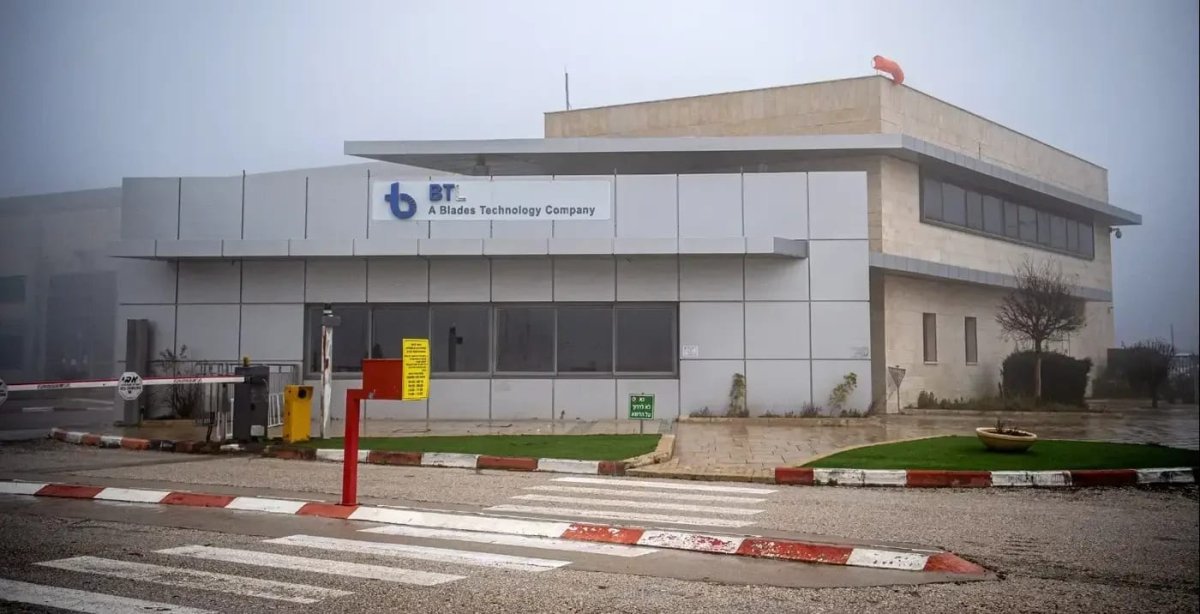
Pratt & Whitney has confirmed the closure of its BTL plant in Nahariya, bringing an end to more than five decades of precision manufacturing in Israel's Western Galilee. Layoff letters began reaching employees this week, with most operations set to cease before August. The decision marks the conclusion of a prolonged struggle involving the Histadrut labor federation, Knesset interventions, and repeated appeals to former ministers of economy and defense — efforts that ultimately could not overcome the corporate calculus of one of the world's largest aerospace firms.
A Factory Born From Embargo
The origins of the BTL plant trace directly to the French arms embargo imposed on Israel after the Six-Day War. In 1968 Stef Wertheimer established the facility in Nahariya to produce critical components that could no longer be imported from traditional suppliers. This move reflected a broader national imperative to develop indigenous industrial capacity in the face of external pressure, positioning the Western Galilee as an unexpected hub for advanced manufacturing at a time when the region lacked significant infrastructure.
Wertheimer's vision emphasized self-reliance and technological independence, principles that shaped the plant's early operations. The factory quickly became known for precision work in metal components essential to aerospace applications. Over the following decades it grew steadily, contributing to Israel's emerging reputation in high-tech industry while providing stable employment in a border area vulnerable to regional tensions.
Pratt & Whitney acquired the plant in 2014 from the Wertheimer family, which had earlier sold its Iscar metalworking business to Warren Buffett for six billion dollars. The acquisition integrated BTL into a global supply chain dominated by one of the largest aerospace engine manufacturers. At that stage the facility employed hundreds of skilled workers whose expertise had been honed across generations in the Galilee setting.
The location roughly ten kilometers from the Lebanon border added a layer of strategic sensitivity from the outset. Successive Israeli governments viewed such industrial outposts as anchors for regional development and security, even as global corporations evaluated them primarily through cost and efficiency metrics. The plant's history therefore embodies both national resilience and the limits of local control once ownership passed to international hands.
Four Years of Resistance
Resistance to the closure began more than four years ago when Pratt & Whitney first signaled its intention to consolidate operations. The Histadrut labor federation organized repeated strikes and public campaigns aimed at preserving the jobs and the industrial know-how concentrated in Nahariya. Knesset committees held multiple hearings where workers, local officials, and industry representatives presented arguments for continued production at the site.
Former ministers of economy and defense were drawn into the discussions at various points, attempting to broker arrangements that might keep the facility viable. These interventions included offers of government support and appeals to the company's long-term interests in the Israeli market. Despite such efforts, corporate planners ultimately prioritized global restructuring over local considerations.
In early 2025 negotiators secured a one-year extension that was later stretched to eighteen months, providing temporary breathing room for employees and their families. During this period the Histadrut continued to press for alternatives, including partial ownership models or technology transfer agreements. The additional time allowed some workers to explore retraining options, though many remained uncertain about future prospects in the region.
One senior official involved in the talks observed that it is impossible to force a giant like Pratt & Whitney to operate the plant against its will. This assessment underscored the asymmetry between a multinational corporation and even a determined national labor movement backed by parliamentary pressure. The four-year campaign highlighted both the strength of organized resistance and the structural challenges facing industrial policy in small economies.
The Human Toll in Nahariya
Layoff letters arriving this week have created immediate uncertainty for roughly 450 of the plant's 900 employees. Many of these workers have spent their entire careers at the facility, acquiring specialized skills in precision machining that are not easily transferable to other local employers. Families in Nahariya now face difficult decisions about relocation, retraining, or early retirement in an area where alternative high-skill positions remain limited.
The social fabric of the Western Galilee community has been strained by the prolonged uncertainty. Schools, local businesses, and municipal services that depend on steady wages from the plant are preparing for reduced economic activity. Workers describe a sense of betrayal after years of assurances that the facility would remain operational under the new ownership.
Community leaders have organized support networks to assist those affected, including counseling services and job fairs. Yet the scale of the layoffs means that even successful placement efforts will leave a significant portion of the workforce without comparable employment in the immediate future. The human dimension extends beyond individual households to the broader sense of economic security in a border region already navigating security challenges.
Local residents note that the plant represented more than a workplace; it symbolized decades of industrial achievement in a part of the country often overshadowed by central Israel. The closure therefore carries emotional weight that compounds the financial hardship for long-term employees who helped build the facility's reputation for quality.
What Remains: Tefen and Two Departments
Negotiations ultimately preserved two departments at the Nahariya site, allowing a limited continuation of certain specialized functions. Approximately 300 employees will transfer to the company's Tefen facility further inland, where operations are expected to absorb some of the production capacity. This partial relocation represents the most concrete outcome of the extended talks between management, the Histadrut, and government representatives.
The decision to maintain two departments reflects a narrow compromise that acknowledges the unique expertise developed over decades while still aligning with corporate consolidation goals. These retained activities focus on processes deemed essential to ongoing contracts, though their long-term viability depends on future investment decisions by Pratt & Whitney headquarters.
Transfers to Tefen will require many workers to commute longer distances or consider moving, adding logistical burdens to an already stressful transition. The company has indicated that severance packages and transition support will be provided, yet union officials continue to monitor implementation to ensure commitments are honored.
Even with these limited preservations, the overall footprint of advanced manufacturing in the Western Galilee has been sharply reduced. The remaining operations serve as a reminder of what was once a much larger industrial presence, underscoring how incremental concessions can mitigate but not reverse the effects of global corporate strategy.
Strategic Concerns for Israeli Industry
The closure raises questions about Israel's ability to retain sophisticated manufacturing capabilities in an era of global supply-chain optimization. Observers point out that once specialized production lines are dismantled, the associated skills and institutional knowledge become difficult to recreate. A former official involved in the discussions warned that what industry produces in Israel today may not be reproducible tomorrow if facilities continue to close.
Defense and aerospace sectors have historically benefited from the proximity of plants like BTL, which supplied components for both civilian and military applications. The loss of this capacity could affect future procurement flexibility and technological sovereignty at a time when regional security dynamics remain complex. Policymakers are now examining whether additional incentives or regulatory frameworks might prevent similar outcomes elsewhere.
Industry analysts note that the Wertheimer-era model of combining entrepreneurship with national needs produced durable assets that later attracted foreign investment. However, the subsequent shift in ownership illustrates how such assets can be redirected according to priorities set far from Israeli shores. This pattern has prompted renewed debate about the balance between attracting multinational capital and safeguarding strategic industrial assets.
Government ministries are reviewing existing support programs for peripheral industrial zones in light of the Nahariya experience. While direct intervention proved insufficient in this case, there is growing recognition that proactive measures may be required to maintain a diversified manufacturing base capable of supporting both economic growth and security requirements.
Broader Implications for the North
The Western Galilee economy, already navigating the challenges of proximity to the Lebanon border, now confronts an additional layer of economic pressure. Nahariya and surrounding communities have relied on the plant not only for direct employment but also for the ecosystem of suppliers and service providers that developed around it over five decades. Reduced activity will ripple through these networks, affecting businesses that had no direct connection to Pratt & Whitney.
Regional development plans that envisioned continued industrial expansion in the north must now be recalibrated. Municipal leaders argue that the closure undermines efforts to attract young families and retain skilled workers in an area where security considerations already influence settlement patterns. The timing, with layoffs occurring this week and full closure expected before August, leaves little room for immediate compensatory projects.
Histadrut representatives have called for targeted government investment in alternative industries, including renewable energy and advanced logistics, to offset the losses. Such proposals face budgetary and bureaucratic hurdles, yet they reflect a determination to prevent the north from experiencing prolonged economic stagnation following the departure of a major employer.
The episode also highlights the tension between national security imperatives and corporate decision-making in border regions. While the plant's location once served dual purposes of production and regional anchoring, global firms increasingly evaluate sites solely on operational metrics. This disconnect may influence future policy discussions about incentives for maintaining industrial presence in sensitive areas.
The Corporate Calculus and National Response
Pratt & Whitney's decision ultimately rested on assessments of global capacity utilization and long-term profitability rather than local or national considerations. Company statements emphasized the need to streamline operations across multiple countries, a rationale that proved decisive despite sustained engagement from Israeli stakeholders. The outcome illustrates the constraints facing even well-organized labor and political efforts when confronting multinational restructuring.
Israeli officials have acknowledged that the tools available to influence such decisions remain limited once a foreign owner determines that continued operation is not viable. This recognition has spurred internal reviews of how future acquisitions of strategic facilities might include stronger safeguards or partnership structures. The experience with BTL is likely to inform these deliberations in coming months.
Workers and union leaders continue to seek clarity on the precise timeline for the remaining departments and the support measures accompanying the transfers to Tefen. While the immediate crisis has passed the negotiation stage, implementation will determine whether the partial agreements deliver meaningful relief to those affected. The coming weeks will reveal how effectively the transition is managed on the ground.
In the wider context, the closure serves as a case study in the challenges of maintaining advanced industry in smaller economies integrated into global markets. Israel's aerospace sector retains significant strengths, yet the loss of the Nahariya facility underscores the ongoing need for coherent strategies that align corporate investment with national industrial and security objectives.
By Hannah Berg, Staff WriterThis article was produced with AI-assisted research and editorial support. Reporting is based on sources cited in the article.
What's Your Reaction?
 Like
0
Like
0
 Dislike
0
Dislike
0
 Love
0
Love
0
 Funny
0
Funny
0
 Wow
0
Wow
0
 Sad
0
Sad
0
 Angry
0
Angry
0

Israel Correspondent at Global1.News. Based in Tel Aviv, covering Israeli politics, security, technology, and society. Provides balanced, deeply-sourced reporting on one of the most closely-watched regions in the world.














Comments (0)