
Russia Fuel Crisis: Stations Ease Limits Amid Shortages
Russian gas stations have begun lifting some purchase limits in key regions, offering motorists a measure of relief after months of tightening restrictions. Yet the underlying fuel shortages continue to disrupt supply across much of the country, leaving many drivers facing long lines and uncertain access.
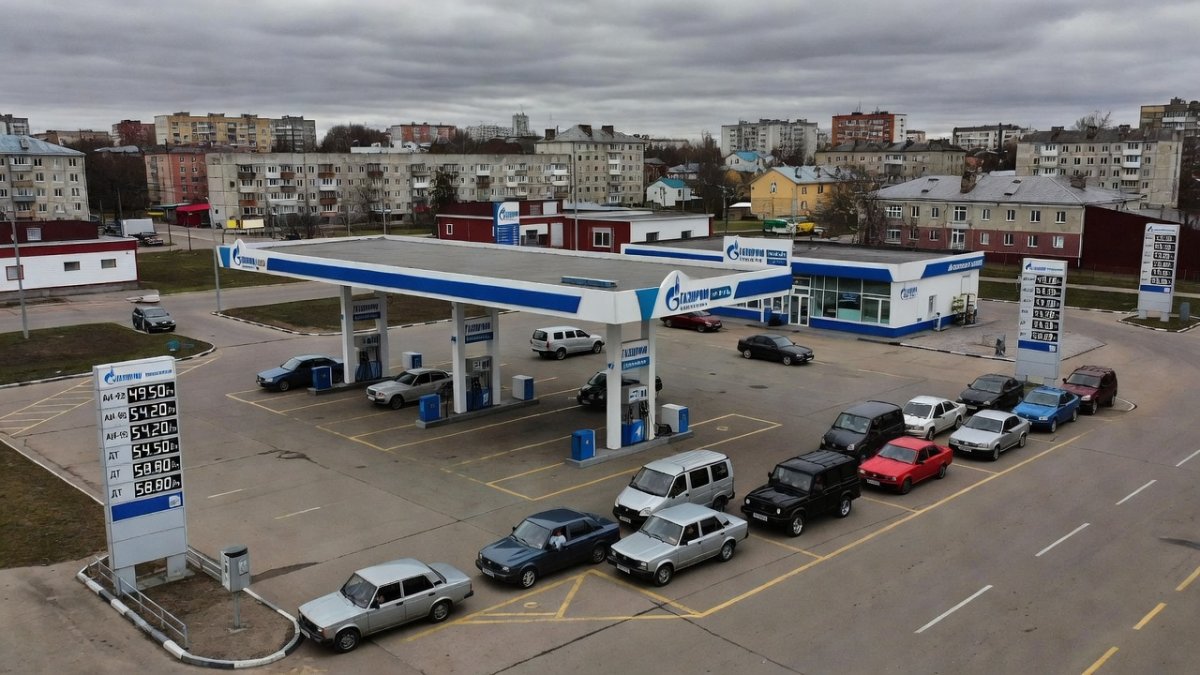
Russian gas stations have begun lifting some purchase limits in key regions, offering motorists a measure of relief after months of tightening restrictions. Yet the underlying fuel shortages continue to disrupt supply across much of the country, leaving many drivers facing long lines and uncertain access. The partial easing comes as officials describe the market as showing signs of stabilization, though the crisis has already spread to 56 of Russia's 89 regions and shows no sign of quick resolution.
The Easing of Limits in Select Regions
Gazprom has removed all purchase restrictions at its stations in Krasnodar, Rostov, and several other southern and central areas. Lukoil has followed a similar path in parts of the country, allowing drivers to fill tanks without the previous caps that limited sales per vehicle. These changes mark a shift from the strict measures that had been in place for weeks, including bans on filling gas cans and per-car quotas at many outlets.
The adjustments reflect localized improvements in supply as some refineries resume operations after maintenance. Industry observers note that the easing remains uneven, with full restoration of normal sales still absent in many provinces. Gazprom and Lukoil together operate thousands of stations, so their decisions carry significant weight for daily fuel availability in affected zones.
The Scale of the Crisis Across 56 Regions
Restrictions have taken hold in 56 regions, forcing authorities to introduce odd-even license plate rationing in places such as Omsk, Irkutsk, Saratov, Voronezh, Amur, and Tambov. Gas stations continue to cap purchases and prohibit sales into containers in numerous locations, measures that directly affect farmers, small businesses, and ordinary commuters who rely on consistent access to fuel.
The impact on daily life has grown noticeable, with reports of altered travel patterns and increased costs for goods that depend on road transport. The Guardian has documented how the shortages are beginning to reshape routines in rural and urban areas alike, adding friction to an economy already under pressure from external sanctions and internal logistical strains.
Ukraine's Drone Campaign as the Primary Driver
Ukraine's sustained strikes on Russian oil refineries stand as the central factor behind the current shortages. These attacks have reduced refining capacity by an estimated 15 to 20 percent from the pre-war level of approximately 5.5 million barrels per day. The Tyumen oil refinery halted production after a drone strike, with industry sources indicating that repair timelines remain difficult to project with precision.
Several other facilities have returned to service following earlier repairs, yet the cumulative effect continues to limit domestic output. Analysts point out that the campaign's effectiveness hinges on Ukraine's ability to maintain pressure on infrastructure targets, a factor that could determine whether the current stabilization holds or reverses in coming months. European observers have tracked the strikes as part of broader efforts to constrain Russian energy revenues.
Ukraine has intensified strikes on key facilities including the Ryazan and Kirishi refineries, where drone incursions damaged distillation units and forced extended shutdowns that removed roughly 300,000 barrels per day from active processing. These targeted operations have disrupted rail and pipeline logistics feeding central Russia, compelling authorities to reroute fuel from Siberian stockpiles and increasing transit times by up to ten days in affected corridors.
The Tyumen refinery, one of the largest in western Siberia, suffered direct hits to its catalytic cracking complex, halting output for an indeterminate period according to industry tracking data. Ukrainian forces have adapted by prioritizing facilities with high throughput and limited redundancy, shifting from broad infrastructure attacks to precision strikes on secondary processing units that maximize downtime while minimizing civilian exposure.
This evolving strategy has compounded the 15-to-20 percent capacity loss, leaving domestic fuel distribution networks reliant on imports from Belarus and Kazakhstan that remain insufficient to offset the shortfall. Analysts note that sustained pressure on these nodes continues to constrain Russia's ability to rebuild strategic reserves ahead of the winter heating season.
Official Statements from Deputy Prime Minister Novak
Deputy Prime Minister Alexander Novak stated that the fuel market is partially stabilizing and announced that the gasoline export ban will remain in place through the end of 2026. He indicated that the diesel export ban could be lifted once domestic supply conditions improve further. These measures aim to prioritize internal needs while the country addresses the shortfall caused by reduced refining capacity.
The Energy Ministry has aligned with Novak's assessment, emphasizing that the extended gasoline restrictions will help prevent further export-driven drains on available stocks. Government sources describe the policy as a necessary safeguard during the recovery phase, though critics argue it may prolong price pressures for consumers inside Russia.
Deputy Prime Minister Alexander Novak, who oversees the fuel and energy complex, has coordinated repeated government interventions since 2022, including temporary export curbs and price caps that were lifted only after domestic markets stabilized. His current directives reflect the persistent tension between preserving export revenues that fund the federal budget and ensuring adequate supplies for agriculture and transport sectors critical to internal stability.
Novak's extension of the gasoline export ban through 2026 underscores the Kremlin's assessment that refining vulnerabilities will persist, even as diesel restrictions may ease selectively. Government records show prior interventions in 2023 similarly balanced these competing priorities, yet critics within industry circles argue that prolonged controls distort market signals and discourage necessary investment in repair and modernization.
Energy Ministry alignment with Novak's position highlights the priority placed on shielding domestic consumers from further price spikes, though the measures risk reducing foreign currency inflows at a time when sanctions already constrain alternative revenue streams.
Central Bank Warnings on Broader Inflation
Central Bank Governor Elvira Nabiullina has acknowledged that the fuel crisis has contributed to rising prices across a wide range of goods and services. Higher transportation costs are feeding into consumer inflation, complicating the bank's efforts to manage monetary policy amid existing economic challenges.
Nabiullina's comments underscore the interconnected nature of energy supply and overall price stability. The Central Bank continues to monitor these developments closely, recognizing that prolonged shortages could amplify inflationary trends in sectors far removed from direct fuel consumption. This linkage highlights how localized energy disruptions can generate nationwide economic effects.
Economic Ripple Effects
Central Bank data indicate that fuel price increases have contributed to a 0.8 percentage point rise in headline inflation over the past quarter, with transportation costs driving up food and consumer goods prices in regions far from the refineries. The Central Bank faces mounting challenges in calibrating interest rates, as energy-driven inflation coincides with broader sanctions-related pressures on supply chains.
Agriculture and road transport sectors report acute strain, with diesel shortages delaying harvests in the Volga and Siberian districts and raising logistics expenses by an estimated 15 percent for trucking firms. Consumer behavior has shifted accordingly, with motorists in 56 regions reducing non-essential travel and turning to public transport or carpooling where available.
These patterns echo earlier disruptions but now intersect with elevated baseline prices, amplifying the effect on household budgets and complicating efforts to contain secondary inflationary waves across retail and manufacturing.
Effects Extending to Neighboring Countries
Kyrgyzstan has sought increased supplies of Russian fuel as the crisis spills across borders. Moscow's domestic constraints have reduced the volumes available for export to Central Asian partners, prompting those governments to explore alternative sources or conservation measures. The ripple effect demonstrates how Russia's refining shortfalls can influence regional energy dynamics beyond its own territory.
Neighboring states that traditionally depend on Russian petroleum products now face similar pressures on pricing and availability. This spillover adds another layer of complexity to the situation, as diplomatic and commercial ties between Moscow and its partners adjust to the new supply realities.
Prospects for Sustained Stabilization
Bloomberg has reported that the fuel crunch appears to be easing as Ukraine redirects some of its focus in the conflict. Yet analysts caution that any lasting improvement depends on whether Ukraine can continue its campaign against Russian oil infrastructure at current intensity. If strikes diminish, refineries may regain capacity more quickly; if they persist, the partial relief seen in recent days could prove temporary.
The Kremlin's decision to extend the gasoline export ban through 2026 signals an expectation that vulnerabilities in the refining sector will remain relevant for an extended period. Industry estimates suggest that full restoration of lost capacity will require sustained investment and time, factors that could keep domestic markets under strain well into the future.
The deeper story lies in the exposure of Russia's dependence on a concentrated refining network that has proven susceptible to targeted disruption. While Gazprom and Lukoil have eased limits in select areas and officials project gradual recovery, the crisis has revealed structural weaknesses that extend from fuel pumps in remote regions to the broader economy and neighboring states. Ordinary Russians continue to navigate the practical consequences, underscoring how energy security remains tightly linked to both domestic policy and external pressures.
The 2023 fuel crisis offers a cautionary parallel, when similar refinery outages required months of coordinated repairs and temporary import surges before markets normalized. Russia's refining network remains structurally fragile due to its concentration in a handful of large facilities, many of which lack sufficient backup capacity or modern defensive measures against aerial threats.
Full recovery would demand sustained capital investment exceeding current budget allocations, alongside accelerated construction of modular refining units and enhanced air defenses around critical sites. Without these steps, analysts project that even modest Ukrainian strikes could re-trigger shortages within weeks.
Historical patterns suggest that partial stabilization achieved through export bans alone rarely addresses underlying vulnerabilities, leaving the sector exposed to renewed external pressure and internal logistical bottlenecks well into the coming year.
By Irina Volkov, Staff Writer By Irina Volkov, Staff WriterThis article was produced with AI-assisted research and editorial support. Reporting is based on sources cited in the article.
What's Your Reaction?
 Like
0
Like
0
 Dislike
0
Dislike
0
 Love
0
Love
0
 Funny
0
Funny
0
 Wow
0
Wow
0
 Sad
0
Sad
0
 Angry
0
Angry
0

Russia/Eastern Europe Correspondent at Global1.News. Covering Russian politics, energy, security, and the shifting dynamics of the post-Soviet space. Provides clear-eyed analysis on one of the world's most opaque regions.












Comments (0)