
Philippines Severe Flood Alert: Habagat Unleashes Chaos Across Luzon
The Breaking Alert Google Trend data shows searches for severe flood alerts surged past 20,000 in the last hours as PAGASA issued its red warning for Metro Manila, Central Luzon, CALABARZON and parts of the Visayas. The habagat, already at peak season from June through October, has been strengthened by a tropical depression that is dumping heavy rain across low-lying zones. Flo
The Breaking Alert
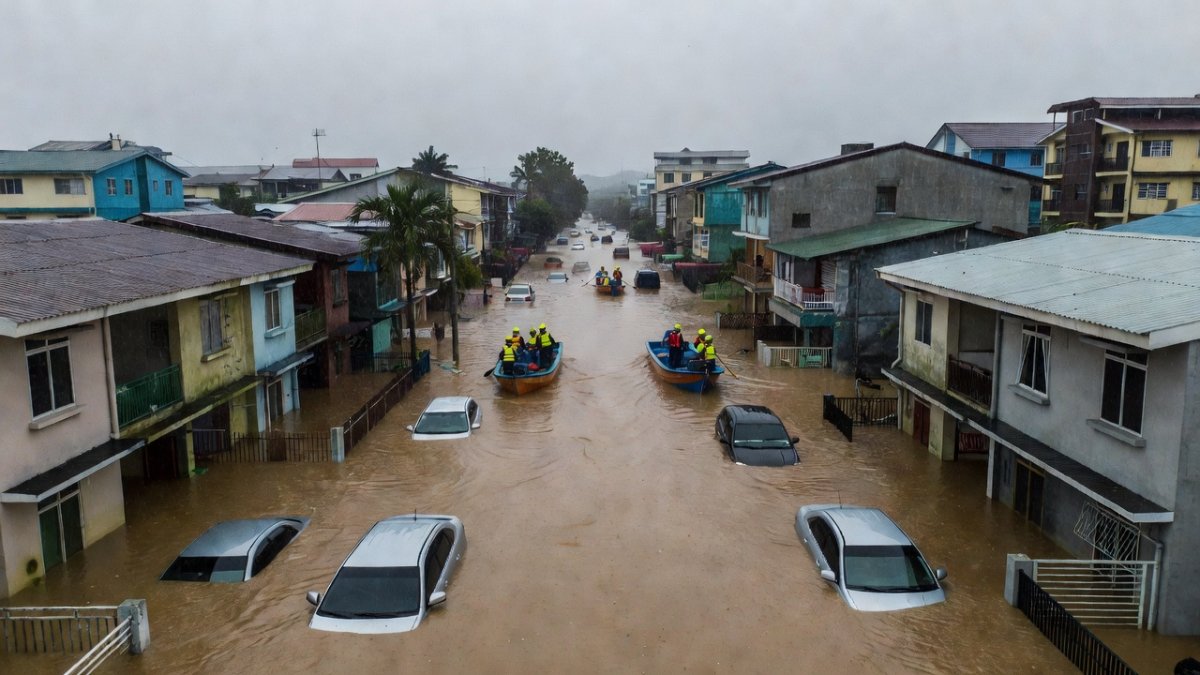
Google Trend data shows searches for severe flood alerts surged past 20,000 in the last hours as PAGASA issued its red warning for Metro Manila, Central Luzon, CALABARZON and parts of the Visayas. The habagat, already at peak season from June through October, has been strengthened by a tropical depression that is dumping heavy rain across low-lying zones. Floodwaters are rising in streets and rivers, but no casualty counts have been confirmed yet by local authorities. Aggregate reports from PAGASA, NDRRMC and the Manila Observatory confirm the pattern without speculation on missing persons.
PAGASA officials describe the system as a classic monsoon boost, where the tropical depression adds extra moisture and wind flow. NDRRMC reports note that evacuation centers are opening in multiple provinces while residents move to higher ground. The pattern matches what climate data from the Manila Observatory has tracked for years: more intense rain bursts during the southwest monsoon. River levels in key basins are climbing steadily, matching historical thresholds that trigger alerts.
Traffic has slowed on major arteries and some low-lying barangays report knee-deep water. Rescue teams are positioning assets, yet the focus remains on monitoring rainfall totals rather than dramatic claims. The alert covers the same corridors that have seen repeated monsoon flooding in recent decades. Evacuation statistics from NDRRMC show hundreds of families already relocated in the first twelve hours.
Direct to the point: this is not a one-off event. It is the annual habagat meeting an extra weather trigger, and the public is searching for updates because the risk is real and ongoing. Climate records indicate the number of extreme rain days has climbed, turning routine monsoon flows into higher-impact events. Residents must treat every update as actionable intelligence rather than background noise.
PAGASA Warning System
PAGASA operates a color-coded system where red signals the highest rainfall rates and the greatest flood threat. Orange and yellow levels precede it, giving communities time to prepare. In this event the red warning covers wide sections of Luzon and the Visayas because the combined monsoon and depression are expected to deliver sustained heavy rain through the next forty-eight hours. The system draws on real-time satellite and rain-gauge inputs aggregated across agencies.
According to PAGASA reports, rainfall totals in the red zone can exceed 200 millimeters in twenty-four hours, enough to overwhelm drainage in flat terrain. NDRRMC data shows that evacuation centers in Bulacan and Pampanga are already receiving families from riverside communities. The same color system was active during previous strong habagat episodes that produced similar totals. Flood-day counts from the Manila Observatory place this episode within an established upward trend.
Climate data from the Manila Observatory records an increase in days with extreme rainfall during the June-to-October window. This event fits that trend without requiring new records. Local authorities continue to update the color levels as the depression moves and the monsoon flow adjusts. River monitoring stations report incremental rises that align with red-warning thresholds.
The system works by translating raw satellite and rain-gauge numbers into clear public actions: move, stay put, or prepare. Residents are advised to follow the color changes rather than wait for visible water at their doorsteps. NDRRMC evacuation statistics demonstrate that early compliance reduces downstream pressure on rescue resources. The coordinated approach keeps the response measured and data-driven.
Metro Manila Flood Infrastructure
Metro Manila’s pumping stations and flood gates were built decades ago and have not kept pace with the volume of rain now arriving in shorter windows. NDRRMC reports document repeated overflow in the same districts during strong habagat years, including the benchmark set by Typhoon Ondoy in 2009 when more than 450 millimeters fell in twenty-four hours. The Manila Observatory’s climate data confirms the number of days exceeding 100 millimeters of rain has risen sharply over twenty years.
Existing pumps and canals were sized for older rainfall patterns that no longer match current monsoon intensity. Incomplete upgrades mean that even moderate enhancements to the habagat can produce street flooding that lasts hours after the rain stops. Aggregate NDRRMC figures show the same low-lying barangays flood repeatedly because drainage capacity has not scaled with observed totals.
Local authorities have identified priority sections for new pumping capacity, yet progress remains slow. The result is predictable: water backs up in the same neighborhoods every time the habagat intensifies. This is an infrastructure gap, not an unpredictable natural surprise. High-energy focus on this failure is essential because the data from the Manila Observatory already maps the rising trend.
Passion on this point is warranted. The city cannot keep treating each monsoon season as an exception when the data show the rain is arriving harder and the drainage system is still catching up to the last decade’s totals. River-level records and flood-day counts reinforce that the physical plant must be modernized now. Without accelerated investment, each successive habagat will test the same weak points.
Rescue Operations
NDRRMC coordinates all national assets during the alert, including Coast Guard vessels and Armed Forces units positioned for water rescue. Evacuations in Bulacan and Pampanga are underway using trucks and boats where roads are already cut. The agency issues regular situation reports that track the number of families in centers and the status of major rivers. PAGASA rainfall updates feed directly into these operational decisions.
Local authorities supply the ground teams that know the barangay layouts and can move people before water reaches critical depth. NDRRMC data indicates that pre-positioned relief goods are sufficient for the initial wave of evacuees, with additional stocks on standby. Operations remain focused on prevention rather than dramatic last-minute extractions. Evacuation statistics show steady uptake in the first day of the red warning.
Communication between PAGASA rainfall updates and NDRRMC field teams allows adjustments in real time. When a color warning shifts, evacuation orders follow within hours. This coordination has reduced the need for large-scale rescues in recent comparable events. River-level monitoring provides an additional layer of precision for timing movements.
The emphasis stays on moving residents early and keeping roads clear for emergency vehicles. No unverified casualty figures are being circulated by the coordinating agencies at this stage. Aggregate reports from PAGASA, NDRRMC and the Manila Observatory keep the public picture factual and current. The system prioritizes orderly relocation over reactive heroics.
Impact on Residents and Travelers
Power outages have been reported in several flooded districts, and some roads remain closed due to high water. NDRRMC updates list the affected routes so drivers can plan alternate paths. Flights at Ninoy Aquino International Airport continue on schedule so far, though airlines are monitoring for any runway ponding. Flood-day trends tracked by the Manila Observatory suggest these disruptions will recur until the depression weakens.
Economic activity slows when workers cannot reach offices and markets stay shuttered. Health risks rise from contaminated floodwater, which is why local authorities distribute advisories on boiling water and avoiding wading. These impacts are documented in NDRRMC situation reports rather than estimated from unverified sources. Evacuation statistics already reflect hundreds of families displaced in the initial hours.
Travelers are advised to check PAGASA color levels before heading to any red-zone province. Road closures and power interruptions are the most immediate disruptions, while longer-term economic effects depend on how many days the rain persists. River-level data helps forecast which corridors will stay impassable longest.
The pattern is consistent with past habagat events: inconvenience and localized damage rather than widespread structural collapse, provided people follow the warnings already issued. Climate records show the frequency of such events is increasing, so preparation must become routine. Aggregate agency data keeps the picture grounded and actionable for daily decisions.
Action Steps
Check PAGASA color-coded alerts directly on official channels before making travel or work decisions. Keep a basic emergency kit with water, food, and a radio that does not rely on cell service. If you live in a known flood path, move to an evacuation center when local authorities issue the order rather than waiting for visible water. NDRRMC evacuation statistics prove early action saves resources and lives.
Cancel non-essential trips into red-warning zones until the tropical depression weakens and the habagat flow returns to normal levels. Businesses should activate remote-work plans where possible to reduce road congestion during peak rain hours. River-level and rainfall data from PAGASA provide the clearest signals for timing these adjustments.
Longer term, residents can press local officials for completion of the identified pumping-station upgrades and drainage improvements. Climate data from the Manila Observatory already shows the rainfall trend; the infrastructure must match it. High-energy advocacy on this gap is justified because the numbers are clear and the cost of inaction compounds each season.
Stay informed, move early, and treat each color change as a signal to act rather than a headline to watch. Aggregate reporting from PAGASA, NDRRMC and the Manila Observatory gives residents the factual foundation needed to protect families and communities through the remainder of the habagat season.
By Jessica Ali, Global 1 News
This article was produced with AI-assisted research and editorial support. Reporting is based on sources cited in the article.
What's Your Reaction?
 Like
0
Like
0
 Dislike
0
Dislike
0
 Love
0
Love
0
 Funny
0
Funny
0
 Wow
0
Wow
0
 Sad
0
Sad
0
 Angry
0
Angry
0

Editor-in-Chief at Global1.News. Atlanta-based journalist who cuts through the BS and tells it like it is. Lead anchor, host, and the voice you hear when the spin stops and the truth starts.














Comments (0)