
Nigerian Animation Takes Center Stage at Annecy 2025
Nigerian animation has long simmered with potential, but June 2025 marked the moment the world took notice. At the Annecy International Animation Film Festival — the world's premier animation gathering — Nigerian animators arrived in unprecedented force, securing project selections, pitching slots, and a dedicated showcase that signaled the continent's growing creative power. N
Nigerian animation has long simmered with potential, but June 2025 marked the moment the world took notice. At the Annecy International Animation Film Festival — the world's premier animation gathering — Nigerian animators arrived in unprecedented force, securing project selections, pitching slots, and a dedicated showcase that signaled the continent's growing creative power.
Nigerian Animation Takes Center Stage at Annecy 2025
Dakar, Senegal — The Annecy International Animation Film Festival, held each June in the French Alpine town, has long been the global benchmark for animated storytelling. For decades, African voices were barely visible on its screens. But in 2025, Nigerian animation rewrote that narrative with a coordinated breakthrough that industry observers are calling a watershed moment for the continent's creative economy.
A Watershed Year at the World's Premier Animation Festival
The Annecy International Animation Film Festival, held each June in the French Alpine town, stands as the world's premier animation event where studios from every continent compete for attention and financing. In 2025 this benchmark status drew a record African contingent that transformed the usual quiet corners into vibrant hubs of discussion and deal-making.
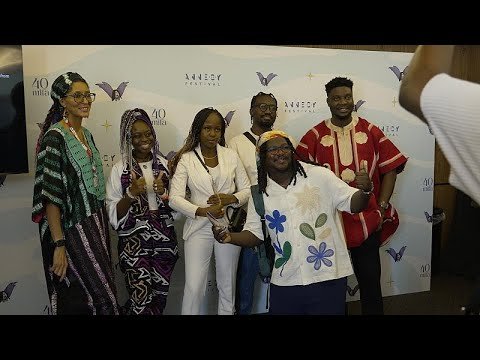
2025 marked a breakthrough year for Nigerian and African animation at Annecy, with one African feature in official competition titled Allah Is Not Obliged and approximately six Africa-linked short films across festival sections. These selections placed Nigerian stories directly alongside established European and Asian productions for the first time on such a scale.
The first delegation of 10 East African animators at the MIFA market joined their Nigerian counterparts, creating daily exchanges that extended well into the evenings at lakeside cafés. Their presence underscored how the festival now serves as a genuine crossroads rather than a distant European showcase.
The African Pavilion returned for networking and promotion, offering a dedicated space where producers could screen clips and discuss co-production terms without competing for scattered meeting rooms. This physical return signaled renewed institutional support from African cultural ministries and European partners alike.
Behind these visible milestones lies a decade of quiet growth in Lagos studios that finally aligned with international market timing. Streaming platforms have begun commissioning African animation, giving creators the runway needed to develop projects that meet Annecy's rigorous selection standards.
For Senegalese readers this coordinated Nigerian advance carries immediate meaning, because the same pipelines that carried five Nigerian projects to MIFA can soon carry stories rooted in Dakar neighborhoods and Wolof oral traditions to the same global buyers.
Dance of the Crocodiles: An Africanfuturist Vision
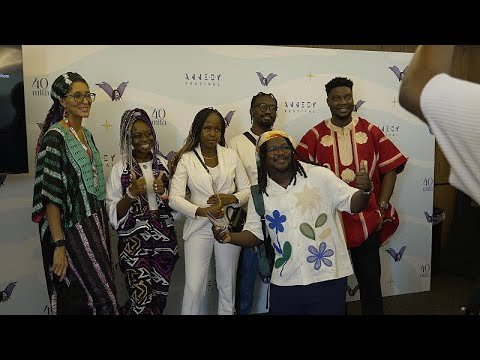
Shofela Coker, the Emmy-nominated and Annie-nominated Nigerian-born animator and director, led the charge with Dance of the Crocodiles, a 2D/3D hybrid animated feature developed through his company Coker CoOp. Co-director Nadia Darries worked with Coker on Crocodile Dance, bringing South African production expertise to the Nigerian-led vision.
The story follows a Nigerian musician who must confront a Mami Wata curse to save her family, set in the fictional surf town of Itesi inspired by Lagos and Badagry. This setting draws directly on West African surfing culture that has thrived along the Atlantic coast for generations yet rarely appears on screen.
The project was selected from more than 250 projects in development, a testament to its distinctive Africanfuturist tone and polished visual bible. As Durban FilmMart alumni, the team already understood how to navigate international markets before arriving at Annecy.
Nigerian/South African co-production status opened doors to additional financing and talent, while a successful Kickstarter campaign completed in December 2025 reached 100 percent funding within weeks. That grassroots support demonstrated strong diaspora interest in seeing authentic African mythologies rendered with high production values.
A planned research trip to Senegal in 2026 will deepen the Mami Wata sequences through conversations with local griots and coastal communities. Such cross-border fieldwork strengthens the film's cultural authenticity while building lasting ties between Nigerian and Senegalese storytellers.
Animation Magazine and SPARK magazine by Studio KÄ both featured extended profiles of the project, giving it visibility among European buyers who rarely encounter African genre animation at this scale.
Ugo and Sim Sim: Championing Neurodiversity Through Animation
Tonye Faloughi-Ekezie, author of the Ugo and Sim Sim books, drew inspiration from her own daughter who has Down syndrome to create stories that center joy and capability rather than limitation. The children's book series adapted into animated TV series follows siblings Ugo and Sim Sim living their everyday lives in Lagos.
Sim Sim has Down syndrome, making the series Nigeria's first picture book series with a Black main character with Down syndrome. The books include Ugo and Sim Sim: What is Down Syndrome? and titles exploring everyday themes such as fruits and vegetables, all while weaving in Nigerian cultural references.
Nigeria's first 100 percent locally made baby board book forms part of the same series, proving that inclusive stories can be produced entirely on the continent without relying on foreign printing or illustration pipelines. This achievement matters for families who have long sought mirrors of their own children in published work.
Selected for Annecy 2025 pitching sessions, the project received direct feedback from international commissioners interested in preschool content that travels across cultures. The emphasis on empathy, inclusion, African heritage, and disability awareness resonated strongly with European buyers seeking authentic representation.
Parents across West Africa have already begun requesting similar titles in local languages, showing how one Lagos author's personal story can ripple outward to influence publishing and animation practices in neighboring countries including Senegal.
The adaptation process now underway in Lagos studios will employ young Nigerian animators trained in digital tools, creating entry-level jobs while modeling how personal experience can fuel sustainable creative enterprises.
Hidden Gems: Nigeria's Five-Project Showcase at MIFA
Hidden Gems: Global Stories from Nigeria served as a dedicated showcase at the MIFA market, presenting five Nigerian animation projects selected for their commercial viability and cultural distinctiveness. The French Embassy backed the initiative, providing both funding and diplomatic visibility that eased introductions to European distributors.
Connecting Nigerian creators with international producers, distributors, and funders formed the core purpose of the showcase, building directly on Nigeria's first TV series selection at Annecy in 2024. That earlier milestone had already proven that Nigerian animation could meet festival standards; 2025 demonstrated it could also attract sustained investment.
Media coverage from What Kept Me Up documented the daily activity at the Nigerian stands, capturing conversations that ranged from music synchronization deals to co-production frameworks. Such reporting helps demystify the festival circuit for emerging creators back home.
A structured push involving studios, delegations, and industry speakers ensured that Nigerian voices appeared on panels and in buyer meetings rather than remaining on the periphery. This professional coordination marked a shift from individual efforts to collective strategy.
The five projects ranged across genres yet shared a commitment to Nigerian settings and soundscapes, giving buyers concrete examples of how local stories can scale globally. Several meetings concluded with letters of intent that will shape production calendars through 2027.
Senegalese animators watching from Dakar noted the replicable model: targeted national showcases backed by embassy support can accelerate market access for any West African film industry willing to invest in preparation and follow-up.
Pan-African Momentum: The Broader Animation Renaissance
The wider context of rising African animation on the global stage now includes Triggerfish, the leading African animation studio based in South Africa, whose features have already secured Netflix distribution. Their success has inspired smaller studios across the continent to aim higher.
Kenyan animation scene has grown through independent shorts and educational content, while the first delegation of 10 East African animators at the MIFA market signaled that the momentum is spreading beyond the usual South African and Nigerian hubs.
The African Pavilion's return provided a physical anchor for these conversations, allowing creators from multiple nations to share resources and contacts in one location. FESPACO's animation sections in Ouagadougou have similarly expanded, creating a yearly calendar of African-focused industry events.
Lagos-based studios gaining international attention now attract talent from across West Africa, including young Senegalese graduates eager to learn advanced rigging and compositing techniques. This circulation of skills strengthens the entire regional ecosystem.
Nigeria's broader creative economy, anchored by Nollywood and Afrobeats, supplies both financing models and music talent that animation projects can leverage. Streaming platforms investing in African content have recognized that animation offers repeatable formats with lower location costs than live-action drama.
For Senegal this renaissance arrives at an opportune moment, as Kourtrajmé film school in Dakar begins training the next generation of filmmakers who can move fluidly between live-action and animation pipelines.
What to Watch For
The Travails of Ajadi, the first Nigerian short selected for Annecy Official Competition in 2026 by Adeoye Adetunji, will test whether the 2025 gains can be sustained. Early footage already suggests a distinctive visual language rooted in Yoruba textile patterns and urban soundscapes.
The Nigerian delegation at MIFA Booth C-01 in 2026 will expand the Hidden Gems format, inviting additional East and West African partners to share the space. Organizers expect at least eight projects to be presented under the unified banner.
Continued development of Dance of the Crocodiles and Ugo and Sim Sim will deliver concrete deliverables by late 2026, including finished reels that can be screened at FESPACO and subsequent Annecy editions. Both projects have already secured additional private investment following their Annecy exposure.
Growing streaming investment in African animation will likely accelerate once these titles reach audiences, creating a virtuous cycle that funds training programs and studio infrastructure across the region.
Implications for Senegal and other West African nations' animation industries include the possibility of joint training initiatives and co-production treaties modeled on the Nigerian-South African example. Skills transfer and training programs will determine how quickly local talent can meet international demand.
Senegal's emerging animation scene centered around Kourtrajmé film school in Dakar stands ready to participate, with several graduates already contributing to Nigerian projects as freelancers. The 2025 Annecy breakthrough has shown that when African creators arrive together, the world listens.
By Amara Diop, Staff WriterThis article was produced with AI-assisted research and editorial support. Reporting is based on sources cited in the article.
What's Your Reaction?
 Like
0
Like
0
 Dislike
0
Dislike
0
 Love
0
Love
0
 Funny
0
Funny
0
 Wow
0
Wow
0
 Sad
0
Sad
0
 Angry
0
Angry
0
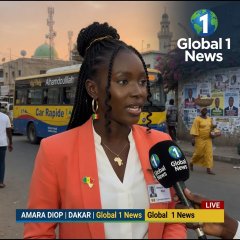
West Africa/Sahel Correspondent at Global1.News. Dakar-based journalist covering politics, security, climate, and development across Francophone and Anglophone West Africa. Tells the stories of a region undergoing profound transformation.










Comments (0)