
Laísa Lima: First Woman to Lead Rio Carnival Samba Bateria
In February 2026, on the hallowed grounds of the Marquês de Sapucaí — Rio de Janeiro's iconic Sambódromo — a young woman raised her baton and changed Brazilian carnival history forever. Laísa Lima, at just 26 years old, became the first woman to command a samba school's bateria as solo mestra de bateria, leading the 200 drummers of Arranco do Engenho de Dentro through a perform
In February 2026, on the hallowed grounds of the Marquês de Sapucaí — Rio de Janeiro's iconic Sambódromo — a young woman raised her baton and changed Brazilian carnival history forever. Laísa Lima, at just 26 years old, became the first woman to command a samba school's bateria as solo mestra de bateria, leading the 200 drummers of Arranco do Engenho de Dentro through a performance that resonated far beyond Brazil's shores, all the way to the African continent that gave samba its soul.
Laísa Lima: First Woman to Lead Samba School Drum Section at Rio Carnival Makes History
Dakar, Senegal — In a historic breakthrough for gender equality in one of Brazil's most cherished cultural institutions, Laísa Lima led the Arranco do Engenho de Dentro samba school's percussion section — known as the Bateria Sensação — through the Sambódromo on Carnival Sunday, 15 February 2026, conducting a dazzling tribute to Maria Eliza Alves dos Reis, the first Black female clown in Brazil. Her achievement reverberates across the Atlantic, where samba's African roots run deep and where women continue to break barriers in drumming traditions from Senegal's sabar to West Africa's djembe circles.
A Historic Night on the Sapucaí
Laísa Lima, 26 years old, became first solo female mestra de bateria at Marquês de Sapucaí when she stepped onto the parade grounds on Carnival Sunday, 15 February 2026. She commanded Arranco do Engenho de Dentro in Rio's Série Ouro second division, directing the Bateria Sensação through its full set of rhythms.
Arranco's bateria is called Sensação with approximately 200 percussionists who followed every cue from her raised baton. About 30 percent of Arranco's percussionists were women in 2026, a visible shift in the composition of the section she led.
Arranco do Engenho de Dentro is based in Rio's northern zone, and its 2026 enredo titled Gargalhada É o Xamego da Vida honored Maria Eliza Alves dos Reis, the first Black female clown in Brazil known as Xamego. The theme celebrated laughter as life's embrace while Laísa kept the drummers in tight formation.
Nine days of festivities include competition for Rio's top samba schools, and the electric atmosphere built as Laísa raised her baton to start the parade. The prefeitura do Rio posted video celebrating Laísa's historic achievement within hours of the performance.
Her portrait photos by Danilo Firme went viral after Carnival 2026, and photographer Camila Valadão's video of her conducting went viral with arrepiada goosebumps reactions across social media. These images captured the precise moment she became recognized as 1ª Mulher Mestra de Bateria do Sambódromo.
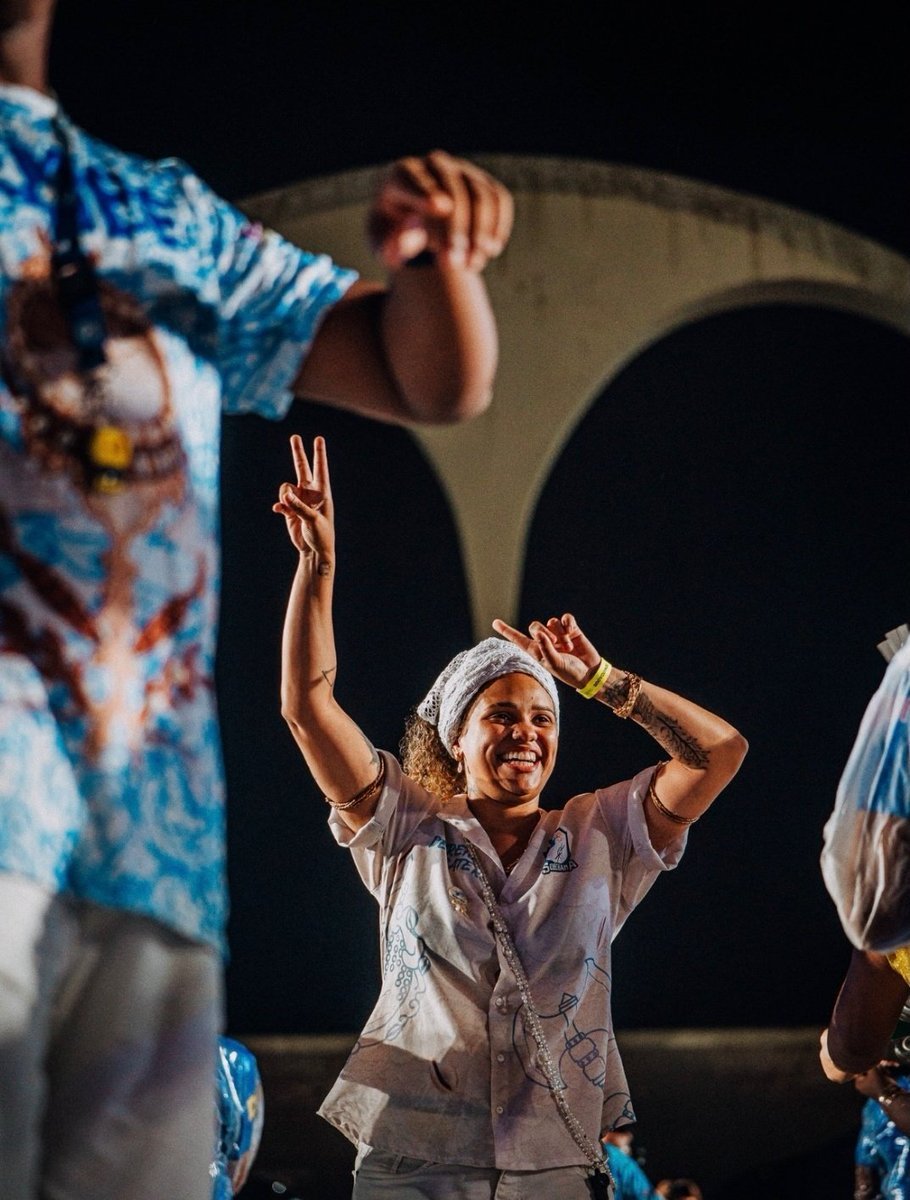
Who Is Laísa Lima? The Daughter of Samba Royalty
Laísa Lima grew up as the daughter of Laíla, one of the most renowned carnavalescos in Brazilian carnival history. Her father shaped her early understanding of samba as both art and cultural resistance from the time she could walk.
She previously served as diretora de tamborins at Beija-Flor de Nilópolis, an elite samba school where she honed her skills directing percussion sections. In 2025 Arranco invited her to command their bateria, marking the first time a woman would hold the solo mestra role at the Sambódromo.
Her X bio reads 1ª mestra solo de bateria and Rio Carnival ambassador, a description she earned through years of steady work. At 26 she carries a quarter-century of carnival experience despite her youth, having absorbed every detail of parade production from childhood onward.
She also served as bateria director for related carnival projects that prepared her for the full leadership of 200 drummers. Nilópolis city council awarded her a motion of congratulations shortly after the parade, recognizing her roots in the region.
Forbes Brasil profiled her historic achievement, noting how her father's legacy guided her approach to the role. She renewed her contract with Arranco for Carnival 2027, ensuring continuity for the Bateria Sensação under her direction.
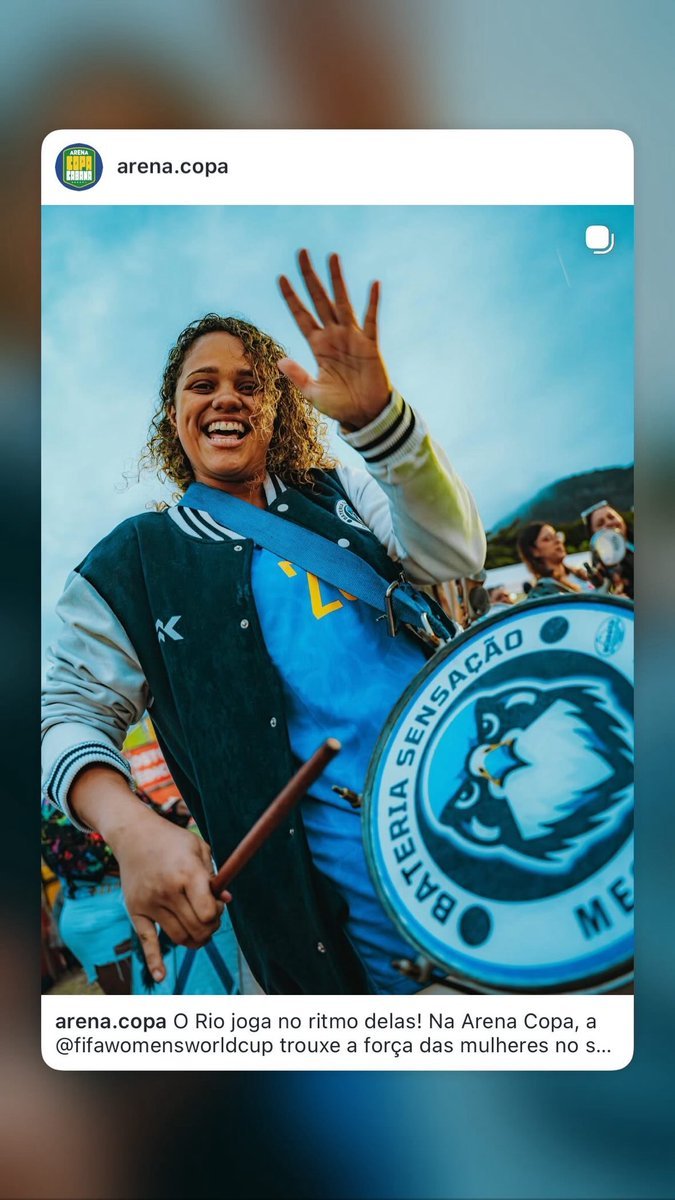
Samba's African Heartbeat: The Roots of a Brazilian Tradition
Samba's roots trace to rhythms from Congo-Angola and Yoruba peoples brought by enslaved Africans to Brazil. These patterns survived in the candomblé religious traditions that preserved African drumming across generations.
Samba evolved in the Afro-Brazilian favelas and quilombos of Rio, where communities turned everyday resistance into musical form. The connection between African talking drums and the complex rhythms of the bateria remains audible in every parade.
The repinique, surdo, caixa and tamborim are instruments with African ancestors that Arranco's 200 drummers played under Laísa's command. The Marquês de Sapucaí itself serves as a stage where Africa's cultural heritage is celebrated every year during the nine days of festivities.
Samba schools function as community organizations preserving Afro-Brazilian heritage, and Arranco do Engenho de Dentro continues that work from its northern zone base. The parallel with Senegal's own sabar drumming tradition runs clear, as both forms rely on layered percussion that carries history forward.
The tassou and mbalax rhythms that define Senegalese music share the same emphasis on collective pulse and individual leadership that Laísa demonstrated when she lifted her baton on 15 February 2026.
Breaking the Gender Barrier in Brazil's Drumming Tradition
The bateria has long been one of the most male-dominated roles in samba, yet Laísa Lima broke that pattern by leading 200 drummers at the Sambódromo. Carnival historian Helena Theodoro of UFRJ has called baterias the heart of samba schools, and Laísa's presence gave that heart a new rhythm.
Helen Maria da Silva Simão, 46, celebrated Laísa from the stands as a pioneer paving the way for others. She expressed hope that more women would follow the path Laísa opened on Carnival Sunday.
The broader movement of women gaining ground in carnival percussion leadership across Brazil gained momentum from this single parade. Laísa's own emphasis that leading a bateria involves leadership, emotion, and people management beyond just physical strength challenged old assumptions about who belongs behind the drums.
Her success directly confronts stereotypes about women and percussion, showing that emotional intelligence and people management matter as much as strength. The connection to African women drummers who have long participated in traditions across parts of West Africa, despite facing their own barriers, adds another layer to her story.
Arranco's decision to appoint her reflects a growing recognition that the heart of samba schools beats strongest when it includes every voice willing to lead.
From the Sambódromo to Senegal: A Pan-African Celebration
Laísa's achievement resonates for African audiences who understand the cultural importance of drumming, especially Senegalese readers who see their own sabar traditions reflected in the bateria. The connection between Brazil's carnival and Africa's festival traditions runs through events such as the Dakar Biennale, the Saint-Louis Jazz Festival, and the Festival National des Arts et Cultures.
The historical return of Afro-Brazilian cultural practices to West Africa through returnee communities in Benin, Togo, and Nigeria makes stories like Laísa's feel like a circle completed. African media including africanews coverage carried her story across the continent within days of the parade.
The broader significance of Afro-descendant achievements in the diaspora strengthens African identity for readers far from Rio. Figures such as Geni Núñez have built bridges between Brazil and Africa, and Laísa's moment adds another visible link.
Samba schools in Rio are more than entertainment — they are community institutions that preserve quilombo memory, Afro-Brazilian religious traditions, and the social fabric of neighbourhoods like Engenho de Dentro. When Laísa Lima raised her baton on that Sunday night, she was not merely conducting drummers; she was continuing a conversation across four centuries of displacement and cultural survival that connects Salvador da Bahia to Gorée Island, and the Sambódromo to the streets of Dakar.
Forbes Brasil profiled her historic achievement, and the recognition from Nilópolis city council underscored how local institutions now celebrate women in these roles. Her story travels easily from the Sambódromo to Dakar because both places honor the same ancestral pulse.
What Lies Ahead for Arranco and Laísa Lima
Laísa renewed her contract with Arranco do Engenho de Dentro for Carnival 2027, securing her place at the head of the Bateria Sensação for another season. The future of the section under her continued leadership looks toward even greater inclusion of women percussionists.
The growing movement for female inclusion in samba percussion now has a clear example to follow. What this means for young girls across Brazil and the African diaspora who dream of leading is a widened path that once seemed closed.
She continues her role as diretora de tamborins at Beija-Flor de Nilópolis alongside her Arranco duties, balancing two major commitments with the same steady hand. Predictions that more samba schools may follow Arranco's lead in appointing female mestras are already circulating in carnival circles.
Her recognition as 1ª Mulher Mestra de Bateria do Sambódromo stands as a permanent marker for future generations. The 2027 Carnival season already shows promise with her renewed contract in place and the lessons of 2026 guiding every rehearsal.
The music community across Brazil and the diaspora now watches closely as she prepares for 2027. Her story has already inspired conversations about female mestras at other samba schools, suggesting that what Arranco started may become a broader shift in how Rio's carnival tradition evolves into a more inclusive future.
By Amara Diop, Staff Writer
This article was produced with AI-assisted research and editorial support. Reporting is based on sources cited in the article.
What's Your Reaction?
 Like
0
Like
0
 Dislike
0
Dislike
0
 Love
0
Love
0
 Funny
0
Funny
0
 Wow
0
Wow
0
 Sad
0
Sad
0
 Angry
0
Angry
0

West Africa/Sahel Correspondent at Global1.News. Dakar-based journalist covering politics, security, climate, and development across Francophone and Anglophone West Africa. Tells the stories of a region undergoing profound transformation.












Comments (0)