
Killed While Stopped: Israeli Soldier Shoots Seven-Month-Old Palestinian Baby in Hebron
In a recent Middle East Eye video report, heart-wrenching footage from Hebron captures the moment Fahd Abu Haikal buried his seven-month-old son Sam, killed by Israeli soldiers while traveling with his family in the occupied West Bank. The killing has reignited outrage over the impunity afforded to Israeli forces and the devastating toll of occupation on Palestinian children in
In a recent Middle East Eye video report, heart-wrenching footage from Hebron captures the moment Fahd Abu Haikal buried his seven-month-old son Sam, killed by Israeli soldiers while traveling with his family in the occupied West Bank. The killing has reignited outrage over the impunity afforded to Israeli forces and the devastating toll of occupation on Palestinian children in a region where accountability remains all but absent.
Killed While Stopped: The Execution of Baby Sam Abu Haikal and Israel's System of Impunity in the Occupied West Bank
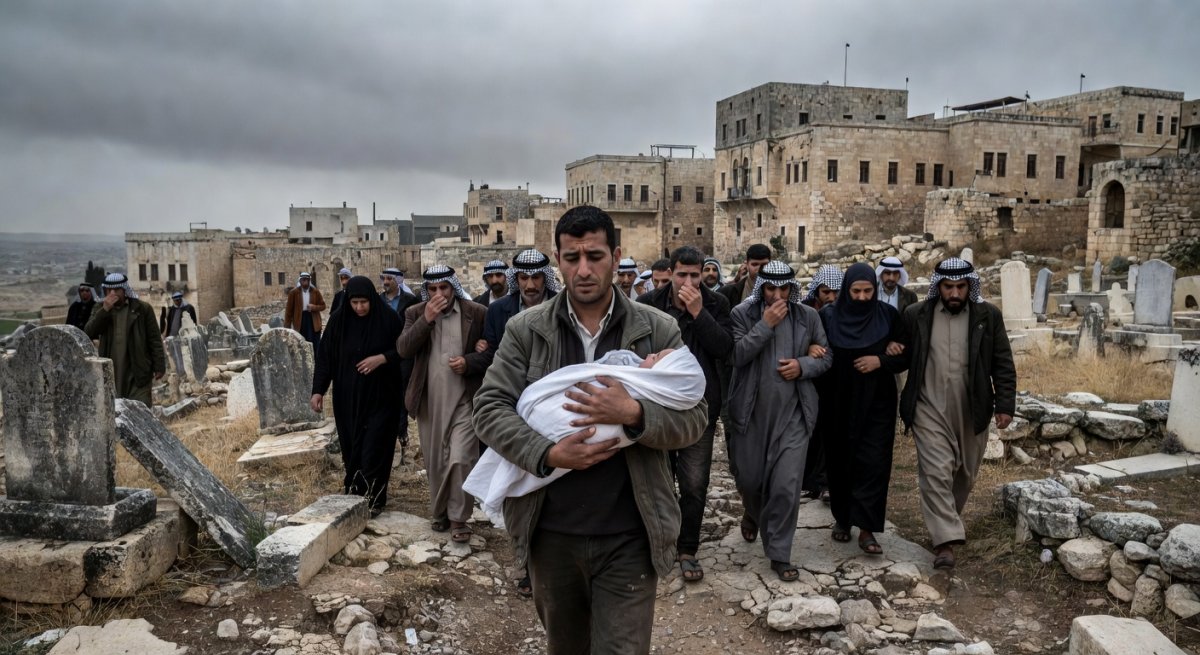
Hebron, occupied West Bank – June 7, 2026 — Sam Fahd Abu Haikal was seven months old. He was killed on Friday afternoon while sitting in the back seat of his family car, which had come to a full stop at the instruction of Israeli soldiers in the Tel Rumeida neighborhood of Hebron.
The Shooting in Tel Rumeida
Sam was traveling with his parents, grandmother Ferial Abu Haikal, and 11-year-old brother when the incident occurred. The family stopped their vehicle after seeing Israeli military vehicles in the flashpoint area of Tel Rumeida, where Israeli settlers live among Palestinians under heavy military presence. The father, Fahd Abu Haikal, a lecturer at Bethlehem University, raised his hands on the steering wheel as soldiers signaled them to halt.
A soldier positioned about 10 meters away fired through the windshield. According to the father's account given to the Associated Press, the bullet entered the front windshield, passed through his right hand, then struck the baby's head before hitting the mother's face. The grandmother later told Reuters that the family had stopped immediately upon seeing the military vehicles. The mother remained unaware of her son's death until Saturday morning because of her own injuries and medical condition.
The Family's Account
At the funeral on Saturday, Fahd Abu Haikal described the sequence of events. He told Haaretz that the soldier was about 10 meters away, the windows were not tinted, it was broad daylight, and visibility was clear. He added that the soldier opened fire, then pulled back the unit and walked away without a word.
"The soldier was about 10 metres away from me. He saw me, he saw my wife and the children. The windows were not tinted, it was broad daylight and everything was clear. You can't say he didn't see that it was a family," he told Haaretz.
Fahd Abu Haikal demanded accountability, stating that if there is any conscience, law, or morality, the soldier who fired must be held responsible. The family has denied claims that the vehicle was accelerating toward the soldiers.
Israeli Military Statement
The Israeli military said the incident is under review and claimed that soldiers perceived a vehicle accelerating toward them. In comments reported by Al Jazeera, the military added that it "sends its condolences" to the family. The phrasing drew immediate anger among Palestinians, who viewed it as a hollow gesture that avoided any admission of responsibility or commitment to justice. No further details on the status of the review have been released. Such statements have followed similar incidents in the occupied West Bank without leading to immediate public outcomes.
Patterns of Accountability
Israeli rights group Yesh Din has documented that soldiers were indicted in less than 1 percent of 2,427 complaints filed between 2016 and 2024. This record covers cases involving alleged misconduct by Israeli forces in the West Bank. Palestinian health records show that 16 children were killed in the West Bank in 2026 before the death of Sam Fahd Abu Haikal. The United Nations has reported that Israeli forces and settlers have killed more than 1,000 Palestinians in the West Bank and East Jerusalem since October 2023, including at least 240 children.
Historical Parallels: The Killing of Hind Rajab
The death of baby Sam echoes the 2024 killing of six-year-old Hind Rajab, who was shot while trapped inside a family car in Gaza alongside relatives. In both cases, children traveling with their families became targets in vehicles that posed no evident threat. Human rights observers note the recurring pattern: Palestinian families attempting routine movement are met with lethal force, followed by military statements citing perceived danger. The parallels have intensified calls for independent investigations that extend beyond internal military reviews.
Broader Context of Violence Since October 2023
Since the Hamas-led attacks of October 7, 2023, settler violence and Israeli military operations have surged across the West Bank. UN and Israeli human rights groups recorded hundreds of settler attacks on Palestinian villages, olive groves, and homes, often accompanied by military presence that restricts Palestinian movement while facilitating settler expansion. In Hebron, these dynamics are concentrated in areas where settlers live in close proximity to Palestinian residents, creating flashpoints like Tel Rumeida.
International Reactions
The UN Human Rights Council expressed alarm at the killing and called for an immediate, transparent investigation. The European Union's foreign affairs spokesperson urged Israeli authorities to ensure accountability and protect civilians under international law. Human Rights Watch and Amnesty International both issued statements condemning the shooting and highlighting the low rate of prosecutions in similar cases. Palestinian civil society organizations urged the International Criminal Court to examine the incident as part of its ongoing examination of the occupied territories.
Daily Reality for Palestinians in Hebron's H2 Area
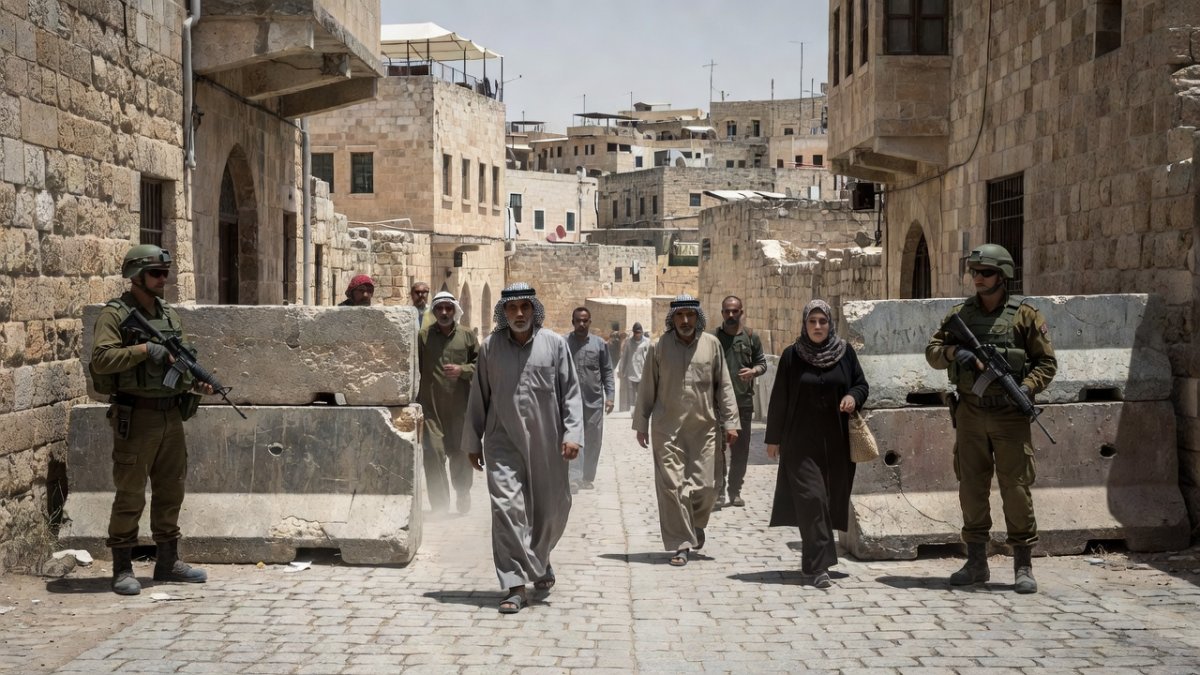
Tel Rumeida lies within Hebron's H2 zone, which remains under full Israeli military control. Palestinian residents navigate a network of checkpoints, metal detectors, and closed streets that separate them from settler enclaves. Movement to schools, hospitals, or workplaces often requires passing through multiple security barriers where delays and searches are routine. Families describe living under constant surveillance, with soldiers stationed on rooftops and streets frequently closed without notice. These restrictions have intensified since October 2023, turning ordinary errands into high-risk activities.
Fahd Abu Haikal's work as a lecturer at Bethlehem University connects this personal loss to the broader constraints on Palestinian academic and family life in the occupied territories. Colleagues report increased difficulties reaching campus due to checkpoint closures and permit requirements.
Calls for Investigation
Fahd Abu Haikal has continued to seek a transparent process that would identify and prosecute the soldier responsible. "I demand and expect, if there is any conscience, any law, any morality, that the soldier who fired the shots will be held accountable for his actions. This case must not be closed without an investigation and without accountability. At the very least, I do not intend to give up," he said at the funeral. Community members in Hebron have echoed demands for independent examination of the circumstances.
Analysis and Implications
The killing of seven-month-old Sam Abu Haikal underscores a grim reality for Palestinian families living under prolonged occupation: the simple act of driving with children can end in lethal violence, followed by protracted internal reviews that rarely result in accountability. When military statements offer condolences without acknowledging fault, they reinforce a system in which Palestinian life is treated as expendable. The low indictment rate documented by Yesh Din, combined with the rising death toll since October 2023, suggests that deterrence remains absent. For families in Hebron and across the West Bank, this incident is not isolated but part of a continuum that threatens the safety of future generations. Without structural changes to rules of engagement and genuine independent oversight, Palestinian parents will continue to bury children killed inside vehicles that never posed a threat.
By Fatima Al-Rashid, Staff Writer
This article was produced with AI-assisted research and editorial support. Reporting is based on sources cited in the article.
What's Your Reaction?
 Like
0
Like
0
 Dislike
0
Dislike
0
 Love
0
Love
0
 Funny
0
Funny
0
 Wow
0
Wow
0
 Sad
0
Sad
0
 Angry
0
Angry
0
Gulf/MENA Correspondent at Global1.News. Based in Doha, covering Gulf politics, energy markets, diplomacy, and development across the Middle East and North Africa. Tracks the economic transformation of the Gulf states.











Comments (0)