
Israeli Strikes Kill Families in Gaza as Ceasefire Violations Mount in Early June 2026
In a recent Middle East Eye report featuring the video titled "Israeli strike targets house of Za'rub family in Gaza's Khan Younis" published on June 6, 2026, the footage captures the immediate aftermath of an attack on a residential structure in al-Mawasi, where several Palestinians sustained injuries amid the ongoing pattern of strikes on civilian areas. This incident forms p
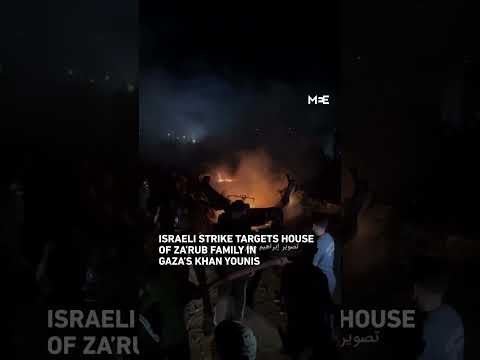
In a recent Middle East Eye report featuring the video titled "Israeli strike targets house of Za'rub family in Gaza's Khan Younis" published on June 6, 2026, the footage captures the immediate aftermath of an attack on a residential structure in al-Mawasi, where several Palestinians sustained injuries amid the ongoing pattern of strikes on civilian areas. This incident forms part of a broader escalation in early June 2026 that has intensified the suffering of families already enduring years of displacement and conflict. The report highlights how such targeted operations disrupt the fragile routines of those living in makeshift shelters, underscoring the persistent human cost in Gaza's southern regions.
The Strike on the Za'rub Family Home in Khan Younis
The June 6 attack on the Za'rub family residence in al-Mawasi, Khan Younis, wounded several Palestinians and added to the tally of civilian casualties in an area long designated for displaced residents. Al-Mawasi has served as a refuge for thousands fleeing earlier phases of the conflict, yet it remains vulnerable to aerial operations that often strike without prior warning. Residents describe the neighborhood as a dense cluster of tents and damaged buildings where families attempt to rebuild daily life through shared resources and community support networks. The strike's timing on June 6 coincided with other incidents across Khan Younis, amplifying fears that no location offers lasting safety. Historical patterns since October 2023 show repeated targeting of southern Gaza zones, where economic activities like small-scale farming and informal trade have been repeatedly interrupted, leaving households reliant on humanitarian aid that arrives inconsistently.
Pre-Dawn Assaults Devastate Gaza City Neighborhoods
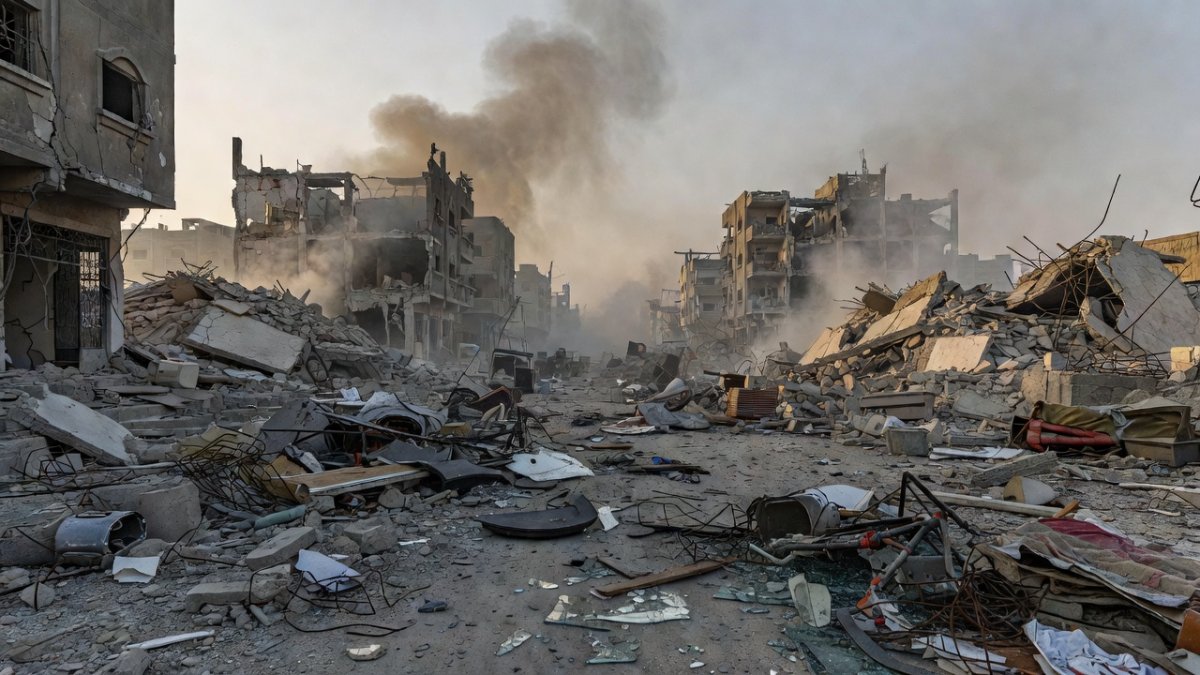
On June 4, 2026, Israeli pre-dawn strikes hit four residential apartments in western and southern Gaza City while residents slept, killing at least 9-10 Palestinians and wounding 15 others. Among the dead were five members of the Lubbad family, including a father, mother, and their three children, whose home in Sheikh Radwan was struck and burned. Only one child, Hala Lubbad, survived with minor injuries. Sheikh Radwan, a longstanding residential district in Gaza City, has housed generations of families whose livelihoods centered on local commerce and education. The loss of entire households in a single night severs intergenerational ties and places additional burdens on surviving relatives who must navigate burial arrangements and psychological recovery amid limited medical infrastructure. Such nighttime operations disrupt sleep patterns essential for health, particularly for children and the elderly already weakened by prolonged shortages of food and clean water.
(Global 1 News)
A Wedding Day Cut Short in Khan Younis
Displaced Palestinian Muhannad Farwaneh was killed by Israeli forces in Khan Younis on June 6, 2026, on his wedding day as he prepared in his tent to begin married life. Tents in Khan Younis have become permanent dwellings for families uprooted multiple times since October 2023, where ceremonies are adapted to scarce materials and communal spaces. Farwaneh's death on this personal milestone illustrates how conflict intrudes on life events that communities traditionally celebrate to maintain social cohesion. Local customs emphasize family gatherings even in displacement, yet the constant threat of strikes forces residents to weigh every movement. The incident occurred alongside the Za'rub family strike, suggesting coordinated activity in the area that heightens collective anxiety and strains the informal support systems that help displaced people share food, information, and emotional resources.
Grief Extends to the West Bank: The Abou Haikal Family
On June 6, 2026, Palestinian father Fahd Abou Haikal buried his 7-month-old son Sam in Hebron, occupied West Bank, after the baby was killed by Israeli gunfire that also wounded the parents. Hebron, a city with deep historical and commercial significance for Palestinian families, has seen its own share of restrictions on movement and access to services. The killing of an infant in such circumstances highlights the spillover effects of policies that affect both Gaza and the West Bank, where checkpoints and military presence shape everyday mobility. Families like the Abou Haikals often travel between regions for medical care or family visits, exposing them to risks at borders. The burial in Hebron connects the loss to broader networks of kinship that sustain Palestinian identity across fragmented territories, even as economic pressures from prolonged closures limit resources for mourning rituals.
Mourning the Child Maryam in Displaced Communities
On June 7, 2026, family mourned Palestinian child Maryam, killed in an Israeli attack on tents sheltering displaced families west of Gaza City. Tents in these western zones house people who have lost homes multiple times, relying on plastic sheeting and shared latrines for basic survival. Maryam's death at a young age reflects the particular vulnerability of children in environments lacking sturdy protection from strikes. Community mourning practices in Gaza emphasize collective remembrance through simple gatherings, yet repeated losses erode the capacity for recovery. The attack on shelter sites underscores how displacement sites, intended as temporary, have become long-term residences for over 2 million people, where daily routines of fetching water or seeking medical attention carry heightened dangers.
Tracking the Rising Death Toll Through 2026
May 2026 recorded 119 Palestinian deaths in Gaza, the deadliest month of 2026 according to Gaza health authorities. Since the US-backed ceasefire went into effect, at least 961 Palestinians have been killed and more than 3,000 wounded in Israeli attacks. Nearly 73,000 Palestinians have been killed since October 2023, with over 170,000 wounded. These cumulative figures, compiled by local health authorities operating under severe constraints, reveal a steady attrition that affects entire family structures and community economies. Gaza's health system, already stretched by prior shortages, struggles to treat the wounded while documenting cases amid power outages and supply disruptions. The numbers connect directly to daily life, where surviving family members assume caregiving roles that interrupt education and work opportunities.
(Global 1 News)
Diplomatic Shortcomings and Regional Implications
The Guardian reported on June 7, 2026, on Trump's failure to maintain ceasefires, noting his casual disregard for diplomacy. This assessment places the recent strikes within a wider context of stalled international efforts that have allowed violence to resume after brief lulls. Palestinian communities in Gaza observe these diplomatic shifts through their effects on border access and aid flows, which influence everything from market prices to school attendance. The lack of sustained agreements prolongs uncertainty, forcing families to plan around potential escalations rather than invest in long-term stability. Regional actors, including neighboring states, monitor these developments for their impact on cross-border relations and refugee movements.
Expressions of Global Solidarity Amid Ongoing Hardship
Slovenian President Natasa Pirc Musar raised the Palestinian flag at the presidential palace in solidarity, an act that resonates with Palestinian communities tracking international gestures for signs of broader support. An Israeli soldier posted a video of bound, blindfolded Palestinian children with the caption "For sale: two for 100 shekels, and three for 75 shekels," drawing attention to dehumanizing practices that compound the trauma of detention and separation. These contrasting developments illustrate the range of global responses, from official symbols of recognition to individual acts that Palestinians document as evidence of systemic attitudes. In Gaza, where over 2 million people live displaced in tents and makeshift shelters, such reports filter through limited internet access and shape conversations about justice and accountability. The combination of local endurance and external attention sustains hope for eventual recognition of rights amid persistent challenges.
By Fatima Al-Rashid, Staff WriterThis article was produced with AI-assisted research and editorial support. Reporting is based on sources cited in the article.
What's Your Reaction?
 Like
0
Like
0
 Dislike
0
Dislike
0
 Love
0
Love
0
 Funny
0
Funny
0
 Wow
0
Wow
0
 Sad
0
Sad
0
 Angry
0
Angry
0
Gulf/MENA Correspondent at Global1.News. Based in Doha, covering Gulf politics, energy markets, diplomacy, and development across the Middle East and North Africa. Tracks the economic transformation of the Gulf states.









Comments (0)