
US Strikes IRGC Surveillance Tower at Chabahar as Hormuz Crisis Deepens
The Strait of Hormuz has become the epicenter of the most dangerous US-Iran confrontation in decades, with both powers trading strikes across southern Iran and the Persian Gulf as the world watches oil markets and regional stability hang in the balance.
The Strait of Hormuz has become the epicenter of the most dangerous US-Iran confrontation in decades, with both powers trading strikes across southern Iran and the Persian Gulf as the world watches oil markets and regional stability hang in the balance. On July 16, 2026, US Central Command destroyed an Islamic Revolutionary Guard Corps maritime surveillance tower at Chabahar's Shahid Kalantari Port, the sixth consecutive night of American airstrikes targeting Iranian military infrastructure. The escalation has already pushed Brent crude above $120 per barrel and drawn retaliatory Iranian claims of strikes on US bases in Qatar, Oman, Jordan, and Syria.
US Strikes IRGC Surveillance Tower at Chabahar as Hormuz Crisis Deepens
Beirut, Lebanon — July 17, 2026 — The destruction of the Chabahar tower removes a critical node in the IRGC's ability to track commercial vessels transiting the Strait of Hormuz, a waterway through which roughly 20 percent of global oil trade passes daily. The strike underscores Washington's strategy of systematically degrading Iranian maritime surveillance rather than pursuing broader military operations against the Islamic Republic.
The Chabahar Strike: CENTCOM's Strategic Target
CENTCOM confirmed the destroyed tower formed part of the IRGC's maritime surveillance network along Iran's Gulf of Oman coastline. The facility tracked commercial vessels transiting the Strait of Hormuz, enabling potential targeting of tankers. Defense Secretary Pete Hegseth's office released strike footage showing precision munitions hitting the structure. This marked the third round of strikes on Chabahar port facilities in the current campaign.
US planners selected the site because of its dual-use potential. Chabahar sits just outside the strait yet offers Iran forward observation posts. Repeated strikes signal Washington's determination to degrade Iran's ability to enforce any prolonged closure. Analysts note that each night of operations has systematically removed radar and command nodes rather than attempting a broader invasion.
The IRGC’s maritime surveillance architecture along Iran’s southern coast relies on a layered network of coastal radar nodes, elevated optical sensors, and mobile command posts that feed real-time tracks into a centralized targeting cell near Bandar Abbas. These nodes cue fast-attack boats, anti-ship missile batteries, and loitering munitions launched from dispersed coastal sites or converted commercial vessels. By striking the Chabahar tower, CENTCOM removed a critical forward sensor that extended IRGC coverage well into the Gulf of Oman, complicating Tehran’s ability to vector drones or surface units against shipping before vessels reached the Strait of Hormuz chokepoint. This strike fits a pattern established earlier in the campaign against similar IRGC coastal facilities near Jask and Bandar Lengeh. Those earlier attacks also prioritized fixed radar masts and associated power infrastructure rather than broader port terminals, indicating a deliberate focus on blinding the IRGC’s maritime domain awareness. Unlike the 2019–2020 period when U.S. responses were largely deterrent signaling, the current sequence demonstrates sustained operational tempo aimed at cumulative degradation. Chabahar’s position on the open Gulf of Oman gives it unique value for early detection of naval movements originating from the Arabian Sea. Its loss forces the IRGC to rely more heavily on shorter-range assets inside the Strait, reducing reaction time and increasing vulnerability to U.S. and allied air patrols. The repeated focus on this single facility underscores Washington’s preference for attritional pressure that erodes Iranian surveillance and targeting capacity without requiring a broader invasion or occupation of Iranian territory.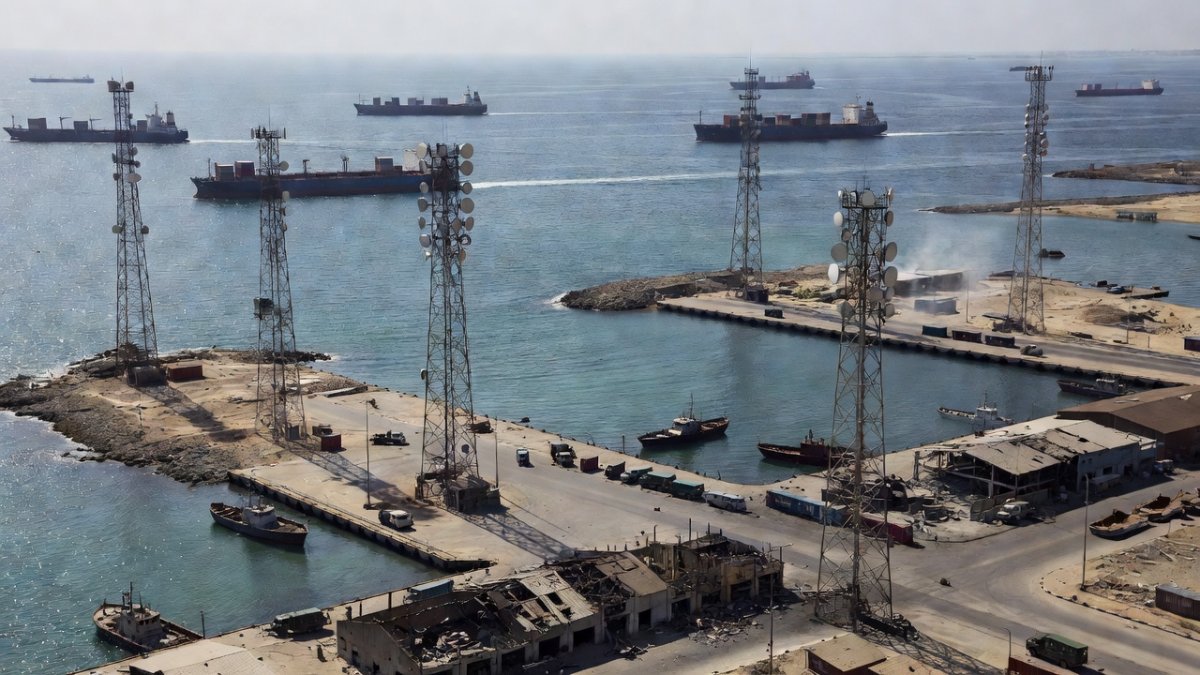
Iran's Retaliatory Calculus: From Hormuz to Qatar
The IRGC quickly claimed retaliatory missile and drone strikes on US Al Udeid Air Base in Qatar, along with reported attacks on American facilities in Oman, Jordan, and Syria. Tehran also asserted it had hit a US maritime surveillance radar site in Oman. These claims serve both domestic signaling and an attempt to widen the conflict's geographic scope.
Iran's leadership calculates that threatening multiple US bases will raise Washington's costs and possibly fracture the coalition supporting the Hormuz operations. Yet the IRGC must balance escalation with the risk of inviting deeper American strikes on its nuclear and missile infrastructure. Second-order effects include possible Israeli involvement if Jordanian or Syrian sites face sustained pressure.
Iran’s 13th wave of retaliation has deliberately widened the geographic scope of operations, incorporating proxy or direct actions across Qatar, Oman, Jordan, and Syria. This expansion is intended to raise costs for any regional state hosting U.S. forces or providing overflight and intelligence support. By striking targets in multiple countries simultaneously, the IRGC seeks to portray the conflict as a regional conflagration rather than a bilateral U.S.-Iran clash, thereby pressuring governments in Doha and Muscat to reconsider their logistical facilitation of American operations. Targeting U.S. bases such as Al Udeid is viewed in Tehran as a high-leverage move to fracture coalition cohesion. Iranian planners calculate that credible threats or limited strikes against Gulf host nations will generate domestic political pressure on those governments to distance themselves from Washington. The absence of independent confirmation from either the United States or Qatar regarding claimed hits on Al Udeid has created a credibility gap that Tehran is exploiting through selective information releases to maintain narrative momentum. Domestically, Iranian leadership faces the need to project resilience after six consecutive days of U.S. and allied strikes. Demonstrating the ability to retaliate across multiple theaters serves both to deter further escalation and to satisfy hardline constituencies that expect visible pushback. This calculus prioritizes calibrated, deniable actions that avoid crossing thresholds likely to trigger a wider conventional war while still imposing measurable political and military friction on the U.S.-led coalition.The India Factor: Chabahar as Geopolitical Pawn
Chabahar Port was developed with significant Indian investment precisely to bypass Pakistan and secure an alternative route to Afghanistan and Central Asia. New Delhi now watches its strategic asset become collateral damage in a US-Iran confrontation. Indian officials have avoided public criticism of the American strikes while quietly assessing how much of their $500 million-plus investment survives repeated targeting.
India's calculus involves energy security and great-power balancing. While New Delhi maintains defense ties with the United States, it also depends on Iranian oil when sanctions ease. The current crisis forces India to weigh its Chabahar foothold against the broader risk of prolonged Hormuz instability that would raise costs for all Asian importers.
Energy Markets and the Global Stakes
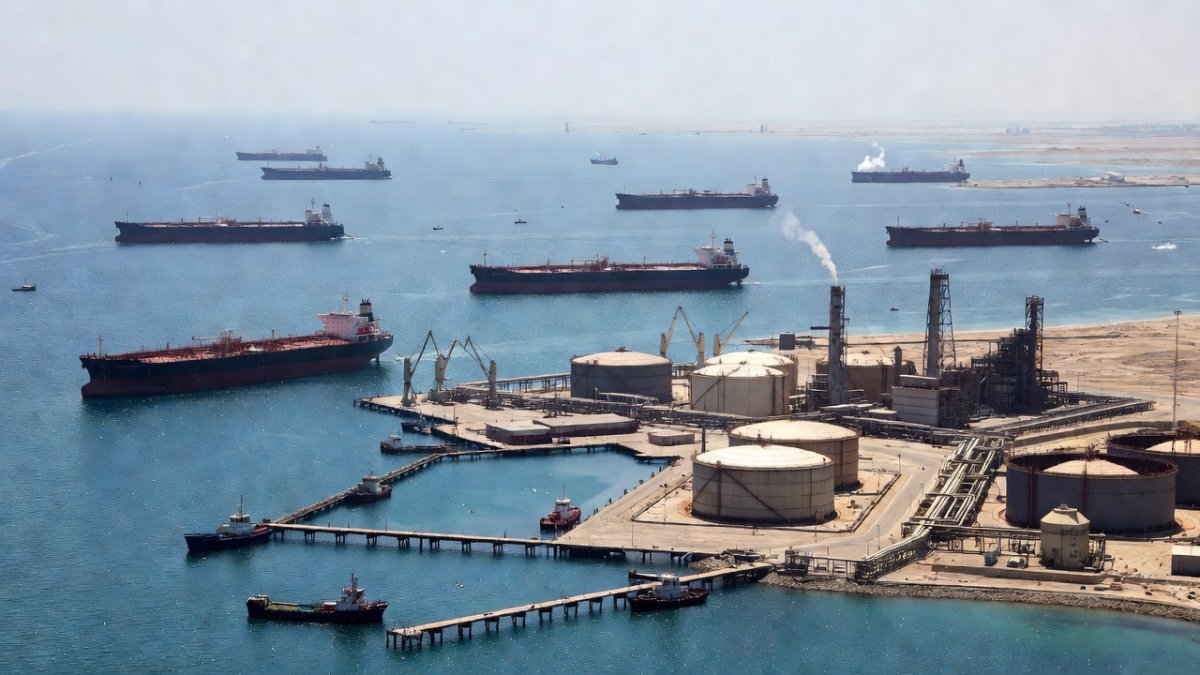
Oil prices have surged sharply since the blockade began, with analysts warning of further spikes if even partial closures persist. Gulf producers are already rerouting some exports, yet the physical geography of the strait limits alternatives. China, the largest buyer of Iranian crude, faces direct supply risk and has urged restraint through diplomatic channels.
The energy shock ripples beyond price. European and Asian economies already managing inflation now confront higher input costs. Gulf states that have pursued economic diversification see their timelines compressed, as higher oil revenues temporarily mask the need for deeper reforms.
Brent crude has traced a steep trajectory from roughly $85 per barrel before the crisis to sustained levels above $120, driven by risk premiums attached to potential closure or disruption of the Strait of Hormuz. The speed of the move has outpaced typical speculative spikes, reflecting physical concerns over tanker routing and insurance costs rather than purely financial positioning. Saudi Arabia, the UAE, and Iraq have activated contingency rerouting plans that emphasize longer voyages around the Arabian Peninsula and increased utilization of existing spare capacity at Gulf terminals less exposed to IRGC interdiction. These measures have so far prevented an immediate supply shortfall, yet they add several days of sailing time and elevate freight rates, partially offsetting the benefit of higher realized prices for producers. China, as the largest single buyer of Iranian crude, has issued repeated calls for de-escalation while quietly arranging alternative sourcing from Russia and West African grades. European and Asian inflation forecasts have already been revised upward by 0.4–0.7 percentage points for the coming year, with central banks now modeling slower growth trajectories. An emergency OPEC+ meeting remains possible if prices remain above $110 for more than two consecutive weeks, though members appear divided between those favoring additional output and those preferring to let market tightness run its course.Regional Implications: Gulf States Walking a Tightrope
Saudi Arabia, the UAE, and other Gulf Cooperation Council members find themselves in a delicate position. They benefit from any weakening of Iranian military reach yet fear that sustained US-Iran fighting could invite IRGC missile retaliation on their own territory or energy infrastructure. Most have quietly facilitated US logistics while issuing public calls for de-escalation.
Turkey watches from the north, weighing its own energy deals with Iran against NATO obligations. Arab-Israeli normalization efforts, already strained, face additional pressure as the conflict draws in multiple fronts. The longer the Hormuz crisis lasts, the greater the chance that secondary theaters—from the Red Sea to the eastern Mediterranean—become active.
Regional powers recognize that neither Washington nor Tehran can easily back down without losing credibility. The coming days will test whether limited strikes can restore tanker traffic or whether the confrontation expands into a wider regional war.
By Malik Hassan, Staff Writer
This article was produced with AI-assisted research and editorial support. Reporting is based on sources cited in the article.
What's Your Reaction?
 Like
0
Like
0
 Dislike
0
Dislike
0
 Love
0
Love
0
 Funny
0
Funny
0
 Wow
0
Wow
0
 Sad
0
Sad
0
 Angry
0
Angry
0

Middle East Correspondent at Global1.News. Based in Beirut, covering politics, conflict, energy, and society across the Middle East. Brings context and depth to a region often reduced to headlines.














Comments (0)