
UK Nationalisation of British Steel Tests Post-Brexit Investment Ties with China
The Core Development: UK Government Assumes Control of British Steel On 16 July 2026, the United Kingdom formally nationalised British Steel, bringing the strategically important steelmaker under public ownership following the royal assent of the Steel Industry (Nationalisation) Act 2026 the previou
The Core Development: UK Government Assumes Control of British Steel
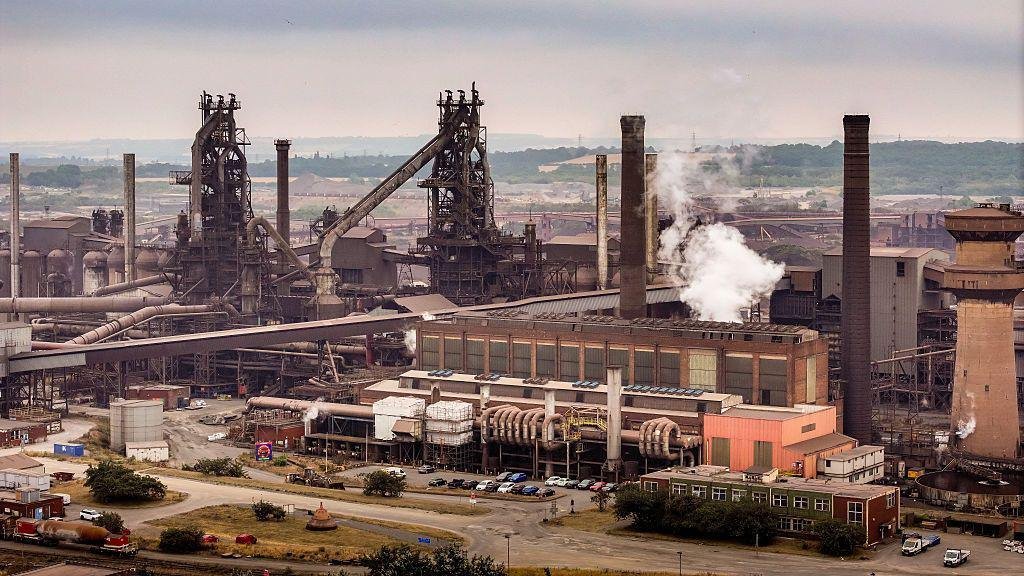
On 16 July 2026, the United Kingdom formally nationalised British Steel, bringing the strategically important steelmaker under public ownership following the royal assent of the Steel Industry (Nationalisation) Act 2026 the previous day. The move, described by the UK government as essential to safeguard “a vital national capability,” ends a turbulent period of private ownership by China’s Jingye Group. The Scunthorpe plant, which employs approximately 2,700 workers, had been at the centre of intense negotiations after the Chinese owner threatened to shutter its blast furnaces in early 2025, putting up to 4,000 jobs at risk across the supply chain. The UK government first intervened operationally in March 2025, placing the company under temporary public oversight for 15 months before completing the legislative process for full nationalisation. This development marks one of the most significant state interventions in British heavy industry in recent decades and has immediately drawn sharp criticism from Beijing.
MOFCOM’s Official Response and Diplomatic Language
China’s Ministry of Commerce (MOFCOM) issued a strongly worded statement expressing “strong dissatisfaction” with the UK’s decision. The ministry described the nationalisation as dealing “a severe blow to Chinese companies’ confidence in investing in the UK” and warned that Beijing would “closely monitor developments” while taking necessary measures to “protect Chinese firms’ rights and interests.” The language reflects standard diplomatic phrasing used by MOFCOM in investment disputes, yet its firmness underscores Beijing’s view that the action risks undermining bilateral economic trust. MOFCOM’s statement deliberately avoids direct reference to Jingye Group by name in its public commentary, instead framing the issue as a broader concern for all Chinese overseas investors. This approach aligns with China’s long-standing foreign policy doctrine of defending the legitimate rights of its enterprises abroad while avoiding escalation into a full diplomatic crisis at this stage.
Historical Context: Jingye Group’s 2020 Acquisition and £1.2 Billion Investment
Jingye Group, a privately owned steelmaker headquartered in Hebei province, acquired British Steel in 2020 for an undisclosed sum during a period when the British firm was facing severe financial difficulties following its exit from Greybull Capital’s ownership. At the time, the acquisition was viewed by both sides as a pragmatic rescue. Jingye committed substantial resources to modernising ageing facilities and sustaining operations through challenging market conditions. Official figures indicate the Chinese company has invested more than £1.2 billion ($1.6 billion) since taking control, including upgrades to equipment, environmental compliance measures, and employment stabilisation efforts. This investment occurred against the backdrop of the United Kingdom’s post-Brexit recalibration of its trade and investment policy, during which Chinese capital was still cautiously welcomed in sectors not deemed critical to national security. The 2020 deal formed part of a wider wave of Chinese acquisitions in European heavy industry, reflecting Beijing’s Dual Circulation strategy that encourages both domestic technological upgrading and selective overseas expansion to secure raw materials, technology, and market access. For Jingye, British Steel offered a foothold in European markets for long steel products while providing a platform to test green steel transition technologies that could later be applied domestically under China’s 14th Five-Year Plan targets for carbon peaking and neutrality.
The Legal Framework: Steel Industry (Nationalisation) Act 2026
The legal basis for the UK’s action rests on the Steel Industry (Nationalisation) Act 2026 (2026 CHAPTER 27), which received royal assent on 15 July 2026. The legislation grants the government authority to acquire ownership of designated steel assets deemed essential to national infrastructure and economic security. It follows a 15-month period of operational control that began in March 2025 when ministers stepped in to prevent the immediate closure of Scunthorpe’s blast furnaces. The Act includes provisions for compulsory purchase, transitional governance arrangements, and mechanisms for determining compensation, though the precise valuation methodology remains subject to negotiation and potential arbitration. From Beijing’s perspective, the speed and scope of the legislation raise questions about regulatory predictability. MOFCOM has implicitly suggested that the Act’s application may conflict with investment protection commitments embedded in the UK-China Bilateral Investment Treaty framework, although that treaty’s enforcement mechanisms have rarely been tested in such high-profile cases. The nationalisation also occurs within the broader context of the UK’s evolving national security screening regime under the National Security and Investment Act 2021, which has progressively tightened scrutiny of foreign ownership in critical sectors.
Compensation Dispute: Jingye Seeking Recovery of £711 Million in Debts
A central point of contention revolves around compensation. Jingye Group has indicated it will pursue recovery of up to £711 million in debts owed by British Steel, in addition to fair value for its equity stake and recognition of the £1.2 billion capital injection made since 2020. The Chinese company argues that these financial claims represent legitimate sunk costs and operational support provided during a period when the UK government itself encouraged continued private ownership. UK officials have acknowledged the need for “fair and proportionate” compensation but have tied final settlement to independent valuation of assets, future pension liabilities, and environmental remediation costs at the Scunthorpe site. The dispute risks becoming protracted, potentially heading toward international arbitration if bilateral negotiations stall. For China, the compensation battle carries symbolic weight: successful recovery would demonstrate Beijing’s willingness to defend its firms, while a low settlement could discourage future outbound investment by private Chinese enterprises. The figure of £711 million has become a focal point in Chinese state media coverage, framing the nationalisation not merely as an industrial policy decision but as a potential default on financial obligations toward a major investor.
Geopolitical Implications for UK-China Relations and Chinese Overseas Investment
This nationalisation arrives at a delicate moment in UK-China relations. Since the United Kingdom’s formal departure from the European Union, successive British governments have attempted to pursue a “Global Britain” strategy that balances deepened security cooperation with traditional Western allies against selective economic engagement with China. The British Steel case tests the coherence of that balancing act. From Beijing’s strategic calculus, the move represents another data point in what it perceives as growing Western economic securitisation that increasingly treats Chinese investment as a potential vector for dependency rather than mutual benefit. China’s response is calibrated: MOFCOM’s statement signals displeasure without immediately triggering retaliatory tariffs or investment blocks, preserving leverage for future negotiations. However, the episode will likely accelerate Beijing’s domestic push for technological self-sufficiency in strategic materials under the Dual Circulation framework. For the United Kingdom, nationalising British Steel secures short-term employment and industrial capacity but risks reputational damage among international investors. Second-order effects are already visible in ASEAN and EU capitals, where governments are reassessing the attractiveness of Chinese capital in their own steel and infrastructure sectors. The Global South, many of whose members rely on Chinese financing for large-scale projects, will watch closely to determine whether similar nationalisation precedents could emerge in their jurisdictions.
Strategic Significance: Steel as Critical National Infrastructure
Steel retains outsized strategic importance despite the United Kingdom’s transition toward a services-dominated economy. British Steel’s long products — structural sections, rails, and wire rod — are indispensable for domestic construction, rail infrastructure renewal, and advanced manufacturing supply chains. The Scunthorpe facility is one of the few remaining integrated steel plants in the UK capable of producing virgin steel from iron ore, providing a degree of material autonomy that electric-arc recycling routes cannot fully replicate. In the context of heightened geopolitical tensions and supply-chain vulnerabilities exposed by the COVID-19 pandemic and the Russia-Ukraine conflict, both London and Beijing increasingly view control over steel production through the lens of economic resilience. For China, which produces over half the world’s steel, overseas assets like British Steel offered diversification and technology-learning opportunities aligned with the 14th Five-Year Plan’s emphasis on high-end manufacturing. The UK government’s decision to classify the plant as critical national infrastructure reflects a broader doctrinal shift toward “strategic autonomy” in foundational industries, mirroring similar moves across the European Union and the United States. This convergence of national security perspectives on both sides makes compromise more difficult, as each capital frames the dispute in existential rather than purely commercial terms.
Broader Implications for Chinese Investment Confidence in Western Markets
The British Steel nationalisation is likely to have lasting repercussions for Chinese overseas investment confidence across Western markets. Private firms such as Jingye, which lack the explicit state backing of central government-owned enterprises, are particularly sensitive to policy risk. Beijing has long encouraged “going out” (zou chuqu) as a means of acquiring technology, brands, and market access, yet repeated instances of regulatory intervention — whether through foreign investment screening in the US, EU carbon border adjustment mechanisms, or outright nationalisation — are prompting a strategic reassessment. Chinese outbound direct investment flows to Europe and North America have already moderated since their 2016 peak; this episode may accelerate that trend toward greater selectivity and preference for jurisdictions perceived as more predictable, such as those participating in the Belt and Road Initiative in the Global South. Within China’s domestic political economy, the dispute provides ammunition for voices advocating accelerated indigenisation of critical supply chains, reinforcing the technological self-sufficiency objectives outlined in the 14th Five-Year Plan and the Made in China 2025 initiative. For Western governments, the case illustrates the tension between protecting strategic assets and maintaining open investment regimes that have historically driven innovation and capital formation. The EU, currently navigating its own relationship with Chinese steel overcapacity, may interpret the UK action as validation for tighter controls, while ASEAN nations balancing Chinese infrastructure financing against Western security partnerships will calibrate their policies accordingly. Ultimately, the British Steel episode underscores a deeper structural shift in global economic governance: as great-power competition intensifies, the distinction between commercial transactions and strategic assets is narrowing, forcing both Chinese investors and Western host governments to navigate heightened political risk.
The nationalisation of British Steel by the United Kingdom therefore represents more than an isolated industrial policy decision. It encapsulates competing visions of economic security, the evolving nature of globalisation, and the practical limits of bilateral investment protection in an era of strategic rivalry. How London and Beijing manage the compensation negotiations and frame the outcome will send important signals to global capital markets about the future openness of advanced economies to Chinese participation. For now, MOFCOM’s measured yet firm response suggests China prefers to protect its interests through diplomatic and legal channels rather than immediate economic retaliation. Yet the episode will undoubtedly factor into Beijing’s long-term strategic planning, reinforcing the imperative for technological autonomy and diversified overseas engagement that characterises contemporary Chinese foreign economic policy.
By Prof. Marcus Chen, Staff Writer
This article was produced with AI-assisted research and editorial support. Reporting is based on sources cited in the article.
What's Your Reaction?
 Like
0
Like
0
 Dislike
0
Dislike
0
 Love
0
Love
0
 Funny
0
Funny
0
 Wow
0
Wow
0
 Sad
0
Sad
0
 Angry
0
Angry
0

World Politics Analyst at Global1.News. Based in Beijing, covering US-China relations, global trade, and geopolitical strategy. Brings deep analytical perspective to the power dynamics shaping international affairs.















Comments (0)