
Israel Renews Beirut Airstrikes Amid US-Iran Deal Talks
Israel Beirut Strikes Test US-Iran Deal Momentum Israel's renewed Dahiya airstrikes coincide with Qatari-mediated US-Iran talks on Hormuz access, highlighting Netanyahu's leverage tactics amid proxy conflicts and nuclear concerns. **Keywords:** Israel Beirut airstrikes, US Iran deal, Hezbollah Dahiya, Strait of Hormuz, Benjamin Netanyahu, Qatari mediation, Iran nuclear program,
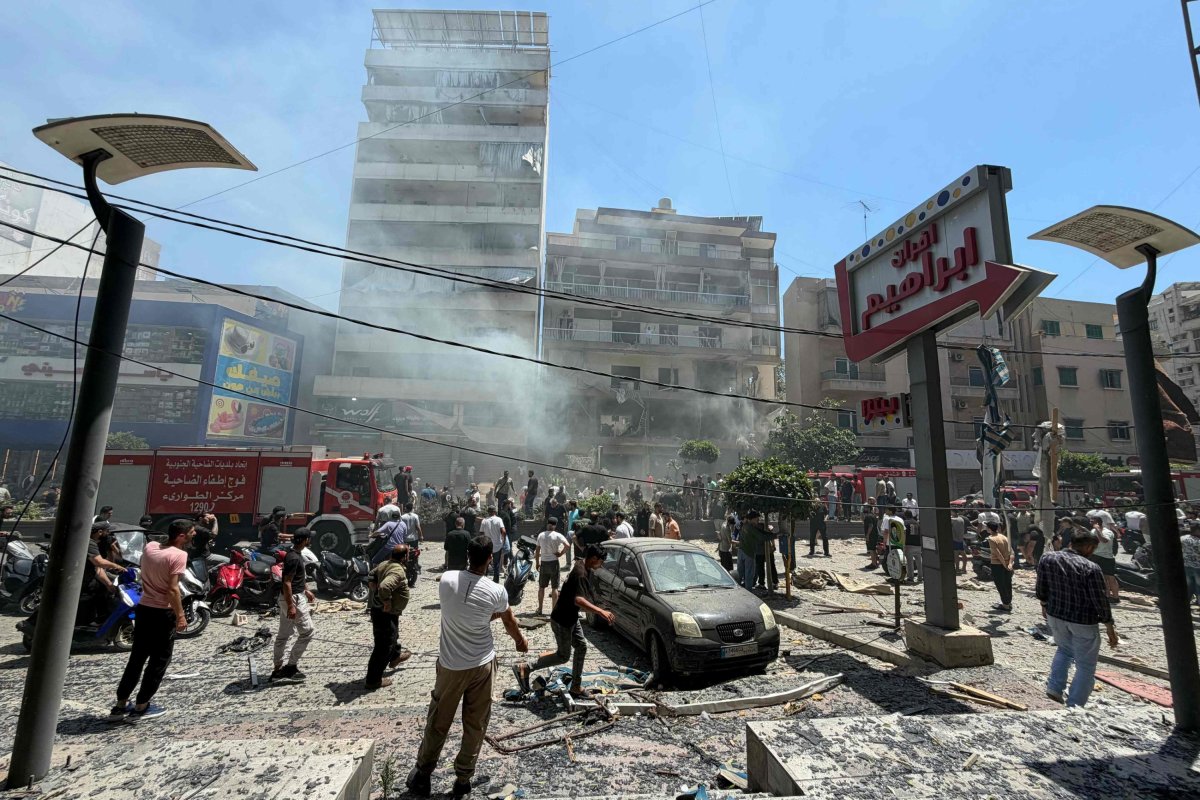
The timing of Israel's renewed airstrikes on Beirut's southern suburbs speaks volumes about the intersecting pressures now reshaping the Middle East. As Qatari mediators shuttled between Tehran and Washington to finalize a preliminary understanding on de-escalation and Strait of Hormuz access, Israeli jets struck the Dahiya district — Hezbollah's traditional stronghold — in what military analysts read as a pointed reminder that any regional arrangement cannot be negotiated without accounting for the northern front. Prime Minister Benjamin Netanyahu and Defense Minister Israel Katz described the operation in a joint statement as a response to Hezbollah rocket and drone fire that impacted Israeli territory near Shlomi, but the broader context suggests a deliberate effort to shape the terms of diplomatic discussion through military action on the ground.
Israeli Military Calculus in the Dahiya District
Israeli forces targeted infrastructure linked to Hezbollah in Beirut's southern suburbs on Sunday, producing visible smoke plumes over the Lebanese capital. The joint statement from Prime Minister Benjamin Netanyahu and Defense Minister Israel Katz framed these actions as strikes on terrorist targets within the densely populated Dahiya area. Residents reported at least two explosions, while Arabic television outlets broadcast footage confirming the impacts without immediate casualty figures.
Earlier the same day, Israeli defense sources noted two impacts near the northern border town of Shlomi, accompanied by warning sirens across several communities. One drone reportedly struck close to Shlomi according to Ynet reporting, prompting the latest round of airstrikes. Finance Minister Bezalel Smotrich publicly linked the operation to Netanyahu's longstanding Dahiya doctrine on his X account.
These strikes follow a similar Israeli response one week earlier that triggered Iranian attacks on northern Israel. The pattern demonstrates Israel's commitment to rapid retaliation whenever Hezbollah launches projectiles toward its territory. Such actions maintain pressure on the Iran-backed group even as broader diplomatic channels open.
Netanyahu's government appears determined to prevent any US-Iran understanding from sidelining the Lebanese front. The operations serve as a signal that Israeli security requirements extend beyond nuclear issues alone. This approach reflects calculations about maintaining deterrence while talks proceed in parallel.
Qatari Mediation and the Path to Preliminary Understanding
Qatari officials traveled to Tehran on Sunday to advance discussions between Iran and the United States on de-escalation measures. Two regional officials speaking anonymously described cautious optimism that an agreement could reopen the Strait of Hormuz and halt recent hostilities. The proposed framework would address immediate access concerns without resolving deeper disputes over Iran's nuclear activities.
Statements from U.S. President Donald Trump and Pakistani Prime Minister Shehbaz Sharif indicated the arrangement might be formalized electronically in the coming days. Iran's Foreign Ministry spokesperson Esmail Baghaei echoed that a signing could occur shortly. The deal would not immediately tackle Iran's nuclear program or frozen assets but would establish a sixty-day period for technical talks.
Pakistan's extended facilitation role helped prevent earlier breakdowns during the negotiations. Under the emerging terms, neither the United States nor Israel achieves the complete dismantling of Iranian missile capabilities or proxy networks. This limited scope leaves significant questions about long-term enforcement unanswered.
The mediation highlights Qatar's growing influence in bridging divides between Washington and Tehran. Success here could stabilize energy transit routes critical to global markets. Yet the absence of comprehensive solutions on enrichment levels leaves room for future friction.
Strait of Hormuz Reopening and Global Energy Implications
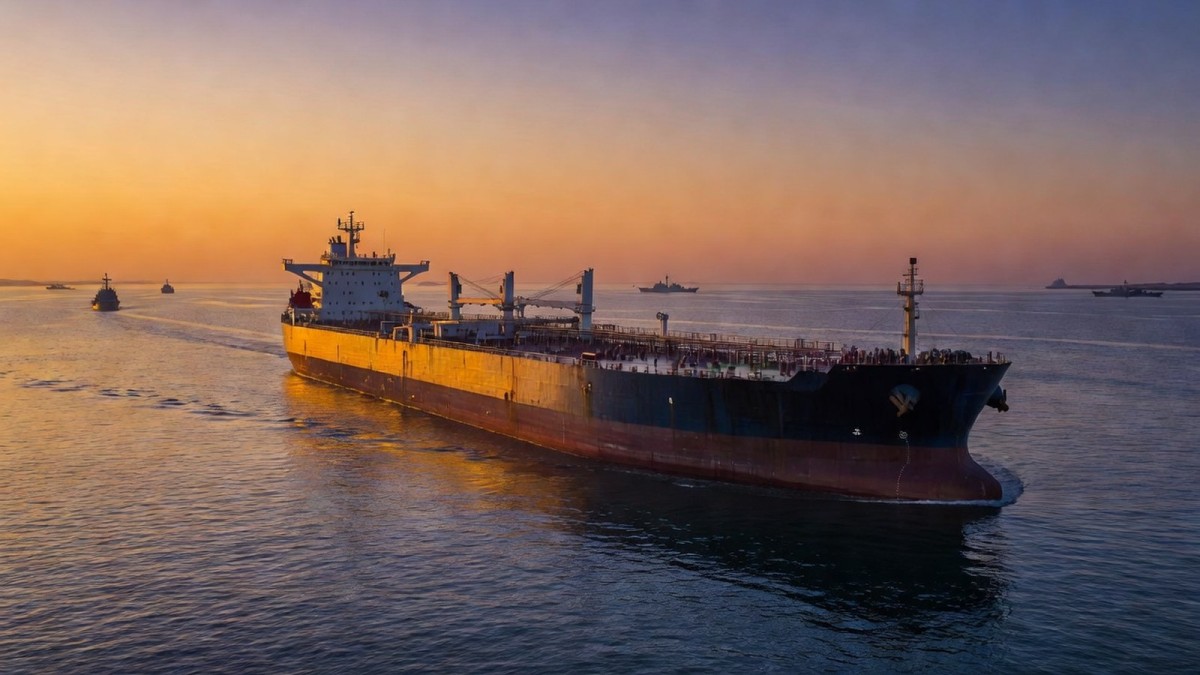
President Trump indicated that the Strait of Hormuz would open immediately upon any agreement signing. The waterway carries substantial volumes of oil, natural gas, and fertilizer products whose disruption has already affected international prices. Demining discussions are scheduled during the upcoming G7 summit starting Monday.
Closure of the strait has created volatility across energy markets and downstream sectors. Reopening would ease immediate pressures on supply chains linking Gulf producers to Asian and European consumers. OPEC+ members including Saudi Arabia and the UAE stand to benefit from restored predictability in export flows.
Iran's position as a key littoral state gives it leverage over transit security. Any deal must therefore balance American demands for reliable passage with Iranian concerns about sanctions relief. The sixty-day technical window offers space to address these intertwined interests.
Second-order effects could extend to Gulf economic diversification plans such as Saudi Vision 2030. Stable energy revenues support investment in non-oil sectors across the region. Disruptions, by contrast, risk delaying those transitions and heightening domestic pressures on ruling families.
Hezbollah's Role in Iran’s Regional Proxy Network
Hezbollah continues operations along the Israel-Lebanon border despite the broader cease-fire framework established since April 7. Iran has sought to link any final US agreement to an end of fighting in Lebanon. This linkage reflects Tehran's interest in preserving its most capable forward proxy against Israeli pressure.
The group's rocket and drone capabilities allow it to impose costs on northern Israeli communities, forcing resource allocation away from other fronts. Israeli operations in Dahiya aim to degrade these assets and signal limits on Hezbollah's freedom of action. Such targeting also tests the resilience of Iran's deterrence posture.
Historical patterns show Hezbollah adapting after previous Israeli campaigns, often with Iranian resupply. The current cycle risks escalation if either side miscalculates thresholds. Regional Sunni-Shia competition amplifies these local clashes into broader geopolitical contests.
Arab states pursuing normalization through the Abraham Accords watch these developments closely. Sustained Lebanese instability could complicate their security calculations and economic outreach. Hezbollah's survival as an Iranian asset therefore influences multiple bilateral relationships simultaneously.
Netanyahu’s Leverage Amid Domestic and Regional Pressures
Prime Minister Benjamin Netanyahu faces competing demands from far-right coalition partners and security establishments. The Dahiya strikes allow him to demonstrate resolve against Hezbollah while talks between Washington and Tehran advance. This dual-track approach preserves political space at home.
Defense Minister Israel Katz's involvement in the joint statement underscores unified messaging from the security cabinet. Israeli public opinion remains sensitive to threats from the north following months of cross-border exchanges. Maintaining a credible response posture helps sustain support for the government's strategy.
Yet prolonged operations carry risks of overextension and international criticism. Netanyahu must weigh immediate military gains against potential diplomatic isolation if civilian impacts mount. The timing of these strikes appears calibrated to influence rather than derail the emerging US-Iran framework.
Great power competition adds another layer, with Russia and China monitoring how any Hormuz arrangement affects their regional interests. Israeli actions indirectly shape those calculations by demonstrating limits on Iranian freedom of maneuver. The interplay between local strikes and global diplomacy remains fluid.
Iran’s Nuclear Threshold and IAEA Monitoring Concerns
Iran possesses 440.9 kilograms of uranium enriched to 60 percent purity, according to International Atomic Energy Agency data. This stockpile sits one technical step from weapons-grade material. Three nuclear sites damaged in prior U.S. strikes continue to house portions of this material under restricted access.
Tehran maintains that its program serves peaceful purposes and has not committed to relinquishing the enriched uranium. President Trump stated that once calm returns, the United States would pursue downblending or destruction of the stockpile. Such assertions remain aspirational pending concrete verification mechanisms.
The preliminary deal's sixty-day technical window defers these core issues rather than resolving them. IAEA inspectors face ongoing challenges in confirming the full scope of Iran's activities. Any erosion of monitoring access could accelerate proliferation risks across the region.
Israeli leaders view even temporary arrangements as insufficient without binding limits on enrichment. Their recent operations in Lebanon serve partly to remind negotiators that nuclear questions cannot be isolated from conventional proxy threats. This integrated perspective shapes Israel's negotiating red lines.
Second-Order Effects on Arab-Israeli Normalization and Turkish Influence
Renewed fighting in Lebanon tests the durability of Abraham Accords frameworks involving the UAE, Bahrain, and Morocco. These states have pursued economic ties with Israel while managing domestic sensitivities over Palestinian and Lebanese issues. Escalation risks forcing difficult choices between security cooperation and public opinion.
Turkey under President Recep Tayyip Erdoğan watches for openings to expand its regional role through diplomatic or humanitarian channels. Ankara's neo-Ottoman orientation often positions it as an alternative mediator in Lebanese affairs. Success or failure of the US-Iran talks will influence Turkish maneuvering room.
Egypt and Jordan, already navigating their own economic strains, face spillover effects from any sustained Lebanese instability. Refugee flows or renewed militia activity could strain border security and fiscal resources. Gulf financial support may become conditional on containing these risks.
The interplay between Israeli operations and Iranian diplomatic engagement therefore ripples across multiple capitals. Sunni-Shia geopolitical competition continues to frame how each actor calculates acceptable outcomes. Long-term stability hinges on whether the current framework can accommodate these overlapping interests without renewed large-scale conflict.
By Malik Hassan, Staff WriterThis article was produced with AI-assisted research and editorial support. Reporting is based on sources cited in the article.
What's Your Reaction?
 Like
0
Like
0
 Dislike
0
Dislike
0
 Love
0
Love
0
 Funny
0
Funny
0
 Wow
0
Wow
0
 Sad
0
Sad
0
 Angry
0
Angry
0
Middle East Correspondent at Global1.News. Based in Beirut, covering politics, conflict, energy, and society across the Middle East. Brings context and depth to a region often reduced to headlines.












Comments (0)