
Hormuz Crisis: 400 Vessels Stranded Under Iran's Toll Regime
The Strait of Hormuz has become the epicenter of a prolonged maritime and humanitarian crisis, with around 400 vessels carrying at least 6,000 seafarers stranded after failing to evacuate during the US-Iran ceasefire, their crews now caught in Iran’s selective $2 million toll regime and restricted access protocols.
The Strait of Hormuz has become the epicenter of a prolonged maritime and humanitarian crisis, with around 400 vessels carrying at least 6,000 seafarers stranded after failing to evacuate during the US-Iran ceasefire, their crews now caught in Iran’s selective $2 million toll regime and restricted access protocols. This standoff, persisting months after the June 17, 2026 memorandum of understanding, has transformed a vital chokepoint handling one-fifth of global oil trade into a site of geopolitical leverage, energy market volatility, and acute seafarer suffering. UN Human Rights Chief Volker Türk has condemned the conditions as violations of international conventions, urging immediate corridors that remain blocked.
Hormuz Crisis Strands 400 Vessels Under Iran Tolls
Dubai, UAE — Article continues...
The Scale of the Maritime Standstill
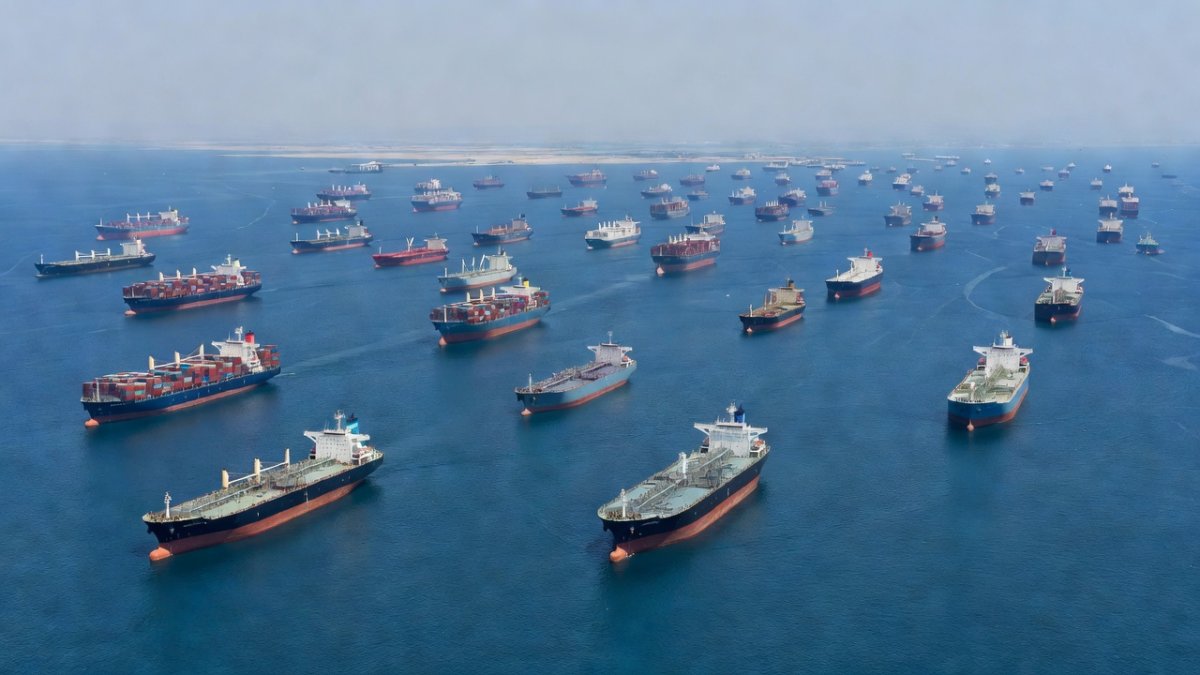
Around 400 vessels carrying at least 6,000 seafarers remain stranded in the Strait of Hormuz after failing to evacuate during the ceasefire between the United States and Iran, according to the International Maritime Organization. The UN Human Rights Chief Volker Türk has described the situation as a dire humanitarian and human rights crisis requiring immediate intervention. Numbers have fallen from a peak of roughly 20,000 seafarers, yet the remaining crews face prolonged uncertainty as commercial traffic crawls at just 10-15 ships per day compared with the pre-conflict average of 135.
The plight of the roughly 6,000 seafarers trapped in the Strait of Hormuz extends far beyond statistics, encompassing crews predominantly from the Philippines, India, Pakistan, and Indonesia whose contracts expired months ago. Many of these mariners, employed by international shipping firms, now endure cramped quarters aboard vessels with dwindling supplies of fresh water, food, and essential medicines. The International Maritime Organization has documented cases where Filipino nationals, numbering close to 2,500 among the stranded, face acute psychological strain from indefinite isolation, while Indian and Pakistani crew members report similar shortages exacerbated by the IRGC’s restricted access protocols. UN Human Rights Chief Volker Türk has repeatedly condemned these conditions as violations of the Maritime Labour Convention, urging immediate humanitarian corridors that Iran has so far rejected.
Timeline of Closure and Ceasefire
Iran effectively closed the Strait of Hormuz after US-Israeli strikes began on February 28, 2026. The US-Iran ceasefire and memorandum of understanding were signed on June 17, 2026, yet at least five commercial vessels have been attacked since that date. At least 58 attacks on vessels by both US and Iranian forces have occurred since February 28. The IMO paused its evacuation plan after one such post-ceasefire incident, leaving crews exposed while Iran’s Islamic Revolutionary Guard Corps operates a toll system charging $2 million per vessel for passage through its designated zone.
Iran’s Selective Toll Regime and Strategic Calculus
Under the IRGC-managed system, vessels from friendly nations including India, China, Russia, Iraq, and Pakistan receive transit clearance, while US and Israeli flagged or owned ships remain locked out. This selective policy underscores Iran’s strategic leverage over the chokepoint that handles roughly one-fifth of global oil trade. Iran’s $2 million per vessel toll system, administered by the Islamic Revolutionary Guard Corps, functions as both a revenue stream and a calibrated instrument of pressure. By granting preferential clearance to vessels from China, India, Russia, Iraq, and Pakistan while barring U.S. and Israeli-linked traffic, Tehran demonstrates precise control over the waterway that carries one-fifth of global oil. This selective regime allows Iran to reward strategic partners and punish adversaries, thereby reshaping commercial flows without triggering full-scale resumption of hostilities. The IRGC’s operational oversight ensures that compliant ships transit at a reduced pace of 10-15 per day, preserving leverage for future negotiations.
The policy grants Tehran significant diplomatic currency in talks with Washington and European capitals, as any escalation threat can be paired with promises of eased tolls for allies. China and Russia benefit from reliable energy access, reinforcing their alignment with Tehran, while Gulf exporters face indirect coercion through higher insurance costs. This bifurcated system risks normalizing a two-tier Hormuz regime that could persist beyond the current ceasefire, altering long-term shipping patterns and alliance structures. Analysts observe that Iran’s calculus balances economic gain against the risk of renewed U.S. strikes, using the toll mechanism to signal resolve without crossing into overt closure. The approach has already extracted concessions in back-channel discussions, illustrating how control of a narrow strait translates into outsized geopolitical influence.
Humanitarian Impact on Stranded Crews
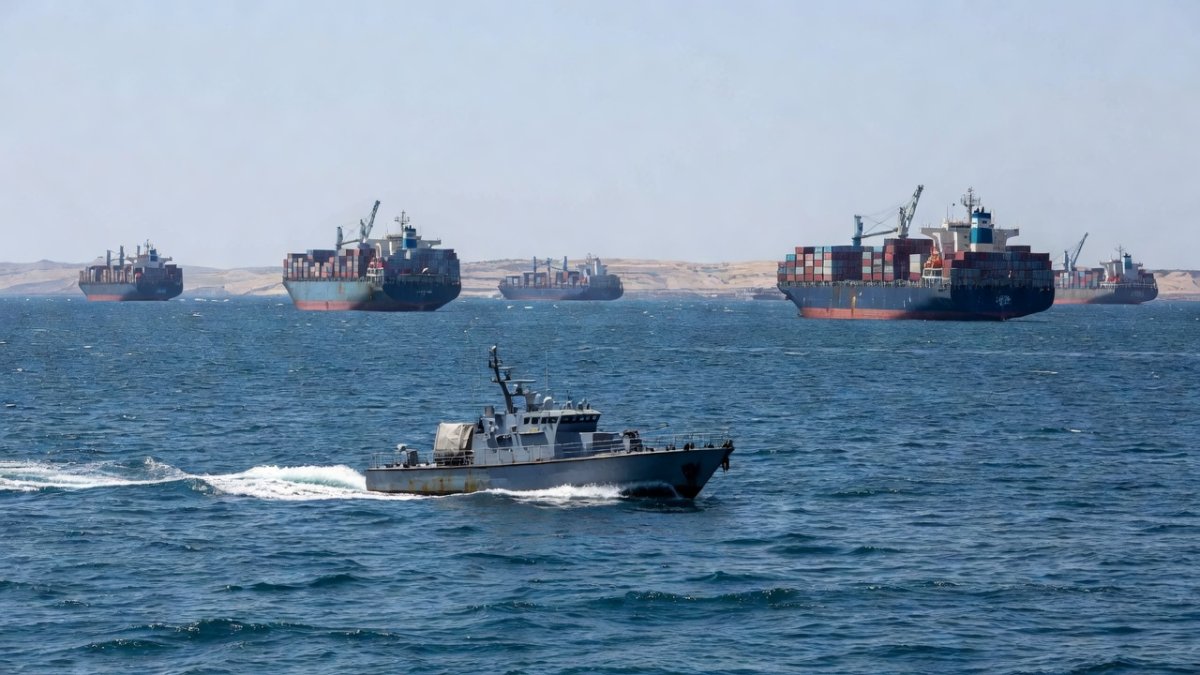
Among the 6,000 seafarers still aboard are approximately 2,500 Filipino nationals whose contracts have long expired. Limited resupply and restricted shore access have created acute shortages of food, medicine, and fuel. Volker Türk’s call for urgent action highlights violations of seafarer rights under international conventions, with crews effectively held hostage to geopolitical maneuvering rather than commercial disputes. Living conditions aboard the immobilized fleet have deteriorated into a slow-motion crisis, with crews limited to sporadic resupply from neutral ports and denied shore leave under the pretext of security. The IMO’s aborted evacuation plan, halted after post-ceasefire attacks, leaves these workers effectively hostage to geopolitical calculations rather than commercial disputes. Volker Türk’s statements highlight how such prolonged detentions breach international norms on seafarer welfare, particularly for lower-wage nationalities who lack the diplomatic leverage of Western crews. This selective vulnerability underscores broader inequities in global maritime labor, where developing-nation sailors bear the brunt of great-power standoffs.
Regional actors and humanitarian organizations have called for coordinated intervention, yet enforcement remains elusive amid Iran’s insistence on toll compliance. The humanitarian dimension risks escalating into a broader rights emergency if food and fuel shortages intensify before the next round of UN-mediated talks. Malik Hassan notes that without swift action, the Strait could become a symbol of how maritime chokepoints weaponize human suffering in modern conflicts.
Energy Market, Regional Implications, and Great Power Competition
Oil prices have stabilized near $77 per barrel, above pre-war levels, reflecting persistent uncertainty over Hormuz access. China and Russia’s preferential passage rights illustrate shifting alignments in great power competition, as both capitals seek to secure energy flows while the United States and its allies face exclusion. This dynamic risks entrenching a bifurcated shipping regime that could outlast the current ceasefire. Saudi Arabia, the UAE, Qatar, and Kuwait have all elevated maritime security postures, diverting tankers toward longer routes around Africa and incurring billions in additional costs that strain national budgets. Saudi Aramco and ADNOC have placed export terminals on alert, while Qatar’s LNG shipments face similar vulnerabilities, threatening the stability of energy revenues that fund Vision 2030 diversification projects. Sovereign wealth funds in Abu Dhabi and Riyadh, heavily invested in global equities and infrastructure, now contend with oil-price volatility near $77 per barrel, prompting portfolio rebalancing that could slow domestic development timelines.
Diplomatic responses have included urgent GCC consultations and appeals to the UN Security Council for guaranteed transit rights, yet internal divisions over engagement with Iran complicate unified action. Kuwait and Bahrain, with smaller reserves, express particular concern over prolonged disruptions that could erode fiscal buffers. Energy security has emerged as the paramount issue, with Gulf states accelerating investments in alternative pipelines and storage to mitigate future chokepoint risks. The cumulative effect threatens to undermine the ambitious economic reforms across the region, as higher logistics expenses and investor caution weigh on growth projections. Malik Hassan observes that sustained Hormuz uncertainty could force a strategic pivot toward Asian markets already favored by Iran’s selective toll policy.
China and Russia’s continued preferential access through the IRGC-managed corridor has redrawn the geopolitical map of the Gulf, allowing both powers to secure energy supplies while the United States and its allies remain excluded. Beijing’s state-owned tankers and Moscow’s flagged vessels transit with minimal delay, strengthening bilateral ties with Tehran and insulating their economies from price spikes. This arrangement enhances China’s Belt and Road maritime component and supports Russia’s efforts to circumvent Western sanctions through alternative export routes. The resulting asymmetry challenges U.S. strategy in the region, as Washington’s traditional role as guarantor of Hormuz security appears diminished. American naval presence continues, yet without commercial leverage, it risks becoming a costly symbol rather than an effective deterrent. European allies have urged renewed diplomatic engagement to restore open access, fearing that a permanent bifurcated regime would erode their energy security and global trade influence. Over time, this dynamic may accelerate a multipolar order in which Gulf energy flows align more closely with Eurasian powers, compelling the United States to recalibrate its posture toward greater reliance on Gulf partners less dependent on Hormuz. Malik Hassan concludes that the selective toll system has inadvertently advanced a new balance of power whose consequences will extend well beyond the current ceasefire.
Strategic Calculus and De-escalation Prospects
Iran’s toll mechanism serves both revenue generation and political signaling, demonstrating that closure remains a viable option should tensions rise again. The IMO continues to advocate maximum restraint and de-escalation, yet enforcement mechanisms remain weak. Regional actors must weigh the costs of renewed conflict against the benefits of negotiated transit guarantees. Without coordinated diplomacy involving the UN, Gulf Cooperation Council members, and the signatories to the June 17 MoU, the humanitarian and economic risks in the Strait of Hormuz will persist.
By Malik Hassan, Staff Writer
This article was produced with AI-assisted research and editorial support. Reporting is based on sources cited in the article.
What's Your Reaction?
 Like
0
Like
0
 Dislike
0
Dislike
0
 Love
0
Love
0
 Funny
0
Funny
0
 Wow
0
Wow
0
 Sad
0
Sad
0
 Angry
0
Angry
0

Middle East Correspondent at Global1.News. Based in Beirut, covering politics, conflict, energy, and society across the Middle East. Brings context and depth to a region often reduced to headlines.









Comments (0)