
BlackRock Just Sold $12.3 Billion in Bonds for One Data Center — and That Changes Everything
BlackRock Inc. has begun marketing $12.3 billion in bonds to fund Meta's 1-gigawatt AI data center campus in El Paso, Texas. The off-balance-sheet JV structure signals a new era of Wall Street-financed AI infrastructure with big implications for independent hosting providers.
BlackRock Just Sold $12.3 Billion in Bonds for One Data Center — and That Changes Everything
Let me tell you something that landed in my feed this morning and hasn't left my head since.
BlackRock started marketing $12.3 billion in high-grade bonds yesterday to fund a single data center campus. One campus. Twelve point three billion dollars. That's not Meta borrowing on its own balance sheet. That's the world's largest asset manager packaging an AI data center as a financial product and selling it to institutional investors — pension funds, insurance companies, sovereign wealth funds — as a bond offering.
If you're running an independent hosting business, you need to understand what just happened. Because this isn't just a big number. It's a structural shift in how AI infrastructure gets financed, who owns it, and what happens when the music stops.
BlackRock Just Sold $12.3 Billion in Bonds for One Data Center — and That Changes Everything
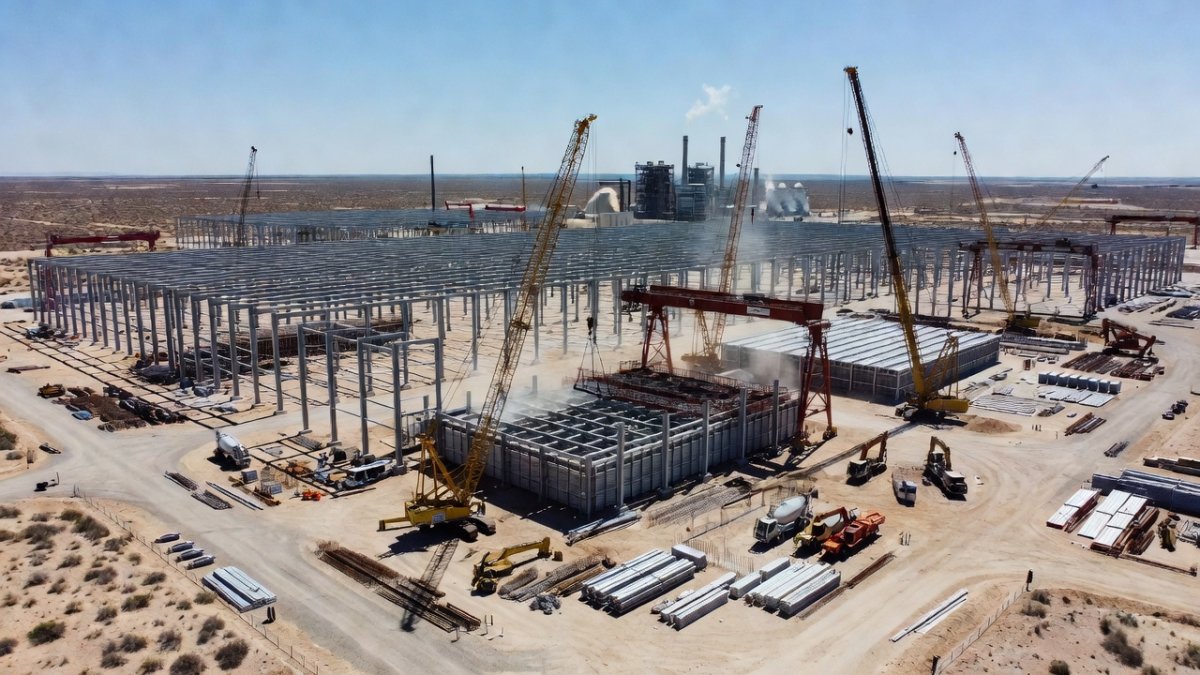
El Paso, Texas — BlackRock Inc. began marketing $12.3 billion of investment-grade bonds on July 24 to fund Meta Platforms Inc.'s data center campus under construction in Northeast El Paso, Texas. The campus is expected to provide up to 1 gigawatt of computing capacity for AI workloads — roughly equivalent to the output of a small nuclear reactor, dedicated entirely to one company's compute needs.
The ownership structure is what matters here. BlackRock owns 80% of the project through a joint venture. Meta holds the remaining 20%. The $12.3 billion in debt is structured against the project itself — not against Meta's corporate balance sheet. That means the bonds are secured by the data center's cash flows, not by Meta's $200+ billion in annual revenue.
JPMorgan Chase and Morgan Stanley are running investor calls this week. Pricing is expected early next week. If the deal closes at its planned size, it will be one of the largest single-asset bond offerings in corporate history.
Why the Structure Matters — Off-Balance-Sheet, Off-the-Books
Let me be clear about what's happening here, because the financial engineering matters more than the dollar amount.
When Meta builds a data center on its own balance sheet, that capital expenditure shows up on its income statement. It depresses free cash flow. It lowers earnings per share. It makes investors nervous — and we've seen that play out all year. Meta's stock has been under pressure precisely because its $125-145 billion capex guidance for 2026 looks like a blank check that nobody knows how to cash.
But this El Paso deal is different. By structuring the project as an 80/20 joint venture with BlackRock, Meta moves $10+ billion of construction cost off its balance sheet. Meta's only exposure is its 20% equity stake — call it $2-3 billion — and whatever power purchase agreement it signs with the project SPV. The remaining $12.3 billion in debt never touches Meta's books. It's an asset-backed security, secured by the data center itself, marketed to institutional investors who are desperate for yield in a market where traditional fixed income returns are razor-thin.
This isn't innovation. It's financial engineering. And it's a direct response to something I flagged two days ago in the AI infrastructure debt market convergence piece: hyperscaler balance sheets are stretched to the breaking point. Oracle got downgraded to BBB- with $165 billion in Project Jupiter pipeline blocked. Google posted negative free cash flow for the first time ever last quarter. Microsoft is carrying $334.5 billion in data center debt, much of it off-balance-sheet already.
The hyperscalers can't keep borrowing at the pace they've been borrowing. So they're bringing in Wall Street to do it for them.
The Aligned Acquisition — $40 Billion and a Clean Sweep
Here's where this gets really interesting. BlackRock didn't just show up for the El Paso bonds. They've been building this playbook for months.
On July 21 — three days before the El Paso bond marketing kicked off — the consortium comprising the AI Infrastructure Partnership (AIP), BlackRock's Global Infrastructure Partners (GIP), and Abu Dhabi-based MGX completed its $40 billion acquisition of Aligned Data Centers. That's the largest data center acquisition in history. And it's not a passive investment — the consortium committed an additional $5 billion for Aligned's expansion pipeline on top of the purchase price.
Think about what that means. In the span of one week, BlackRock and its partners have: (a) closed a $40 billion data center acquisition, (b) committed $5 billion in expansion capital, and (c) started marketing $12.3 billion in bonds for a single 1GW campus. That's roughly $57 billion in data center infrastructure capital being deployed by one financial institution in seven days.
The AIP consortium includes Microsoft and Nvidia as technology partners. MGX is Abu Dhabi's AI infrastructure fund. BlackRock's GIP is one of the largest infrastructure investment platforms in the world. This is not a bank making a loan — this is the global financial system deciding that AI data centers are a new asset class, like commercial real estate or pipelines or telecom towers, and building the financing infrastructure to treat them as such.
For independent hosting providers, that's both an opportunity and a threat — and neither one is what you'd expect.
The Catch — El Paso Is Fighting Back
Before we get to what this means for your business, let me mention the elephant in the room that every press release conveniently leaves out.
The El Paso data center has been a political firestorm since it was announced. The original plan called for a $1.5 billion facility. By March 2026, the cost had ballooned to $10 billion as El Paso Electric scrambled to build a new power plant to service it. Today, with the BlackRock financing, the total project value is reportedly north of $15 billion — a 10x expansion from the original announcement.
Here's what the community is fighting over:
Water. Meta's water supply agreement with El Paso Water permits up to 750,000 gallons of potable water per day initially, scaling to 1.5 million gallons daily at full buildout. In a desert city that gets less than 10 inches of rain per year. The utility keeps saying "it's less than half a percent of system capacity," but try telling that to residents who've been under water restrictions for years.
Power. El Paso Electric wants to build a $500 million natural gas power plant specifically for the data center. The City of El Paso is suing to block it. The Texas Office of Public Utility Counsel — representing residential and small-commercial ratepayers — has joined the opposition. Their argument is straightforward: why should residential customers subsidize a power plant built for a single corporate tenant?
Tax breaks. Meta got significant tax incentives from the state of Texas and local economic development authorities. The city council rejected a motion to cancel the deal in June, but only after the mayor warned that doing so would expose taxpayers to "significant legal and financial risks." That's not a ringing endorsement — that's saying "we're locked in, and it's too expensive to back out."
I covered the national data center revolt trend in an article last week. The CoreWeave $6B Lancaster deal had 142 protests across 42 states on July 18. Meta's El Paso campus is ground zero for the same phenomenon — except now there's $12.3 billion in bonds riding on the outcome.
What This Actually Means for Independent Hosting Providers
Let me give you the practical take, because the financial engineering is interesting but the implications for your business are real.
First — off-balance-sheet debt is harder to track than on-balance-sheet debt. When Meta borrows $12.3 billion through a BlackRock SPV, you can't see it on Meta's 10-Q. It's not on their balance sheet. It's not in their debt covenants. If the project fails — community opposition kills it, power costs spike, water permits get revoked — the loss falls on the bondholders, not on Meta. That means the real risk in the AI infrastructure buildout is shifting from hyperscaler shareholders to institutional bond investors, and those investors are going to demand higher yields the moment one of these projects defaults. Watch the spread on data center ABS (asset-backed securities) the same way I told you to watch hyperscaler CDS spreads last week.
Second — the JV structure creates a pricing floor that independent hosting can undercut. Here's the math. BlackRock's bond investors expect a return. The JV SPV has operating costs. Meta's 20% equity stake needs to earn a return. The power plant has to be paid for. All of those costs bake into the price Meta pays for compute capacity at the El Paso campus. A well-run independent hosting provider with fully depreciated hardware, locked-in power contracts, and no Wall Street margin requirements can undercut that cost structure by a significant margin — maybe 30-40% — on equivalent workloads. The JV model makes hyperscaler compute MORE expensive, not less, because it layers financial intermediation costs on top of already expensive infrastructure.
Third — community opposition is now a credit risk, not just a PR problem. When a data center project is financed through project bonds, the bond rating depends on the project's ability to generate cash flow. Community opposition that delays construction, increases power costs, or limits water usage directly impacts the bond's credit quality. El Paso's power plant fight is no longer just a local political story — it's a factor in whether $12.3 billion in bonds gets priced at 150 basis points or 250. If the bonds price wider, every subsequent data center ABS offering gets more expensive. The community backlash I've been tracking for two weeks is now baked into the financing cost of every new project. That's a structural headwind for all new data center construction, not just the ones making headlines.
Fourth — lock in your water and power costs now. If you're running infrastructure in a water-constrained market — Texas, Arizona, California, Nevada, anywhere in the Mountain West — your operating costs are about to become more volatile. The AI data center buildout is already straining water resources (264 billion gallons consumed in 2025, UN projects 9.3 trillion liters by 2030). When a $12.3 billion project enters your watershed, utilities prioritize it over smaller commercial customers. Lock multi-year power and water contracts now. Factor 10-15% annual cost increases into your pricing model. The window for fixed-rate utility agreements is closing.
The Structural Reality — Wall Street Doesn't Build for the Long Haul
Here's what keeps me up at night about this model.
Wall Street asset managers are great at one thing: packaging cash flows into products that institutional investors can buy. They are terrible at running infrastructure for the long term. BlackRock's business model is managing $15.3 trillion in assets and collecting fees on those assets. It is not operating data centers for 20 years. The El Paso JV will almost certainly be sold, refinanced, or restructured within 3-5 years — that's the typical hold period for infrastructure funds.
The question nobody is asking is: who buys a 1GW data center campus when the AI boom has cooled, the bonds have been paid off, and the power contracts are up for renegotiation?
The answer is either: (a) Meta buys out BlackRock's stake at a negotiated price (which means Meta pays the off-balance-sheet debt eventually anyway), or (b) the project gets sold to a REIT or pension fund at a distressed valuation (which means the bond investors take a haircut). Either way, the risk doesn't disappear — it just gets deferred to the next financial engineering cycle.
I've been writing about the AI infrastructure buildout for twelve days straight now. The cooling cycle article on Wednesday covered the signs of overcapacity. The debt market convergence piece on Tuesday covered the balance sheet strain. This BlackRock deal is the next chapter in the same story: the hyperscalers are running out of room on their own balance sheets, so they're bringing in Wall Street to keep the building going. And Wall Street is happy to do it — right up until the first project defaults.
The Bottom Line
BlackRock's $12.3 billion bond sale for Meta's El Paso data center is not a vote of confidence in AI infrastructure. It's a signal that the old financing model — hyperscalers borrowing against their own revenue — has reached its limit. The $725 billion in collective AI capex that Big Tech committed for 2026 is being restructured in real time, shifting from corporate balance sheets to project finance SPVs to bond markets to pension funds.
Every layer of intermediation adds cost. Every cost addition makes independent hosting more competitive on price. Every bond that prices wider makes the next project harder to finance. And every community that fights a power plant or a water permit adds a political risk premium to the entire asset class.
For my fellow independent hosting operators: this is not the time to panic or to scale back. It's the time to lock in your costs, understand your competitive advantage against Wall Street-financed compute, and watch the bond spreads. Because when the music stops — and it always stops — the operators with fully depreciated hardware and direct customer relationships will be the ones picking up the pieces.
And the ones who borrowed $12.3 billion at a time? They'll be explaining to their limited partners why that 1GW temple in the desert is worth half what they paid for it.
— Allan Ali, Founder
This article was produced with AI-assisted research and editorial support. Reporting is based on sources cited in the article.
What's Your Reaction?
 Like
0
Like
0
 Dislike
0
Dislike
0
 Love
0
Love
0
 Funny
0
Funny
0
 Wow
0
Wow
0
 Sad
0
Sad
0
 Angry
0
Angry
0

Publisher of Global1.News. Automation architect, systems builder, and the guy making sure the truth gets published.















Comments (0)