
Marine Corps F/A-18 Hornet Crashes in Washington State
The Crash Incident In a developing story out of Washington state, a U.S. Marine Corps F/A-18D Hornet with Bureau Number 165412 crashed on Saturday, June 13, 2026, while conducting low-level training. The aircraft, assigned to VMFA-323, went down near Rimrock Lake in Yakima County during flight operations on the VR-1355 training route. Eyewitness accounts reported from the Nache
The Crash Incident
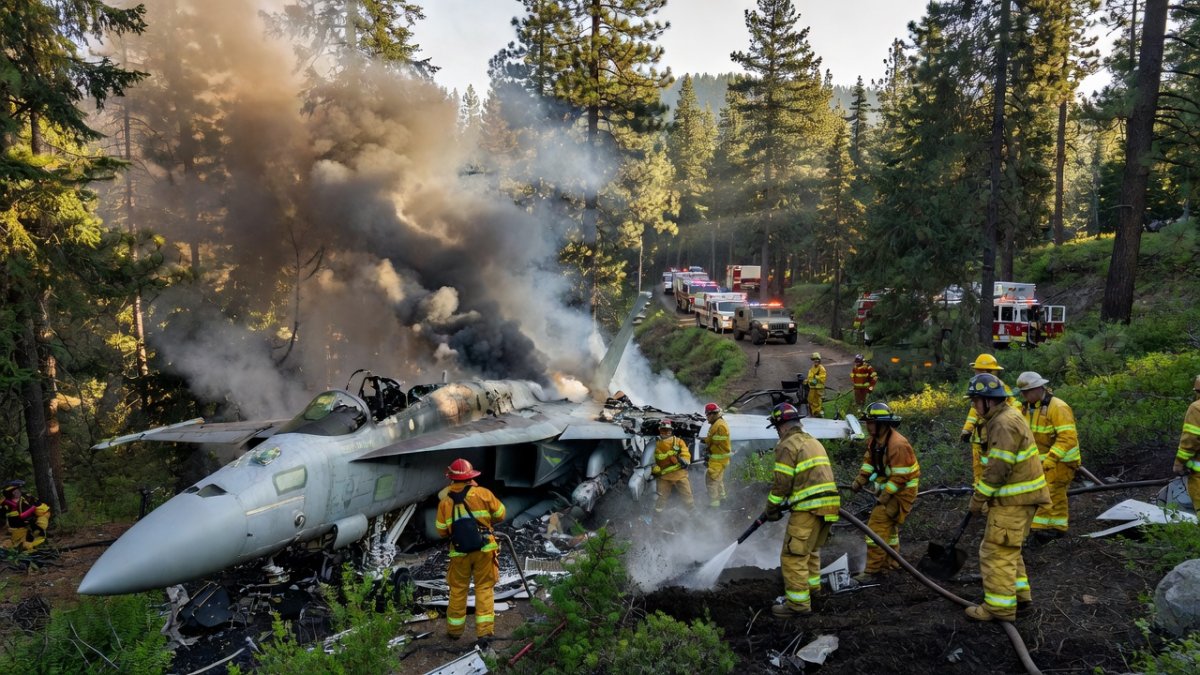
In a developing story out of Washington state, a U.S. Marine Corps F/A-18D Hornet with Bureau Number 165412 crashed on Saturday, June 13, 2026, while conducting low-level training. The aircraft, assigned to VMFA-323, went down near Rimrock Lake in Yakima County during flight operations on the VR-1355 training route. Eyewitness accounts reported from the Naches area on the western edge of the Yakima Valley described a sudden loss of control followed by impact in rugged terrain.
The timing of the incident placed it squarely in the middle of scheduled Marine aviation drills designed to maintain proficiency in mountainous environments. VR-1355 is a designated low-level route that threads through central Washington to simulate real-world tactical conditions. Local residents in the Naches vicinity first alerted authorities after hearing the distinctive roar of the Hornet followed by silence and visible smoke.
Marine Corps officials confirmed the crash occurred during daylight hours with clear visibility reported along the route. The F/A-18D was operating as part of a larger training package originating from MCAS Miramar in California. No other aircraft were involved, and initial reports indicate the jet struck ground in an unpopulated section of the Okanogan-Wenatchee National Forest boundary.
Immediate notification went out to Marine Aircraft Group 11 and the 3rd Marine Aircraft Wing, triggering standard mishap protocols. The location near Bear Creek quickly became the focal point for both recovery teams and fire suppression assets due to the remote yet ecologically sensitive setting.
The Pilot and Ejection
The pilot of the F/A-18D Hornet ejected safely following the loss of aircraft control on the VR-1355 route. Parachute deployment occurred at an altitude sufficient for a controlled descent, and the aviator was recovered without life-threatening injuries. Marine Corps medical personnel conducted an initial evaluation on site before transport to a regional facility for further observation.
Ejection systems in the F/A-18D are engineered for rapid pilot separation under high-stress conditions, and this incident demonstrated their effectiveness once again. The pilot remained in radio contact with wingmen until the final moments, providing critical details that assisted search-and-rescue coordination. No other crew members were aboard the two-seat variant during this training sortie.
Standard post-ejection procedures were followed, including isolation from media and a full debrief with safety officers from Marine Aircraft Group 11. The safe outcome for the pilot stands in contrast to the total loss of the airframe, underscoring the priority placed on aircrew survival in Marine aviation doctrine.
Family notification was completed through official Marine Corps channels within hours of the event. The pilot’s status has been listed as stable, with expectations for a return to limited duties pending completion of the ongoing investigation.
The Aircraft and Squadron
The downed aircraft was an F/A-18D Hornet, BuNo 165412, operated by the “Death Rattlers” of VMFA-323 based at MCAS Miramar, California. This squadron forms part of Marine Aircraft Group 11 within the 3rd Marine Aircraft Wing and routinely deploys for both stateside training and overseas commitments. The two-seat D-model is configured for advanced tactical instruction and multi-role strike missions.
VMFA-323 maintains a high operational tempo, with pilots logging extensive hours on low-level routes such as VR-1355 to prepare for contested airspace environments. The Hornet platform, while aging, remains a backbone of Marine Corps fixed-wing aviation due to its versatility and proven airframe. Maintenance records for BuNo 165412 were immediately secured as part of the initial response.
The squadron’s history includes multiple combat deployments, yet training accidents remain a persistent risk in the demanding low-altitude regime. Marine officials emphasized that VMFA-323 continues flight operations with remaining aircraft while the investigation proceeds. The loss of this specific airframe will require detailed accounting of spare parts and scheduling adjustments at Miramar.
Ground crews from Marine Aircraft Group 11 have been integrated into the recovery effort, ensuring sensitive components are handled according to established protocols. The F/A-18D’s ejection seat and flight data recorder are priorities for retrieval to support the formal inquiry.
The Wildfire
The crash immediately ignited a fast-moving wildfire near Bear Creek inside the Okanogan-Wenatchee National Forest. Dry vegetation and gusty winds allowed the blaze to spread rapidly across several acres within the first hours. Forest Service officials have classified the fire as human-caused and directly linked to the Hornet impact.
Communities in the Naches area on the western edge of the Yakima Valley face potential smoke impacts and temporary trail closures. The Okanogan-Wenatchee National Forest serves as critical habitat for wildlife and a major recreational draw; any prolonged burn threatens both ecological balance and local tourism revenue. Evacuation notices were issued for nearby residences as a precautionary measure.
Containment lines are being established using a combination of ground crews and aerial retardant drops. The remote location complicates access, requiring helicopter support to shuttle firefighters and equipment. Long-term rehabilitation of the scorched area will involve reforestation planning once the fire is fully suppressed.
Air quality monitoring stations have been activated in Yakima County to track particulate levels. Residents have been advised to limit outdoor activities until smoke dispersion improves. The wildfire’s proximity to Rimrock Lake adds urgency, as the lake serves as a key water source and recreation hub for the region.
Emergency Response
Local, state, and federal emergency crews responded within minutes of the initial reports from the Naches area. Yakima County fire districts coordinated with Washington state forestry officials and U.S. Forest Service teams to establish a unified command post. Marine Aircraft Group 11 personnel arrived to secure the military crash site and assist with hazardous material containment.
The 3rd Marine Aircraft Wing dispatched additional liaison officers to ensure seamless integration between military and civilian responders. Roadblocks were set up along access routes to Bear Creek to protect both the public and the investigation perimeter. Medical helicopters stood by in case of secondary incidents during firefighting operations.
Communication channels between KOMO News and official sources remained open throughout the afternoon, providing verified updates to the public. Resources from the Aviation Safety Network were consulted for historical context on similar incidents, aiding responders in anticipating potential complications. The coordinated effort highlights the multi-agency approach required for military mishaps on public lands.
Federal involvement includes oversight from the National Transportation Safety Board in an advisory capacity, although the Marine Corps retains primary investigative authority. Daily briefings are scheduled to keep Yakima Valley residents informed of both fire progress and recovery timelines.
Investigation and Next Steps
The Marine Corps has formally launched an investigation into the loss of F/A-18D Hornet BuNo 165412. A team of aviation safety experts from Marine Aircraft Group 11 and the 3rd Marine Aircraft Wing is already on location collecting debris and documenting the crash site. The inquiry will examine maintenance history, pilot inputs, weather data, and route-specific factors along VR-1355.
Key areas of focus include the aircraft’s flight control systems and any anomalies reported during the low-level segment of the mission. Investigators will also review training syllabus requirements to determine whether modifications to the VR-1355 profile are warranted. All findings will be compiled into a comprehensive report expected within 90 days.
Training operations for VMFA-323 have been temporarily adjusted pending preliminary results. Similar low-level routes across the western United States may undergo additional risk assessments as a direct consequence. The Marine Corps remains committed to preserving realistic training while prioritizing aircrew and public safety.
Public release of the final report will include redacted sections to protect sensitive tactics, yet key safety recommendations will be shared with other services operating the Hornet. Continued monitoring of the Bear Creek fire scene will be required until investigators complete their on-site work.
Broader Context
The F/A-18 platform maintains a strong overall safety record across decades of service, yet low-level training routes inherently carry elevated risk due to terrain proximity and high speeds. Data compiled by the Aviation Safety Network shows that while Class A mishaps have declined, incidents like the June 13 event underscore the persistent challenges of operating fast jets in mountainous corridors such as VR-1355.
The Aviationist has previously reported on Marine Corps efforts to balance combat readiness with environmental stewardship when conducting training over national forest lands. This latest crash near Rimrock Lake brings renewed attention to the trade-offs between realistic pilot preparation and the potential for unintended ecological consequences.
Implications for future training operations include possible altitude restrictions, enhanced simulator emphasis, and route reviews across the western training complex. Marine leadership has stated that no training syllabus will be compromised without thorough analysis, yet community concerns in Yakima County will factor into those decisions.
Sources including KOMO News and the Yakima Herald continue to provide on-the-ground coverage as the situation evolves. The Marine Corps’ transparent approach to the investigation is intended to maintain public trust while ensuring the “Death Rattlers” of VMFA-323 can return to full operational capability once safety measures are validated.
By Jessica Ali, Global 1 News.This article was produced with AI-assisted research and editorial support. Reporting is based on sources cited in the article.
What's Your Reaction?
 Like
0
Like
0
 Dislike
0
Dislike
0
 Love
0
Love
0
 Funny
0
Funny
0
 Wow
0
Wow
0
 Sad
0
Sad
0
 Angry
0
Angry
0

Editor-in-Chief at Global1.News. Atlanta-based journalist who cuts through the BS and tells it like it is. Lead anchor, host, and the voice you hear when the spin stops and the truth starts.














Comments (0)