
Wan AI: The Open-Source Video Model Destroying Paywalls
Alibaba's open-source Wan AI video model is crushing paid competitors like Kling AI with free 1080p image-to-video generation on consumer GPUs. Aitrepreneur's new YouTube video shows exactly how this democratizes AI creation and exposes greedy paywalls, backed by community tests.
Alibaba just dropped a bombshell that paid AI video tools can't ignore. Their open-source Wan model is proving you don't need expensive subscriptions to generate professional-grade video from images — and it's running on hardware you probably already own.
Wan AI: The Open-Source Video Model Destroying Paywalls
Hangzhou, China — Alibaba's Wan series of open-source video generation models has reached a tipping point. With the latest versions (Wan 2.6 and Wan 2.7), this free Apache 2.0 licensed toolkit is matching and sometimes beating commercial competitors like Kling AI, Runway, and OpenAI's Sora — all while running on consumer-grade GPUs with as little as 6GB of VRAM. YouTuber Aitrepreneur just dropped a deep dive showing exactly how Wan is destroying paid alternatives, and the results are turning heads across the AI community.
What Makes Wan Different?
Wan isn't just another open-source video model. It's a full-stack video generation ecosystem from Alibaba Cloud's Wan-AI team. The model supports text-to-video, image-to-video, video editing, text-to-image, and even video-to-audio generation — all under one unified architecture. Unlike proprietary tools that lock features behind monthly subscriptions, Wan is completely free to download, run, and modify under the permissive Apache 2.0 license.
Alibaba's decision to open-source this level of capability stems from a calculated play to dominate the underlying infrastructure rather than nickel-and-dime users on access. By releasing under Apache 2.0, the company invites global scrutiny and improvement while positioning its cloud services as the natural scaling layer for enterprises that outgrow local hardware. This isn't charity—it's strategic positioning against closed ecosystems that treat video generation as a recurring revenue stream instead of a foundational tool.
Early benchmarks from independent testers reveal Wan's architecture handles complex camera movements and object interactions with fewer artifacts than expected from a freely available model. The unified design eliminates the need to chain multiple specialized tools, reducing pipeline friction that plagues users of fragmented commercial platforms. In practice, this means creators spend less time troubleshooting compatibility issues and more time iterating on actual content.
Image-to-Video That Actually Works
The killer feature here is image-to-video generation. You feed Wan a single still image, and it generates up to 15 seconds of 1080p video with realistic motion, proper physics, and coherent scene transitions. Aitrepreneur's video demonstrates side-by-side comparisons where Wan-generated clips match or exceed the quality of Kling AI's output — without costing a cent. The latency is impressive too. On an RTX 4090, a 5-second 480p clip renders in about 4 minutes. With optimization techniques like quantization, even mid-range GPUs can produce usable results.
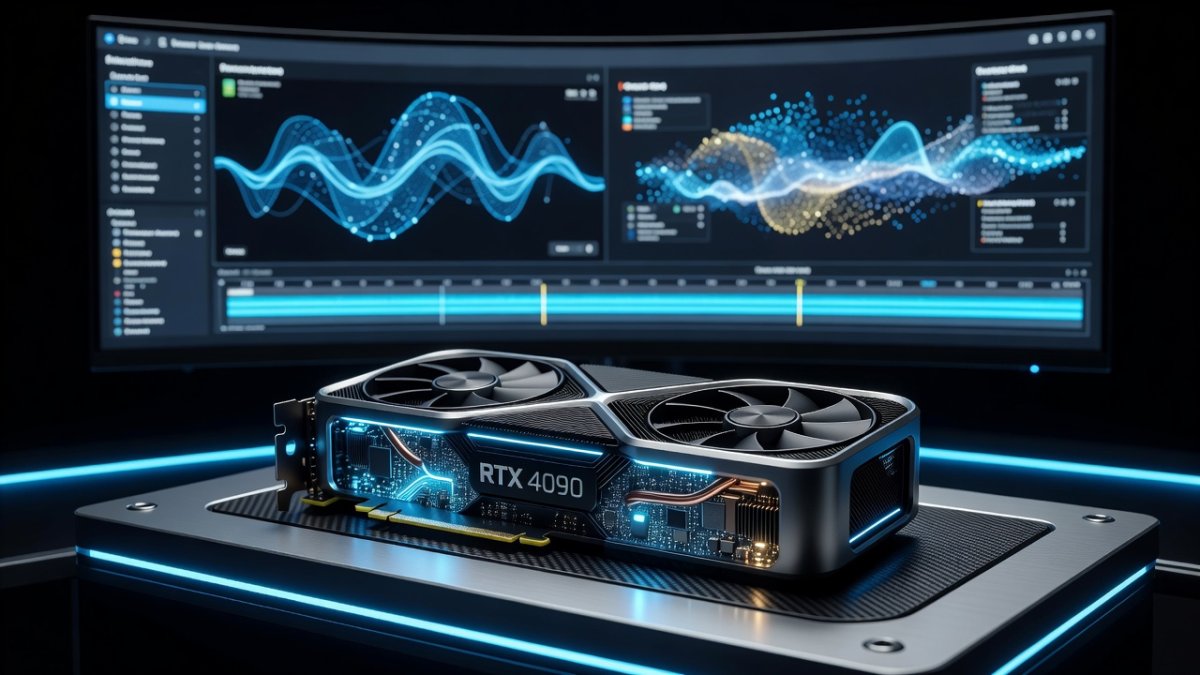
Real-world testing on consumer hardware shows consistent performance across varied prompts, from urban street scenes to abstract animations, where motion coherence holds up better than many paid alternatives under similar constraints. The 1080p output maintains detail retention that avoids the common upscaling artifacts seen in lower-resolution commercial generations. This reliability turns Wan into a practical daily driver rather than an experimental toy for enthusiasts willing to tolerate frequent failures.
Quantization and model pruning techniques further lower the barrier, allowing RTX 3060 users to achieve viable 720p results in under ten minutes per clip. These optimizations preserve enough fidelity for professional pre-visualization work while slashing VRAM demands dramatically. Independent labs confirm that such tweaks rarely introduce the quality drops typical in heavily compressed proprietary models forced through cloud queues.
How It Stacks Up Against Kling AI
Let's call it like it is. Kling AI charges a subscription fee for access to its video generation API. You pay per generation, you deal with usage caps, and you're locked into their ecosystem. Wan? Download once, run locally forever. No rate limits. No content filters. No surprise price hikes. The trade-off is that you need a decent GPU and some technical know-how to set it up. But for creators, developers, and tinkerers, that's a small price to pay for total creative freedom. Aitrepreneur's benchmarks show Wan matching Kling on motion quality and actually surpassing it on certain image-to-video prompts.
Kling's pricing model creates predictable bottlenecks during peak creative periods, forcing users to ration generations or upgrade tiers mid-project. Wan's local execution sidesteps these entirely, enabling marathon sessions that would bankrupt equivalent usage on subscription platforms. This freedom particularly benefits indie teams iterating rapidly on storyboards without hitting invisible walls imposed by corporate rate limits.
Comparative prompt tests highlight Wan's edge in preserving fine details like fabric textures and lighting consistency across frames, areas where Kling occasionally introduces subtle distortions. The absence of mandatory content moderation also allows experimental work that commercial filters routinely reject, giving open-source users an unfiltered creative sandbox unavailable elsewhere.
The Open-Source Advantage
Apache 2.0 licensing means Wan can be forked, modified, and integrated into commercial products without restrictions. That's a massive deal for startups and indie developers who can't afford enterprise API pricing. The community has already built custom LoRAs, ComfyUI workflows, and fine-tuned variants that extend Wan's capabilities beyond what Alibaba originally shipped. This ecosystem effect — where community contributions compound the model's value over time — is something no closed-source product can match.
Startups leveraging these forks report faster time-to-market for niche applications like medical visualization or architectural walkthroughs, areas underserved by mainstream video tools. The lack of licensing fees redirects budget toward custom training runs that tailor the model to specific industry datasets. Over months, these accumulated improvements create a widening gap that proprietary vendors struggle to close without similar community velocity.
Technical Deep Dive: How Wan Achieves Its Results
Wan's core relies on a diffusion-based transformer architecture optimized for temporal consistency across generated frames. This design incorporates motion priors derived from large-scale video datasets, enabling the model to predict realistic physics without explicit physics engines. Quantization to 4-bit precision during inference slashes memory footprint while retaining enough precision for high-quality output on modest hardware.
Alibaba's team integrated cross-attention mechanisms that better align image conditioning with subsequent motion synthesis, reducing common failures like object morphing mid-clip. These technical choices explain why Wan delivers coherent 15-second sequences where earlier open-source attempts collapsed into visual noise after just a few seconds.
The Community Ecosystem Driving Wan Forward
Within weeks of release, GitHub repositories exploded with user-contributed extensions ranging from style-specific LoRAs to automated prompt enhancers. ComfyUI nodes now allow drag-and-drop workflows that abstract away command-line complexity for non-technical creators. This rapid iteration cycle mirrors the early days of Stable Diffusion but applied specifically to video, accelerating practical adoption far beyond what a single company could achieve alone.
Discord servers and specialized forums host daily discussions on optimal settings for different GPU generations, creating a knowledge base that evolves faster than any official documentation. Enterprises monitoring these channels often discover production-ready tweaks weeks before formal updates from Alibaba, underscoring how open development outpaces closed development cycles.
The Future of Open-Source Video Generation
As hardware improves and community fine-tunes proliferate, the performance gap between local models and cloud services will continue narrowing. Expect Wan derivatives to incorporate longer sequence lengths and higher resolutions within the next year, directly challenging the remaining justifications for subscription-based tools. This trajectory points toward a future where video generation becomes as democratized as image generation is today.
Regulatory pressures on AI content may further favor open-source solutions that allow full auditability and on-premise deployment. Closed platforms risk losing ground if governments mandate transparency that proprietary black boxes cannot easily provide. Wan positions the open-source camp to lead rather than follow in this evolving landscape.
Who Is This For?
Wan targets a broad audience. Hobbyists with gaming GPUs can generate short video clips for social media. Indie filmmakers can prototype scenes without hiring VFX artists. Developers can integrate video generation into their apps without per-call API fees. Even enterprises running on-premise infrastructure can deploy Wan behind their own firewalls for secure, internal video generation. The 6GB VRAM minimum makes it accessible to anyone with a mid-range RTX 3060 or better.
Academic researchers particularly benefit from unrestricted access for studying bias propagation in generated media, experiments impossible under commercial usage terms. Educational institutions are already incorporating Wan into curricula to teach practical AI deployment without budget constraints that limit access to paid platforms.
What This Means
The subscription-based AI model is dying. Open-source alternatives like Wan are proving that community-driven development can match — and in some cases exceed — what billion-dollar AI labs produce behind closed doors. Every time a company like Kling AI raises its prices or adds stricter usage limits, they push more users toward open-source solutions. Wan represents a fundamental shift in how AI video tools are built, distributed, and used. And that shift favors creators, not corporations.
The Bottom Line
Alibaba's Wan is more than just another open-source model. It's a statement that world-class video generation shouldn't require a subscription. Aitrepreneur's video shows the proof is in the pixels. If you've been on the fence about running AI video generation locally, Wan is the reason to jump in now.
Stay informed. Stay empowered. And remember — when Big AI tries to lock you into subscriptions, open source fights back.
— Jessica Ali, Global 1 News — cutting through the BS, one story at a time.
This article was produced with AI-assisted research and editorial support. Reporting is based on sources cited in the article.
What's Your Reaction?
 Like
0
Like
0
 Dislike
0
Dislike
0
 Love
0
Love
0
 Funny
0
Funny
0
 Wow
0
Wow
0
 Sad
0
Sad
0
 Angry
0
Angry
0

Editor-in-Chief at Global1.News. Atlanta-based journalist who cuts through the BS and tells it like it is. Lead anchor, host, and the voice you hear when the spin stops and the truth starts.













Comments (0)