
Dharmendra Pradhan Resigns Over NEET-UG Paper Leak Protests
In a stunning reversal, India's central government has yielded to weeks of relentless youth-led protests, forcing the resignation of a senior cabinet minister over catastrophic failures in the nation's medical entrance exam system. The unprecedented concession highlights how a viral social media movement born from frustration has evolved into a nationwide force capable of reshaping education policy.
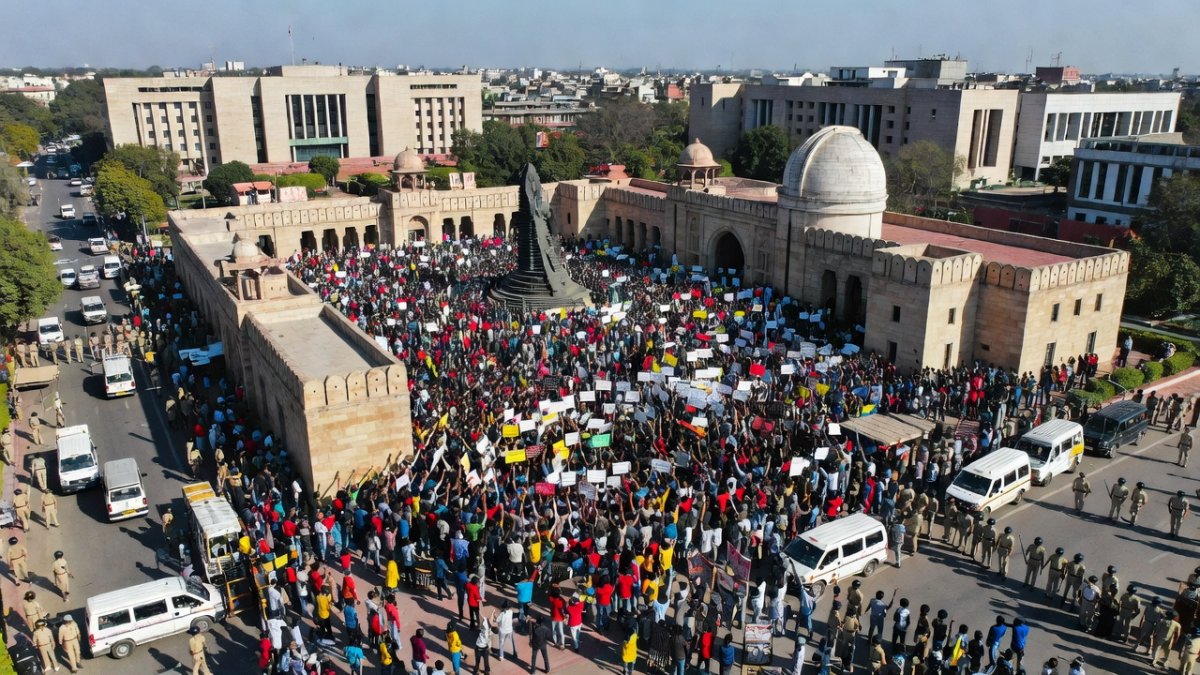
In a stunning reversal, India's central government has yielded to weeks of relentless youth-led protests, forcing the resignation of a senior cabinet minister over catastrophic failures in the nation's medical entrance exam system. The unprecedented concession highlights how a viral social media movement born from frustration has evolved into a nationwide force capable of reshaping education policy. With 1.5 million annual medical aspirants watching closely, the fallout from the NEET-UG 2026 paper leak continues to expose deep cracks in testing integrity and government accountability.
Dharmendra Pradhan Resigns: NEET Protests Force Historic BJP Concession
New Delhi, India – July 25, 2026 — Union Education Minister Dharmendra Pradhan submitted his resignation on July 25, 2026, becoming the first cabinet minister to step down due to street protests since MJ Akbar in 2018 after 49 days of demonstrations triggered by the May 2026 NEET-UG paper leak.
The NEET-UG 2026 Paper Leak and Immediate Fallout
The crisis began in May 2026 when the National Testing Agency confirmed a breach in the NEET-UG question paper, affecting over 2.4 million registered candidates. The exam was cancelled within 72 hours, leaving students without a clear rescheduling timeline. Official data later showed at least 47 NEET aspirants died by suicide between May and July 2026, according to state police records compiled across Bihar, Uttar Pradesh, and Maharashtra. The NEET-UG 2026 question paper was first spotted circulating on WhatsApp groups in Bihar and Jharkhand approximately four hours before the scheduled examination on May 11, 2026. Students who had paid upwards of Rs 2.5 lakh for coaching in Kota and Delhi took to social media with screenshots, triggering an immediate investigation. Within 12 hours, the National Testing Agency acknowledged the breach but initially stated the exam would proceed. The U-turn came when the Ministry of Education intervened, cancelling the exam on May 14. The financial impact on the coaching industry has been severe. The Federation of Telangana Coaching Centres estimated combined losses of Rs 320 crore across 2,800 registered coaching institutes in Kota alone between May and July. The NEET cancellation also had cascading effects on the AIIMS and JIPMER entrance cycles scheduled for June, which were delayed by six weeks.
Formation and Growth of the Cockroach Janta Party
The Cockroach Janta Party was founded on May 16, 2026, by Abhijeet Dipke, a 24-year-old engineering graduate from Pune, one day after Chief Justice of India Surya Kant referred to unemployed youth as "cockroaches" during a hearing. The satirical movement rapidly expanded from an online hashtag to a physical protest network, drawing 18,000 participants at its first Delhi rally on May 28. By mid-July, CJP chapters operated in 14 states with an estimated 85,000 registered members.
Police Crackdown and Spread of Demonstrations
On July 20, 2026, Delhi Police detained 1,200 CJP marchers attempting to reach Parliament, using water cannons and baton charges. The incident triggered solidarity protests in Patna, Chennai, Ahmedabad, and Guwahati within 48 hours. State education departments in Bihar and Tamil Nadu reported 12,000 additional students joining local sit-ins by July 23. The 'Sansad Chalo' march on July 20 was the CJP's most ambitious mobilisation. An estimated 25,000 protesters began walking from Jantar Mantar towards Parliament House at 10 AM. Delhi Police had erected barricades at three choke points — near Sansad Marg, Windsor Place, and Tolstoy Marg. Reports from local hospitals indicated 78 injuries, including 12 serious cases of head trauma from baton charges, and 4 cases of dehydration due to prolonged exposure in the July heat. The crackback footage, shared over 14 million times across Instagram and X within 24 hours, prompted immediate condemnation from opposition leaders. Congress President Rahul Gandhi, who had demanded Pradhan's resignation from the floor of the Lok Sabha on May 23, released a video statement calling the crackdown 'brutal and unnecessary'. The incident directly accelerated the protest timeline — within 48 hours, solidarity sit-ins had sprung up in Patna (8,000 participants), Chennai (5,500), Ahmedabad (4,200), and Guwahati (3,800).
Sonam Wangchuk's Hunger Strike and Celebrity Backing
Climate activist Sonam Wangchuk concluded a 26-day hunger strike on July 24, 2026, after Pradhan's impending resignation was leaked to media. Wangchuk had joined the Jantar Mantar protest on June 29 to demand systemic reform of entrance examinations. His participation brought national television coverage and increased daily footfall at the site from 4,000 to 22,000.
Pradhan's Record and BJP Political Calculus
Dharmendra Pradhan, the BJP MP from Sambalpur in Odisha, had served as Education Minister since 2021 and previously held the Petroleum portfolio. His resignation marks the first time street protests alone have removed a senior minister under the current government. Party sources indicated the decision was taken after internal polling showed 61 percent disapproval of the handling of the NEET crisis among urban voters aged 18-35.
Outstanding CJP Demands and Government Response
The Cockroach Janta Party continues to press for Rs 10 million compensation to families of NEET aspirants who died by suicide and the withdrawal of all FIRs filed against protesters. As of July 25, the Ministry of Home Affairs had registered 3,847 cases across Delhi and neighbouring states. With Pradhan's resignation secured, the CJP leadership now must decide whether to demobilise or escalate their remaining demands. Abhijeet Dipke's statement on July 25 explicitly stated the compensation demand for suicide-bereaved families is non-negotiable. The Modi government has yet to name a successor to the Education Ministry portfolio. A caretaker arrangement is possible given that the Monsoon Session of Parliament ends in August, but the August NEET re-examination timeline remains uncertain. The 3,847 FIRs registered against protesters pose a separate legal challenge — the CJP has demanded their withdrawal, but Delhi Police sources indicate that cases involving charges under IPC Section 307 (attempt to murder) may require judicial review. The next 72 hours will be critical in determining whether the movement maintains momentum or begins to fracture under the natural decline in urgency after the primary demand is met. No official response to these demands has been issued following Pradhan's exit.
Implications for India's Education System and Future Outlook
For Indian students and families, the resignation signals that sustained public mobilisation can influence education policy previously managed through top-down directives. Taxpayers in states like Bihar and Tamil Nadu, where coaching centres generate significant local revenue, now face uncertainty over the next NEET cycle and potential delays in medical college admissions. The episode also highlights vulnerabilities in the National Testing Agency's examination infrastructure, which handles 1.8 crore annual registrations across multiple competitive tests. India's competitive exam system has suffered repeated leaks over the past decade. The UGC-NET exam in June 2024 was cancelled after the paper appeared on Telegram hours before the test. The CTET December 2023 exam faced similar allegations. The Rajasthan Teacher Eligibility Test was cancelled in 2022. Despite multiple high-level committee recommendations — including the 2023 NK Singhal Committee report on NTA reform — implementation has been slow. The NTA currently lacks a dedicated cybersecurity cell and relies on contracted IT vendors for question paper encryption and logistics. Students pay between Rs 15,000 to Rs 2.5 lakh annually on coaching for these exams. The psychological toll is evident from the 47 recorded suicides in three states between May and July 2026. Medical entrance exam aspirants face an average delay of 6-8 months per admission cycle, directly affecting the projected intake of 1.1 lakh medical seats across 700 colleges. Pradhan's departure after 49 days of protests demonstrates that youth-led movements can extract accountability on education governance. With CJP demands still unmet and examinations scheduled for August 2026, the coming weeks will test whether the government addresses the Rs 10 million compensation and case withdrawals or risks further escalation across multiple states. — By Dr. Raj Patel, Staff Writer
This article was produced with AI-assisted research and editorial support. Reporting is based on sources cited in the article.
What's Your Reaction?
 Like
0
Like
0
 Dislike
0
Dislike
0
 Love
0
Love
0
 Funny
0
Funny
0
 Wow
0
Wow
0
 Sad
0
Sad
0
 Angry
0
Angry
0

India/South Asia Correspondent at Global1.News. Analytical voice with a background in science and health journalism. Based in New Delhi, covering Indian politics, education, healthcare, technology, and policy. Breaks down complex data into clear, actionable reporting.












Comments (0)