
BC Wildfires Cause Power Outages, Grid Vulnerability Grows
BC Hydro is reporting widespread flickering lights and power interruptions linked to wildfire activity in the province's interior. Ash and smoke from fires near Clinton have coated critical transmission infrastructure, creating challenges for the utility as crews work to maintain service amid active blazes.
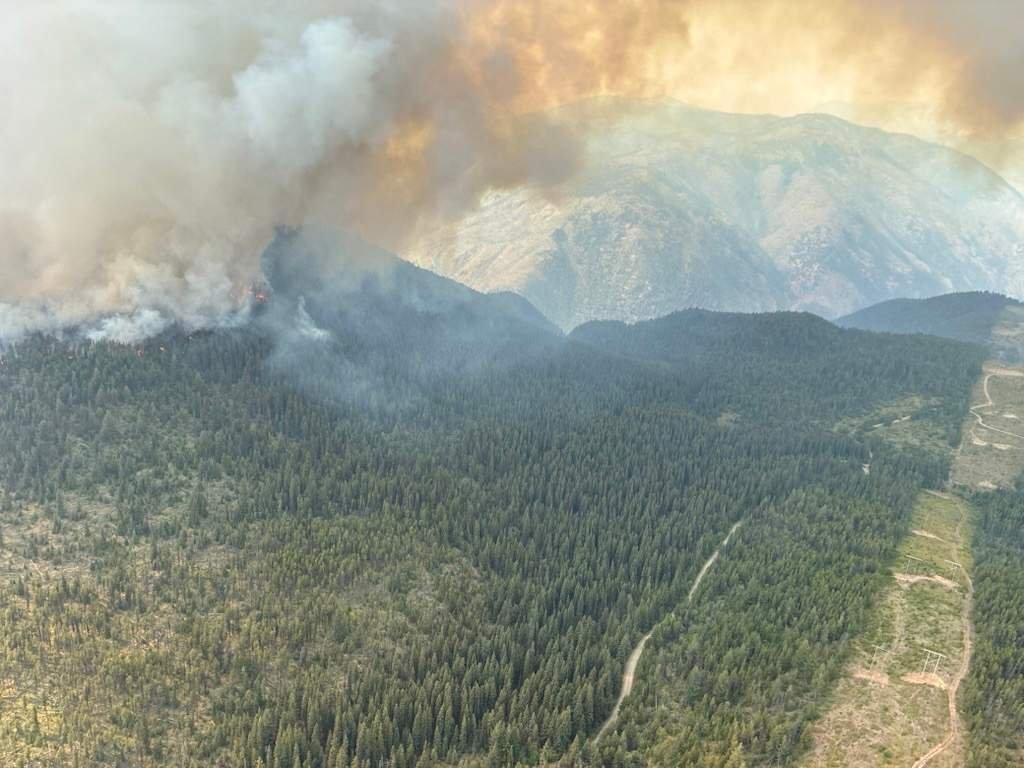
BC Hydro is reporting widespread flickering lights and power interruptions linked to wildfire activity in the province's interior. Ash and smoke from fires near Clinton have coated critical transmission infrastructure, creating challenges for the utility as crews work to maintain service amid active blazes.
The Grid Vulnerability
BC Hydro community relations coordinator Bob Gammer explained that part of the backbone of the grid is near where there's a lot of fire activity in the Southern Interior. Smoke and ash buildup on 500,000-volt transmission lines is directly responsible for the disruptions being felt across the province. The utility has built redundancy into the system over many years, yet Gammer noted that this is so central to the whole operation of the grid, there really isn't a suitable workaround.
These high-voltage lines form a key segment of BC's energy network, carrying power from generation sites to distribution points that serve both urban centres and rural communities. When ash accumulates on the conductors, it can create conductive paths that lead to arcing and automatic protective shutdowns. The result is intermittent outages that affect households, businesses, and essential services alike.
British Columbia’s transmission network relies on a north-south backbone that moves power from major hydroelectric facilities on the Peace and Columbia rivers through narrow Interior corridors to the Lower Mainland and Vancouver Island. These 500-kilovolt lines carry enough electricity to serve roughly one million homes at peak load, making any single-point disruption immediately noticeable across the province. When wildfire ash settles on insulators, it creates a conductive film that allows small leakage currents to flow; under humid conditions or light rain the current escalates into arcing and eventual flashover, tripping protective relays and forcing operators to de-energise entire segments. BC Hydro has invested more than $300 million since 2018 in its Wildfire Mitigation Program, including upgraded composite insulators, automated vegetation management along 12,000 kilometres of right-of-way, and real-time smoke-detection sensors. Despite these measures, the 2025 Mount Underwood fire demonstrated remaining vulnerabilities: crews required fourteen days to restore full service after repeated flashovers forced repeated de-energisation. Historical events underscore the pattern. The 2021 heat dome and 2023 summer fires each caused multi-day outages affecting more than 60,000 customers in the Southern Interior, while 2025 saw similar corridor losses near Kamloops that lasted nine days.
The Big Bar Complex
Three wildfires are burning near Clinton, known collectively as the Big Bar complex. This group of fires has already destroyed at least 20 structures in the Big Bar Lake area. The Pear Lake fire advanced rapidly enough to prompt an evacuation order for the entire Village of Clinton on Friday. Separately, two wildfires merged in Boston Bar, forming the 57-square-kilometre Anderson Creek wildfire.
The BC Wildfire Service has recorded more than 100 active fires across the province. Lightning strikes have been a primary ignition source, accelerating the pace of new starts during the current heat wave. Highways in the BC Interior have been closed in several locations to support firefighting operations and ensure public safety.
Evacuations and Community Impact
Residents of Clinton and surrounding areas have faced sudden displacement as the Pear Lake fire threatened homes and infrastructure. Evacuation orders require rapid coordination between local governments, the BC Wildfire Service, and Emergency Management BC. Neighbouring communities such as Cache Creek and areas near Kelowna have also felt secondary effects through road closures and strained resources.
Power interruptions compound these pressures. Without reliable electricity, refrigeration for food and medicine becomes difficult, and communication systems that rely on backup batteries face limits. Indigenous communities in the affected regions maintain longstanding ties to the land and are working with provincial agencies to protect cultural sites while managing immediate safety needs.
The Village of Clinton, population 620, sits at the junction of Highway 97 and the historic Cariboo Wagon Road, serving as a service centre for ranching families whose roots date to the 1860s gold rush. When the Anderson Creek and Boston Bar fires merged on late July, the resulting complex jumped containment lines and forced the immediate evacuation of 1,800 residents within a 40-kilometre radius. Highway 97, the primary economic artery linking the Interior to the Lower Mainland, was closed for six consecutive days, stranding commercial freight and cutting off scheduled medical-supply deliveries to northern communities. Local emergency operations centres coordinate through the Provincial Emergency Coordination Centre, drawing on mutual-aid agreements with neighbouring regional districts. First Nations governments, including the Bonaparte and Whispering Pines bands, have activated traditional knowledge protocols for cultural-site protection while participating in joint incident command. Repeated evacuations have produced measurable mental-health strain; Interior Health reports a 40 percent increase in crisis-line calls from the region since June. Wildfire smoke has pushed air-quality indices above 150 in the Fraser Valley and Metro Vancouver on multiple days, prompting school closures and advice for residents with respiratory conditions to remain indoors. Access to fresh food and prescription refills has been further complicated by the highway shutdown, leaving some households reliant on emergency helicopter drops.
Climate Context and Wildfire Season
The 2026 Canadian wildfire season ranks among the most intense on record. Extended periods of extreme heat and dry conditions have lengthened the window during which fires can ignite and spread. Climate change has altered precipitation patterns and increased the frequency of lightning events, contributing to the current surge in activity across the Southern Interior, the Okanagan, the Cariboo, and the Kamloops regions.
Federal and provincial governments continue to examine how shared responsibilities for emergency response and land management can be strengthened. BC's experience with previous severe seasons has prompted investments in detection technology and inter-agency training, yet the scale of the present fires tests these preparations.
Provincial data show the 2026 season has already surpassed the ten-year average of 340,000 hectares burned by mid-August, with a significant number of fires and suppression costs continuing to mount. Drought indices across the Interior remain at extreme levels, leaving pine and fir stands weakened by successive years of moisture deficit; foresters note that dead standing timber now constitutes up to 35 percent of some stands, sharply raising the risk of crown fire. BC Hydro has warned that the combination of dry fuels and an active fall storm track could mirror the 2015 and 2018 seasons, when late-September lightning ignited new fires that damaged transmission infrastructure already stressed by summer operations. Federally, the Canadian Armed Forces have deployed personnel to support evacuation and logistics, while Ottawa continues to assess disaster financial assistance needs. Nationally, 2023 and 2024 remain the benchmark years with 15 million hectares burned across Canada, yet British Columbia’s 2026 per-capita impact on infrastructure is already higher. The province’s FireSmart program has treated 48,000 properties since 2020, yet uptake in rural communities remains uneven. Economically, repeated closures of Highway 97 and secondary forestry roads have idled logging operations worth millions weekly, while insurance claims for smoke and evacuation damage have risen notably year-over-year.
BC Hydro's Challenge
BC Hydro has forecast all-time high summer power consumption as residents rely on air conditioning during the heat warnings now expanded across southern BC. The combination of record demand and compromised transmission capacity creates a narrow margin for the grid operator. Crews cannot safely access and clean the affected 500,000-volt lines while active fire remains nearby.
The utility maintains a workforce that includes both permanent staff and seasonal support. Coordination with the BC Wildfire Service determines when access can be restored. In the meantime, the system must operate with reduced flexibility, relying on whatever alternate pathways remain available.
What Happens Next
Fire behaviour will dictate the timeline for restoring full access to the transmission lines. Once conditions allow, BC Hydro crews will prioritise cleaning the ash-coated conductors to reduce arcing risks. Continued monitoring of the Big Bar complex and the Anderson Creek wildfire will guide decisions on evacuation orders and highway reopenings.
Provincial officials are assessing long-term measures to improve grid resilience against wildfire impacts. These include vegetation management along rights-of-way and potential reinforcement of key corridors. Residents are advised to follow updates from BC Hydro and local emergency authorities while conserving power where possible during peak demand periods.
The current situation illustrates the interconnected nature of energy infrastructure and wildfire management in British Columbia. As the season progresses, the effectiveness of existing redundancies and inter-agency cooperation will be closely observed by communities that depend on both reliable electricity and effective fire response.
Tags: BC wildfires, BC Hydro, Clinton, Big Bar complex, power outages, Southern Interior, evacuation orders, wildfire season, transmission lines
By Alex Thompson, Staff Writer
This article was produced with AI-assisted research and editorial support. Reporting is based on sources cited in the article.
What's Your Reaction?
 Like
0
Like
0
 Dislike
0
Dislike
0
 Love
0
Love
0
 Funny
0
Funny
0
 Wow
0
Wow
0
 Sad
0
Sad
0
 Angry
0
Angry
0

Canada Correspondent at Global1.News. Based in Toronto, covering Canadian politics, energy, trade, and US-Canada relations. Provides the Canadian perspective on North American and global affairs.















Comments (0)