
Anutin says no cause for celebration on anniversary of Thai-Cambodian border conflict
Prime Minister Anutin Addresses Anniversary at Government House Prime Minister Anutin Charnvirakul spoke at Government House on Friday, 24 July, stating there was nothing to celebrate on the first anniversary of the Thai-Cambodian border conflict that began on 24-25 July 2025. He assured the public that the security situation has returned to normal while confirming Thailand's ongoing commitment to protecting its sovereignty.
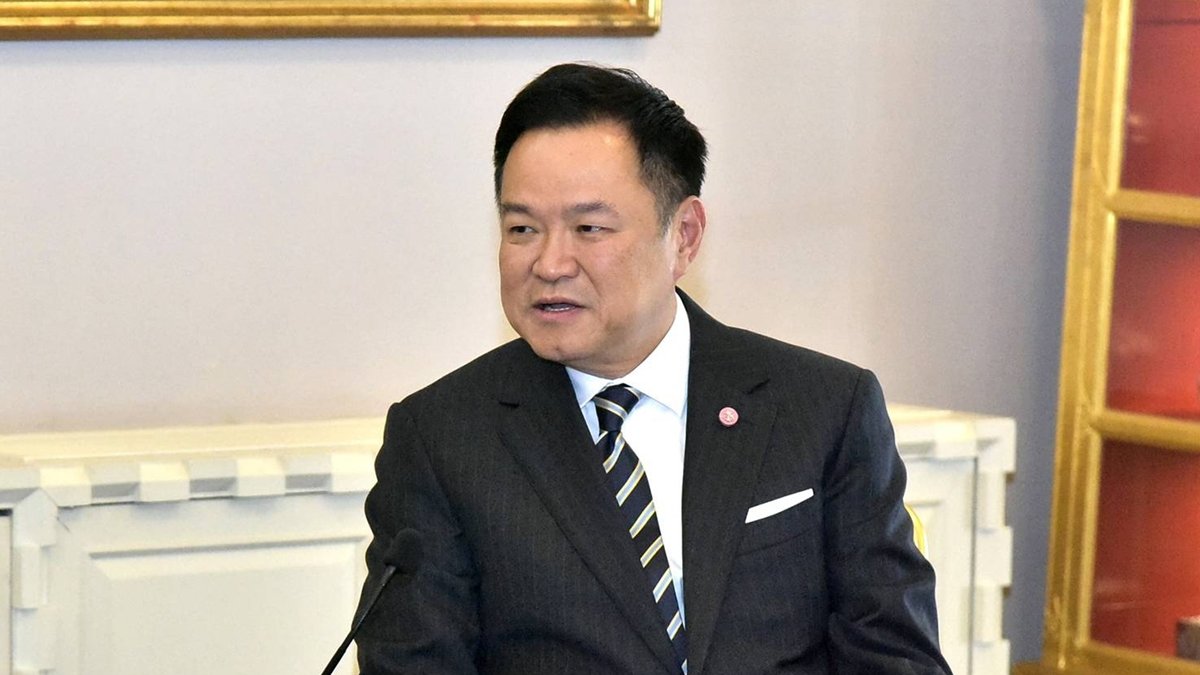
Prime Minister Anutin Addresses Anniversary at Government House
Prime Minister Anutin Charnvirakul spoke at Government House on Friday, 24 July, stating there was nothing to celebrate on the first anniversary of the Thai-Cambodian border conflict that began on 24-25 July 2025. He assured the public that the security situation has returned to normal while confirming Thailand's ongoing commitment to protecting its sovereignty. The Prime Minister stressed there was no reason for public alarm in Bangkok or elsewhere in the kingdom.
Anutin urged patience on 22 July when responding to Cambodian correspondence about ceasefire discussions. He said developments should be judged by actual events rather than paperwork. This statement came days before his remarks at Government House and after his return from China.
Background of the 2025 Clashes Near Ta Moan Thom and Preah Vihear
Armed clashes broke out on 24-25 July 2025 near Ta Moan Thom temple and the Preah Vihear temple complex along the Thai-Cambodian border. Cambodian forces accused Thailand of using cluster munitions during the fighting. Thai troops reported incoming BM-21 rocket fire that struck a 7-Eleven store in Sisaket province.
The temples hold deep cultural and Buddhist significance for communities on both sides of the border. Preah Vihear remains a UNESCO World Heritage site that draws Thai pilgrims and visitors from across the Isaan region. The 2025 incidents disrupted local religious observances and cross-border family visits that have continued for generations.
The 2025 clashes at Ta Moan Thom and Preah Vihear carried a heavy human toll, with casualties reported on both sides and widespread evacuations displacing families from border villages. Communities in Thailand’s Sisaket and Surin provinces faced sudden disruptions to daily life, as residents sought safety while farmland and homes remained vulnerable. These events echoed the long-standing tensions rooted in the disputed temple areas, where the International Court of Justice’s ruling on Preah Vihear and the 2008-2011 clashes continue to shape local memories and cross-border relations.
Ta Moan Thom holds deep religious significance as a site of shared Hindu-Buddhist heritage, drawing pilgrims and reminding both nations of their intertwined cultural histories. The presence of cluster munitions and BM-21 rocket fire, including the strike on a 7-Eleven in Sisaket, intensified fears among civilians already navigating fragile peace. Local leaders in the affected provinces have since called for renewed dialogue that honors this heritage while protecting those living nearest the frontier.
Security Incidents Reported by Second Army Region in 2026
Thailand's Second Army Region recorded 19 explosions near the border from April to mid-July 2026, with six incidents occurring in July alone. Two Thai soldiers sustained minor injuries in July 2026 after detonating an old anti-personnel landmine at a military installation in Sisaket province.
The border remains officially closed with no checkpoint reopening announced as of July 2026. Royal Thai Police and local authorities in Sisaket continue to monitor the area while maintaining normal daily operations for residents in nearby districts.
Prime Minister Anutin's July 2026 Visit to China
Prime Minister Anutin traveled to China from 16-20 July 2026 on his first official visit as head of government. He visited Shanghai, Chengdu, and Beijing, where he attended the World AI Conference and met senior Chinese leaders. Senior Thai military officials accompanied him throughout the trip.
During the Beijing meetings, Anutin received assurances from China regarding the Cambodia border situation. China had unveiled a new security partnership with Phnom Penh in late June 2026, just weeks before Anutin's arrival. Thai officials viewed the timing as significant for regional diplomacy.
Discussions also covered AI and technology cooperation in semiconductors, electric vehicles, and robotics, as highlighted by Thailand Mirror. These areas offer pathways for future growth even as the Chinese assurance on Cambodia ties into broader strategic competition across Southeast Asia. The visit underscored how economic and security threads remain closely linked in the region’s evolving landscape.
Effects on Thai Businesses and Cross-Border Trade
Thai companies have begun rethinking investment plans in Cambodia after a full year of tensions and closed borders. Sectors tied to cross-border trade, including agriculture and logistics firms operating out of Sisaket and Surin provinces, report reduced activity since July 2025.
Local traders in the Isaan region note that the closure has shifted some commerce toward domestic markets and alternative routes through Laos. The Thai Ministry of Foreign Affairs continues to monitor these economic shifts while coordinating with provincial chambers of commerce.
Regional Implications for ASEAN Stability
The Diplomat magazine recently described Cambodia-Thailand relations as a defining factor for ASEAN's immediate future, carrying more immediate weight than even developments in Myanmar. Thai analysts note that stable borders support the free flow of goods and people across the ten-member bloc.
Phnom Penh Post coverage has focused on negotiating stability through border diplomacy. For Thai readers, these discussions matter because they influence tourism recovery in provinces such as Sisaket and Sattahip, as well as broader ASEAN trade agreements that Thailand helped shape.
Fellow ASEAN members view the Thai-Cambodian tensions with concern, given that Vietnam, Laos, and Myanmar each share borders with one or both countries. The conflict tests ASEAN’s credibility as a body capable of resolving disputes among its members, raising questions about its effectiveness in maintaining regional harmony. Tourism recovery efforts in border areas have also slowed, affecting livelihoods tied to cross-border travel.
The prolonged border closure disrupts the ASEAN Economic Community’s goal of free movement for goods, creating delays for traders and supply chains. With upcoming ASEAN summits on the horizon, observers note that border normalization may feature on the agenda as members seek practical steps toward renewed cooperation and stability.
Buddhist Heritage and Community Life Along the Border
Residents in Sisaket province maintain daily Buddhist practices at local temples even as the border stays closed. Monks and laypeople continue merit-making ceremonies that have long connected Thai and Cambodian communities through shared religious traditions.
The Royal Thai Government has emphasized that sovereignty protection does not conflict with these cultural ties. Local leaders in the Second Army Region work with village committees to ensure families near the border can access services while security measures remain in place.
By Ann Srisawat, Staff WriterThis article was produced with AI-assisted research and editorial support. Reporting is based on sources cited in the article.
What's Your Reaction?
 Like
0
Like
0
 Dislike
0
Dislike
0
 Love
0
Love
0
 Funny
0
Funny
0
 Wow
0
Wow
0
 Sad
0
Sad
0
 Angry
0
Angry
0

Southeast Asia Correspondent at Global1.News. Based in Bangkok, covering Thai and Southeast Asian politics, economy, technology, and culture. Deep regional perspective on one of the world's most dynamic regions.













Comments (0)