
EU Hits Google With B Fine as Brussels Tightens the Screws on Big Tech
The EU fined Google €890M (B) on July 23, 2026 under the Digital Markets Act, the third major Alphabet penalty in under a year as Brussels escalates its Big Tech crackdown.
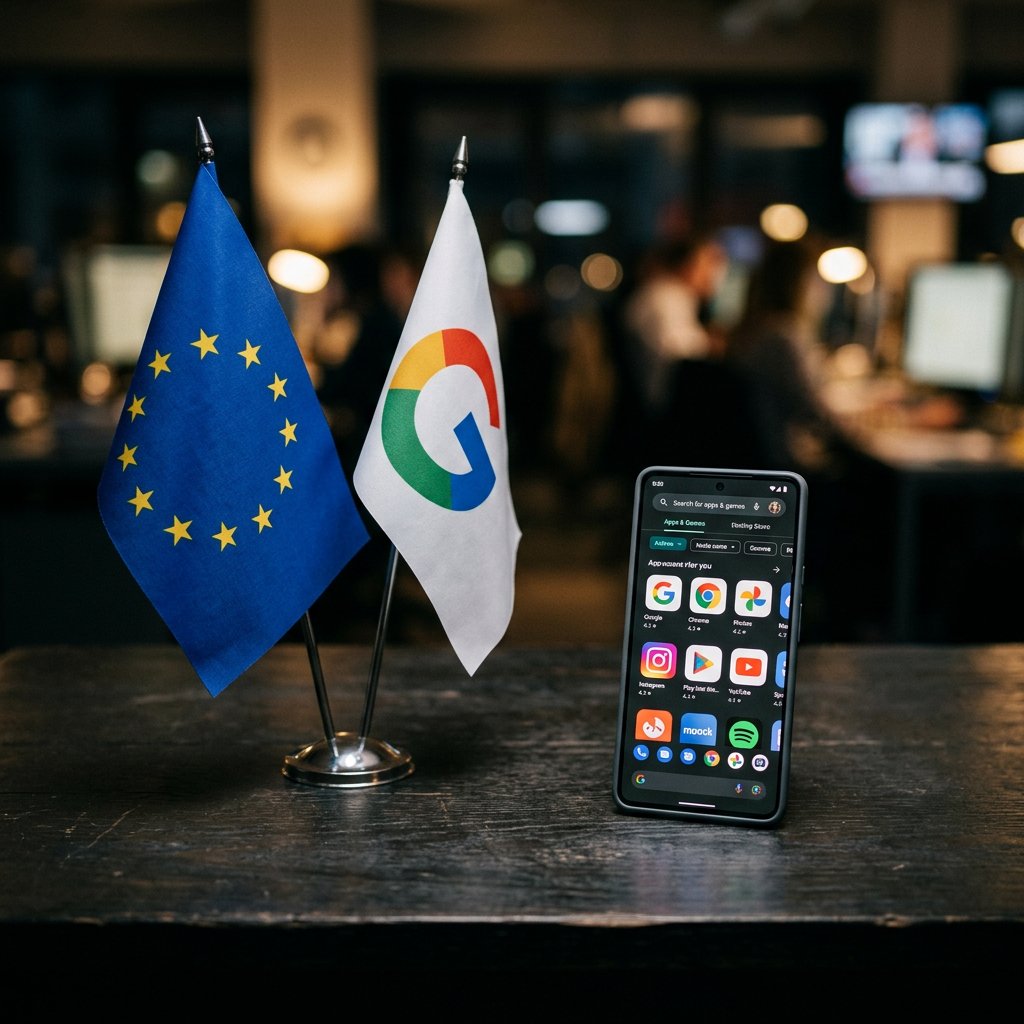
EU Hits Google With $1B Fine as Brussels Tightens the Screws on Big Tech
A Billion-Dollar Message From Brussels
The European Union just put another billion dollars on the table — and this time it's Google picking up the tab. On Thursday, July 23, 2026, Brussels fined the search giant €890 million (roughly $1 billion), accusing it of steering users of Google Play and its own search engine toward its own services and apps at the expense of rivals. It's not a rounding error. It's a statement.This is the latest volley in the EU's years-long campaign to do what Washington keeps talking about and rarely does: actually punish the largest tech companies on the planet for behaving like the rules don't apply to them. The penalty lands under the Digital Markets Act, the bloc's flagship law aimed at reining in so-called "gatekeepers" — the firms so big that owning the app store or the search box means owning the outcome.What Google Actually Did
According to the European Commission, Google used its dominance to funnel people toward its own products. When you search for a hotel, Google surfaces its own booking features. When you open an Android phone, Google Play is the default everything. The Commission's argument is blunt: the best product should win because it's better, not because the company running the search engine owns it.Teresa Ribera, the Commission's executive vice president for clean, just and competitive transition, didn't mince words. "European consumers have a right to be told by app developers where to sign up to the best offers, even when the app store owner does not get a cut," she said. Commission spokesperson Thomas Regnier echoed the line: businesses have the right to compete fairly, and gatekeepers have the obligation to ensure a level playing field.Google's head of global affairs, Kent Walker, fired back. He argued the company is being forced to "strip away real-time Search features Europeans love — like instant pricing and direct availability for hotels, flights, and restaurants" and to "dismantle safety protections on Google Play." His verdict: "This isn't fair competition."The Third Strike in Under a Year
Here's the part that should worry Mountain View's accountants. This isn't a one-off. It's the third major EU penalty against Alphabet in less than twelve months. Google recently lost its appeal against a $4.5 billion antitrust fine tied to throttling competition through the dominance of its Android mobile operating system. And in September last year, Brussels imposed a separate €2.95 billion ($3.4 billion) fine under different antitrust rules.Zoom out further and the pattern is brutal. Between 2017 and 2019, the EU hit Google with fines totaling €8.2 billion ($9.3 billion). Add this week's €890 million and the running total since 2017 crosses €11 billion. That's not a fine sequence — that's a business model for the regulators.Why This Fine Is Different
The older penalties came under classic antitrust law. This one comes under the DMA, which only took effect in 2024 and is built for speed. Under the DMA, the EU can slap fines of up to 10 percent of a company's total global turnover. This week's penalty amounts to just 0.22 percent of Google's turnover — a fraction of the maximum, and clearly a warning shot rather than the nuclear option.The Commission also built in an escalation lever. If Google fails to comply within 60 days, Brussels threatened "periodic penalty payments" — recurring fines that tick up until the company falls in line. That's the kind of mechanism that turns a one-time cost into a running expense.The Meta and Apple Precedent
Google isn't alone on the DMA hit list. In 2025, the EU levied penalties of €200 million against Meta and €500 million against Apple under the same law. Combined with this week's Google fine, that's more than €1.5 billion in DMA penalties against three American giants in roughly eighteen months. The DMA is no longer a threat on paper. It's a collection agency.Washington Is Watching — and Pushing Back
None of this is happening in a vacuum. On Tuesday, two days before the fine landed, 25 Republican lawmakers sent a letter urging President Trump to use trade tools against what they called the EU's "discriminatory" digital rules — potentially opening the door to higher levies on European goods. It's the latest chapter in a transatlantic standoff that's been simmering since Brussels imposed a €2.95 billion fine last September, prompting Trump to threaten retaliation.The EU, for its part, looked unfazed. Ribera said the bloc's duty is to ensure its "sovereign institutions" are "fully enforced and respected," and pointed out that American authorities are "dealing with very similar approaches" to the same problems. The EU and US agreed earlier this year to address friction over the bloc's digital rules through talks — but those talks have yet to begin.The Bigger Picture: Regulation Is Now Enforcement
For years, AI and tech regulation lived in white papers and think-tank panels. In 2026, it moved to the collection desk. The EU's approach — hit the gatekeepers where it hurts, build in recurring penalties, and refuse to flinch when Washington complains — is the most aggressive template on the planet. Whether you think it's fairness or overreach depends on which side of the Atlantic you're standing on.What's undeniable is the momentum. With the DMA's biggest enforcement milestones still ahead and U.S. authorities pursuing their own antitrust cases against Google, Meta, Apple, and Amazon simultaneously, the era of easy dominance is closing. The companies that built empires on owning the entry point are now being told, by law, that ownership isn't the same as permission.By Jessica Ali, Staff WriterThis article was produced with AI-assisted research and editorial support. Reporting is based on sources cited in the article.
What's Your Reaction?
 Like
0
Like
0
 Dislike
0
Dislike
0
 Love
0
Love
0
 Funny
0
Funny
0
 Wow
0
Wow
0
 Sad
0
Sad
0
 Angry
0
Angry
0

Jessica Ali
Editor-in-Chief at Global1.News. Atlanta-based journalist who cuts through the BS and tells it like it is. Lead anchor, host, and the voice you hear when the spin stops and the truth starts.














Comments (0)