
Marunouchi Super Tube: Tokyo Underground Energy Resilience
In the heart of Tokyo's Marunouchi business district, an innovative underground energy network called the Super Tube is quietly safeguarding critical infrastructure against the city's looming earthquake threat. Running 35 meters deep and connecting 28 buildings through a private-sector cogeneration system, this 250-meter tunnel delivers steam and chilled water independently of the main grid, offering a lifeline when surface utilities fail.
Tokyo's Super Tube: Underground Energy Network Protecting Marunouchi
Tokyo, Japan —
Tokyo's Underground Energy Network — Overview of the Super Tube system
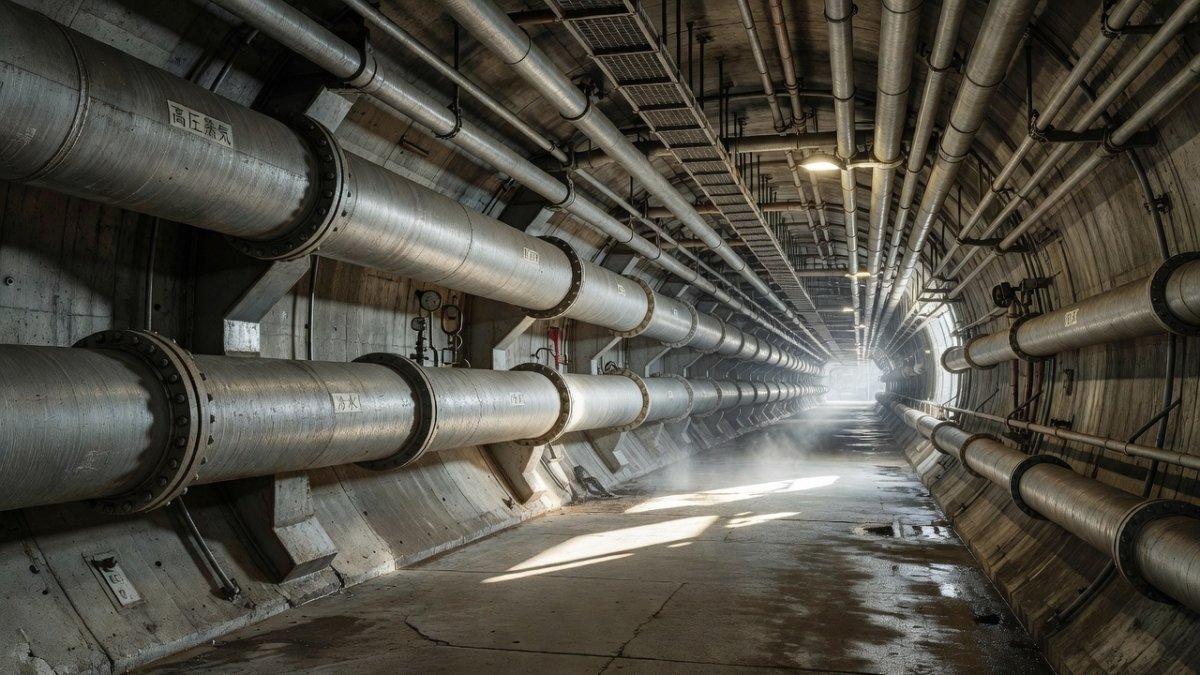
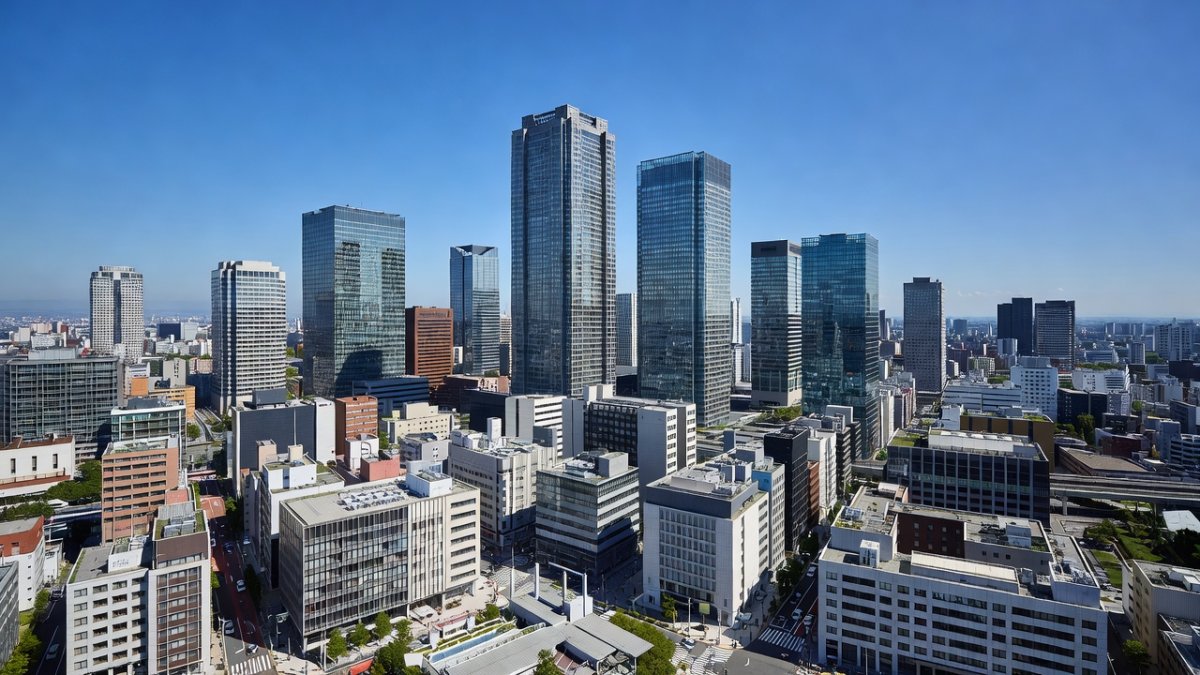
Marunouchi stands as Tokyo's leading business district, hosting approximately 350,000 daytime workers while maintaining only about 50 residents. Within this dense commercial zone lies an underground energy tunnel network known as the Super Tube. The system runs 35 meters below Marunouchi Nakadori, deeper than the nearby Yurakucho subway line at roughly 20 meters.
Pipes within the tunnel carry steam at 175 degrees Celsius and cold water at approximately 6 degrees Celsius. The tunnel itself measures 250 meters in length and features a 20-centimeter concrete outer layer. This infrastructure connects 28 buildings across 2.8 million square meters of floor space. Steam reaches eight buildings while cold water serves three buildings. Three interconnected areas allow mutual backup during disruptions.
The scale of coverage in Marunouchi highlights how a compact underground corridor can serve a high-density commercial core. With 2.8 million square meters of floor space linked through a single 250-meter tunnel, the design concentrates distribution points while minimizing surface disruption. Steam at 175 degrees Celsius travels to eight buildings and cold water at 6 degrees Celsius reaches three, illustrating precise thermal delivery calibrated to different building loads. The three interconnected zones create redundancy so that service can shift if one segment encounters difficulty.
Placement at 35 meters below ground, well beneath the Yurakucho subway line, positions the Super Tube in a stable geological layer. This depth separates the energy network from shallower utilities and reduces exposure to surface-level vibrations. The 20-centimeter concrete outer layer encases the entire length, forming a protective shell around the steam and chilled-water pipes. Such layering supports continuous operation even when daytime population peaks at 350,000 workers.
The Earthquake Risk Beneath Tokyo — 70% probability, 18,000 at risk
Current estimates from December 2025 place the probability of a major Tokyo earthquake within the next 30 years at 70 percent. Such an event could result in up to 18,000 estimated deaths. The 2011 Great East Japan Earthquake left 5.15 million people stranded in Tokyo, highlighting vulnerabilities in urban energy supply during crises.
These figures underscore the need for resilient infrastructure in areas like Marunouchi. The district's high daytime population amplifies potential impacts from power outages or infrastructure failures following seismic activity.
The 70 percent probability within three decades places sustained pressure on planners to protect energy continuity for Marunouchi’s 350,000 daily occupants. When the 2011 disaster stranded 5.15 million people, many remained in commercial districts because elevators, lighting, and climate control failed. The Super Tube’s independent thermal supply offers one pathway to reduce similar stranding by keeping essential heating and cooling available even if the wider grid collapses.
Marunouchi’s extreme daytime-to-nighttime population swing—from 350,000 workers to roughly 50 residents—means any prolonged outage quickly affects economic activity and emergency response. The 18,000-death estimate attached to a major local quake underscores how quickly concentrated commercial zones can become bottlenecks for evacuation and relief. Underground placement at 35 meters provides a buffer that surface-level systems lack, allowing the network to maintain steam and chilled-water circulation when above-ground utilities are severed.
Engineering the Super Tube — 35m deep, 20cm concrete, seismic design
The Super Tube sits at a depth of 35 meters, where seismic force measures less than one-quarter of ground-level intensity. This placement reduces stress on the tunnel during earthquakes. The 20-centimeter concrete outer layer provides structural integrity, while medium-pressure gas pipelines made of welded steel can bend and stretch without breaking.
The energy production facility occupies the fourth basement floor, spanning about 2,500 square meters. During Japan's rapid growth period from the 1950s to 1970s, individual buildings relied on separate boilers, which raised fire risks. The consolidated Super Tube approach lowers city-wide fire hazards during disasters by centralizing energy distribution.
At 35 meters depth the tunnel experiences seismic motion reduced to less than one-quarter of surface intensity, a direct engineering response to Tokyo’s known fault lines. The 20-centimeter concrete shell encases the entire 250-meter length, shielding the steam and chilled-water pipes from both ground acceleration and potential liquefaction effects. Welded-steel medium-pressure gas lines inside the tunnel are designed to flex rather than fracture, preserving fuel supply to the cogeneration units even after strong shaking.
The 2,500-square-meter energy plant on the fourth basement level centralizes equipment that once sat on individual rooftops during the 1950s–1970s growth surge. That earlier decentralized model relied on separate boilers in each building, increasing localized fire loads during emergencies. By moving generation underground and routing thermal energy through the Super Tube, the system removes multiple ignition sources from the surface and replaces them with a single, monitored facility serving 28 structures across 2.8 million square meters.
Cogeneration and Energy Independence — Gas-powered system, waste heat recovery
A cogeneration system burns gas to generate electricity while recovering waste heat to produce steam. This setup supplies both power and thermal energy through the tunnel network. The system can operate independently during city-wide power outages, maintaining service to connected buildings.
Steam at 175 degrees Celsius and cold water at around 6 degrees Celsius flow through the pipes to support heating and cooling needs. The three interconnected areas enable load sharing and backup, ensuring continuity even if one section faces damage.
The cogeneration process begins with gas combustion that drives on-site electricity generation; the remaining thermal energy is captured as 175-degree steam rather than released as waste. This dual output travels through the 250-meter tunnel to eight buildings for heating and three for cooling via 6-degree chilled water. Because the plant sits on the fourth basement level, it can continue running when external grids fail, directly addressing the stranding risk observed in 2011.
Three interconnected zones within the network allow steam and chilled-water flows to be rerouted if one segment is compromised. This redundancy means that service to the 28 connected buildings can be maintained even when only a portion of the 2.8 million square meters remains online. The welded-steel gas lines feeding the cogeneration units are engineered to deform without rupture, sustaining fuel delivery after seismic events and supporting the independent operation that distinguishes the Super Tube from conventional utility feeds.
Private Sector Leadership in Disaster Resilience — Notable because it's private sector
The Super Tube represents a private sector initiative rather than a government-run project. Takano Yusuke's company developed and operates the facility. Dr. U Hiroi, an urban disaster expert, contributed to disaster preparation efforts surrounding the system.
This private leadership demonstrates how commercial entities in Marunouchi have invested in long-term resilience measures. The approach addresses historical risks from decentralized boiler systems while supporting the district's role as a core business hub with hundreds of thousands of daily occupants.
Takano Yusuke’s company undertook both development and ongoing operation of the Super Tube, placing responsibility for 35-meter-deep infrastructure and its 2,500-square-meter energy plant in private hands. Dr. U Hiroi’s involvement in disaster-preparation planning added specialized seismic and operational guidance to the project. This private-sector model allowed the 250-meter tunnel and its three interconnected zones to be built without direct public funding while still serving 28 buildings across 2.8 million square meters.
By replacing the scattered boilers of the 1950s–1970s era with a single underground cogeneration source, the private initiative reduced surface-level fire exposure for Marunouchi’s 350,000 daytime workers. The decision to locate the system 35 meters deep and to incorporate welded-steel gas lines reflects commercial recognition that resilience investments protect both daily operations and long-term asset value in a district where only 50 residents remain overnight.
Implications for Japan's Urban Resilience Strategy — Society 5.0, GX, future of cities
The Super Tube aligns with broader Japanese priorities including Society 5.0 and Green Transformation (GX) strategies promoted by government ministries such as METI. By consolidating energy services underground, the project supports efficient resource use and reduced emissions through cogeneration and waste heat recovery.
Japanese corporate strategies in sectors like semiconductors and urban development can draw lessons from this model. The system's seismic advantages at depth and independent operation capacity contribute to national goals for disaster-resilient cities. As Tokyo prepares for potential major earthquakes, such private innovations complement public efforts in building sustainable infrastructure for future generations.
Integration with Digital Agency initiatives and BOJ economic considerations further positions underground energy networks as components of comprehensive urban planning. The Marunouchi example illustrates practical steps toward minimizing stranded populations and infrastructure failures during crises, fostering greater stability in high-density business districts.
Continued focus on these technologies supports Japan's position in advancing resilient, low-carbon urban environments aligned with GX objectives and Society 5.0 frameworks.
The 70 percent probability of a major quake within 30 years and the memory of 5.15 million people stranded in 2011 give added weight to private projects that keep thermal energy flowing at 175 degrees Celsius and 6 degrees Celsius. By operating independently and sharing load across three zones, the Super Tube demonstrates how commercial infrastructure can advance METI-backed GX targets while supporting Society 5.0 goals for data-integrated, disaster-ready cities. The approach also aligns with Digital Agency smart-city pilots that emphasize redundant underground systems capable of sustaining economic activity when surface utilities fail.
Japan’s leadership in seismic engineering and integrated urban systems continues to set global benchmarks, with projects like the Super Tube illustrating how private innovation can scale Society 5.0 and GX principles into practical, replicable models for earthquake-prone megacities worldwide.
By Kenji Tanaka, Staff Writer
This article was produced with AI-assisted research and editorial support. Reporting is based on sources cited in the article.
What's Your Reaction?
 Like
0
Like
0
 Dislike
0
Dislike
0
 Love
0
Love
0
 Funny
0
Funny
0
 Wow
0
Wow
0
 Sad
0
Sad
0
 Angry
0
Angry
0
Japan Correspondent at Global1.News. Tokyo-based voice covering Japanese politics, technology, economy, and culture. Tracks the intersection of tradition and innovation in one of the world's most dynamic societies.










Comments (0)