
Lebanon Pilot Zones Test US-Backed Trilateral Deal
Lebanon deploys army to three southern pilot zones as Hezbollah rejects the US-backed framework and Israeli strikes continue.
In a recent Middle East Eye report analyzing the pilot zones through on-the-ground footage and expert commentary, the deployment of Lebanese forces to three southern villages highlights both tentative steps toward de-escalation and the deep fractures that persist in the region.
Lebanon Pilot Zones Test US-Backed Trilateral Deal
Beirut, Lebanon — Lebanese army units began moving into the villages of Froun, Srifa and Zawtar al-Gharbiya on July 20 under a US-backed Trilateral Framework signed on June 26 by Lebanon, Israel and the United States. The agreement envisions phased Israeli withdrawal from southern Lebanon alongside Hezbollah disarmament, yet early implementation has already exposed sharp divisions over timelines, security guarantees and the very meaning of withdrawal.
Background of the Pilot Zones
The three pilot villages were selected for initial Lebanese army deployment because of their proximity to the border and relatively limited direct Israeli ground presence in recent months. Residents returning to Froun and nearby Ghandouriyeh have noted that Israeli forces never established permanent positions inside these communities, raising questions about what concrete withdrawal the framework is meant to achieve. The Lebanese army has stated clearly that its operations will not be directed by Israeli commanders, preserving a measure of national sovereignty even as it coordinates with international monitors.
The March 2 escalation that ignited the current phase of conflict stemmed from cross-border exchanges that rapidly intensified after Israeli strikes on Hezbollah positions near the Blue Line, displacing tens of thousands and drawing in broader regional actors. By mid-June, diplomatic channels led to the June 26 signing ceremony in Washington, where Lebanese, Israeli, and U.S. representatives formalized the Trilateral Framework amid heavy American pressure to stabilize the frontier before wider war engulfed the region. The three pilot villages of Froun, Srifa, and Zawtar al-Gharbiya were deliberately selected for their strategic proximity to the border yet relatively light recent Israeli ground presence, allowing Lebanese army units to deploy without immediate confrontation while testing coordination mechanisms. Last week’s Rome talks, hosted under Italian auspices, further refined monitoring protocols and addressed early disputes over verification procedures, yet they also revealed persistent gaps in defining what constitutes full withdrawal versus a reconfigured security buffer. These choices reflect a calculated effort to build incremental confidence, though residents in nearby Ghandouriyeh note that the absence of permanent Israeli positions inside the villages raises doubts about whether the framework addresses the core territorial realities on the ground or merely formalizes a fragile pause.
Hezbollah's Rejection and Regional Dynamics
Hezbollah leader Naim Qassem’s swift declaration that the Trilateral Framework is null and void underscores the group’s refusal to accept any arrangement that fails to secure complete Israeli withdrawal and address the displacement of southern communities since October 2023. Qassem framed the pilot zones as an attempt to normalize a permanent security regime without resolving occupation grievances, a stance reinforced by Iran’s explicit backing of continued resistance operations. Internally, Lebanon’s political divisions have sharpened, with some factions in Beirut wary of Hezbollah’s veto power while others fear that army deployments under the framework erode national sovereignty. Netanyahu’s recent claim that certain Christian villages have requested annexation to Israel has further inflamed tensions, exposing how sectarian fault lines intersect with border disputes and complicating any unified Lebanese position. These dynamics illustrate the framework’s vulnerability to regional spoilers, as Iranian influence and domestic polarization threaten to derail even modest de-escalation steps before the August 4 talks in Italy can produce concrete guarantees.
Hezbollah leader Naim Qassem immediately declared the Trilateral Framework null and void, urging continued armed resistance against any arrangement that leaves Israeli forces near the border. The group views the pilot zones as an attempt to legitimize a permanent security arrangement without addressing core grievances over occupation and displacement. Meanwhile, Israeli officials have reiterated plans for a 10-kilometer security zone along the frontier, a demand that directly contradicts the framework's stated goal of full withdrawal.
Human Impact on Southern Lebanon
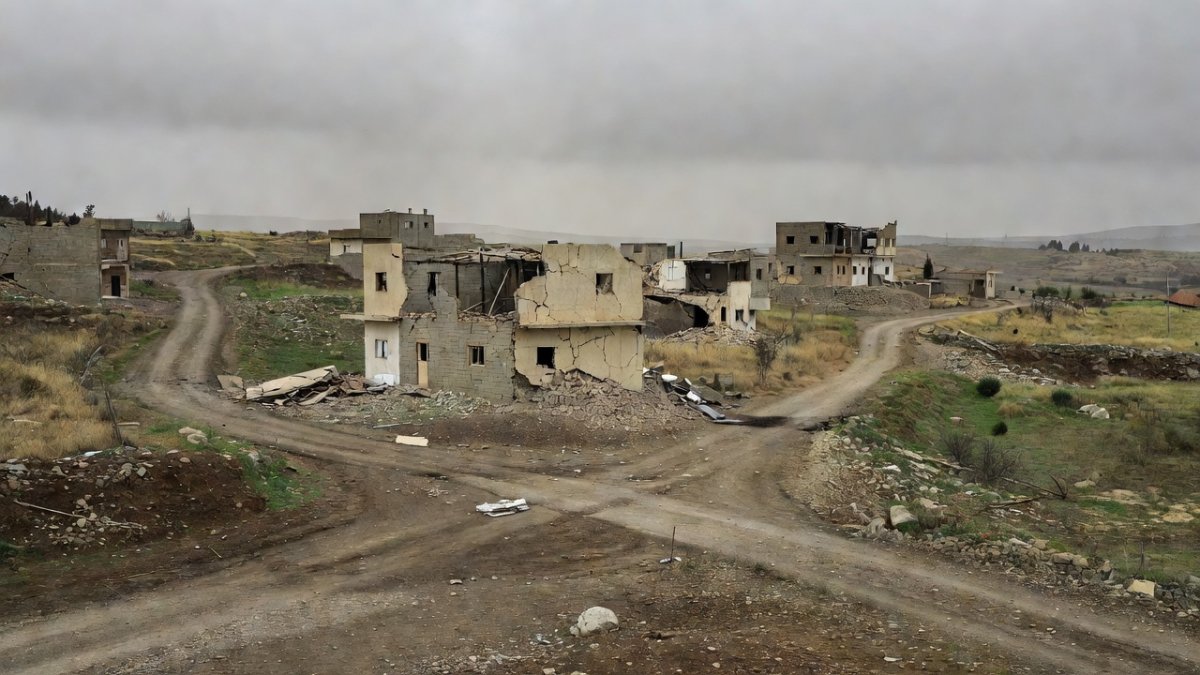
Daily life in southern Lebanon under repeated Israeli strikes has become a cycle of destruction and displacement, with more than 4,000 killed since March 2, the majority in villages like Froun and Srifa where homes lie in rubble and farmland is laced with unexploded ordnance. Families describe systematic village demolitions that echo tactics previously observed in Gaza, including targeted strikes on infrastructure and direct attacks on ambulances attempting to evacuate the wounded, leaving medical services crippled. In Majdal Zoun, fresh demolitions on July 24 compounded the trauma for returning residents who had already endured multiple waves of forced flight. Schools remain shuttered, water systems damaged, and movement restricted by lingering threats, forcing many households into protracted uncertainty. These conditions highlight how the human cost extends far beyond casualty figures, eroding the social fabric of communities that now view the pilot zones with cautious skepticism rather than genuine relief.
More than 4,000 people have been killed in Lebanon since fighting erupted on March 2, with the majority of casualties concentrated in southern villages and border towns. Families returning to Froun and Srifa describe homes reduced to rubble, farmland contaminated by unexploded ordnance, and schools shuttered for months. In Majdal Zoun, Israeli demolitions on July 24 further eroded trust in the framework's ability to halt violence, even as Lebanese troops arrived in neighboring pilot areas. Daily life remains suspended between cautious hope and the memory of repeated displacements.
The International Framework and Its Gaps
The June 26 agreement’s most glaring omission remains the absence of any fixed timeline for Israeli withdrawal, leaving southern residents to question whether the pilot zones represent progress or merely a temporary lull. Israeli insistence on maintaining a 10-kilometer security zone directly contradicts the framework’s stated aim of full pullback, while the Lebanese army’s explicit refusal to operate under Israeli direction exposes the fragility of coordination structures that lack clear enforcement mechanisms. Adding to the confusion, several designated pilot villages had never hosted permanent Israeli positions, raising doubts about the framework’s ability to deliver verifiable change. Lebanese President Joseph Aoun’s recent Washington meetings sought firmer U.S. commitments, yet the undefined role of international monitors and the lack of penalties for violations continue to undermine trust. These gaps risk transforming the pilot initiative into another layer of inconclusive diplomacy rather than a foundation for lasting stability.
The June 26 agreement lacks any fixed timeline for Israeli withdrawal, leaving residents uncertain whether the pilot zones represent genuine progress or merely a pause in hostilities. Lebanese President Joseph Aoun met with US officials in Washington this week to press for clearer commitments, while the next round of talks is scheduled for August 4 in Italy. The Lebanese army's insistence that it will not operate under Israeli direction underscores the fragility of coordination mechanisms that remain largely undefined.
Analysis and What Comes Next
If Hezbollah actively resists implementation, the pilot zones could quickly devolve into renewed clashes that draw Iran deeper into the conflict and derail the August 4 talks in Italy. Trump’s reported meeting with President Aoun may inject new U.S. leverage, yet success hinges on whether the framework can convert military deployments into tangible security improvements and reconstruction access for exhausted communities. Scenarios range from incremental confidence-building if timelines are clarified, to outright collapse if the 10-kilometer demand persists or if Christian village annexation claims escalate sectarian tensions. Ultimately, durable progress requires centering the voices of displaced southern families in negotiations, ensuring that any agreement prioritizes verifiable withdrawal and protection from future strikes over temporary security arrangements that have repeatedly failed the region.
Without enforceable deadlines or guarantees against renewed strikes, the pilot zones risk becoming another layer of temporary arrangements that prolong uncertainty for communities already exhausted by conflict. The framework's success will ultimately depend on whether it can translate military deployments into tangible improvements in safety, reconstruction access and freedom of movement for southern Lebanese residents. As talks resume in Italy, the voices of those who have lived under the shadow of repeated invasions will need to shape any durable path forward.
By Fatima Al-Rashid, Staff Writer
This article was produced with AI-assisted research and editorial support. Reporting is based on sources cited in the article.
What's Your Reaction?
 Like
0
Like
0
 Dislike
0
Dislike
0
 Love
0
Love
0
 Funny
0
Funny
0
 Wow
0
Wow
0
 Sad
0
Sad
0
 Angry
0
Angry
0

Gulf/MENA Correspondent at Global1.News. Based in Doha, covering Gulf politics, energy markets, diplomacy, and development across the Middle East and North Africa. Tracks the economic transformation of the Gulf states.















Comments (0)