
NEET Paper Leak: Pradhan Falls, Medical Education Crisis
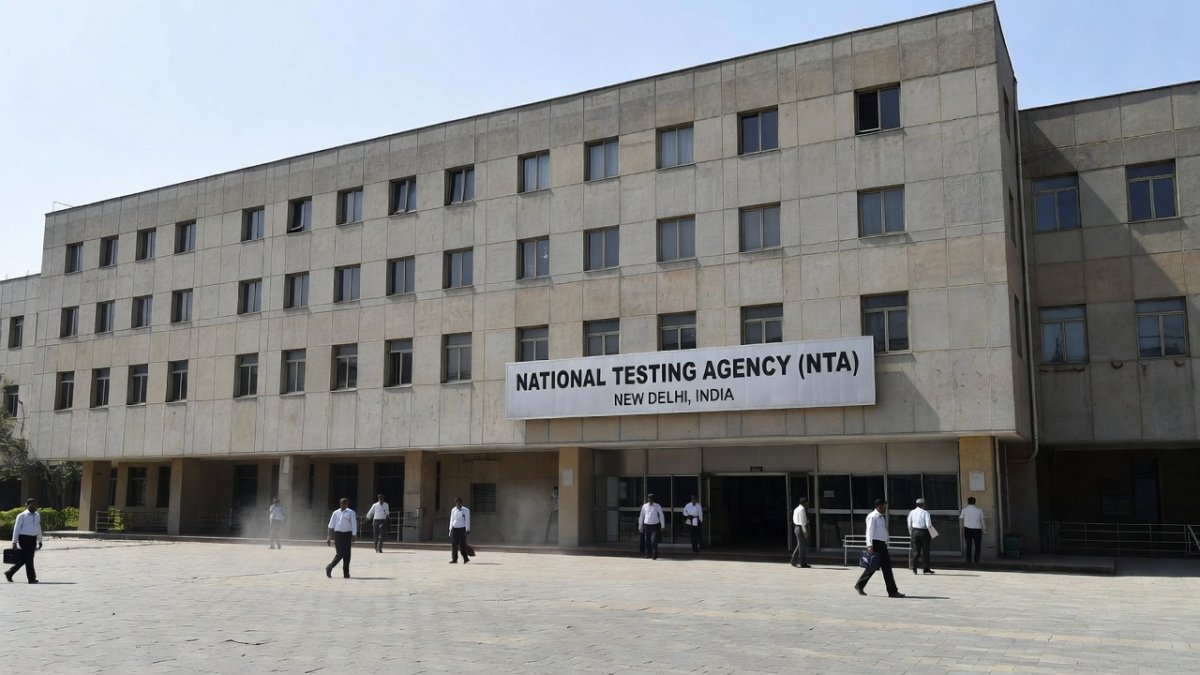
The resignation of Union Education Minister Dharmendra Pradhan on July 25, 2026, marks a watershed moment in India's long-running crisis over examination integrity and medical education reform. Forced out by over a month of sustained student protests led by the Cockroach Janta Party (CJP) at Delhi's Jantar Mantar, Pradhan's departure signals that the NEET-UG 2026 paper leak — affecting more than 22.7 lakh medical aspirants — has shattered public confidence in the National Tes
The resignation of Union Education Minister Dharmendra Pradhan on July 25, 2026, marks a watershed moment in India's long-running crisis over examination integrity and medical education reform. Forced out by over a month of sustained student protests led by the Cockroach Janta Party (CJP) at Delhi's Jantar Mantar, Pradhan's departure signals that the NEET-UG 2026 paper leak — affecting more than 22.7 lakh medical aspirants — has shattered public confidence in the National Testing Agency (NTA) and the very system that selects India's future doctors.
NEET-UG Paper Leak: Education Minister Falls, But Systemic Crisis Remains
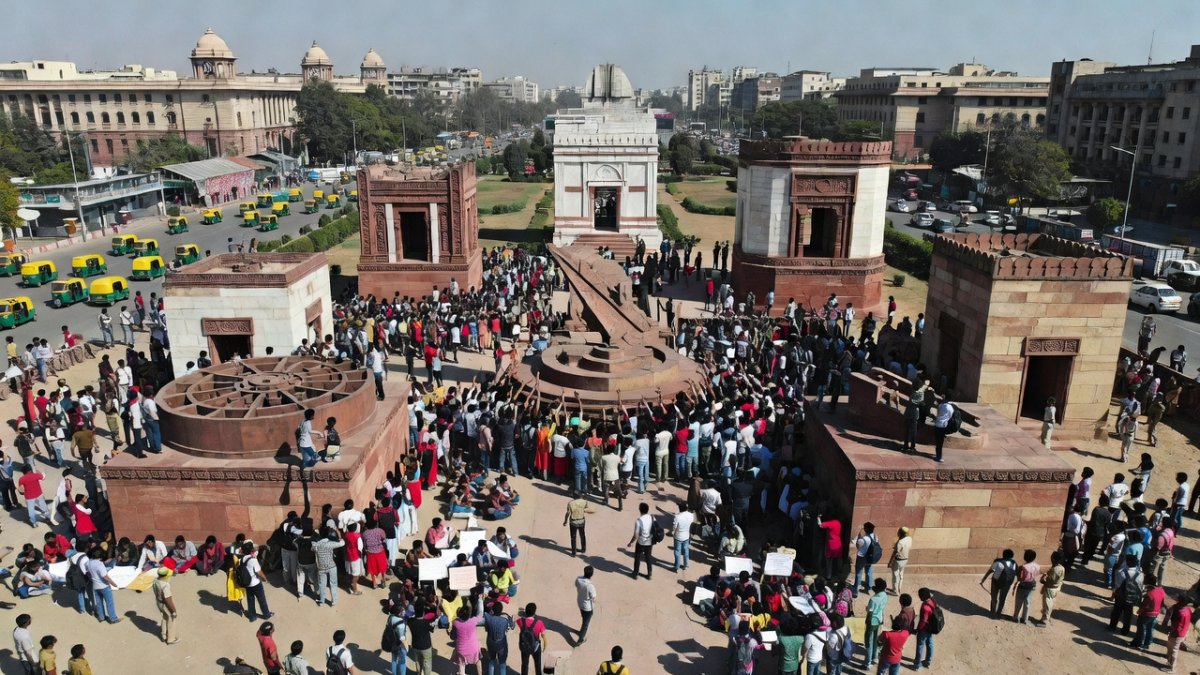
New Delhi, India – July 25, 2026 — In a resignation letter posted on X, Pradhan stated he was stepping down on moral grounds, taking responsibility for the breach that has disrupted medical admissions across the country. His exit comes after the CJP, led by founder Abhijeet Dipke, transformed from a satirical social media page into a national youth movement that occupied Jantar Mantar for 34 consecutive days, drawing crowds from Pune to Kolkata and forcing three rounds of government negotiations.
The Resignation: A Minister Held Accountable
Dharmendra Pradhan's resignation on July 25, 2026, represents the highest-profile casualty of India's examination integrity crisis. In his letter, the outgoing minister acknowledged moral responsibility for the NEET-UG 2026 paper leak while alleging that "anti-national forces" had manipulated student sentiment. The Ministry of Education confirmed the resignation had been forwarded to Prime Minister Narendra Modi, who now faces the task of appointing a replacement capable of restoring credibility to a deeply damaged system.
Congress leader Priyanka Gandhi Vadra described the resignation as a "victory for the youth of India," while the party asserted that sustained pressure from streets to Parliament — led by Rahul Gandhi's parliamentary interventions — was the decisive factor. Former Union Minister Sharad Pawar called it a "major development" that exposed systemic rot in the examination apparatus.
NEET-UG 2026: Anatomy of a Catastrophic Leak
The NEET-UG 2026 paper leak, which compromised the gateway examination for MBBS, BDS, and AYUSH courses across more than 700 medical colleges, unfolded through a sophisticated network involving coaching centres in Kota, Rajasthan, and Delhi. The CBI has registered FIRs against 12 coaching institutes and made multiple arrests, with forensic analysis revealing that question papers were distributed through encrypted WhatsApp groups days before the scheduled examination date.
In the immediate aftermath, the NTA sacked 47 officials, including senior exam controllers and regional coordinators, for lapses in paper handling and protocol violations. The breach is the third major NTA scandal since 2024, following the UGC-NET cancellation and the NEET-UG 2024 grace marks controversy, raising serious questions about whether the agency — operating with only 12 per cent of its budget allocated to cybersecurity — is structurally equipped to handle examinations for over two crore candidates annually.
Four point eight lakh candidates in high-risk zones in Uttar Pradesh, Bihar, Rajasthan, Maharashtra, and Karnataka are believed to have received compromised papers, with state governments in Tamil Nadu and West Bengal demanding a full re-examination and independent oversight of the NTA's operations.
Youth Uprising: The CJP and Gen Z's Moment
The Cockroach Janta Party (CJP), founded by 28-year-old Abhijeet Dipke, began as a satirical critique of Indian politics on Instagram but rapidly evolved into a nationwide protest movement. What started with a few hundred students at Jantar Mantar swelled to crowds of over 15,000 daily, amplified across social media platforms where CJP-related content generated more than 48 million impressions on X and Instagram.
Environmental activist Sonam Wangchuk, who had been on a 26-day hunger strike at Jantar Mantar demanding systemic education reforms, became a symbol of the movement's moral authority. CRPF personnel were deployed at the Constitution Club as the government braced for further escalation. Lathi-charge incidents on June 12, which injured 67 protesters, only galvanised wider support, with demonstrations spreading to Bengaluru, Chennai, Pune, and Kolkata.
The CJP's demands have now expanded beyond Pradhan's resignation. The organisation is demanding Rs 1 crore compensation for families affected by the paper leak, swift prosecution of all those responsible, and a complete restructuring of the NTA with independent oversight.
Political Fallout: A Government on the Defensive
Congress has aggressively framed the resignation as a victory for student power, with party leaders pointing to Rahul Gandhi's repeated adjournment motions in Parliament and Priyanka Gandhi's public statements as key pressure points. The resignation gives the opposition significant ammunition ahead of upcoming state elections, where education policy and youth unemployment are expected to dominate voter concerns.
For the ruling BJP, the episode is a painful blow to its governance narrative. Prime Minister Modi must now appoint a new Education Minister while simultaneously managing the fallout from the NTA's failures. The government's handling of the crisis — initially dismissive of the protests, then forced into three rounds of talks with the CJP — has been criticised as reactive rather than proactive. The CJP has declared the resignation "the first wicket" and vowed to continue agitating until their remaining demands are met.
Medical Education in Peril: What 22.7 Lakh Aspirants Face
The NEET-UG 2026 crisis extends far beyond a single exam cycle. India's medical education system, already stretched thin, now faces the prospect of delayed admissions, disrupted counselling schedules, and a potential shortfall in the 2026-27 intake of new doctors. With only 1.1 lakh MBBS seats available annually against 22.7 lakh applicants — a selection rate of just 4.8 per cent — any integrity breach in the examination process has cascading consequences for the healthcare workforce.
India's doctor-to-patient ratio currently stands at 1:834, perilously close to the WHO's recommended minimum of 1:1000. However, this national average masks severe regional disparities. In Bihar, the ratio drops to approximately 1:2,500, while Uttar Pradesh and Madhya Pradesh report ratios of 1:1,800 and 1:1,600 respectively. Rural districts, where 60 per cent of India's population resides, face the worst shortages, with an estimated 80 per cent of specialist positions vacant in primary health centres across underserved states.
Delays in the 2026 admissions cycle could push the next cohort of doctors into clinical practice by mid-2027 rather than early 2027, compounding existing gaps in rural healthcare delivery. The AIIMS Delhi psychiatry department has documented a rise in student distress calls since the leak was confirmed, with mental health professionals warning that the uncertainty is taking a measurable toll on young aspirants and their families.
What Comes Next: NTA Overhaul and the Road to Reform
The Ministry of Education has announced the formation of a high-level committee, including AIIMS directors and IIT faculty, to recommend comprehensive NTA restructuring by September 2026. Proposed reforms include AI-driven question paper generation, biometric verification at examination centres, and independent oversight mechanisms that bypass the current bureaucratic structure.
The CBI investigation is expected to yield formal chargesheets within 90 days, with a focus on the coaching centre nexus that has become a multi-crore industry built on examination arbitrage. Estimates suggest the coaching sector in Kota alone generates over Rs 8,000 crore annually, creating perverse incentives for institutions to develop insider access to examination materials.
Beyond institutional reform, the crisis raises fundamental questions about the scale and structure of India's medical education pipeline. Health policy analysts argue that the country needs at least 2.5 lakh new doctors annually by 2030 to meet the healthcare demands of a growing and ageing population — more than double the current output. The NEET-UG 2026 scandal, by exposing the fragility of the selection mechanism, has made the case for expanding medical education capacity as urgently as it has for reforming the examination process itself.
The Bottom Line
The resignation of Dharmendra Pradhan is a historic concession to youth-led accountability in Indian governance, but it is only the first step. For the 22.7 lakh students whose futures hang in the balance, for the rural communities that already face a severe shortage of doctors, and for a healthcare system that depends on a steady pipeline of qualified professionals, the real work begins now. A new Education Minister, a restructured NTA, and systematic reforms to India's medical education framework are not optional — they are essential to prevent the next crisis from being worse than the one that finally brought a minister down.
— By Dr. Raj Patel, Staff Writer
This article was produced with AI-assisted research and editorial support. Reporting is based on sources cited in the article.
What's Your Reaction?
 Like
0
Like
0
 Dislike
0
Dislike
0
 Love
0
Love
0
 Funny
0
Funny
0
 Wow
0
Wow
0
 Sad
0
Sad
0
 Angry
0
Angry
0

India/South Asia Correspondent at Global1.News. Analytical voice with a background in science and health journalism. Based in New Delhi, covering Indian politics, education, healthcare, technology, and policy. Breaks down complex data into clear, actionable reporting.










Comments (0)