
Houthis Escalate Attacks on Saudi Oil Sites in Red Sea Crisis
In the broader context of the intensifying Iran-US confrontation, marked by naval posturing in the Strait of Hormuz, renewed sanctions debates in Washington, and Tehran's warnings against American military buildups, the Houthi escalation in the Red Sea serves as a calculated proxy front that amplifies pressure on Riyadh while testing the limits of US deterrence commitments across the Gulf. Escalation in the Red Sea: Houthis Renew Strikes on Saudi
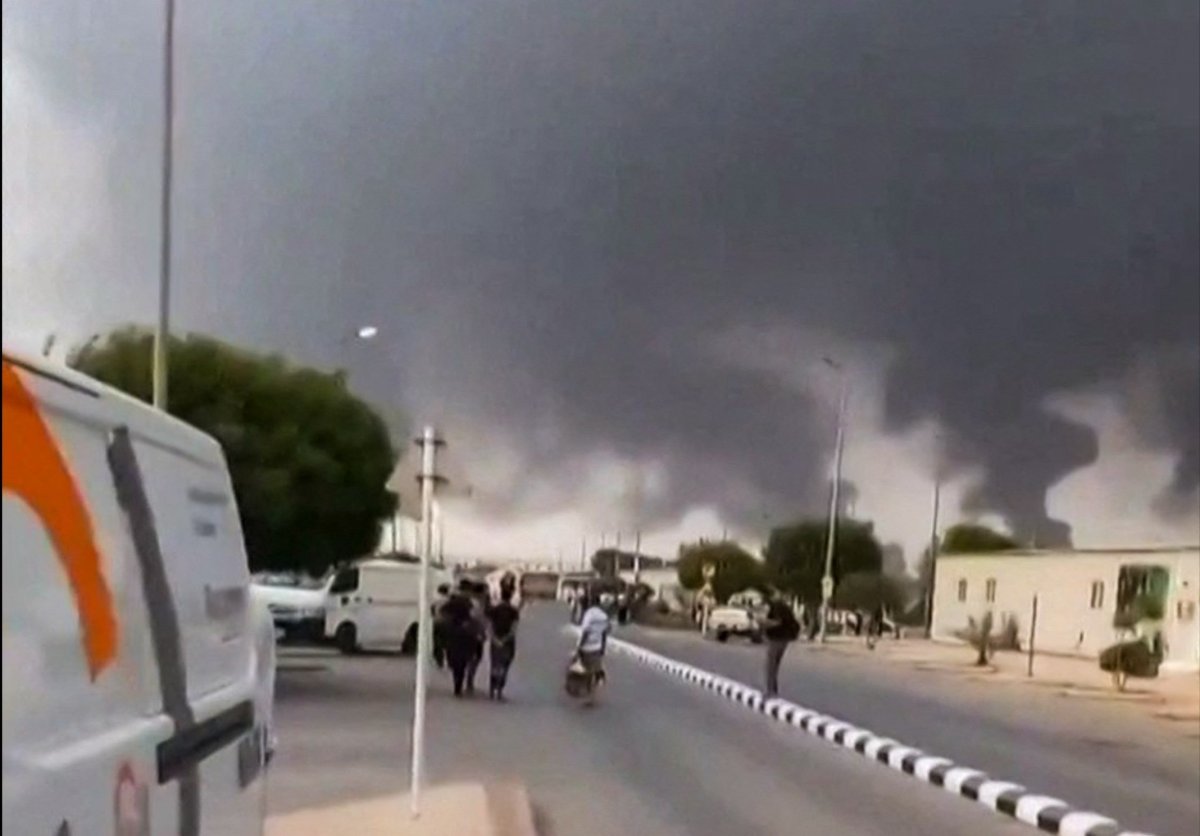
The breakdown of the 2022 U.N.-brokered ceasefire between Saudi Arabia and Yemen’s Houthi movement has produced direct attacks on oil facilities once again. On July 25, 2026, Saudi air defenses intercepted two ballistic missiles aimed at refineries in Yanbu, while video verified by Reuters showed smoke rising from the direction of the Saudi Aramco facility in Jizan.
This latest flare-up unfolds against a backdrop of shifting alliances across the Middle East, where the Red Sea has emerged as a critical chokepoint linking the Suez Canal to Asian markets and where proxy confrontations increasingly intersect with global energy security concerns.
Details of the Latest Exchange
Greek-operated Patriot batteries, deployed in Saudi Arabia since 2021, successfully intercepted the missiles targeting Yanbu at 07:15 local time. Saudi Civil Defense issued alerts for both Yanbu and Jizan before declaring the immediate threat over. Two trading sources reported limited damage at the Jizan site, which processes 400,000 barrels per day. Aramco has not yet issued an official statement.
The Houthis had declared a naval blockade of Saudi Arabia the previous week. Houthi leader Abdul Malik al-Houthi had warned that deeper Saudi involvement would expose oil infrastructure and other critical sites to missile and drone strikes.
The Patriot systems in question, specifically the PAC-3 variant, offer advanced hit-to-kill interception capabilities against short- and medium-range ballistic threats, with a proven track record in Gulf deployments. Their Greek operators, trained under a 2021 bilateral defense pact that built on earlier Saudi-Greek military cooperation dating back to the 2010s, underscore Athens’s growing footprint in regional security arrangements. Damage assessments at Jizan remain preliminary, yet satellite imagery and local reports indicate partial disruption to processing units handling heavy crude, potentially affecting export schedules for weeks.
Historical Context of the Yemen Conflict
Saudi Arabia launched its military intervention in Yemen in 2015 after Houthi forces seized Sanaa and ousted the internationally recognized government. The seven-year campaign produced hundreds of thousands of deaths from direct violence, famine, and disease. A U.N.-brokered truce in 2022 largely halted large-scale fighting until the Houthi attack on a Saudi airport on July 13, 2026, and the subsequent naval blockade.
The Houthis previously struck Yanbu and Jizan before the 2022 ceasefire and claimed responsibility for the September 2019 attacks on Saudi oil facilities at Abqaiq and Khurais that cut more than half of the kingdom’s crude output temporarily.
The 2022 ceasefire’s structural weaknesses stemmed from its lack of enforceable monitoring mechanisms and failure to address core territorial disputes, allowing sporadic violations to erode trust over time. UN mediation efforts, led by successive special envoys, provided a temporary diplomatic umbrella but struggled to translate humanitarian pauses into lasting political frameworks. In comparison, the 2019 Abqaiq-Khurais attacks demonstrated the Houthis’ capacity for high-impact strikes, temporarily removing nearly 5 million barrels per day from global supply and forcing rapid Saudi repairs that highlighted vulnerabilities still relevant today.
The protracted nature of the Yemen conflict reveals deeper patterns of regional proxy warfare, where external arms flows and ideological alignments have repeatedly undermined ceasefires, turning localized grievances into sustained theaters of attrition that drain resources from all participants. Historical precedents from earlier Saudi interventions demonstrate that military superiority alone rarely translates into political resolution, as Houthi resilience stems from entrenched local support networks and adaptive guerrilla strategies honed over decades.The Iran Factor
Iran’s role in arming and directing Houthi forces has intensified through sustained shipments of missile components, drone technology, and training programs coordinated by the IRGC Quds Force, whose advisory personnel embedded with Houthi units provide real-time targeting guidance and operational planning. This support aligns with Tehran’s overarching strategy of encircling Saudi Arabia via a network of proxies stretching from Iraq and Syria through Lebanon to the Arabian Peninsula, creating multiple pressure points that divert Riyadh’s attention and resources away from direct confrontation with Iran itself. Quds Force commanders have publicly framed the Red Sea operations as extensions of the “axis of resistance,” leveraging Houthi naval capabilities to threaten Saudi oil lifelines while maintaining plausible deniability. Such encirclement tactics not only bolster Iran’s deterrence posture amid US maximum-pressure campaigns but also position the Houthis as a low-cost force multiplier capable of disrupting global energy routes without requiring direct Iranian naval deployments.International Military Involvement
Greek military personnel operating the U.S.-made Patriot system played a direct role in Saturday’s interception. The deployment, in place since 2021 under a bilateral agreement, was intended to safeguard Saudi energy infrastructure. President Donald Trump stated on July 23 that Tehran and its Houthi allies would face “major military punishment” following Houthi strikes on two Saudi tankers in the Red Sea.
Trump’s broader Iran strategy emphasized maximum pressure through sanctions and proxy deterrence, a posture that now intersects with renewed Houthi activity and risks drawing the United States deeper into Gulf flashpoints. CENTCOM maintains approximately 40,000 personnel across the region, supported by carrier strike groups and destroyer flotillas patrolling the Arabian Sea and Gulf of Oman. NATO members operating Patriot batteries in Saudi Arabia signal a collective defense commitment that could complicate escalation ladders if Iranian-backed forces target allied assets.
The presence of Greek operators introduces additional alliance dynamics that could either stabilize deterrence through collective defense signaling or inadvertently escalate tensions if Iranian proxies perceive NATO involvement as a direct affront. Regional observers highlight how such multinational deployments reflect a broader recalibration of Gulf security architectures, where traditional US-centric arrangements increasingly incorporate European partners to share burdens amid shifting American priorities.Strategic Calculus on Both Sides
The Houthis seek to impose costs on Saudi Arabia for any renewed support to anti-Houthi forces and to leverage control over Red Sea shipping lanes. Their naval blockade directly threatens oil exports that move by pipeline to the Red Sea to avoid Iran’s effective closure of the Strait of Hormuz. Saudi Arabia, for its part, aims to protect Vision 2030 diversification plans that depend on stable energy revenues and secure maritime routes.
Each side possesses asymmetric leverage. The Houthis retain missile and drone capabilities plus Iranian technical support. Saudi Arabia maintains superior air power and the diplomatic backing of the United States. Second-order effects include higher global oil price volatility and renewed pressure on shipping insurance rates in the Red Sea.
Houthi military capabilities have expanded through drone swarm tactics and an estimated inventory of several hundred ballistic missiles, bolstered by Iranian technical advisors providing guidance on precision targeting. Saudi air defense modernization, including layered Patriot and THAAD systems, aims to counter these threats but faces saturation risks from coordinated attacks. Energy market implications include potential oil price spikes above $90 per barrel if disruptions persist, prompting OPEC+ to consider output adjustments to stabilize supplies.
Houthi decision-making appears calibrated to extract maximum political concessions without triggering overwhelming Saudi retaliation, relying on calibrated strikes that exploit Saudi economic sensitivities while preserving their own territorial strongholds. Conversely, Saudi calculations must balance domestic economic imperatives with the need to project strength, creating a narrow window where misperceptions could rapidly spiral into wider conflict.Regional and Global Implications
The renewed fighting complicates Gulf economic diversification efforts and raises questions about the durability of any future de-escalation agreements. Iran’s proxy network gains an additional pressure point against Saudi Arabia at a time when OPEC+ production decisions already influence energy markets. The involvement of Greek air defenses highlights the continued role of external powers in protecting Gulf energy infrastructure.
Broader Arab-Israeli normalization efforts under the Abraham Accords framework could face indirect strain if the conflict widens and draws in additional regional actors. Energy markets outside the Gulf will watch closely for any sustained disruption to Red Sea tanker traffic.
Abraham Accords momentum may slow as Gulf states prioritize immediate security over diplomatic outreach. Vision 2030 faces financing headwinds if oil revenues fluctuate, while China’s heavy reliance on Red Sea crude imports—accounting for over 40 percent of its supply—exposes Beijing to supply chain risks. Russia has maintained a cautious stance, balancing its own energy exports with opportunistic diplomatic engagement in Sanaa.
These implications extend to non-state actors and smaller Gulf states, whose economies remain vulnerable to secondary sanctions or spillover instability, potentially reshaping migration patterns and investment flows across the wider Middle East.Outlook for Further Escalation
Houthi-affiliated media described the Saudi strikes on Hodeidah telecommunications facilities and Kamaran Island as the beginning of an “escalation for escalation” phase. Saudi officials stated they would respond “uncompromisingly” to continued hostile actions. Both sides have demonstrated willingness to target economic and military assets, suggesting the current round of violence may persist beyond the immediate exchange of fire.
The trajectory of escalation hinges on external mediation capacity, with regional powers like Oman and Qatar positioned to facilitate backchannel communications that could de-escalate tensions before they reach irreversible thresholds.The Energy Price Dimension
Recent attacks have already triggered oil price spikes of 4-6 percent on benchmark Brent crude, with analysts warning of further volatility if Red Sea transit remains restricted. Shipping insurance costs for tankers have risen sharply, with war-risk premiums climbing above $200,000 per voyage and prompting some operators to reroute via the Cape of Good Hope at added expense and delay. Alternative pipelines and expanded storage facilities offer partial mitigation, yet sustained disruptions could strain global refining margins and accelerate calls for strategic reserve releases.
Oil Markets and Global Energy Security
Oil markets have responded with immediate volatility, as Brent crude futures surged amid fears of prolonged Red Sea disruptions, prompting the US and allies to consider coordinated releases from strategic petroleum reserves to cushion supply shocks. OPEC+ has scheduled emergency virtual meetings to assess output quotas and potential increases from spare capacity holders like Saudi Arabia and the UAE, aiming to prevent a broader price spiral that could exceed $100 per barrel. Global energy security concerns have intensified, with European importers particularly exposed due to their reliance on Red Sea routes for LNG and crude, while Asian economies brace for higher input costs that threaten post-pandemic recovery trajectories. These dynamics underscore the interconnectedness of regional conflicts and worldwide energy stability, where even localized Houthi actions can cascade into macroeconomic pressures felt from Tokyo to Brussels.What Comes Next
Three plausible scenarios emerge from the current standoff. A diplomatic resolution could materialize through renewed UN talks if both sides accept confidence-building measures on Red Sea access, potentially restoring the 2022 framework with added verification protocols. Limited escalation might involve tit-for-tat strikes on peripheral targets without crossing into full-scale war, preserving Saudi economic priorities while allowing Houthi signaling. Full confrontation remains the highest-risk path, entailing expanded Saudi air campaigns and possible direct Iranian involvement that could draw in additional external powers and destabilize the entire region.
By Malik Hassan, Staff WriterThis article was produced with AI-assisted research and editorial support. Reporting is based on sources cited in the article.
What's Your Reaction?
 Like
0
Like
0
 Dislike
0
Dislike
0
 Love
0
Love
0
 Funny
0
Funny
0
 Wow
0
Wow
0
 Sad
0
Sad
0
 Angry
0
Angry
0

Middle East Correspondent at Global1.News. Based in Beirut, covering politics, conflict, energy, and society across the Middle East. Brings context and depth to a region often reduced to headlines.














Comments (0)