
Senegal's AFCON Title Fight Heads to CAS in October
The closed-door session offers the Fédération Sénégalaise de Football its clearest path yet to overturn CAF’s controversial forfeit ruling that handed the trophy to Morocco.
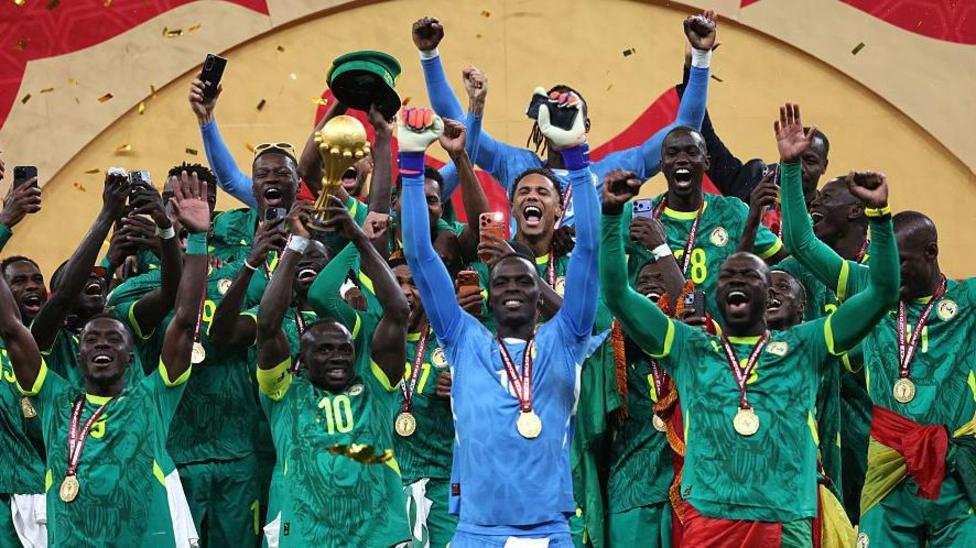
Senegal’s long-running battle to reclaim the 2025 Africa Cup of Nations title reaches a decisive stage with the Court of Arbitration for Sport confirming an October 8 hearing in Lausanne. The closed-door session offers the Fédération Sénégalaise de Football its clearest path yet to overturn CAF’s controversial forfeit ruling that handed the trophy to Morocco. Supporters across Dakar and beyond view the date as a moment of national reckoning and renewed hope for fairness in African football governance.
Senegal's AFCON Title Fight Heads to CAS in October
Dakar, Senegal — Article continues...
The CAS Hearing Date Brings Fresh Hope
The Court of Arbitration for Sport, established in 1984 as an independent Swiss foundation, operates under a three-arbitrator panel model for complex disputes, drawing from a global list of experts to ensure neutrality. In African football cases, such as the 2015 Zambian federation challenge and the 2021 Cameroonian eligibility appeal, CAS has favored written submissions supplemented by limited oral arguments, often resolving matters within six months while prioritizing procedural fairness over public scrutiny.
Procedural rules require both parties to submit detailed briefs 30 days prior, followed by a closed Lausanne session where arbitrators may request clarifications but rarely allow live witnesses. This format has proven effective in balancing power imbalances between national federations and continental bodies, though critics note its limited precedent for title-stripping decisions, potentially setting new standards for AFCON administrative reviews.
On July 24, 2026, the Court of Arbitration for Sport confirmed that Senegal’s appeal against the loss of the 2025 Africa Cup of Nations title will be heard on October 8 in Lausanne. The Fédération Sénégalaise de Football received the notice with quiet determination, knowing the date marks the next step in a long fight that began after the chaotic final in Rabat. Families across Dakar and Thiès gathered around radios and phones that evening, sharing the news the way news travels in Senegal, from one compound to the next.
Recalling the January 2026 Final in Rabat
The final itself took place on January 18, 2026, between defending champions Senegal and hosts Morocco. What should have been a celebration of African football turned into confusion when crowd disturbances and refereeing decisions disrupted play. Senegal left the pitch believing they had retained the trophy, only for events weeks later to rewrite that outcome. The match remains vivid in the minds of supporters who traveled or watched from home, waving flags under the Moroccan night sky.
The March 17 CAF Appeals Board Ruling
The CAF Appeals Board justified its March 17 decision by invoking Article 48 of its disciplinary code, which permits forfeit awards when teams allegedly fail to maintain order or comply with security directives during matches. Officials cited precedents from the 2019 AFCON semi-final disruptions in Egypt and the 2008 qualifier abandonment in Nigeria, where similar administrative overrides occurred without full evidentiary hearings. This approach prioritized host-nation stability over on-pitch evidence, raising questions about selective enforcement.
International bodies responded cautiously. FIFA issued a brief statement urging all parties to respect CAF autonomy while monitoring for broader governance implications, echoing its 2022 handling of the Libyan federation dispute. UEFA observers noted parallels to European cases involving crowd control, yet African confederation analysts highlighted how such rulings often disadvantage non-host nations, potentially undermining the tournament's credibility across the continent.
On March 17, 2026, the CAF Appeals Board, chaired by officials including vice-president Constant Omari, overturned the original result and awarded Morocco a 3-0 forfeit victory. The decision stripped Senegal of the title and handed it to the host nation. CAF president Patrice Motsepe endorsed the ruling, citing security and disciplinary protocols. In Senegal the news landed like a sudden storm, prompting immediate statements from the FSF and calls for an independent review.
National Outrage and Community Response
In Dakar’s bustling markets and Thiès youth centers, ordinary Senegalese expressed dismay through teranga-infused gatherings where families replayed match footage on shared phones. Street footballers in Pikine recounted how the Lions embody national resilience, linking the ruling to historical grievances over uneven CAF treatment of West African sides. Local griots composed new verses during evening sessions, framing the forfeit as a test of collective dignity rather than mere sporting loss.
Journalists from Dakar-based outlets like L’Observateur described the reaction as measured yet profound, with artists in Saint-Louis painting murals of the Lions under Moroccan floodlights to symbolize interrupted glory. Community radio debates emphasized football’s role in unifying diverse ethnic groups, transforming outrage into calls for transparent governance that honor Senegal’s longstanding contributions to African football development.
Streets in Dakar, Saint-Louis and Ziguinchor filled with peaceful marches in the days after the CAF decision. Elders and young players alike spoke of pride in the Lions’ journey and the need for fairness. Local radio stations hosted open discussions where fans recalled specific moments from the final and questioned the timing of the forfeit award. The outrage stayed rooted in love for the game rather than bitterness, reflecting the grounded spirit that has long defined Senegalese football support.
The FSF Appeal to Lausanne
The FSF, led by president Augustin Senghor, filed its appeal with the Court of Arbitration for Sport shortly after the CAF ruling. Legal representatives prepared detailed submissions arguing procedural irregularities and insufficient evidence for the forfeit. The federation emphasized that Senegal had followed every on-field instruction during the final. Supporters viewed the move to CAS as a necessary step to restore both the title and the integrity of the competition.
Details of the October 8 Closed Hearing
The hearing scheduled for October 8, 2026, will take place behind closed doors at CAS headquarters in Lausanne, Switzerland. A panel of three arbitrators will review written evidence and oral arguments from both the FSF and CAF. No public broadcast is planned, yet the outcome will be announced in the weeks that follow. Senegalese officials have already begun coordinating travel and documentation, treating the date as a national appointment rather than a distant legal formality.
Voices from Players and Former Coaches
Former captain Kalidou Koulibaly and coach Aliou Cissé have both expressed quiet confidence in the appeal process. In interviews conducted in Dakar last week, they spoke of the team’s unity and the lessons learned from the final’s chaos. Youth academies in Pikine and Rufisque have used the story in training sessions, reminding young players that persistence matters as much as talent. These grounded perspectives keep the focus on long-term growth even while the title remains in dispute.
Looking Toward Resolution and African Football
This CAS case underscores the urgent need for CAF reforms that separate hosting privileges from disciplinary authority, preventing future conflicts where administrative rulings overshadow athletic merit. Past governance lapses, including the 2010 Nigeria boycott fallout, illustrate how unresolved disputes erode trust in AFCON’s integrity and deter investment from sponsors wary of political interference.
Resolution could catalyze standardized protocols across African football, emphasizing independent oversight panels and data-driven security assessments. By addressing the tension between on-field results and off-field decisions, the outcome may strengthen confederation accountability, fostering a more equitable landscape that elevates the continent’s global standing while preserving the sport’s unifying power for nations like Senegal.
Whatever the CAS panel decides, the case has already prompted wider conversations about final-match protocols across the continent. Senegal’s appeal represents more than one nation’s claim; it touches on how African football governs itself under pressure. As October approaches, communities continue their daily rhythms while holding space for the hearing’s result. The Lions’ story, like the country itself, remains one of resilience and measured hope.
By Amara Diop, Staff Writer
This article was produced with AI-assisted research and editorial support. Reporting is based on sources cited in the article.
What's Your Reaction?
 Like
0
Like
0
 Dislike
0
Dislike
0
 Love
0
Love
0
 Funny
0
Funny
0
 Wow
0
Wow
0
 Sad
0
Sad
0
 Angry
0
Angry
0

West Africa/Sahel Correspondent at Global1.News. Dakar-based journalist covering politics, security, climate, and development across Francophone and Anglophone West Africa. Tells the stories of a region undergoing profound transformation.












Comments (0)