
Threading a Future: Samira Simporé Brings String Art to Burkina Faso's Art Scene
In Burkina Faso's vibrant capital Ouagadougou, where painting and sculpture have long dominated the visual arts landscape, a quiet revolution is unfolding — one nail, one thread, one intricate pattern at a time. Meet Samira Simporé, the Burkinabè artist threading a bold new vision into existence through the meticulous craft of string art, known in French as art filaire.
In Burkina Faso's vibrant capital Ouagadougou, where painting and sculpture have long dominated the visual arts landscape, a quiet revolution is unfolding — one nail, one thread, one intricate pattern at a time. Meet Samira Simporé, the Burkinabè artist threading a bold new vision into existence through the meticulous craft of string art, known in French as art filaire.
Threading a Future: Samira Simporé Brings String Art to Burkina Faso's Art Scene
Ouagadougou, Burkina Faso — In a country where canvas and clay have traditionally held court in galleries and exhibitions, Samira Simporé is quietly threading a revolution. Her medium is unconventional for West Africa's art scene: vibrant threads stretched across meticulously placed nails, forming intricate geometric patterns and soulful portraits that seem to pulse with life. It is meticulous, meditative, and utterly mesmerizing — yet she faces a singular, stubborn obstacle that has nothing to do with her talent and everything to do with visibility.
A Solitary Thread in a Sea of Paintings
Samira Simporé is a Burkinabè artist pioneering string art (art filaire) in Burkina Faso, yet her path has been marked by the weight of standing alone. Burkina Faso's art scene has long been dominated by painting and sculpture, leaving little room for forms that do not fit the expected frame. In a sea of paintings, she was a solitary thread, often the sole practitioner bringing this approach to public view.
She recalls one particular exhibition with clarity. "I participated in an exhibition where most of the exhibitors were visual artists, and I was practically the only one presenting this style of art." The words carry both pride and the quiet ache of isolation. Samira creates intricate geometric patterns and soulful portraits, but recognition comes slowly when the audience expects familiar canvases.
The public is used to visual art. Her biggest challenge right now is promoting these pieces—specifically, making them more visible. Viewers pass by, drawn instead to what they already understand, while her nailed boards and woven threads remain a mystery to many. This unfamiliarity can feel like a barrier that no amount of skill can immediately overcome.
Still, she describes solitude as slowly becoming her strength. Each exhibition where she stands apart teaches her something new about persistence. Rather than shrinking from the difference, she leans into it, allowing the uniqueness of her work to speak for itself over time.
The challenge of making string art visible in Burkina Faso's art ecosystem remains real. Galleries and collectors often favor established mediums, yet Samira continues to show up, thread by thread, building a quiet case for her craft. Her resolve suggests that what begins as solitude may one day become a recognized path.
What Is String Art? The Art of Art Filaire
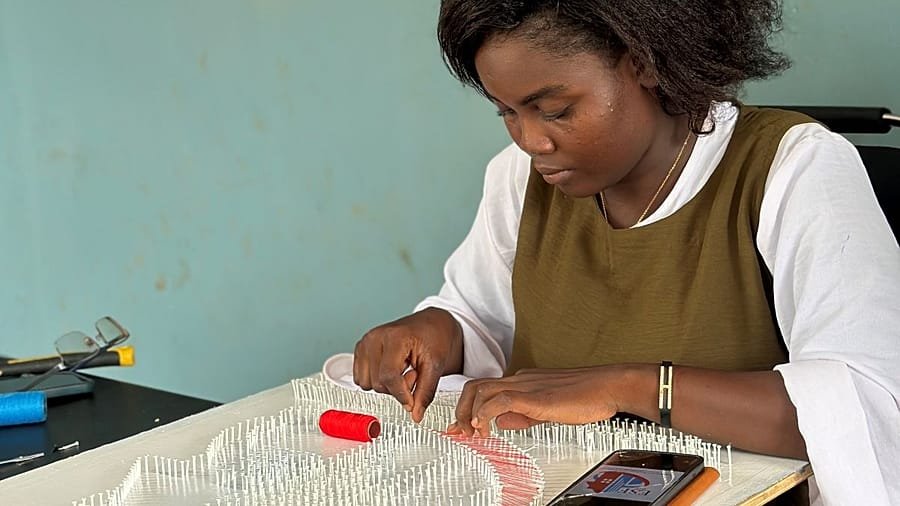
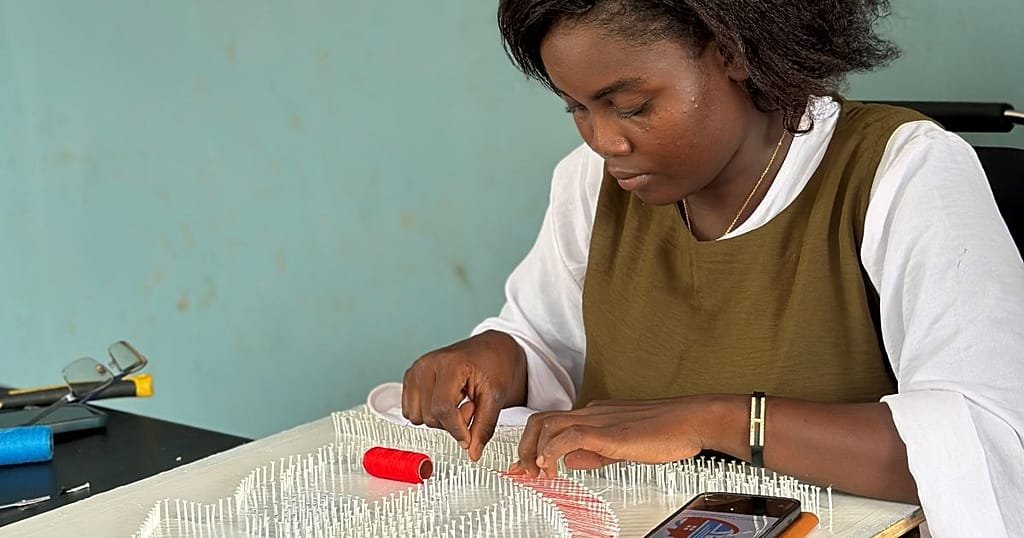
String art involves hammering nails into a board in patterns and wrapping colorful threads around them. The result is a layered image that emerges only after hours of careful placement and winding. Samira Simporé has made this technique her own, turning simple materials into works that catch both light and attention.
The process is described as meticulous, meditative, and stress-reducing. Each nail must sit at the precise angle, each thread pulled taut without breaking the emerging design. There is no rushing the work, and that deliberate pace becomes part of its appeal.
She shares her experience plainly. "L'art filaire en tant que tel, demande la patience et une concentration et ça réduit beaucoup le stress." The French words capture what many feel when they try the craft: the mind settles as the hands stay busy. The therapeutic benefits of string art require patience and concentration, offering a quiet refuge from daily pressures.
Precision and concentration are essential at every stage. A single misplaced nail can shift the entire composition, so the artist learns to move slowly and deliberately. This discipline turns the act of creation into something almost ritualistic.
Materials—nails, thread, and boards—are affordable and locally accessible. Unlike paints or imported canvases, these items can be found in most markets, lowering the barrier for anyone curious to begin. The art form is known in French as art filaire, yet its simplicity makes it approachable across languages and backgrounds.
Rooted in African Tradition
Aboubacar Sanga is a visual artist and art promoter who observes cultural evolution in Burkina Faso. He sees deeper connections in Samira's work than many realize at first glance. Sanga notes string art's DNA traces back to African women's knitting traditions passed down through generations, where hands once wove stories into cloth now find new expression in thread and nail.
Burkina Faso has a rich heritage in textiles, masks, and sculpture. The connection feels natural when viewed through that lens. Faso Dan Fani is Burkina Faso's traditional handwoven cotton strip fabric with deep cultural symbolism, and string art echoes its geometric rhythms and patient construction.
Innovation doesn't always arrive from the outside. Sometimes, it's stitched from the fabric of what already exists. Sanga reminds us that artists like Samira are not importing foreign ideas but reworking patterns long present in daily life across the region.
The broader West African textile tradition supports this view. From strip weaving to intricate embroidery, the continent has always valued the meeting of color, line, and patience. String art simply carries that spirit into a new form.
Sanga also highlights practical advantages. "Economically, it's also a plus for the economy, because these are materials that need to be purchased." The observation grounds the art in everyday realities while honoring its cultural roots.
Building a Movement: Economic and Cultural Impact
Aboubacar Sanga offers a fuller perspective on the possibilities ahead. "In some contexts where painting might not resonate, string art might resonate—through its approach, its affordability, and its style." His words point to an opening for new voices and new audiences in Burkina Faso's galleries.
The potential for string art as a cottage industry is clear. Because the materials for string art are accessible to young and emerging artists, more people can experiment without large investments. Workshops could spring up in neighborhoods, turning spare rooms into small studios.
Affordable materials make it accessible to young artists who might otherwise hesitate to enter the art world. Nails and thread cost little, yet the finished pieces carry both visual impact and personal meaning. This accessibility could widen participation beyond those with formal training.
The therapeutic and wellness aspect adds another layer. As Samira notes, the process calms the mind while producing something tangible. Communities might one day use string art sessions for both creative expression and mental well-being.
Burkina Faso's contemporary art scene continues to evolve. A growing community of young Burkinabè artists is already experimenting with mixed media and unconventional forms. Samira's solitary thread may soon become part of a larger weave.
A Pan-African Perspective on Artistic Innovation
Across the continent, artists are finding fresh ways to speak. From Senegal's contemporary art scene to South Africa's mixed-media practitioners, the pattern is similar: tradition meets invention. Burkina Faso's experiment with string art fits neatly into this wider movement.
Artists across the continent are blending traditional techniques with modern expressions. The results honor heritage while opening doors to new conversations. Reference to Dakar Biennale and Ouagadougou's own arts festivals shows how these platforms increasingly welcome such explorations.
The importance of nurturing unconventional art forms cannot be overstated. When institutions and audiences make space for difference, the entire cultural landscape grows richer. Samira's work benefits from this openness even as it helps create it.
From my Senegalese perspective, the parallels feel immediate. Senegal's rich tradition of textile arts (tissus, bazin) parallels Burkina Faso's weaving heritage. Both countries carry deep knowledge of cloth, color, and pattern that string art naturally extends.
Africanews covered Samira's story on July 22, 2026 through English and French channels. The English article titled "Threading a future: The woman weaving a new art form in Burkina Faso" and the French article "Burkina Faso : Samira Simporé, pionnière de l'art filaire" brought her voice to wider audiences. An Africanews YouTube video published July 22, 2026 features her story, helping the solitary thread reach beyond Ouagadougou.
What to Watch For
Samira Simporé's plans for upcoming exhibitions signal steady forward movement. She continues to refine her technique while seeking spaces that allow string art to stand beside more familiar forms. Each showing adds to the quiet momentum she has built.
The future of string art in Burkina Faso looks promising as more eyes adjust to its possibilities. Interest from younger artists suggests the form may find a lasting place in the local scene. What began as an outlier could become a recognized thread in the country's artistic fabric.
Potential for international recognition grows with every mention in regional media. Global curiosity about African contemporary art is rising, and Samira's distinctive approach offers something fresh within that conversation.
Her visibility challenge may turn into an advantage as interest grows. The very quality that once set her apart now draws attention, proving that patience and persistence can reshape an ecosystem. Readers can follow her journey through the Africanews coverage already available online.
The growing interest in African contemporary art globally creates space for voices like hers. Samira Simporé continues to hammer, wind, and weave, reminding us that revolutions often begin with a single, deliberate thread.
By Amara Diop, Staff Writer
This article was produced with AI-assisted research and editorial support. Reporting is based on sources cited in the article.
What's Your Reaction?
 Like
0
Like
0
 Dislike
0
Dislike
0
 Love
0
Love
0
 Funny
0
Funny
0
 Wow
0
Wow
0
 Sad
0
Sad
0
 Angry
0
Angry
0

West Africa/Sahel Correspondent at Global1.News. Dakar-based journalist covering politics, security, climate, and development across Francophone and Anglophone West Africa. Tells the stories of a region undergoing profound transformation.












Comments (0)