
Togo's Evala Wrestling Festival: Where Young Men Wrestle Int
Every mid-July, thousands of bare-chested young men emerge from forest ceremonies in northern Togo chanting war songs, ready for one of West Africa's most demanding initiation traditions — the Evala wrestling festival, where young Kabye men wrestle to become men. As the 2026 edition of this centuries-old rite of passage reaches its climax in the Kara region, Togo is pursuing UNESCO recognition to safeguard a tradition that shapes warriors, leaders, and an entire community's i
Every mid-July, thousands of bare-chested young men emerge from forest ceremonies in northern Togo chanting war songs, ready for one of West Africa's most demanding initiation traditions — the Evala wrestling festival, where young Kabye men wrestle to become men. As the 2026 edition of this centuries-old rite of passage reaches its climax in the Kara region, Togo is pursuing UNESCO recognition to safeguard a tradition that shapes warriors, leaders, and an entire community's identity.
Togo's Evala Wrestling Festival: Where Young Men Wrestle Into Adulthood
Kara, Togo — The bare-chested young men emerged from the forest chanting war songs, their bodies marked with the ritual scars that signal readiness for one of West Africa's most demanding traditions. Ahead of the wrestling, each Evalo — as the initiates are called — must sport three small scars near each ear, made with blades. They must also dance with a dog until it dies of exhaustion, then eat its meat. "The dog is a strong, hardy and cunning animal," explained Tchitchao canton chief Achille Samah Bidiwana. "By eating its meat, the initiate takes on these qualities." This is the Evala, the Kabye people's ancestral rite of passage, where wrestling is not sport — it is the price of becoming a man.
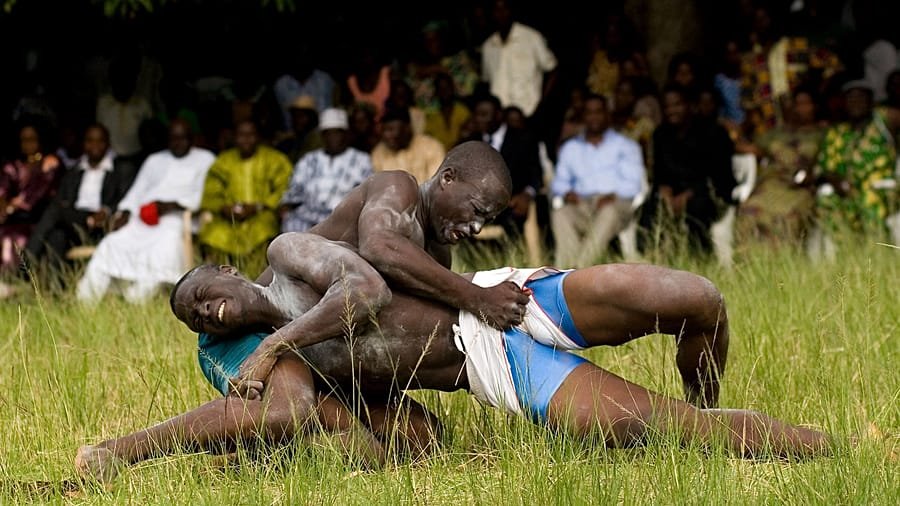
The Arena: Where Warriors Are Made
The wrestling matches unfold under the fierce mid-July sun in open clearings across the Kara region, hundreds of kilometres north of Lomé. Young men aged 18 to 20 circle each other with intense focus, watching every shift in their opponent's stance before lunging to grab an arm or leg and bring him crashing to the ground in spectacular falls that draw gasps from the crowd.
First aid teams stand ready at the edges of each arena, rushing in when a wrestler lands awkwardly or suffers a deep cut. In the 2026 edition some young men were carried away to nearby hospitals, yet the matches continued without pause as the community understood that such trials forged resilience.
The energy of the spectators pulses through the air like a living drum. Voices rise in Kabye, urging the fighters on with calls of "Hold tight, don't let go," "Lock your legs and throw him," and "We are great warriors!" These chants echo across the fields, binding everyone present in shared purpose.
One spectator put it simply: "Our encouragement helps the wrestlers keep their courage right to the end of the fight." The communal support system runs deep, with elders and peers alike offering strength through words and presence rather than leaving any Evalo to face the test alone.
Security and proximity operations ran from July 13 to 19 across all arenas, ensuring the rough physical contests remained safe while preserving the raw intensity that defines Evala. The 2026 edition ran approximately July 11-19 across multiple cantons including Pya, Tchitchao, Yadè and Bohou, drawing thousands each day.
Through every throw and every cheer, the arena reveals how Evala transforms individual strength into collective pride, reminding all who watch that becoming a man in Kabye society demands both personal courage and the backing of one's people.
The Evalo's Journey: Tradition and Social Pressure
The initiation is not compulsory, yet it carries immense social weight among the Kabye. Coach Tchaa Tidiye of Pya canton explains the reality plainly: "We don't force a young Kabye to wrestle, but if he doesn't, especially if he is in good shape, he brings shame on society." Families feel the quiet judgment when a son stands aside.
According to tradition, "you can't have a wife before becoming an Evalo," as Tchitchao canton chief Achille Samah Bidiwana reminds younger men. This expectation weaves the rite into the very fabric of adult life, linking physical courage to the right to build a family and claim full standing in the community.
Full initiation requires three consecutive years of participation. Each summer the young men return to the forest and the arena, deepening their commitment until they earn the red berets that symbolise warrior status. Only after this sustained journey do they step forward as recognised adults.
Nabede Kpatcha, a father watching his son compete, speaks for many when he says, "What my parents showed me, I must pass on to my child." The three-year cycle ensures that values of courage, discipline, perseverance, solidarity and community responsibility travel intact from one generation to the next.
Thousands of ethnic Kabye men aged 18-20 take part annually, their bodies marked by the three small blade-cut scars near each ear. These visible signs, together with the red berets awarded at the end, mark a clear transition that the whole village recognises and respects.
Even those who feel the weight of expectation find comfort in knowing they walk a path their ancestors cleared. The social pressure, though real, grows from love for the culture rather than coercion, binding young men to something larger than themselves.
Presidential Wrestlers: From the Arena to the State House
Several of Togo's high-ranking officials, including ministers and army officers from the Kara region, have passed through Evala themselves. Their presence at the matches each year signals that the rite remains a living source of leadership rather than a relic of the past.
Faure Gnassingbé, President of the Council, launched the 2026 edition on July 11 in Pya, Kozah prefecture. He attended the matches and addressed the wrestlers directly in the Kabye language, as he does every year, showing that the highest office in the land still honours the traditions of the north.
His father, Gnassingbé Eyadéma, also underwent the rite. Coach Tchaa Tidiye notes with quiet pride that "Faure Gnassingbé is considered one of the best wrestlers of his generation." This personal history gives the president's annual visits a depth that resonates far beyond politics.
The connection between Evala and Togolese political leadership runs through decades. Young men who once grappled in the dust now shape national policy, carrying the discipline and solidarity learned in the arena into the corridors of power.
When the president speaks to the crowd in their mother tongue, the moment bridges the gap between modern governance and ancestral ways. It affirms that Kabye identity strengthens the nation rather than standing apart from it.
Many ministers and officers return each July not as distant figures but as former Evalo who understand the cost of the red beret. Their example encourages the current generation to see the festival as preparation for service, whether in the village or in the capital.
UNESCO Recognition: Safeguarding a Living Heritage
Togo has officially launched the process to register Evala on the UNESCO list of intangible cultural heritage. Culture Minister Isaac Tchiakpe told AFP that the Togolese government is determined to see the Evala duly recognised on the international stage, a step that would place the tradition alongside other celebrated African practices.
The bid aims to preserve the tradition amid modern social pressures that pull young people toward city life and global influences. By seeking UNESCO status, Togo signals that Evala is not merely local custom but a vital thread in the continent's living heritage.
Other African traditions have already received this recognition, from the Gule Wamkulu of Malawi and Zambia to the Vimbuza healing dance of Malawi. These listings have helped communities protect their practices while sharing them with the wider world, offering a model Togo now follows.
Minister Tchiakpe emphasises that the effort goes beyond paperwork. It seeks to ensure that the three-year initiation, the ritual scars, the dog ceremony and the wrestling itself continue to shape young men for generations to come.
The cultural preservation dimension reaches every Kabye household. Families see UNESCO recognition as validation that their ancestors' wisdom deserves protection, not replacement by newer ways that may lack the same depth of meaning.
Through this process, Togo invites the international community to witness how one people's rite of passage carries universal lessons about courage, identity and the responsibilities that bind a community together.
Tourism, Security, and the Future of Evala
Evala has attracted domestic and foreign tourists eager to witness an authentic African initiation. French visitor Sandrine Plathey travelled from France and described the experience as "a wonderful discovery," one that left her moved by the depth of commitment on display.
The economic boost flows through local food vendors, hospitality providers and transport operators during the July gatherings. Villages that once hosted only relatives now welcome visitors from across Togo and beyond, creating new opportunities while the wrestling continues.
Yet jihadist groups in neighbouring Sahel threaten tourism to Togo's north. The lush Kara region remains peaceful, but the shadow of instability requires careful management so that visitors feel secure without altering the intimate character of the festival.
The balancing act between preserving tradition, welcoming visitors and maintaining security defines the present moment. Organisers work closely with security forces to keep arenas safe while ensuring the chants, falls and rituals stay true to their origins.
The 2026 finals on July 18 in cantons Tcharè, Soumdina and Lassa drew huge crowds that spilled across the fields. The energy felt both timeless and forward-looking, as elders and youth alike celebrated another successful cycle.
Looking ahead to 2027, communities hope the UNESCO process will bring greater visibility and protection, allowing Evala to flourish even as the wider region faces new pressures. The festival's future rests on this careful stewardship of heritage and hospitality.
What Evala Means for African Cultural Identity
Evala stands as a living example of how African communities keep their heritage vibrant amid rapid change. Across the continent, initiation rites like this one continue to transmit courage, discipline, perseverance, solidarity and community responsibility to new generations.
The Kabye people's annual ritual strengthens identity in ways that formal education alone cannot achieve. Young men emerge not only with red berets but with a profound sense of belonging that shapes their choices long after the matches end.
Other African communities can learn from Togo's commitment to cultural preservation. By pursuing UNESCO recognition while maintaining the three-year cycle and the dog ceremony, the Kabye show that tradition and modernity need not stand in opposition.
The values instilled through Evala echo in many Senegalese and West African traditions where physical trials mark the passage to adulthood. This shared continental thread reminds us that our diverse cultures draw from the same deep well of ancestral wisdom.
Each July the Kara region becomes a classroom without walls, where elders pass on what their parents showed them. The result is a society that values both individual strength and collective care, a model worth celebrating far beyond Togo's borders.
In Evala we see Africa at its most grounded: proud of its roots, open to measured change, and determined that the next generation will wrestle not only in the arena but through life with the same courage their fathers carried before them.
By Amara Diop, Staff Writer
This article was produced with AI-assisted research and editorial support. Reporting is based on sources cited in the article.
What's Your Reaction?
 Like
0
Like
0
 Dislike
0
Dislike
0
 Love
0
Love
0
 Funny
0
Funny
0
 Wow
0
Wow
0
 Sad
0
Sad
0
 Angry
0
Angry
0

West Africa/Sahel Correspondent at Global1.News. Dakar-based journalist covering politics, security, climate, and development across Francophone and Anglophone West Africa. Tells the stories of a region undergoing profound transformation.











Comments (0)