
US Warns Citizens in Iraq of Iran Drone Attacks in Erbil
Escalation in Erbil: Drones Over a City on Edge The US Embassy in Baghdad and Consulate General in Erbil issued a joint security alert on Friday warning American citizens to exercise heightened vigilance amid rising regional tensions. Officials stated that Iran and its allied groups could target US interests and facilities across multiple locations.
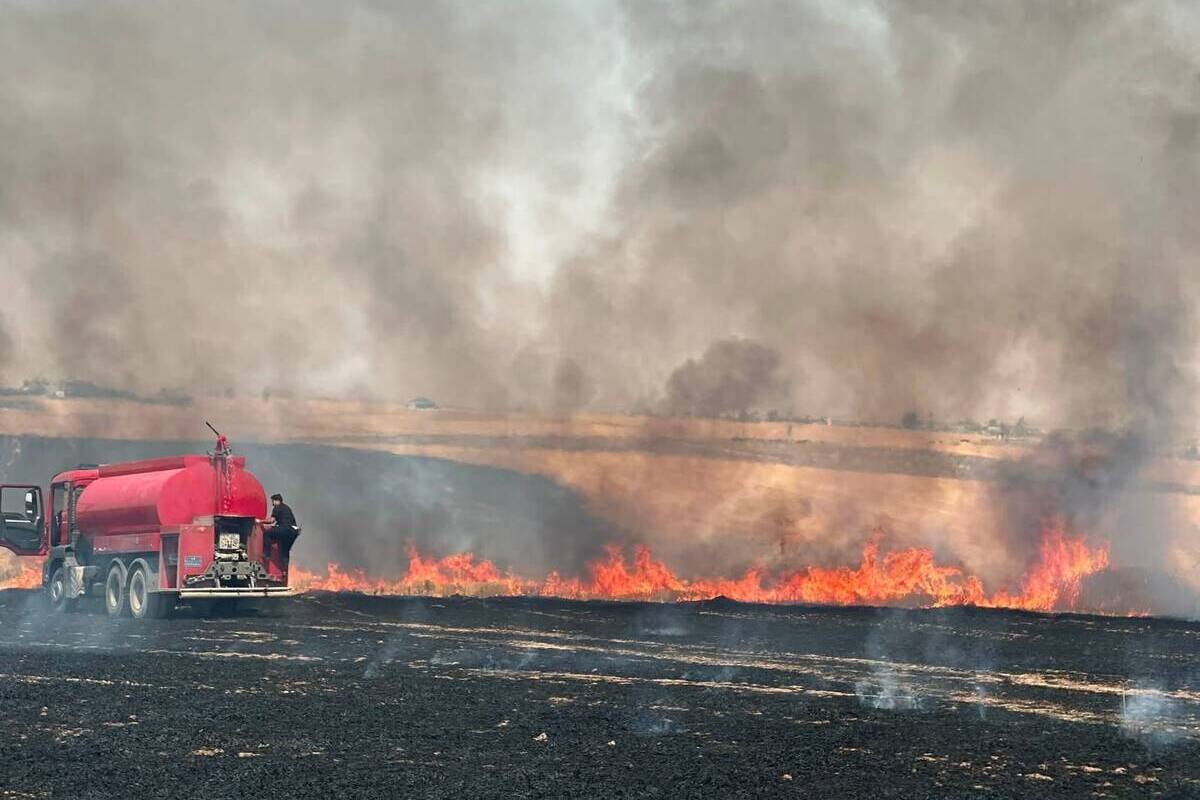
Escalation in Erbil: Drones Over a City on Edge
The US Embassy in Baghdad and Consulate General in Erbil issued a joint security alert on Friday warning American citizens to exercise heightened vigilance amid rising regional tensions. Officials stated that Iran and its allied groups could target US interests and facilities across multiple locations. Air defense systems intercepted five suicide drones over Erbil that same day, producing explosions that rattled neighborhoods throughout the northern Iraqi city. Iran's Islamic Revolutionary Guard Corps claimed responsibility, asserting that the strikes had aimed at US military assets including a Patriot air defense system, a surveillance balloon, and a residence housing American personnel. These assertions remain unverified by independent sources. The incident forms part of a pattern of repeated Iranian missile and drone operations against sites in Erbil and Sulaymaniyah since the broader war involving Iran, Israel, and the United States began.
Civilians and Sovereignty: Iraq Caught Between Powers
Iraqi civilians find themselves once again positioned between competing external powers whose decisions shape daily life without regard for local consent. The drone interceptions over Erbil underscore how foreign military calculations override Iraqi sovereignty, leaving residents to absorb the physical and psychological fallout. Families in affected districts described sudden alerts, shattered windows, and the scramble for shelter as explosions echoed across the city. Such episodes mirror the lived experience of communities under prolonged external pressure, where security alerts arrive from distant capitals rather than local authorities. The presence of US facilities and Iranian retaliation creates a cycle in which ordinary Iraqis bear the immediate consequences while their government struggles to assert control over its airspace and territory.
The Wider War: Iran, Israel, and the US in the Shadow of Conflict
The Erbil incident cannot be isolated from the larger confrontation spanning Iran, Israel, and the United States. Each side frames its actions as defensive responses to prior aggression, yet the resulting violence extends far beyond the original disputants. Palestinian communities have long observed how such regional escalations reinforce patterns of displacement and restricted movement already familiar in the occupied territories. US warnings to its citizens in Iraq reflect the same strategic posture that sustains military aid and diplomatic cover elsewhere in the region. Iranian claims of targeting American assets echo the rhetoric of resistance groups that position themselves against perceived occupation, while the human consequences accumulate in cities far from the decision-making centers.
Iran-US proxy dynamics in Iraq trace back to the 2003 invasion, when Tehran cultivated Shia militias to counter American influence. The January 2020 assassination of Qasem Soleimani near Baghdad airport triggered a wave of retaliatory strikes on US facilities, establishing a template of calibrated escalation that resumed after October 7, 2023. Each subsequent Iranian drone or missile operation in Erbil functions as both deterrence signaling and domestic consolidation for the IRGC amid economic sanctions.
The confrontation remains deeply interconnected: Israeli strikes on Iranian targets prompt US force posture adjustments in Iraq, which in turn invite Iranian responses through proxies. This feedback loop extends the original Israel-Hamas theater into Iraqi airspace, where local sovereignty serves as expendable terrain. US Patriot deployments and surveillance assets become magnets for Iranian claims of legitimate targeting, sustaining a cycle that prioritizes military posturing over deconfliction.
Palestine occupies a central rhetorical and strategic node within this proxy architecture. Iranian support for Palestinian factions is framed as resistance to occupation, yet the resulting regional volatility often diverts international attention and resources away from Gaza and the West Bank. Palestinian observers thus view Erbil incidents as symptomatic of how broader Iran-Israel-US friction perpetuates displacement and restricted movement without resolving core grievances.
Kurdistan Regional Government: A Call for Restraint
The Kurdish Regional Government swiftly condemned the attacks and appealed to Tehran to cease operations that endanger civilians and destabilize the region. Local officials emphasized that Erbil and surrounding areas have already endured repeated strikes since the current war phase began. Their statements highlight the limited leverage smaller entities possess when larger powers treat their territory as an arena for confrontation. The KRG's position reflects a broader reality in which regional autonomy remains vulnerable to external missile exchanges and drone incursions. Calls for restraint have so far produced little measurable change in the tempo of operations, leaving Kurdish authorities to manage the aftermath through security coordination and public advisories.
Human Cost of Regional Tensions
Beyond official statements and military claims lies the daily strain on residents whose routines are interrupted by air raid sirens and the constant possibility of escalation. Children in Erbil schools practice emergency drills while parents weigh the risks of remaining in neighborhoods near reported US-linked sites. Medical facilities report increased cases of anxiety-related conditions and respiratory issues linked to stress and dust from explosions. These experiences parallel those documented in other conflict-affected zones where civilian populations endure the indirect effects of geopolitical maneuvering. Displacement within Iraq has accelerated as some families relocate from high-risk districts, adding pressure on already stretched local resources and echoing the longer-term patterns of forced movement seen across the Middle East.
Since the escalation of Iran-US confrontations in Iraq following October 2023, displacement patterns have intensified markedly in the Kurdistan region. UN and IOM data indicate over 48,000 additional internally displaced persons have registered in Erbil and Sulaymaniyah governorates between late 2023 and mid-2024, many fleeing repeated drone and missile incidents. Pre-existing camps housing Yazidi and Arab IDPs from earlier conflicts now face overcrowding, with new arrivals straining water, sanitation, and medical resources already operating at capacity limits.
Economic fallout compounds these pressures. Direct infrastructure damage from intercepted drones in Erbil neighborhoods has exceeded $12 million, including shattered commercial buildings and disrupted power grids. Tourism, which contributed nearly 8% to KRG GDP pre-escalation, collapsed by over 65% in the first half of 2024 as international flights were curtailed and hotels reported occupancy rates below 20%. Small businesses near reported US-linked sites have shuttered, pushing unemployment among youth above 35% in affected districts.
Vulnerable populations bear disproportionate burdens. Families in IDP camps near Erbil report heightened respiratory ailments from explosion dust and psychological distress among children, with local NGOs documenting a 40% rise in anxiety-related clinic visits. These indirect effects echo broader Middle East patterns where geopolitical maneuvering accelerates forced movement without adequate humanitarian corridors or compensation mechanisms.
Regional Repercussions: From Baghdad to Beirut
The ripple effects extend southward to Baghdad and westward toward Beirut, where similar warnings and precautionary measures have been activated. Lebanese communities, already navigating their own economic and political strains, watch the Iraqi developments with concern that comparable drone activity could reach their territory. In Baghdad, demonstrations have been discouraged by security forces wary of any gathering that might invite further targeting. The interconnected nature of these alerts reveals how a single theater of confrontation can synchronize tensions across multiple capitals. Palestinian observers note that such synchronized pressure often coincides with intensified restrictions in the West Bank and Gaza, as attention and resources shift toward managing wider fallout rather than addressing core occupation-related grievances.
Iraq’s political landscape reveals deepening fractures among Shia factions. Groups aligned with the Coordination Framework maintain varying degrees of Iranian influence, while others seek pragmatic engagement with Washington for reconstruction aid and security cooperation. This division has paralyzed parliamentary decision-making on airspace sovereignty and foreign basing agreements, leaving Baghdad unable to present a unified front against external incursions.
Economic stability faces parallel risks. Iraq’s oil exports, which account for over 90% of government revenue, have encountered logistical disruptions at northern terminals amid heightened alert levels. Insurance premiums for tankers have risen sharply, and foreign investors have delayed projects in the south. These pressures compound existing fiscal strains and limit Baghdad’s capacity to mediate between Tehran and Washington.
Lebanon’s sovereignty challenges mirror Iraq’s experience. Hezbollah’s entanglement in the wider confrontation has invited Israeli warnings and economic isolation, while ordinary citizens in Beirut and Baghdad alike express fatigue with imported conflicts that eclipse local governance failures. Regional polling indicates widespread perception that escalation serves external agendas rather than domestic interests, fostering cynicism toward both Iranian and American narratives.
What Comes Next: No End in Sight
With no diplomatic off-ramp currently visible, the prospect of continued drone and missile activity remains high. The US advisory urging citizens to avoid demonstrations and areas with heavy security presence signals expectations of prolonged uncertainty rather than imminent de-escalation. Iraqi and Kurdish authorities continue to navigate between competing demands from Washington and Tehran while attempting to protect civilian life. The pattern suggests that future incidents will again place local populations at the center of external calculations. For communities already familiar with occupation, displacement, and restricted sovereignty, the Erbil events serve as another reminder that regional stability remains elusive when powerful actors prioritize military positioning over negotiated restraint.
Diplomatic off-ramps remain constrained. Iraq has floated mediation proposals through its foreign ministry and engaged UN envoys, yet neither Washington nor Tehran has signaled willingness to accept third-party frameworks that might constrain operational freedom. Past de-escalation attempts, such as those following Soleimani’s killing, collapsed once immediate retaliation cycles subsided, suggesting current efforts face similar structural obstacles.
Militarily, Iran’s expanding drone inventory—particularly loitering munitions—tests the limits of US Patriot systems in Erbil, where interception rates have been high but not absolute. Sustained operations could expose vulnerabilities in layered defenses and encourage further Iranian adaptation. US force protection measures, including dispersal of assets, indicate expectations of prolonged low-intensity pressure rather than decisive confrontation.
For Palestinian solidarity movements, the dynamic underscores the risk that regional escalation dilutes focused advocacy on occupation-related issues. Activists note that attention and diplomatic bandwidth shift toward managing Iran-US flashpoints, potentially delaying accountability mechanisms in Gaza and the West Bank. Absent negotiated restraint, the pattern suggests repeated civilian exposure across multiple theaters without resolution of underlying proxy competitions.
By Fatima Al-Rashid, Staff Writer
This article was produced with AI-assisted research and editorial support. Reporting is based on sources cited in the article.
What's Your Reaction?
 Like
0
Like
0
 Dislike
0
Dislike
0
 Love
0
Love
0
 Funny
0
Funny
0
 Wow
0
Wow
0
 Sad
0
Sad
0
 Angry
0
Angry
0

Gulf/MENA Correspondent at Global1.News. Based in Doha, covering Gulf politics, energy markets, diplomacy, and development across the Middle East and North Africa. Tracks the economic transformation of the Gulf states.












Comments (0)