
Yen Hits 40-Year Low as Japan Weighs Intervention Timing
to approximately 163.93-163.96 per dollar, marking its weakest level since November 1986. The currency briefly touched the 164 per dollar threshold during recent trading sessions. This marks a 40-year low that has drawn attention from markets and policymakers alike. Japan has already spent approximately US$72.25 billion on currency intervention this year. Markets have largely shrugged off these efforts so far.
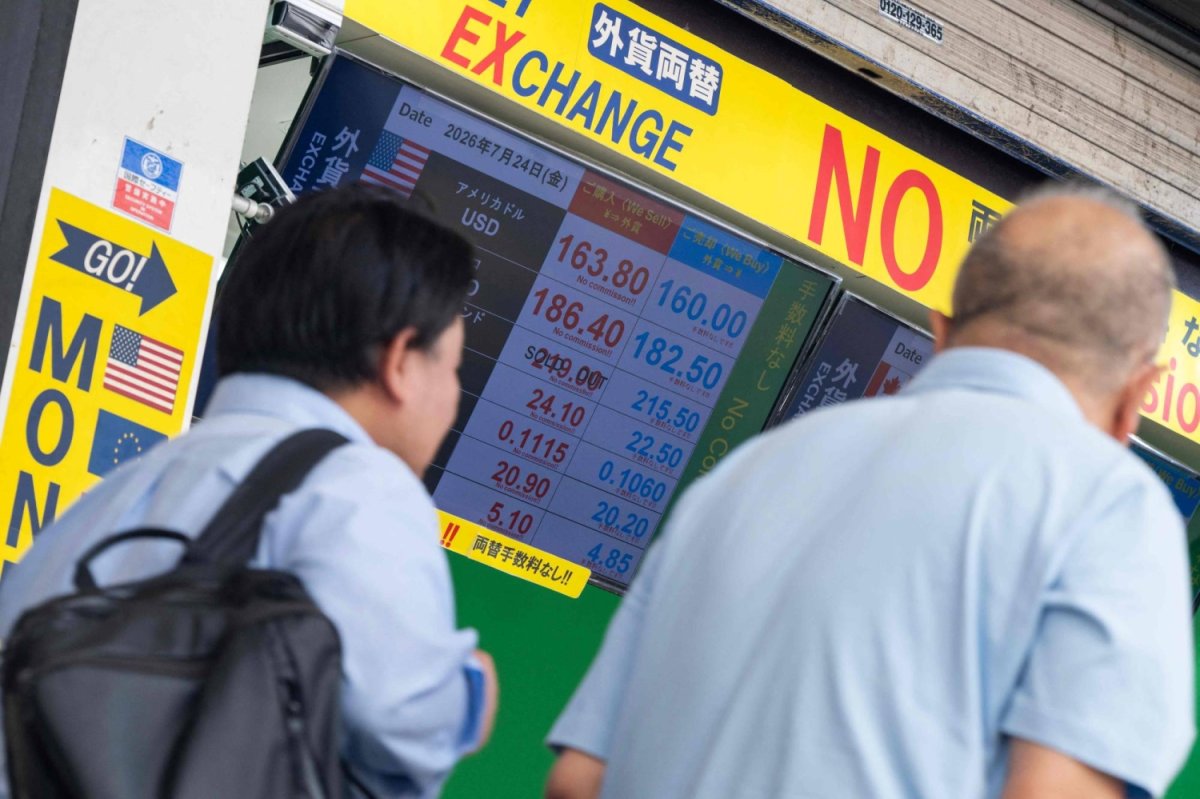
Current Exchange Rate Situation
The Japanese yen has weakened to approximately 163.93-163.96 per dollar, marking its weakest level since November 1986. The currency briefly touched the 164 per dollar threshold during recent trading sessions. This marks a 40-year low that has drawn attention from markets and policymakers alike.
Japan has already spent approximately US$72.25 billion on currency intervention this year. Markets have largely shrugged off these efforts so far. The current rate environment reflects persistent downward pressure on the yen driven by multiple external factors.
Iran War's Impact on Japan's Energy Costs
The Iran war has driven up global oil prices, placing additional strain on Japan as a major energy importer. Japan's oil reserves are being depleted, forcing the country to purchase oil at elevated prices. This development adds to import cost pressures at a time when the yen's depreciation already amplifies the expense of foreign energy purchases.
Prime Minister Sanae Takaichi's government faces mounting pressure to respond as these costs surge. Higher energy prices directly affect manufacturing and transportation sectors across corporate Japan. The combination of currency weakness and oil price increases creates a compounded challenge for energy security planning.
Japan's energy security remains tightly linked to Middle East crude supplies, with the country continuing to source the bulk of its petroleum needs from the region. The ongoing Iran conflict adds pressure to these supply routes, raising the prospect of higher acquisition costs and potential delivery delays for a nation that must import nearly all of its oil. Officials at the Ministry of Economy, Trade and Industry have long tracked such vulnerabilities, emphasizing the need for steady stockpiling and diversified procurement to cushion sudden external shocks.
Japan's strategic petroleum reserves provide a temporary buffer, yet sustained price spikes force greater drawdowns and increase the fiscal burden on energy security planning. At the same time, authorities have pursued gradual diversification through expanded liquefied natural gas contracts with suppliers in the United States and Australia, alongside stepped-up investment in renewable generation capacity. These measures echo earlier efforts to reduce single-source dependence following the 1973 oil shock, when Japan accelerated nuclear development and conservation programs that later shaped its modern energy mix.
Corporate and government planners now weigh how prolonged Middle East instability could interact with existing currency weakness to compound import expenses. Historical transitions after the 1970s demonstrated that policy responses combining reserves management with long-term supply shifts helped stabilize the economy, though full insulation from global price movements proved difficult. Current conditions suggest similar challenges may persist as Japan balances immediate needs against structural adjustments.
BOJ Policy Versus Fed Stance
The Bank of Japan maintains a more deliberate approach to rate hikes compared with global counterparts. This stance contrasts with the Federal Reserve's actions and contributes to the widening interest rate differential. US Treasury yields have strengthened, further supporting the dollar against the yen.
The interest rate gap encourages capital flows that favor dollar assets. Rising oil prices and inflation concerns tied to the Iran conflict have also fueled safe-haven demand for the US dollar. These dynamics reinforce the yen's current weakness despite intervention spending.
The Bank of Japan has maintained a measured pace of policy normalization relative to the Federal Reserve, preserving a notable interest rate differential that continues to influence cross-border capital flows. Market participants have observed that this gap supports carry trade strategies favoring dollar-denominated assets, contributing to ongoing pressure on the yen. Analysts monitor statements from BOJ Governor Kazuo Ueda for indications of any acceleration in rate adjustments, though the central bank has repeatedly stressed data-dependent timing.
Imported inflation arising from elevated energy prices tied to the Iran conflict introduces additional complexity for the BOJ's price stability mandate. While such external cost pressures can lift headline inflation readings, they do not necessarily strengthen underlying domestic demand, complicating assessments of sustainable wage and price growth. Officials have noted the distinction between these imported factors and demand-driven inflation when evaluating the appropriate pace of future adjustments.
Market expectations for the BOJ's next steps remain tempered by uncertainty over how long the interest differential will endure and whether global commodity developments will alter inflation trajectories. Past communications have highlighted a preference for gradual shifts to avoid disrupting fragile recovery signals. This cautious stance aligns with Japan's broader economic context, where external shocks must be weighed against domestic conditions that have historically required extended support.
Effectiveness of Past Interventions
Past interventions in April-May 2024 and July 2024 produced only temporary effects on the exchange rate. Those operations demonstrated that market forces can quickly reassert downward pressure on the yen once initial buying support fades. The scale of spending this year has not yet altered the broader trend.
Analysts note that isolated interventions face limits when underlying interest differentials and commodity price shocks remain in place. Japan's experience highlights the difficulty of sustaining currency strength without supportive monetary policy shifts.
Analysts' Views on Timing
Japan's government is probably seeking effective timing, specifically a moment when yen-buying pressure increases naturally, to amplify the effect of any intervention. Analysts emphasize that acting when market sentiment already leans toward yen purchases can extend the impact beyond the short term.
The current environment shows limited organic buying pressure, which explains the cautious stance. Officials appear focused on identifying windows where intervention can reinforce existing market movements rather than fighting prevailing trends alone.
Impact on Japanese Consumers and Businesses
Japanese consumers face higher costs for imported goods and energy as the weak yen raises the price of foreign purchases. Household budgets are stretched by elevated fuel and utility expenses linked to both currency levels and global oil prices.
Corporate Japan, particularly manufacturers reliant on imported raw materials, encounters squeezed margins. Exporters benefit from a weaker yen in theory, yet the surge in energy input costs offsets some gains. METI has monitored these effects closely as firms adjust supply chains and pricing strategies.
Japanese households continue to encounter elevated expenses for imported food, fuel, and utilities as the weaker yen amplifies global price movements. Electricity and heating costs have drawn particular attention from consumer groups, while retail prices for everyday goods reflect the combined effects of currency levels and supply-chain adjustments. These pressures have prompted households to reassess spending patterns, with METI surveys tracking shifts in consumption across regions.
Small and medium-sized enterprises face squeezed operating margins when imported raw materials and energy inputs rise faster than revenue adjustments allow. Many such firms lack the pricing power of larger exporters, leading to cautious inventory management and delayed capital spending. At the same time, inbound tourism has strengthened in sectors such as hospitality and retail, offering some offset through increased foreign visitor spending, though domestic consumer confidence indicators have shown mixed responses.
METI has maintained close consultation with industry associations to assess supply-chain resilience and explore targeted support measures. Historical episodes of yen weakness have demonstrated that exporters may record improved competitiveness abroad, yet energy-intensive manufacturers often experience partial erosion of those gains. Current conditions suggest firms will continue balancing these factors while monitoring policy signals on energy cost mitigation.
What to Watch For
Market participants will monitor whether yen-buying pressure emerges organically in coming sessions. Any coordinated signals from the Bank of Japan or Ministry of Finance could influence timing decisions. Continued depletion of oil reserves and movements in US Treasury yields remain key variables.
Observers also track how Prime Minister Sanae Takaichi's administration balances intervention with longer-term energy security measures. The interplay between these factors will determine whether future operations achieve more lasting results than those seen in 2024.
Market attention centers on whether organic buying interest in the yen emerges to support any future intervention by Japanese authorities. Officials have historically sought moments when prevailing sentiment aligns with policy actions, allowing operations to reinforce rather than counteract trends. Continued movements in U.S. Treasury yields and developments in global oil markets remain closely watched variables that could influence these calculations.
Coordination with G7 partners has featured in past discussions of currency stability, and observers note that any joint signals could shape expectations around timing and scale. The Bank of Japan’s upcoming policy meetings will also draw scrutiny for indications of further normalization steps, while fiscal authorities consider supplementary budget provisions that might address energy-related costs. These elements interact within Japan’s specific economic framework, where external shocks must be balanced against domestic priorities.
Broader geopolitical developments, including the trajectory of the U.S. presidential contest, could affect dollar-yen dynamics through shifts in trade or monetary expectations. Analysts emphasize that lasting effects from intervention depend on addressing underlying interest differentials and commodity pressures rather than isolated operations. Japan’s experience underscores the importance of aligning short-term measures with longer-term structural adjustments in energy and monetary policy.
Tags: yen exchange rate, Japan currency intervention, BOJ policy, Iran war oil prices, Sanae Takaichi, US Japan interest differential
By Kenji Tanaka, Staff Writer
This article was produced with AI-assisted research and editorial support. Reporting is based on sources cited in the article.
What's Your Reaction?
 Like
0
Like
0
 Dislike
0
Dislike
0
 Love
0
Love
0
 Funny
0
Funny
0
 Wow
0
Wow
0
 Sad
0
Sad
0
 Angry
0
Angry
0

Japan Correspondent at Global1.News. Tokyo-based voice covering Japanese politics, technology, economy, and culture. Tracks the intersection of tradition and innovation in one of the world's most dynamic societies.















Comments (0)