
US Tariffs on 60 Trading Partners Reshape Global Trade
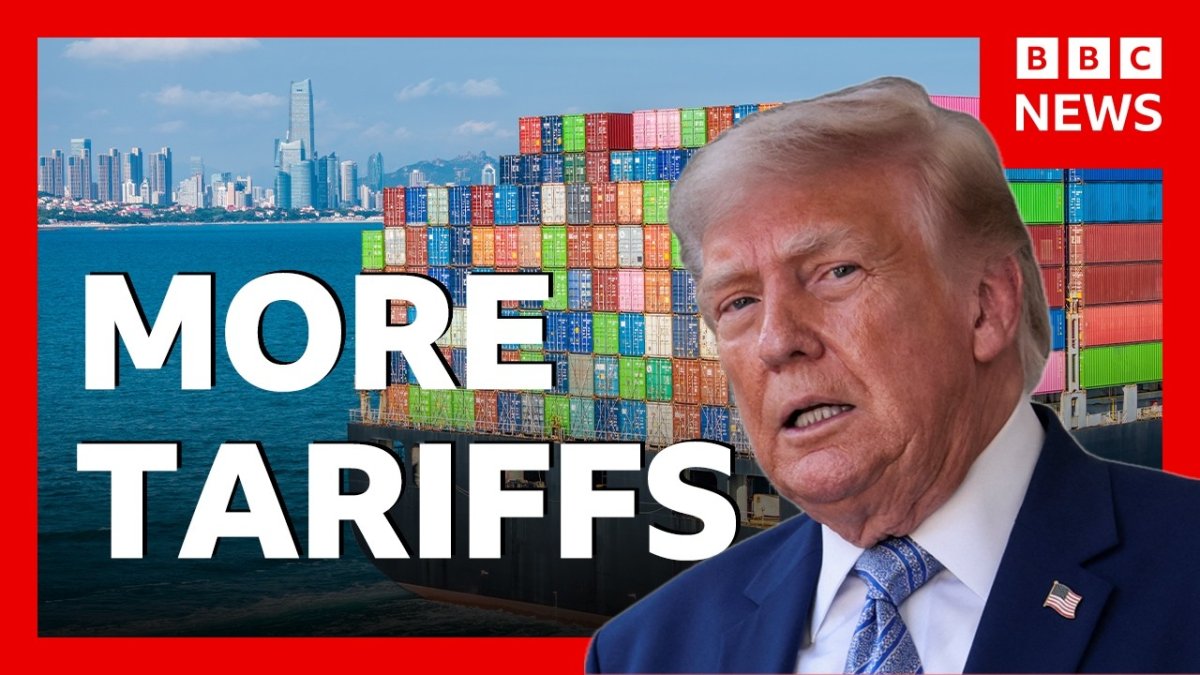
In a recent BBC News report, the network examined how the Trump administration's latest round of tariffs is reshaping global trade. The United States has imposed new duties on 60 trading partners, escalating a trade war that has defined the president's economic agenda since his return to office. The tariffs, ranging from 10 to 12.5 percent on all goods from the targeted countries, took effect on Friday, the same day an earlier temporary levy expired. US Tariffs on 60 Trading Partners Reshape Glo
In a recent BBC News report, the network examined how the Trump administration's latest round of tariffs is reshaping global trade. The United States has imposed new duties on 60 trading partners, escalating a trade war that has defined the president's economic agenda since his return to office. The tariffs, ranging from 10 to 12.5 percent on all goods from the targeted countries, took effect on Friday, the same day an earlier temporary levy expired.
US Tariffs on 60 Trading Partners Reshape Global Trade as Trump Administration Defies Legal Setbacks
New York, United States – 24 July 2026 — The United States has imposed sweeping new tariffs of 10 to 12.5 percent on 60 trading partners, escalating a trade war that has now survived a Supreme Court defeat, a temporary replacement levy, and a third legal iteration within 18 months. Critics and trade experts warn the forced labour rationale is a pretext for economic protectionism.
A New Tariff Regime Takes Shape
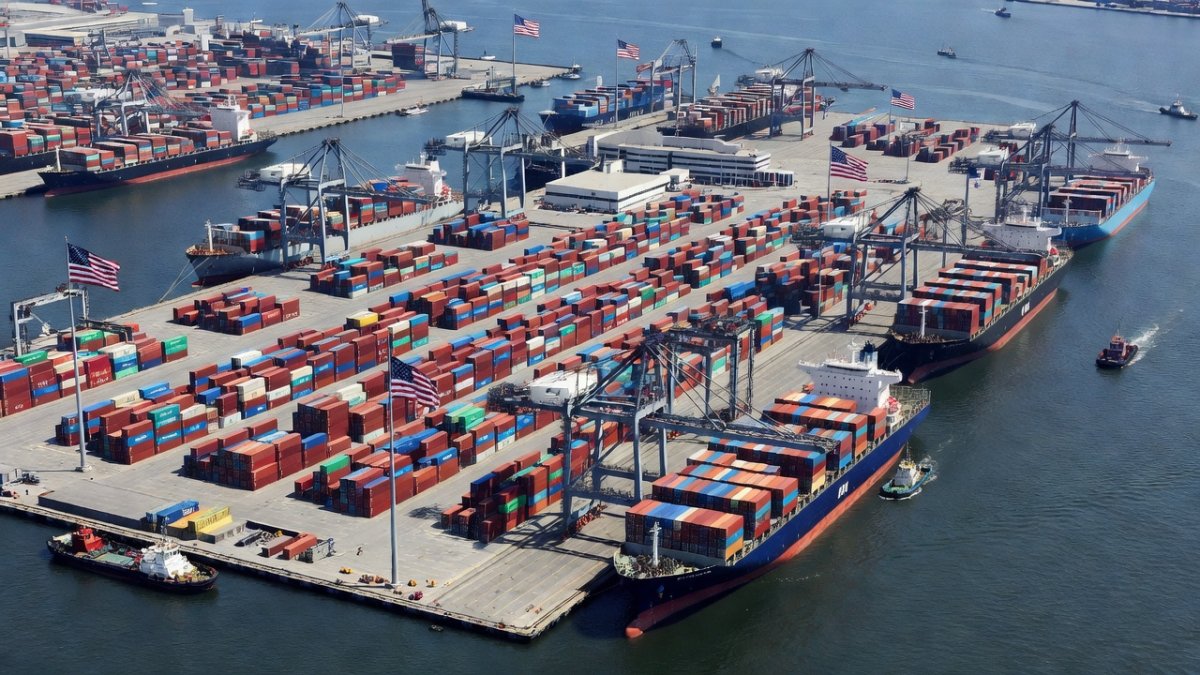
The new tariffs, ranging from 10% to 12.5%, apply to the top 60 US trade partners covering 99.4% of US imports. The Office of the US Trade Representative confirmed the implementation. The new duties replace a temporary 10% global levy that expired on Friday — which itself had been introduced after the Supreme Court struck down Trump's original "Liberation Day" tariffs in February 2026. This is the third iteration of Trump's tariff structure in just over a year. US Trade Representative Jamieson Greer stated that "Today's action will begin to correct what is both a human rights abuse and distortive trade practice." The two-tier structure means trading partners with commitments to enforce forced labour bans pay the lower 10% rate, while those without such commitments face the higher 12.5% rate. The Office of the US Trade Representative has indicated that the policy targets goods across nearly all categories, from consumer electronics to agricultural products, ensuring broad coverage that affects supply chains worldwide. Implementation details show that customs authorities began collecting the duties immediately upon the expiration of the prior temporary measure, leaving importers with little transition time. President Donald Trump has framed the move as essential for protecting American workers and addressing long-standing imbalances in global commerce.
The Supreme Court ruled earlier this year that many of the tariffs imposed under emergency powers were illegally enacted, forcing the administration to pay tens of billions in refunds to importers. The White House then shifted to Section 122 of the Trade Act of 1974, which allowed only 150 days — expiring Friday. The new tariffs use Section 301 authority based on forced labour investigations as their legal basis, allowing the duties to remain in place indefinitely unless challenged again in court. Section 301 differs fundamentally from both the emergency powers previously invoked and the time-limited Section 122 mechanism. Whereas emergency powers required a national-security declaration subject to judicial review and Section 122 imposed a strict 150-day sunset, Section 301 permits the U.S. Trade Representative to initiate investigations into unfair foreign practices and impose duties that can persist for years. This shift grants the administration greater durability and flexibility, enabling tariffs to function as a semi-permanent feature of trade policy rather than temporary emergency measures. Legal scholars note that Section 301's procedural safeguards are narrower, focusing primarily on whether the investigation was properly initiated rather than on the underlying economic rationale, which reduces the likelihood of successful court challenges.
Trade experts have expressed scepticism about the stated rationale. Caroline Freund, Dean of the UC San Diego School of Global Policy and Strategy, told the BBC's Today programme the move was a "like for like" swap but the forced labour rationale was a pretext. She stated: "I think they were looking for a legal reason to put the tariffs in and that they can maintain them because their goals and Greer has been very clear about this, as has Trump, is about the trade deficit and it is about US manufacturing, it is not about forced labour." Freund noted that the administration's focus remains on reducing the overall trade deficit and bolstering domestic manufacturing capacity rather than addressing labour conditions abroad.
Global Reactions: Condemnation and Resistance
Brazil called its new 12.5% rate "unjustified," arguing that its exports to the United States do not involve the labour practices cited by Washington. Japan expressed regret over the tariffs, warning that they would disrupt established supply chains in Asia. Australian Trade Minister Don Farrell said the levies were "completely unjustified" and would harm consumers on both sides of the Pacific. China's Foreign Ministry spokesperson Mao Ning denied allegations of forced labour, stating "There is no so-called forced labour in China, and we oppose using this as an excuse for political manipulation." International human rights groups have documented forced labour in China, particularly among Muslim ethnic minorities in Xinjiang, creating a complex debate where genuine human rights concerns are weaponised for trade policy. Wendy Cutler of the Asia Society Policy Institute observed that most trading partners will focus on reducing their dependence on the US by making deals with other countries, accelerating a global realignment away from American markets. The European Union secured a 10% all-inclusive arrangement, while other nations face differentiated rates depending on their labour enforcement records. The administration is separately investigating 16 countries over manufacturing overcapacity, indicating that additional tariffs may follow in the coming months.
The UK's Uneasy Position
The UK government said firms face no change to tariff rates following the new measures. However, William Bain of the British Chambers of Commerce warned that the UK lost its comparative advantage because the EU has a 10% all-inclusive deal while the UK faces 10% universal tariffs on top of individual goods duties. David Henig of the European Centre for International Political Economy said the UK "has slightly moved backwards." He added: "We have slightly moved backwards, but this is President Trump so anything could change tomorrow or the day after. I don't think too many businesses will be changing their plans based on that." The irony lies in the exemption granted to UK whisky after Trump struck a deal during King Charles III and Queen Camilla's state visit, a diplomatic achievement that highlights how personal diplomacy shapes trade outcomes in the Trump era. British exporters now navigate a patchwork of duties that places them at a disadvantage relative to European competitors. The government has emphasised that existing trade agreements remain intact, yet industry groups continue to press for further exemptions to restore parity with the EU bloc.
Moscow's Calculated Silence
Russia is not a direct target of this tariff round because US-Russia trade volumes remain relatively small. The Kremlin is nevertheless watching closely as a global trade war creates both opportunities and risks for Moscow. With trade routes disrupted between the US, Europe, and China, Russia could position itself as an alternative energy supplier and transit corridor for Eurasian commerce. The tariffs also deepen transatlantic tensions, which serves Russian strategic interests by weakening Western unity. However, the broader economic fragmentation hurts Russian exporters who rely on stable global supply chains, and any recession in the EU would directly impact the Russian economy as the country's remaining major trading partner. The Kremlin has not issued an official statement, but analysts suggest Moscow is calculating how to exploit the growing rift between Washington and its traditional allies. Ordinary Russians face higher costs for imported goods as supply chains adjust, while energy revenues could rise if European buyers seek alternatives to US-linked suppliers. Post-Soviet dynamics show that such fragmentation often benefits authoritarian regimes seeking to insulate their economies from Western pressure.
Analysis — A Weaponised Trade Policy
Trump's tariff policy has survived a Supreme Court defeat by evolving its legal justification from emergency powers struck down by the courts to Section 122 with its 150-day limit that expired to Section 301 forced labour claims. This pattern reveals an administration determined to maintain tariff barriers regardless of legal setbacks. The impact on global supply chains is already measurable as businesses face uncertainty about which tariff regime will apply tomorrow, investment in US manufacturing has not materialised at the scale promised, and consumer prices are rising. The administration is also investigating 16 countries over manufacturing overcapacity, suggesting more tariffs are coming. The forced labour rationale, while arguably a pretext in this case, has opened a new front in trade policy that will outlast the Trump administration through the weaponisation of human rights concerns for economic protectionism. President Donald Trump has repeatedly used tariffs to press countries like Mexico on non-trade issues, demonstrating the policy's flexibility beyond its stated economic goals. Trading partners including the UK, China, and the European Union now recalibrate their strategies, with many accelerating diversification efforts to mitigate future shocks. The long-term effect is a more fragmented global trading system where bilateral deals and regional blocs replace the multilateral framework that once governed commerce.
The tariffs are accelerating a strategic realignment between Russia and China. As Western markets erect higher barriers, Moscow and Beijing have deepened energy, technology, and infrastructure cooperation, with Russia supplying discounted oil and gas to Chinese refineries while Chinese firms fill gaps left by departing Western suppliers in Russian markets. This convergence strengthens the Eurasian economic corridor at the expense of transatlantic and transpacific linkages. Supply-chain realignment is no longer hypothetical: firms are rerouting components through Southeast Asia and Mexico to avoid direct exposure, yet the cumulative effect raises costs and lengthens lead times. In the shifting global order, middle powers are hedging by negotiating parallel agreements with both Washington and Beijing, eroding the once-dominant position of the United States as the central node in global trade. The weaponisation of trade policy thus risks entrenching a bipolar economic architecture in which rules-based multilateralism gives way to competing spheres of influence.
By Irina Volkov, Staff Writer
This article was produced with AI-assisted research and editorial support. Reporting is based on sources cited in the article.
What's Your Reaction?
 Like
0
Like
0
 Dislike
0
Dislike
0
 Love
0
Love
0
 Funny
0
Funny
0
 Wow
0
Wow
0
 Sad
0
Sad
0
 Angry
0
Angry
0
Russia/Eastern Europe Correspondent at Global1.News. Covering Russian politics, energy, security, and the shifting dynamics of the post-Soviet space. Provides clear-eyed analysis on one of the world's most opaque regions.









Comments (0)