
Lagos Beaches: A City's Coastline Privatized Beyond Reach for Working Families
Lagos's 180-kilometre Atlantic coastline is being transformed by private developers and public-private ventures, turning weekend beach trips into a luxury many residents can no longer afford. With entry fees, seating charges, and mandatory purchases, a single day by the sea now costs more than half the monthly minimum wage for millions of Lagosians who work in the informal sector.
For generations, weekends at the beach have been a cherished escape for Lagosians seeking relief from the pulse of Africa's largest city. But as Nigeria's commercial capital pushes toward megacity status, the once-free Atlantic shoreline that surrounds it is quietly slipping beyond reach for many of the people who call Lagos home.
Lagos Beaches: A City's Coastline Privatized Beyond Reach for Working Families
Lagos, Nigeria — Much of Lagos's 180-kilometre Atlantic coastline is being transformed by private developers and public-private ventures, turning weekend beach trips into a luxury many residents can no longer afford. With entry fees, seating charges, and mandatory purchases, a single day by the sea now costs more than half the monthly minimum wage for millions of Lagosians who work in the informal sector.
From Free Shores to Pay-to-Play: How Lagos Beaches Changed
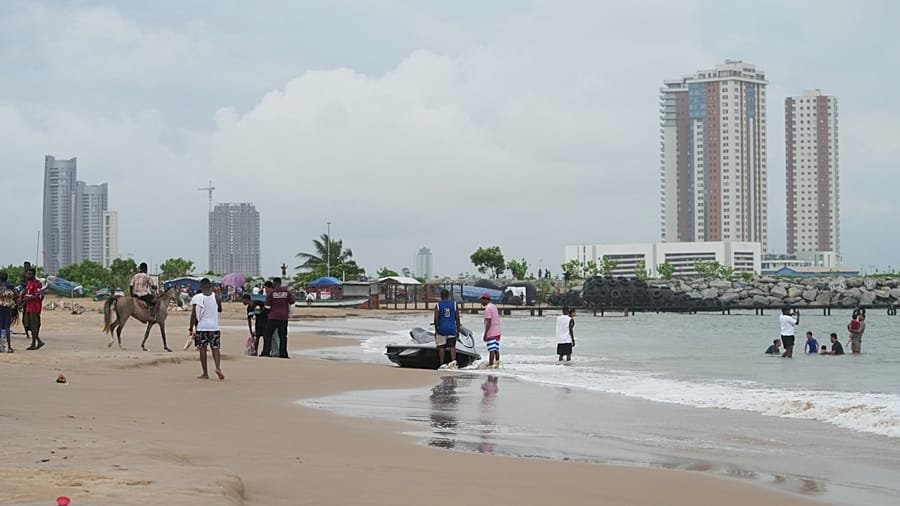
Mukthar Oladunmade, a 27-year-old writer, recalls spending childhood weekends at Lagos beaches without paying a single naira for entry. Families would spread mats on the sand, bring home-cooked meals, and swim freely along the Atlantic shore. Those open spaces have steadily disappeared as private operators took control of prime stretches.
Today visitors face gate fees ranging from 10,000 to 50,000 naira, equivalent to six to thirty US dollars. Additional charges cover plastic chairs, umbrellas, and even basic shade. Food and drink must be purchased on site because rules prohibit bringing personal items.
Many Lagosians complain that the paid experiences deliver poor value. Toilets remain dirty, lifeguards are scarce, and waste collection is inconsistent despite the high prices. The shift from free public access to resort-style models has removed the simple pleasure of an afternoon by the sea.
Beach costs now bundle entry fees, chair rentals, food, drink, and water sports into packages that quickly add up. What once cost nothing now requires careful budgeting for working families who rely on informal jobs.
The transformation reflects a deliberate move away from open shoreline toward controlled, revenue-generating venues. Developers market these sites as modern and safe, yet the result is exclusion for those unable to pay.
Residents note that even modest activities such as renting a canoe or buying grilled fish carry mark-ups that feel designed for tourists rather than locals. The cumulative effect has turned a once-accessible public resource into a paid commodity.
A Resident's Perspective: One Day at the Beach Costs a Month's Wage
Oladunmade still tries to visit the coast on weekends, but each trip now requires planning. He budgets roughly eighteen dollars for a single day, covering transport, entry, and minimal refreshments. That amount represents a significant portion of earnings for someone in Lagos's informal economy.
Nigeria's minimum wage stands at about 70,000 naira per month. One beach outing can therefore exceed half that monthly salary when all costs are tallied. Oladunmade has watched friends stop going altogether because the expense no longer feels justified.
He contrasts Lagos with beaches he has visited in Somone near Dakar, Lome, Accra, and Cotonou. In those cities public access remains free, allowing families to enjoy the sea without financial strain. The difference highlights how privatization has altered daily life in Nigeria's largest city.
The new barriers reinforce class divisions. Only those with steady formal incomes can regularly afford to unplug from the stress of Lagos traffic and heat. Informal workers, who form the majority of residents, find themselves priced out of what used to be a shared city resource.
Oladunmade describes the beach as a place to breathe and reset after long weeks of writing and commuting. Yet he acknowledges that the same escape is now available mainly to a narrower slice of society.
His experience mirrors countless others who grew up with open shores and now navigate entry gates and mandatory purchases. The personal cost extends beyond money to a sense of lost belonging along the coastline.
Lagos Megacity Ambitions Driving the Transformation
For more than a decade the Lagos state government has pursued a vision of becoming a megacity comparable to Dubai or New York. That ambition has shaped decisions about the 180-kilometre coastline, favoring private investment over open public use.
Lagos generated 1.9 billion dollars in internal revenues in 2025, marking a sixteen per cent increase from the previous year. Officials have directed portions of those funds toward infrastructure that supports high-end coastal developments rather than preserving free beach access.
The 2026 state budget of approximately 4.4 trillion naira, or 2.5 billion dollars, includes continued support for projects that accelerate privatization. Revenue targets and foreign partnerships often take precedence over maintaining traditional public spaces.
Eko Atlantic replaced the former public Bar Beach with luxury real estate after coastal erosion and reclamation altered the shoreline. The development hosted the 2026 Nigerian Navy International Fleet Review, showcasing the area's new profile to international visitors.
The Blue Line rail Phase 1 now operates with potential expansions planned, improving connectivity to these redeveloped coastal zones. While transport upgrades benefit some residents, they also facilitate access primarily for those who can afford the new beach venues.
Supporters argue that private management brings order and investment. Critics counter that the megacity model has narrowed who benefits from the city's natural assets, deepening divides between wealthy enclaves and working neighborhoods.
Infrastructure at a Cost: The Coastal Highway Debate
The Lagos-Calabar Coastal Highway stretches approximately 750 kilometres and stands as a flagship federal project. Sections rely on private financing secured through 20- to 25-year toll concessions that direct revenues to operators rather than public coffers.
Foreign lenders including Deutsche Bank and First Abu Dhabi Bank have provided capital for portions of the route. These arrangements tie long-term financial returns to continued private control of coastal land.
Critics point out that the highway has worsened flooding in several communities by blocking natural water outflow to the sea. Informal settlements along the route have faced displacement as construction advances.
Residents in affected areas report that drainage systems were not upgraded to handle the new barriers created by the elevated roadbed. The environmental consequences fall heaviest on neighborhoods already vulnerable to seasonal rains.
Toll revenues flow to private operators for two decades or more, locking in the financial model even as public complaints grow. The project exemplifies how infrastructure decisions intersect with beach privatization to reshape access along the Atlantic.
Local voices question whether the promised connectivity justifies the loss of open shoreline and increased flood risk. The debate continues as further phases move forward.
What Other West African Cities Can Teach Lagos
Oladunmade's trips to Somone near Dakar, Lome, Accra, and Cotonou revealed a different approach to coastal access. In those cities beaches remain open without entry fees, preserving a tradition of public enjoyment that Lagos once shared.
Senegal maintains strong cultural expectations around free coastal spaces, rooted in centuries of fishing communities and family gatherings. This model allows residents to maintain connections to the sea without financial barriers.
The broader question for West African cities is whether development must come at the expense of public access. Lagos's trajectory suggests one path, yet neighboring capitals demonstrate that growth and open beaches can coexist.
Supporters of privatization in Lagos claim private operators handle maintenance and environmental management more effectively than strained public agencies. They point to cleaner facilities and better security at paid sites.
Still, the contrast with free beaches in Dakar and Accra underscores the social cost. Families in those cities continue to gather without budgeting for gate fees or mandatory purchases.
Policy discussions in Lagos could draw lessons from these examples, exploring hybrid models that protect public access while encouraging responsible development along the shoreline.
The Cost of Escaping the City
Public sentiment in Lagos carries a strong thread of nostalgia for earlier decades when beaches welcomed everyone. Older residents remember arriving by bus with coolers and spending entire days without paying for the privilege.
The class divide created by privatization now determines who can regularly unplug from the stress of Lagos. Those in formal employment enjoy occasional escapes, while the majority working in the informal sector face exclusion.
An AP report by Ope Adetayo in July 2026 brought international attention to the issue, followed by coverage from Policy Wire on how rising prices are pricing out locals. Both accounts highlighted the daily reality for working families.
Most Lagos residents work in the informal sector, where earnings fluctuate and large discretionary expenses remain rare. Beach privatization therefore affects a wide swath of the population beyond any single income group.
The tension between megacity growth ambitions and inclusive public access sits at the heart of the coastline debate. As Lagos expands, the question of who belongs on its shores grows more urgent.
Future decisions will shape whether the Atlantic remains a shared city asset or becomes further segmented by payment barriers.
What to Watch For
Public pressure may yet influence upcoming phases of the coastal highway and new developments in Lekki. Advocates are calling for mandated public beach sections within private projects.
Continued expansion of Eko Atlantic and surrounding luxury zones will test whether any space remains for non-paying visitors. Monitoring these projects offers insight into the balance between profit and access.
City officials could introduce requirements that new coastal investments include free or low-cost public areas. Such mandates would represent a shift from the current pattern of full privatization.
The long-term identity of Lagos as a coastal city depends on these choices. Residents watch to see whether growth policies will eventually accommodate the needs of the informal majority.
Tourism revenue remains a key driver, yet sustainable policy must weigh visitor income against the daily realities of those who live beside the sea year-round.
By Amara Diop, Staff Writer
This article was produced with AI-assisted research and editorial support. Reporting is based on sources cited in the article.
What's Your Reaction?
 Like
0
Like
0
 Dislike
0
Dislike
0
 Love
0
Love
0
 Funny
0
Funny
0
 Wow
0
Wow
0
 Sad
0
Sad
0
 Angry
0
Angry
0

West Africa/Sahel Correspondent at Global1.News. Dakar-based journalist covering politics, security, climate, and development across Francophone and Anglophone West Africa. Tells the stories of a region undergoing profound transformation.










Comments (0)