
Trump Draws Red Line for Beijing and Moscow: Don't Arm Iran
Trump warns China and Russia on Truth Social not to arm Iran, citing personal assurances from Xi and Putin. This comes amid 21 weeks of U.S. strikes under Operation Epic Fury, Iranian threats to close Hormuz, and sliding oil prices. Most Americans oppose the war per polls. Article covers the warning, assurances, escalation, regional impact, oil risks, domestic opposition, and next steps.
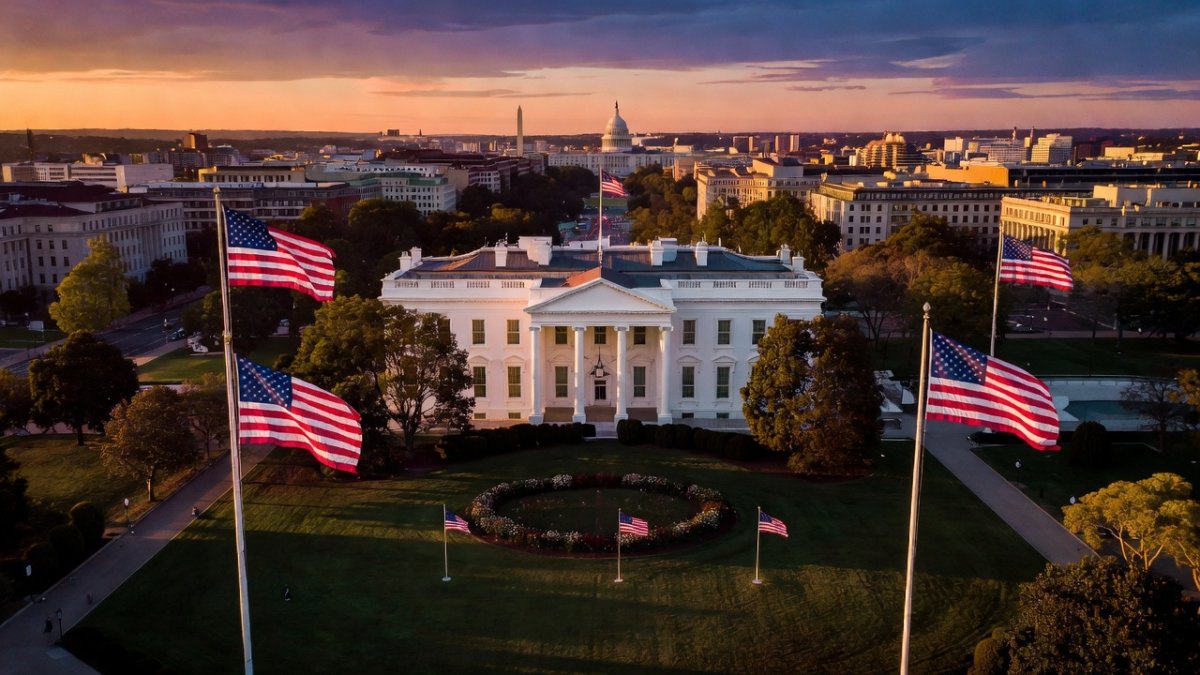
President Trump just fired a direct shot across the bow at Beijing and Moscow, warning them in no uncertain terms to keep their weapons out of Iran's hands amid a grinding U.S. air campaign that has now stretched into its 21st week. This is not posturing from the sidelines. This is the commander-in-chief drawing red lines while American bombs keep falling on Iranian soil.
Trump Draws Red Line for Beijing and Moscow: Don't Arm Iran
Washington, D.C. — President Trump took the extraordinary step of publicly warning two nuclear powers against arming Iran as U.S. strikes enter their 21st week.
The Warning
Trump took to Truth Social on July 24, 2026, with a blunt message aimed squarely at China and Russia. He stated that if either nation supplied arms to Iran, "it would be very bad for them — Certainly not in their best interests." The president left no room for ambiguity, adding that "two major Countries that people speak of often in terms of Iran are, in my opinion, not participating." This comes as the U.S. enters the 13th straight night of strikes under Operation Epic Fury, targeting everything from nuclear sites to command bunkers.
The language is classic Trump: short, sharp, and loaded with consequence. He is not asking nicely. He is reminding two nuclear powers that crossing this line carries real costs, especially after Washington already slapped sanctions on Chinese and Russian firms caught helping Tehran acquire weapons. The message lands at a moment when the war has displaced millions and turned the Middle East into a tinderbox.
Since March 2026, the Treasury Department’s Office of Foreign Assets Control has designated more than two dozen Chinese and Russian entities for allegedly facilitating Iran’s procurement of dual-use components and missile guidance systems. Among the sanctioned parties were China’s Zhuhai Zhenrong Company and several subsidiaries of the China Aerospace Science and Technology Corporation, which were accused of routing gyroscopes and carbon-fiber materials through third countries. Russian firms including the state-owned Almaz-Antey and a network of intermediaries tied to Rosoboronexport faced asset freezes and secondary sanctions for supplying air-defense electronics.
These measures built on earlier executive orders that expanded the scope of secondary sanctions to any foreign bank clearing payments linked to Iran’s weapons programs. OFAC’s June 2026 enforcement actions also targeted shipping companies that had moved cargo through Bandar Abbas, illustrating Washington’s willingness to weaponize global finance even before Trump’s latest public warning. The cumulative effect has already raised the cost of covert procurement for Tehran by an estimated 30-40 percent, according to U.S. intelligence assessments.
The Assurances
Trump claimed he received personal guarantees from both Chinese President Xi Jinping and Russian President Vladimir Putin. During their recent meeting in Beijing, Xi reportedly assured him that China would not sell weapons to Iran "under any circumstances, including through Chinese companies." Putin gave similar commitments, with Trump noting that the Russian leader "understands that I do not sell Weapons to Ukraine, but to NATO Countries."
These assurances matter because Iran has been actively courting both nations at the Shanghai Cooperation Organization summit, where Foreign Minister Abbas Araghchi held talks with his counterparts. Trump is essentially saying the back channels are closed. Whether those promises hold is another question entirely, but the president is betting his public warning will keep the arms flowing to zero.
The July 12, 2026, meeting in Beijing between Trump and Xi lasted nearly four hours and covered not only Iran but also rare-earth export controls and Taiwan Strait stability. Xi’s pledge to halt weapons sales was delivered in the presence of both countries’ national security advisers and was framed as a continuation of the 2024 U.S.-China agreement on fentanyl precursor chemicals. U.S. officials later briefed reporters that the Chinese leader emphasized domestic production priorities and the risk of secondary sanctions on major state banks.
Putin’s parallel assurance carries additional constraints. With Russia’s defense industry already stretched by the Ukraine conflict and reliant on Chinese microelectronics and dual-use machinery, Moscow has little surplus capacity to divert advanced systems to Tehran. Analysts note that any visible Russian arms shipment to Iran would jeopardize the flow of critical components Beijing currently supplies to Russia, giving Putin a strong incentive to honor the commitment even if he privately resents U.S. pressure.
Operation Epic Fury Escalates
The U.S.-Iran war kicked off February 28, 2026, with massive joint American-Israeli strikes. What began as a targeted operation has ballooned into a sustained air campaign now in its 21st week. American warplanes have hammered military infrastructure, nuclear facilities, and leadership nodes across Iran while Tehran has fired back at U.S. bases in Bahrain, Jordan, Iraq, and Kuwait.
Trump met with his top military advisers on Friday to map out the next phase. The strikes show no sign of slowing, and the administration appears determined to degrade Iran's ability to project power or restart its nuclear program. Each night of bombing adds to the body count and the refugee crisis, yet the White House shows no appetite for de-escalation talks.
Pentagon briefings released on July 22, 2026, confirmed that B-2 Spirit bombers operating from Diego Garcia and carrier air wings aboard USS Gerald R. Ford and USS John C. Stennis have flown more than 1,800 sorties since February. Primary targets have included the Natanz underground enrichment halls, the Bushehr reactor cooling systems, and multiple IRGC regional command posts near Tehran and Isfahan. U.S. officials estimate Iranian military fatalities at approximately 4,200, with several hundred additional deaths among nuclear facility personnel.
Precision munitions employed include the GBU-57 Massive Ordnance Penetrator and the new AGM-183 ARRW hypersonic missiles, both of which have been used to strike hardened underground sites. Satellite imagery analyzed by independent researchers shows extensive damage to centrifuge halls at Natanz and the destruction of at least three IRGC underground storage depots. The sustained tempo has required the rotation of more than 12,000 U.S. Air Force and Navy personnel into the theater since the operation began.
Regional Fallout
Millions have been displaced across the region as the conflict drags on. Neighboring countries are struggling with refugee flows, strained resources, and the constant threat of spillover. Iran's retaliatory strikes on U.S. installations have turned once-stable bases into active combat zones, forcing allies to rethink their security posture.
The broader instability is feeding extremism and proxy fights that could outlast the current bombing campaign. Trump's warning to China and Russia is partly an attempt to contain the damage by cutting off Tehran's resupply routes before the war widens further.
Iraq has absorbed the largest refugee influx, with UNHCR reporting more than 680,000 Iranian nationals crossing the border since March, overwhelming camps near Sulaymaniyah and Erbil. Jordan and Lebanon together host an additional 310,000 displaced persons, placing severe strain on already fragile water and electricity grids. Saudi Arabia and the UAE have restricted entry to only limited numbers of high-skilled workers, citing security concerns, while Turkey has closed its eastern border entirely except for medical evacuations.
Proxy dynamics have intensified as well. Hezbollah has fired several hundred rockets into northern Israel since April, while Houthi forces in Yemen have launched repeated drone and missile attacks against shipping in the Red Sea and U.S. facilities in Djibouti. Iraqi Shia militias aligned with the Popular Mobilization Forces have conducted more than 40 attacks on U.S. and coalition positions in Anbar and Nineveh provinces, prompting additional U.S. defensive deployments to those areas.
Oil Markets and the Hormuz Threat
Iran has repeatedly threatened to close the Strait of Hormuz, a move that would choke off a fifth of global oil supply. Yet oil prices have continued sliding despite the escalating tensions, a sign that markets are pricing in either successful U.S. containment or a quick resolution that never materializes.
Traders appear skeptical that Tehran can follow through on its threat without inviting even heavier retaliation. Still, any actual closure would send prices spiking overnight and trigger a global energy shock. Trump's public pressure on Beijing and Moscow is also a signal to energy markets that alternative suppliers will stay on the sidelines.
Brent crude has traded in a narrow $68–$74 per barrel range throughout July 2026 despite the conflict, down from $82 in late February. The U.S. Energy Information Administration reports that the Strategic Petroleum Reserve currently holds 378 million barrels, roughly 12 percent above the five-year average, giving Washington additional leverage to offset any supply disruption. European and Asian refiners have increased spot purchases from U.S. Gulf Coast and West African producers, partially offsetting the loss of Iranian and Russian barrels.
A full closure of the Strait of Hormuz would remove roughly 21 million barrels per day from global markets. Modeling by the International Energy Agency indicates that Europe would face immediate shortages of diesel and jet fuel within three weeks, while Asian economies dependent on liquefied natural gas from Qatar would see prices triple. Current futures curves price in only a 12 percent probability of sustained closure beyond 30 days, reflecting market confidence that U.S. naval presence and diplomatic pressure will keep the waterway open.
Domestic Pressure
A recent Fox News poll shows most Americans oppose the war with Iran. War fatigue is real, and the administration faces growing questions about costs, casualties, and an exit strategy. Trump has framed the campaign as necessary to neutralize a nuclear threat, but public support remains thin.
Congressional critics are already demanding more oversight, while supporters argue that pulling back now would hand Iran a victory. The domestic divide adds another layer of complexity to Trump's diplomatic maneuvering with China and Russia.
A Fox News poll conducted July 18–20, 2026, showed 54 percent of registered voters opposing continued military action against Iran, with opposition rising to 67 percent among independents. House Foreign Affairs Committee hearings scheduled for early August will examine the administration’s legal justification under the 2001 and 2002 Authorizations for Use of Military Force. Several Democratic senators have introduced a War Powers Resolution measure that would require congressional approval for any further expansion of the campaign.
The Congressional Budget Office estimates cumulative costs through July at $47 billion, including munitions replenishment and deployment expenses. Anti-war demonstrations have occurred in more than 40 U.S. cities since May, with the largest gathering in Washington drawing an estimated 85,000 participants on July 15. Republican leadership has so far blocked floor votes on funding restrictions, but several defense appropriators have privately signaled concern over the open-ended nature of the operation.
What Comes Next
Trump's warning buys time, but it does not guarantee compliance. The real test will come in the coming weeks as U.S. strikes continue and Iran looks for any external lifeline. If Beijing or Moscow quietly tests the limits, the president has already telegraphed that the response will be severe.
The war is now a grinding contest of attrition. Trump's direct approach to Xi and Putin reflects a calculation that public pressure plus private assurances can keep the conflict from spiraling into a wider confrontation. Whether that bet pays off will determine if Operation Epic Fury stays contained or drags the world into something far more dangerous.
Beijing’s strategic interest lies in prolonging U.S. entanglement in the Middle East, which diverts American attention and resources from the Indo-Pacific. Chinese state media have framed the conflict as evidence of Washington’s overextension while quietly increasing diplomatic engagement with Gulf states to secure long-term energy contracts. Russia, meanwhile, continues to coordinate with Iran inside the Shanghai Cooperation Organization but has little incentive to risk secondary sanctions that could further isolate its defense industry.
Diplomatic off-ramps remain limited. Oman and Qatar have both offered to host indirect talks, yet Tehran has conditioned any negotiations on a complete halt to U.S. strikes. At the United Nations, Russia and China are expected to veto any Security Council resolution authorizing additional sanctions, leaving Washington to rely on unilateral measures and coalition pressure. The coming weeks will test whether Trump’s public warnings and private assurances can prevent external resupply while the air campaign continues to degrade Iranian capabilities.
By Jessica Ali, Staff Writer
This article was produced with AI-assisted research and editorial support. Reporting is based on sources cited in the article.
What's Your Reaction?
 Like
0
Like
0
 Dislike
0
Dislike
0
 Love
0
Love
0
 Funny
0
Funny
0
 Wow
0
Wow
0
 Sad
0
Sad
0
 Angry
0
Angry
0

Editor-in-Chief at Global1.News. Atlanta-based journalist who cuts through the BS and tells it like it is. Lead anchor, host, and the voice you hear when the spin stops and the truth starts.














Comments (0)