
Re-NEET 2026: Women Lead 11.21 Lakh Qualified Candidates
NTA declared Re-NEET 2026 results with 11.21 lakh qualifiers, women leading at 58%. Joint toppers Aryan Gupta and Panshul Bansal scored 715/720. Cut-offs rose across all categories. Counselling for 1.36 lakh MBBS seats begins soon through MCC.
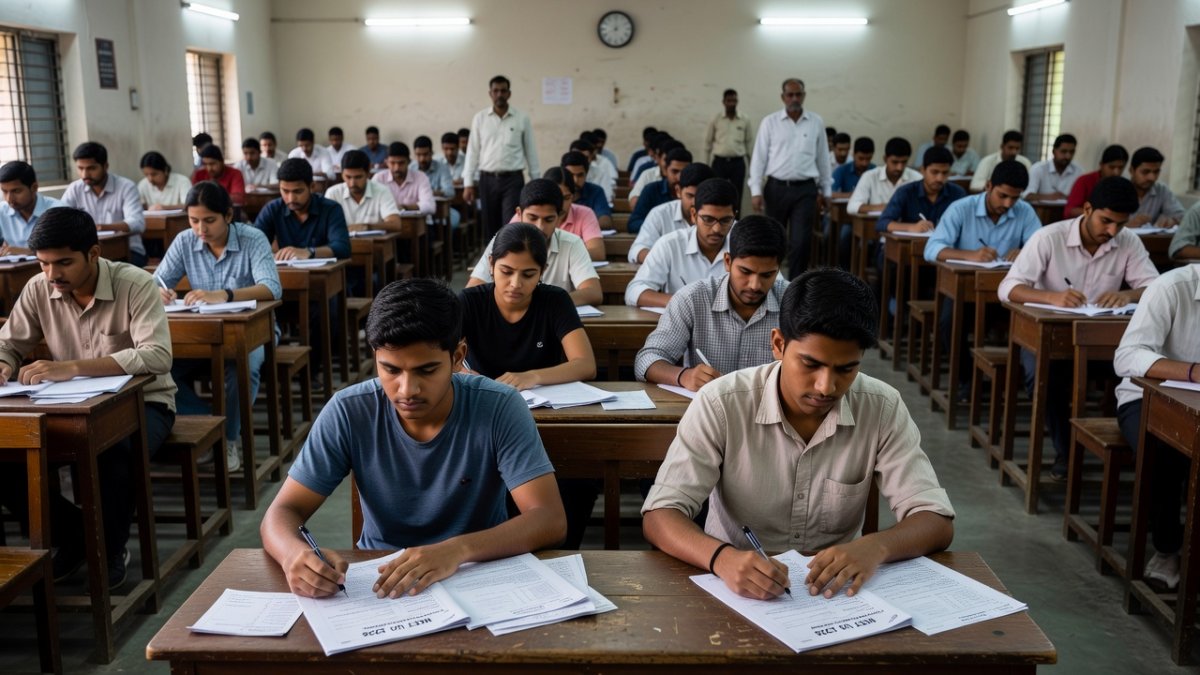
Re-NEET 2026: Women Lead 11.21 Lakh Qualifiers
New Delhi – July 17, 2026 — The National Testing Agency declared Re-NEET UG 2026 results on July 16, confirming that 11.21 lakh candidates qualified out of nearly 20 lakh who appeared. This follows the cancellation of the original May 3 exam due to paper leak allegations and a subsequent CBI probe. The re-test was held on June 21 at 5,440 centres across 551 Indian cities and 14 overseas locations under enhanced protocols.
Joint Toppers Emerge from Punjab and Haryana
Aryan Gupta from Punjab's Ludhiana district and Panshul Bansal from Haryana's Faridabad emerged as joint toppers with 715 out of 720 marks. Both pursued the Physics-Chemistry-Biology stream under CBSE-affiliated schools, with Gupta crediting daily 12-hour regimens at the Allen Career Institute's Kota branch. Their identical scores underscore the exam's extreme precision, where a single question can shift ranks by hundreds amid 23 lakh aspirants. Punjab and Haryana together accounted for 28% of 700-plus scorers, driven by robust state-funded science academies and proximity to Delhi's coaching hubs.
Score Distribution and High Achievers
Nineteen candidates scored 700 or above, while 1,492 crossed 650 and 10,160 reached 600 or more. Ninety-nine percent of high scorers fell in the 17-19 age bracket, and 93% were appearing for the first time. The top 17 rank holders with 705-plus marks came from eight states: Punjab, Haryana, Rajasthan, Uttar Pradesh, Maharashtra, Bihar, Tamil Nadu, and Telangana. This 93% first-time qualifier rate among high scorers signals effective integration of NCERT-aligned curricula in Class 12 boards and diminishing reliance on multiple-attempt strategies that characterised earlier NEET cycles.
Score bands carry direct cut-off implications. With 10,160 candidates above 600 and 1,492 above 650, the All India Quota general category threshold for 2026 MCC counselling is projected in the 610-620 range, up significantly from last year. Further down the distribution, 90,780 candidates scored above 500, ensuring competitive cut-offs across all categories. NTA data reveals that 138 candidates scored above 690, drawn from 66 cities nationwide, indicating geographic spread in top-tier performance even as urban centres continue to dominate the highest brackets.
Category-Specific Qualification Data
Under the unreserved category, 9,96,935 candidates qualified at the 50th percentile with scores between 715 and 213. OBC (NCL) candidates at the 40th percentile totalled 81,111, followed by 29,947 SC and 12,452 ST qualifiers. Category breakdowns showed 2.91 lakh general, 5.12 lakh OBC (NCL), 1.59 lakh SC, 63,716 ST, and 95,026 EWS candidates clearing the exam. Additionally, 3,666 persons with benchmark disabilities and 303 persons with disabilities qualified. OBC-NCL's 5.12 lakh qualifiers, surpassing General category numbers, reflect Mandal Commission legacies and 27% reservation enforcement under the National Medical Commission Act 2019.
State-wise Trends and Regional Disparities
Uttar Pradesh recorded the highest number of qualifiers at 1.7 lakh, while Lakshadweep registered the lowest with only 43. Cut-off marks rose across all categories compared to the original examination. Analysis reveals Tamil Nadu and Telangana producing outliers through government-backed residential coaching programs modeled on the APJ Abdul Kalam initiative, contrasting with Bihar's reliance on self-funded migrations to Delhi. Southern toppers such as Veeriahgari Sahyu (Telangana) and Namala Prerana (Andhra Pradesh) exemplify state-specific models like Telangana's Gurukul residential schools. These distributions expose urban-rural divides, as 99% of elite scorers aged 17-19 hail from cities with digital access to NTA's mock portals.
Overhauled Security Protocols After Leak
The original May 3, 2026, examination was cancelled following widespread allegations of paper leaks, prompting the Ministry of Education to order a CBI investigation. The June 21 re-examination incorporated stricter measures, including real-time GPS monitoring of question paper movement and advanced CCTV at every centre. These changes aimed to restore credibility to the single national entrance test for undergraduate medical admissions. Proposed NTA reforms include AI-proctored hybrid modes and a shift toward NEP 2020's multidisciplinary entrance framework by 2027.
Impact on MBBS Admissions and Counselling
The results directly affect seat allocation for 1,36,939 MBBS seats across 823 medical colleges in the 2026-27 academic year. This expanded matrix is up from 1.28 lakh seats in 2025 and 1.18 lakh in 2024, reflecting the National Medical Commission's incremental seat expansion policy bolstered by new colleges sanctioned under the Centrally Sponsored Scheme. Additionally, approximately 52,000 AYUSH and 26,000 BDS seats are accessible through the same NEET scores.
The Medical Counselling Committee under the Directorate General of Health Services will conduct centralised counselling for the 15% All India Quota across three primary rounds through the MCC portal, with online choice-filling and seat allocation through the established algorithm prioritising NEET-UG ranks while respecting category reservations. Concurrently, states such as Uttar Pradesh (via DMER), Maharashtra (CET Cell), and Karnataka (KEA) will independently manage their 85% quotas with counselling schedules typically commencing in August. With 10,160 candidates above the 600-mark cut-off, states like Maharashtra face pressure to adjust their state quota reservations amid rising OBC claims, while the overall system implements 27% OBC, 15% SC, 7.5% ST, and 10% EWS reservations under the constitutional framework.
Gender Dynamics in Medical Education
Women accounted for more than 58% of qualifiers, with 56.8% of female candidates succeeding compared to 55.1% of males. The trajectory of female participation reflects a profound shift since the Medical Council of India's 2010 data recorded women at just 30% of MBBS enrolments. By 2024, National Medical Commission figures show women exceeding 50% across undergraduate seats, with NEET qualifiers dominated by female candidates since 2021 when their success rate first surpassed males by 3.2 percentage points.
The 58% female qualifier share signals progress toward gender parity in India's doctor-patient ratio of 1:834, edging closer to the WHO benchmark of 1:1,000. This could boost rural postings under Ayushman Bharat Pradhan Mantri Jan Arogya Yojana, which has empanelled 28,000 health centres since 2018. However, persistent imbalances remain evident in NMC speciality data: women constitute only 22% of surgical seats in orthopaedics and 28% in cardiothoracic surgery, while exceeding 65% in obstetrics and paediatrics. Safety concerns for rural postings under the Ayushman centres and the absence of widespread creche facilities continue to limit choices, underscoring the relevance of the 2024 Working Women Hostel Scheme that has sanctioned 1,200 new facilities in tier-2 and tier-3 districts.
Broader Policy Implications and Reforms
These regional variations highlight persistent disparities in access to quality coaching and resources. The High-Level Committee on NTA Reforms, reporting in January 2026, recommended phased computer-based testing and dynamic sectional cut-offs to address the 1:23 selection ratio, drawing explicit parallels with the US MCAT's multi-stage format and the UK UCAT's situational-judgement component. A parliamentary panel has further advocated splitting NEET into regional phases to improve accessibility for rural candidates, contrasting sharply with Germany's federal Lander-based examinations.
Data from the Ministry of Health shows OBC overrepresentation in MBBS admissions could necessitate dynamic seat adjustments by 2028 to maintain equity across 823 colleges. The 103rd Constitutional Amendment's EWS quota implementation adds another layer of complexity to the seat allocation framework. The Kota-Delhi ecosystem, enrolling 2.3 lakh students annually through firms like Resonance and FIITJEE, creates feedback loops where test-series data informs NTA patterns, yet rural aspirants from Lakshadweep or smaller northeastern states face barriers despite NTA's 2023 Vidyarthi portal scholarships. With cut-offs increasing across categories and women outnumbering men among qualifiers, the Re-NEET 2026 results underscore both the resilience of the examination system and ongoing challenges in equitable access.
— By Dr. Raj Patel, Staff Writer
This article was produced with AI-assisted research and editorial support. Reporting is based on sources cited in the article.
What's Your Reaction?
 Like
0
Like
0
 Dislike
0
Dislike
0
 Love
0
Love
0
 Funny
0
Funny
0
 Wow
0
Wow
0
 Sad
0
Sad
0
 Angry
0
Angry
0

India/South Asia Correspondent at Global1.News. Analytical voice with a background in science and health journalism. Based in New Delhi, covering Indian politics, education, healthcare, technology, and policy. Breaks down complex data into clear, actionable reporting.















Comments (0)