
Hoekstra Warns Trump Tariffs Threat Over Canadian Wildfire Smoke
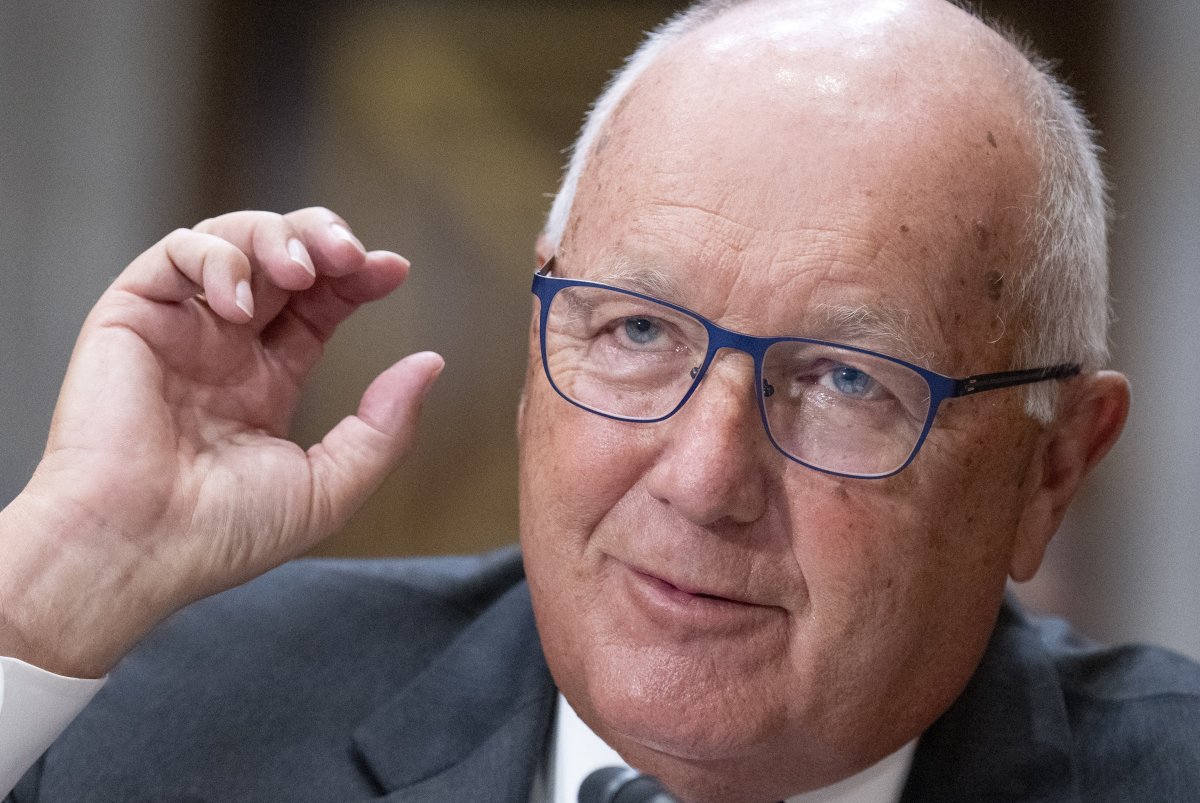
Hoekstra Warns Trump Tariffs Threat Over Canadian Wildfire Smoke Ottawa, Ontario – July 18, 2026 — Background On 18 July 2026 US Ambassador to Canada Pete Hoekstra stated in an exclusive interview with Global News that President Donald Trump’s threat to impose new tariffs over smoke drifting from Canadian wildfires should be treated as a firm American position. Hoekstra described the president’s remarks as a “call to action” rather than idle rhetoric, noting that the recurring haze has.
Hoekstra Warns Trump Tariffs Threat Over Canadian Wildfire Smoke
Ottawa, Ontario – July 18, 2026 —
Background
On 18 July 2026 US Ambassador to Canada Pete Hoekstra stated in an exclusive interview with Global News that President Donald Trump’s threat to impose new tariffs over smoke drifting from Canadian wildfires should be treated as a firm American position. Hoekstra described the president’s remarks as a “call to action” rather than idle rhetoric, noting that the recurring haze has already cost the United States billions of dollars in health and productivity losses in recent years.
The comments come as more than 800 wildfires continue to burn across British Columbia, Alberta and the Northwest Territories. The largest single blaze now covers an area comparable to Washington, D.C., fuelled by record temperatures and prolonged drought conditions tracked by Environment Canada.
Canada-US Relations
Hoekstra’s latest remarks mark a shift from earlier in the week when he characterised the smoke as a “shared challenge” requiring a “shared response.” On Friday he amplified President Trump’s social-media post criticising Canadian forest management, signalling that the tariff proposal is now part of Washington’s formal stance on bilateral trade.
Canada-US trade relations, already strained by past disputes over softwood lumber and dairy, now face a new environmental dimension. Global Affairs Canada officials have reiterated that any tariff measures would require formal notification under the Canada-United States-Mexico Agreement, a process that typically involves months of consultation rather than immediate enforcement.
Canada’s trade relationship with the United States has long been marked by recurring disputes that illustrate Washington’s willingness to weaponise tariffs for domestic political gain. The softwood lumber conflict, stretching back decades, saw repeated duties imposed on Canadian exports despite multiple rulings from binational panels under earlier trade agreements. Dairy market access remains another flashpoint, with Trump previously threatening to scrap supply-management protections during the original USMCA negotiations. Auto tariffs floated in 2018 and 2019 further demonstrated how environmental or security pretexts can quickly morph into broader economic pressure. The current smoke-related threat fits squarely inside this pattern, allowing the administration to portray Canadian forest management as an unfair subsidy while advancing a wider agenda of renegotiating CUSMA terms before the mandatory 2026 review begins.
Under CUSMA Article 34.7, any new tariff must follow formal notification and a minimum 180-day consultation window, giving Ottawa time to assemble legal and scientific rebuttals. Canadian negotiators are already preparing data showing that cross-border smoke originates from both countries’ boreal zones, undermining claims of unilateral Canadian responsibility. This procedural buffer mirrors past disputes where prolonged talks ultimately produced managed outcomes rather than outright trade wars.
Wildfire Crisis
Wildfire activity in 2026 has been intensified by prolonged heat domes and below-average precipitation across western and northern Canada. British Columbia’s Cariboo region and Alberta’s boreal forest zones have recorded the highest number of ignitions, while the Northwest Territories continues to battle remote fires that are difficult to access.
Canadian government officials have pointed to climate change as a primary driver, stating that “climate change is everybody’s responsibility… including the United States.” They note that federal carbon pricing, introduced in 2019 and expanded through 2025, remains the central tool for meeting Canada’s 2030 emissions-reduction targets under the Paris Agreement.
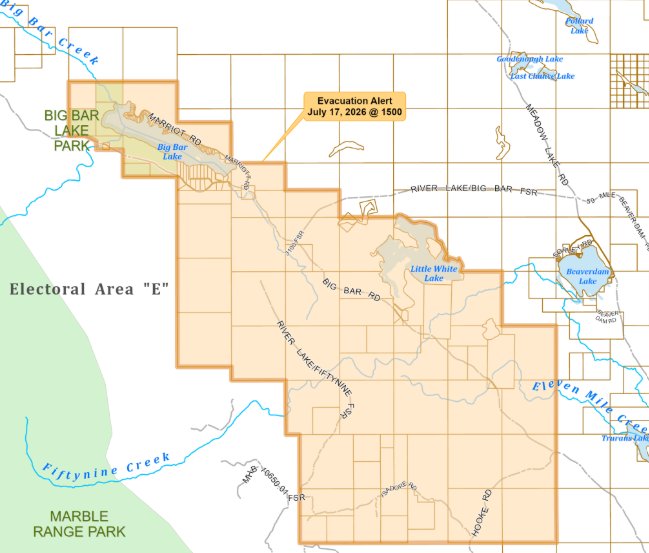
Canada’s firefighting capacity in 2026 remains stretched despite record federal and provincial spending. British Columbia fields roughly 1,200 initial-attack personnel and 200 helicopters during peak season, while Alberta maintains 900 firefighters and a fleet of 15 air tankers. Coordination occurs through the Canadian Interagency Forest Fire Centre, yet overlapping jurisdictions often delay resource sharing when multiple provinces declare emergencies simultaneously. The Royal Canadian Air Force has redeployed six CC-130H water bombers and two CH-147F Chinooks to support ground crews, while RCMP detachments in the Cariboo and Fort McMurray regions have assisted with more than 12,000 evacuations since May.
To date, over 4.8 million hectares have burned, surpassing the 2023 total of 4.1 million hectares and approaching the 2024 record of 5.2 million hectares. Environment Canada reports 87 communities under evacuation orders, with 23,000 residents displaced. These figures underscore how climate-amplified drought has outpaced incremental increases in aerial resources and prescribed-burn programmes approved in the 2025 federal budget.
Economic Impact
Smoke blanketing the US Midwest and East Coast has already triggered air-quality alerts in major population centres, leading to school closures, flight cancellations and reduced retail activity. Hoekstra cited internal US estimates placing annual costs in the billions, primarily from respiratory illnesses and lost workdays.
For Canada the economic stakes are equally high. Tourism operators in British Columbia and Alberta report cancellations, while forestry companies face uncertainty over export markets if tariffs materialise. The Bank of Canada has warned that prolonged trade friction could shave several tenths of a percentage point from GDP growth in 2027.
The forestry sector faces immediate uncertainty, with British Columbia’s lumber shipments to the United States valued at $8.7 billion in 2025 now at risk of new duties. Insurance claims from wildfire damage inside Canada have already reached $1.9 billion, driven largely by destroyed timber and infrastructure in remote northern communities. Tourism operators in Jasper and Whistler report 28 percent booking cancellations through August, compounding losses from last year’s smoke events. Firefighting operations themselves carry steep costs; federal and provincial governments combined have spent $1.4 billion year-to-date, including overtime for military crews and contracted heavy equipment.
The Bank of Canada has signalled that any prolonged tariff friction could trim 0.3 to 0.5 percentage points from 2027 GDP growth, prompting analysts to price in a possible 25-basis-point rate cut by year-end if trade tensions escalate. These pressures arrive as carbon-pricing revenues, projected at $9.2 billion nationally, remain earmarked for household rebates rather than direct firefighting augmentation.
Political Reactions
Prime Minister’s Office spokespeople have avoided direct comment on the tariff threat, instead emphasising ongoing cooperation through the Canada-US Joint Fire Management Committee. Opposition parties in Ottawa have called for an emergency debate in the House of Commons, with Conservative MPs questioning whether federal forest-management funding has kept pace with climate-driven fire seasons.
Provincial premiers in British Columbia and Alberta have urged Ottawa to accelerate prescribed-burn programs and increase aerial firefighting resources, noting that current federal-provincial cost-sharing agreements expire in March 2027.
British Columbia Premier David Eby has urged Ottawa to treat the tariff threat as a national emergency, calling for immediate expansion of the Joint Fire Management Committee’s mandate. Alberta Premier Danielle Smith emphasised provincial sovereignty over forest policy while criticising federal carbon pricing as insufficiently targeted at wildfire prevention. Federal Environment Minister Steven Guilbeault reiterated that climate change is a shared North American challenge and pointed to Canada’s 2030 emissions targets under the Paris Agreement as evidence of good-faith action.
Opposition leaders have been more pointed. Conservative Leader Pierre Poilievre demanded an emergency debate on forest-management funding shortfalls, while NDP Leader Jagmeet Singh linked the crisis to inadequate support for Indigenous-led stewardship programmes. Internationally, the European Union’s environment commissioner noted that transboundary air pollution protocols developed under the Aarhus Convention could offer a template for Canada-US cooperation, avoiding tariff escalation while addressing the root drivers of increasingly severe fire seasons.
What Happens Next
Hoekstra indicated that further details on any tariff proposal would likely emerge from the White House in the coming weeks. Canadian officials are preparing briefing notes for possible discussions at the next Canada-US Cabinet-level meeting scheduled for September in Ottawa.
Environment and Climate Change Canada continues to monitor smoke trajectories using satellite data shared with the US National Oceanic and Atmospheric Administration. Both countries have agreed to expand joint research on boreal-forest resilience, though no new funding commitments have been announced.
Analysts at the Canadian Chamber of Commerce caution that any tariff action would require months of procedural steps under CUSMA, giving negotiators time to seek alternative solutions such as expanded cross-border firefighting agreements or coordinated emissions-reduction initiatives.
Wildfire crews in British Columbia and Alberta remain on high alert as hot, dry conditions are forecast to persist through August. Federal resources, including additional water bombers from the Royal Canadian Air Force, have been redeployed to the hardest-hit zones.
The coming days will test whether the cooperative tone Hoekstra struck earlier this week can be reconciled with the more confrontational tariff language now emanating from Washington.
Tags: Pete Hoekstra, Donald Trump, Canadian wildfires, US Canada tariffs, carbon pricing, Canada US trade, British Columbia fires, Alberta wildfires, Northwest Territories, climate policy
By Alex Thompson, Staff Writer
This article was produced with AI-assisted research and editorial support. Reporting is based on sources cited in the article.
What's Your Reaction?
 Like
0
Like
0
 Dislike
0
Dislike
0
 Love
0
Love
0
 Funny
0
Funny
0
 Wow
0
Wow
0
 Sad
0
Sad
0
 Angry
0
Angry
0

Canada Correspondent at Global1.News. Based in Toronto, covering Canadian politics, energy, trade, and US-Canada relations. Provides the Canadian perspective on North American and global affairs.













Comments (0)