
INPEX Abadi LNG Project: $21B Boost to Japan Energy Security
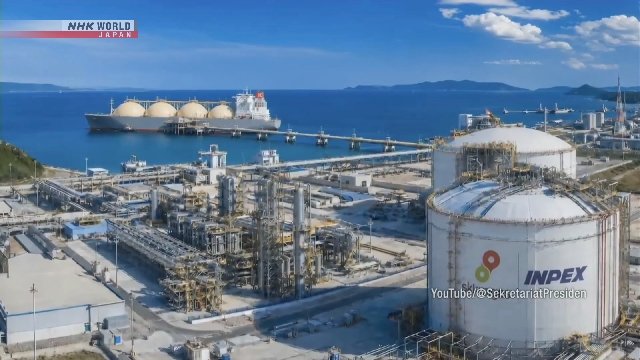
Groundbreaking Marks Major Milestone for Abadi LNG Japanese energy company INPEX held a groundbreaking ceremony on July 16, 2026, for the Abadi LNG project in Indonesia’s Masela Block. The event took place in the Tanimbar Islands of Maluku Province, with Indonesian President Prabowo Subianto participating virtually from the Merdeka Palace. The $21 billion development represents Japan’s largest energy infrastructure investment in Southeast Asia.
Groundbreaking Marks Major Milestone for Abadi LNG
Japanese energy company INPEX held a groundbreaking ceremony on July 16, 2026, for the Abadi LNG project in Indonesia’s Masela Block. The event took place in the Tanimbar Islands of Maluku Province, with Indonesian President Prabowo Subianto participating virtually from the Merdeka Palace. The $21 billion development represents Japan’s largest energy infrastructure investment in Southeast Asia.
INPEX President and CEO Takayuki Ueda called the project “extremely important” for energy security. Partners include JOGMEC, Pertamina, and Petronas. The facility will become Indonesia’s second-largest LNG project once operational.
Japan’s LNG Import Dependence and Supply Diversification
Japan relies heavily on imported liquefied natural gas to meet its energy needs. The Abadi project’s planned annual output of 9.5 million metric tons equals more than 10 percent of current Japanese LNG imports. This volume supports efforts to diversify sources away from traditional suppliers in the Middle East and Australia.
Japan currently imports between 70 and 75 million tonnes of LNG annually, making it one of the world’s largest buyers. Australia supplies roughly 40 percent of this volume, followed by Qatar at around 15 percent, Malaysia at 12 percent, and the United States at 10 percent. The concentration of supply routes through the Strait of Malacca and the Middle East exposes Japan to geopolitical and transit risks that the Abadi project is designed to mitigate by adding a new Southeast Asian source located closer to domestic terminals.
The ongoing conflict in Ukraine has heightened concerns over the Sakhalin-2 project, which still accounts for nearly 10 percent of Japan’s LNG imports under long-term contracts. Japanese utilities have sought to reduce this exposure while maintaining stable volumes. Within the framework of the Sixth Strategic Energy Plan, METI has prioritized diversification through government-backed initiatives. JOGMEC plays a central role by providing equity financing and political-risk insurance that enable Japanese firms to commit capital to frontier developments such as Abadi.
Compared with earlier Japanese investments, Abadi offers distinct advantages. The Ichthys LNG project in Australia delivered 8.9 million tonnes per year but remains subject to cyclone and labor disruptions. Mozambique LNG, delayed by insurgency, illustrates execution risks in less stable jurisdictions. Abadi’s location in Indonesian waters, combined with JOGMEC participation, provides a more secure profile while still meeting the volume targets required to offset potential shortfalls from traditional suppliers.
Japanese government policy, coordinated through METI, emphasizes stable long-term contracts and strategic partnerships in Southeast Asia. The Abadi development aligns with these goals by adding a major new supply route in the Arafura Sea, located 160 km off Yamdena island.
Project Scale, Reserves, and Technical Design
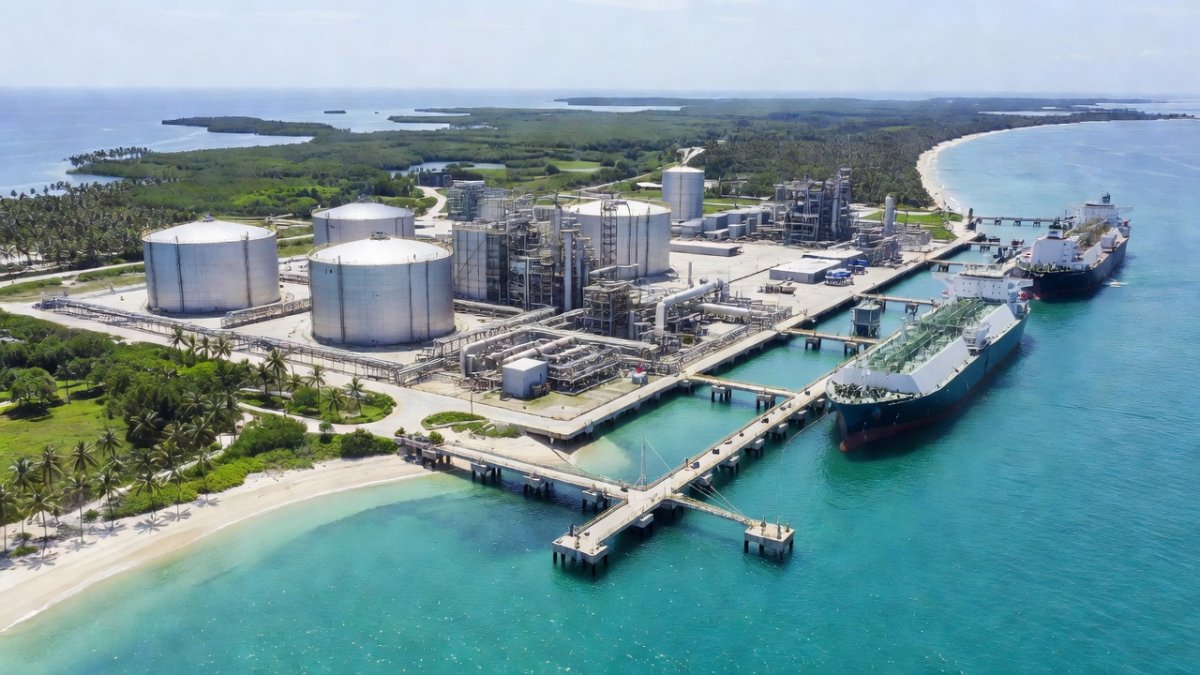
The Masela Block holds estimated natural gas reserves of 6.97 trillion cubic feet. Production is expected to reach 9.5 million metric tons of LNG per year, plus up to 35,000 barrels of condensate daily and 150 MMSCFD of pipeline gas. An offshore-to-onshore scheme will extract gas at sea and transport it via pipeline to an onshore liquefaction plant.
Environmental approval was granted in February 2026. Front End Engineering Design work began in August 2025. Offtake agreements were signed in May 2026. A final investment decision remains scheduled for 2027, with first production targeted around 2030. The project has experienced multiple delays over the past decade.
Indonesia-Japan Energy Cooperation and Regional Context
Energy ties between Japan and Indonesia date back decades and include joint development of earlier LNG facilities. The Abadi project continues this pattern while supporting Indonesia’s own domestic gas supply goals through the pipeline gas component. JOGMEC’s participation provides Japanese government-backed financing and risk-sharing mechanisms typical of strategic resource projects.
Both nations have referenced expanded cooperation in recent bilateral discussions. For Indonesia, the project brings investment, technology transfer, and local employment in Maluku Province. For Japan, it adds geographic diversity to LNG sourcing within the Asia-Pacific region.
Indonesia-Japan LNG trade began in the 1970s with the Arun and Bontang projects, establishing a model of long-term contracts that underpinned Japan's energy security for decades. Pertamina has remained the key Indonesian counterparty, managing both upstream participation and domestic allocation. The Abadi development revives this partnership at a larger scale, with Pertamina holding equity alongside INPEX and Petronas.
Indonesia’s position as a stable ASEAN member distinguishes it from more distant suppliers. Political continuity under President Prabowo Subianto reinforces the attractiveness of the investment climate. The project aligns with Prabowo’s stated priority of accelerating downstream industrialization in eastern Indonesia, where the Tanimbar Islands will receive infrastructure upgrades and employment opportunities that support broader regional development goals.
Bilateral energy dialogue has intensified in recent years, with both governments referencing expanded cooperation in joint statements. For Japan, the arrangement secures not only molecules but also diplomatic leverage within ASEAN. For Indonesia, Japanese technology and financing accelerate monetization of the Masela Block while advancing national targets for domestic gas utilization through the planned pipeline deliveries to local markets.
Implications for the Asia-Pacific LNG Market
The addition of 9.5 million metric tons of new annual capacity will influence regional supply balances as other projects in Australia and Qatar reach plateaus. Buyers in Japan, South Korea, and Taiwan may gain additional options for term contracts. The project’s condensate and pipeline gas streams also create value beyond LNG exports alone.
Market analysts note that Southeast Asian LNG developments can help moderate price volatility during periods of high demand in Northeast Asia. However, the 2030 start date means near-term market effects will depend on the pace of other projects already under construction.
The addition of 9.5 million tonnes from Abadi will intensify competition among mega-projects in the Asia-Pacific basin. Qatar’s North Field expansion and several Australian brownfield developments are also scheduled to reach final investment decisions in the same window, potentially creating a supply overhang after 2030. The Japan-Korea Marker (JKM) benchmark, which has exhibited sharp volatility during Northeast Asian winter peaks, may experience greater price discipline if Abadi volumes enter the market under term contracts rather than spot cargoes.
Long-term contract structures are evolving toward hybrid pricing that blends oil-indexation with JKM references. Japanese buyers, including Tokyo Gas, Osaka Gas, and JERA, have already secured offtake positions in Abadi. These arrangements allow utilities to hedge against both volume and price risk while maintaining flexibility to redirect cargoes if domestic demand softens due to accelerated renewable deployment.
Regional buyers in South Korea and Taiwan are expected to monitor Abadi closely as a potential alternative to Middle Eastern or U.S. supply. The project’s condensate and pipeline-gas streams add further value, enabling Indonesian domestic consumption that reduces the need for LNG imports into Southeast Asia and thereby frees up regional molecules for Northeast Asian markets during periods of high demand.
Technology Elements and Operational Approach
The Abadi scheme combines offshore gas extraction with subsea pipelines feeding an onshore liquefaction train. This configuration reduces the need for floating LNG vessels while allowing larger processing capacity on land. Standard liquefaction technology will be employed, consistent with other large-scale Indonesian facilities.
INPEX and partners have incorporated lessons from earlier projects to address technical and regulatory challenges encountered during the extended planning phase. Local infrastructure upgrades in the Tanimbar Islands are expected to support both construction and long-term operations.
Strategic Timing and Outlook for Japanese Industry
With FID expected in 2027 and production from 2030, the project timeline fits within Japan’s broader energy transition planning. Stable LNG supplies remain essential for power generation and industrial feedstock while renewable capacity expands. Japanese trading houses and utilities that have signed offtake agreements will benefit from the additional volume.
Consumers may see indirect effects through more diversified import portfolios that can help moderate price exposure. The project also reinforces INPEX’s position as a key player in upstream LNG development outside Japan.
Japan's Green Transformation (GX) policy positions LNG as a transitional fuel that supports power-sector decarbonization while renewable capacity scales. The 2030 production start for Abadi coincides with the government's interim target of reducing greenhouse-gas emissions by 46 percent from 2013 levels. Gas-fired generation equipped with high-efficiency turbines and, later, carbon-capture readiness can bridge the gap until 2050 net-zero goals are met.
Renewable targets under the same GX framework call for 36–38 percent of electricity from renewables by 2030. However, intermittency and grid constraints mean that dispatchable thermal capacity remains essential. Abadi volumes will help maintain reserve margins during this transition, particularly as older coal plants are retired. The project’s timeline also allows Japanese utilities to align contract expirations with new supply, avoiding gaps that could force reliance on expensive spot purchases.
By 2050, Japan anticipates a significant role for hydrogen and ammonia derived from natural gas. Abadi’s upstream infrastructure could eventually support blue-hydrogen production if carbon-capture technology is retrofitted. This long-term optionality strengthens the strategic rationale for Japanese participation and positions INPEX to evolve from a traditional LNG developer into a broader low-carbon energy supplier.
By Kenji Tanaka, Staff Writer
This article was produced with AI-assisted research and editorial support. Reporting is based on sources cited in the article.
What's Your Reaction?
 Like
0
Like
0
 Dislike
0
Dislike
0
 Love
0
Love
0
 Funny
0
Funny
0
 Wow
0
Wow
0
 Sad
0
Sad
0
 Angry
0
Angry
0

Japan Correspondent at Global1.News. Tokyo-based voice covering Japanese politics, technology, economy, and culture. Tracks the intersection of tradition and innovation in one of the world's most dynamic societies.














Comments (0)