
Chinese Saindak Mine Risks Shutdown Over Balochistan Attacks
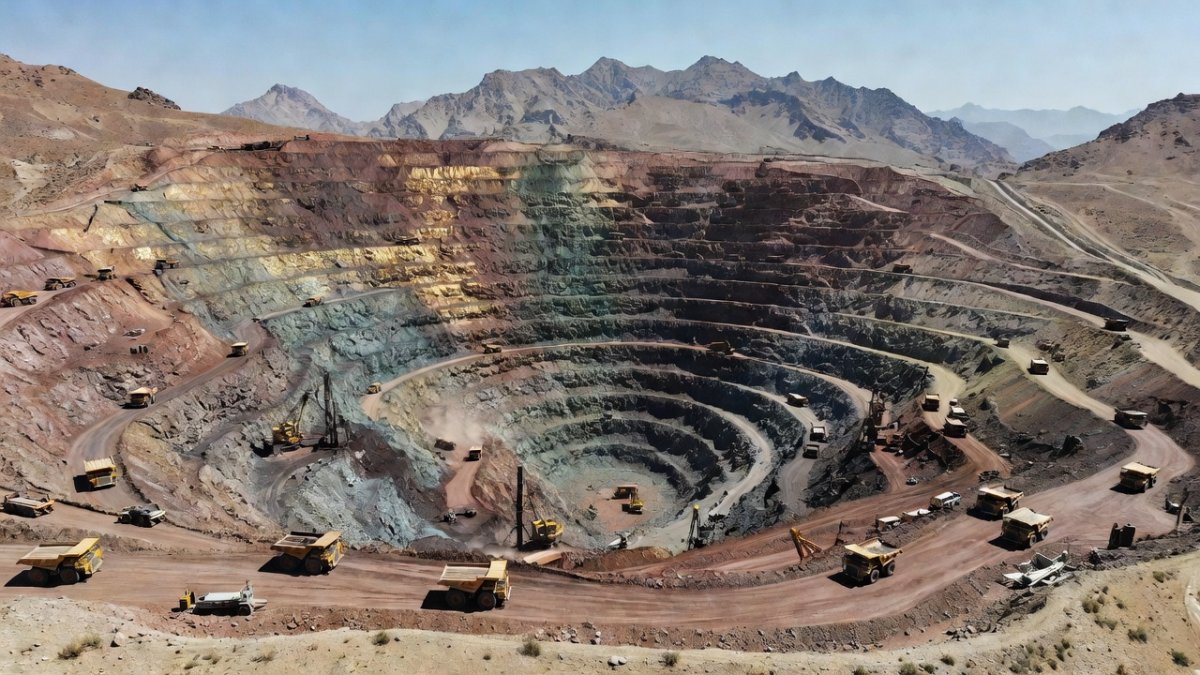
The Saindak copper and gold mine in Pakistan's Balochistan province faces an imminent operational halt after Saindak Metals Limited warned the energy ministry that Balochistan Liberation Army attacks have made supply routes too dangerous to sustain, according to coverage in a recent i24NEWS English YouTube video that examined the July 2026 escalation and its effect on Chinese projects.
Chinese Saindak Mine Risks Shutdown Over Baloch Attacks
Jerusalem — July 18, 2026 — Saindak Metals Limited, the joint venture running Pakistan's largest copper-gold operation, notified federal authorities this week that repeated strikes by the Balochistan Liberation Army along the N-40 highway and secondary routes from Quetta to the mine site could force suspension of work within 30 days.
Supply Routes Under Siege
The 25-year-old lease held by China's Metallurgical Corporation of China runs until 2037, yet daily convoys carrying fuel, explosives and spare parts from the port of Karachi now encounter ambushes near the towns of Nushki and Dalbandin. Saindak Metals Limited stated that three separate attacks in the first two weeks of July destroyed six trucks and killed four drivers employed by local subcontractors.
Output from the open-pit facility accounts for the bulk of Pakistan's $750 million in annual copper product exports, with concentrate shipped through Gwadar port under the China-Pakistan Economic Corridor framework. Any prolonged stoppage would immediately reduce foreign-exchange earnings at a time when Islamabad negotiates new IMF disbursements.
The N-40 highway linking Karachi to the Saindak mine, spanning roughly 1,100 kilometers through rugged Balochistan terrain, has become a primary target for Balochistan Liberation Army militants. Convoys carrying copper concentrate face frequent roadside IED attacks and hit-and-run ambushes, with incidents reported near Turbat and Panjgur in late 2023 forcing Chinese operators to reroute shipments via heavily guarded military escorts. Pakistani security officials, including Frontier Corps commander Major General Ahsan Gulrez, have acknowledged that the highway's remote stretches allow BLA fighters to plant explosives and withdraw before reinforcements arrive, disrupting the 3,500-plus local workers who rely on steady mine operations for employment.
Should the Saindak facility shut down due to sustained attacks, Pakistan would forfeit approximately $750 million annually in copper exports, compounding pressure on its IMF bailout program that already demands fiscal austerity. Local Baloch communities, already marginalized in resource deals, would face acute job losses, while Beijing's Metallurgical Corporation of China risks further delays in its Belt and Road timelines. On-the-ground reports from Quetta indicate that even partial closures have halved daily output, underscoring how BLA tactics directly threaten the mine's viability.

Balochistan's Enduring Crisis
Balochistan, Pakistan's largest province by area, borders both Iran and Afghanistan and remains the country's poorest despite holding major reserves of copper, gold and natural gas. The Balochistan Liberation Army and allied groups have conducted a low-intensity insurgency since 2004, demanding greater control over mineral revenues and an end to federal development projects they claim displace local populations.
Between July 4 and July 8, coordinated Balochistan Liberation Army assaults across Mastung, Kalat and Panjgur districts killed 42 people, including 38 security personnel, according to the Interior Ministry's incident log. These strikes followed the same pattern of roadside bombings and raids on checkpoints that have targeted Chinese personnel and infrastructure since 2021.
The Baloch insurgency traces its roots to 1948, with successive uprisings in 1958, 1973, and the current phase that intensified after 2000, claiming thousands of lives according to Human Rights Commission of Pakistan data. The BLA has evolved from tribal militias into a more coordinated force using asymmetric tactics, fueled by grievances over resource extraction that benefits Islamabad and foreign firms while locals see little revenue sharing. Displacement from CPEC projects has exacerbated tensions, with villages near Gwadar cleared for infrastructure.
Afghanistan's porous border provides Taliban-controlled safe havens and drug trafficking corridors that generate funds for militant groups, allowing BLA operatives to cross with relative ease. Pakistani officials have repeatedly raised these dynamics in talks with Kabul, yet cross-border flows persist, sustaining the insurgency's operational capacity and complicating any negotiated settlement.
Pakistan's Security Response
Interior Minister Tallal Chaudhry announced on Wednesday, July 15, that additional Frontier Corps and army units would be deployed to protect the Saindak site, its worker housing and the 180-kilometer logistics corridor linking it to the national highway network. The ministry also ordered aerial surveillance of the route using newly acquired Chinese Wing Loong drones stationed at Quetta airbase.
Despite the minister's statement, Saindak Metals Limited later issued a clarification denying imminent closure, describing media reports of an immediate shutdown as baseless and noting that the mine has maintained continuous production since the original 1992 agreement. The company emphasized that security coordination meetings with provincial authorities continue daily.
China's Regional Ambitions
Beijing's Metallurgical Corporation of China operates the Saindak facility under a production-sharing contract that delivers the majority of profits to the Chinese partner after cost recovery. The same state-owned enterprise holds stakes in other Belt and Road projects, including the nearby Duddar zinc-lead mine and the Gwadar deep-water port 400 kilometers to the south.
China's foreign ministry responded to the latest incidents by stating it would coordinate with Pakistani authorities to safeguard Chinese citizens and assets. This language mirrors statements issued after the 2022 Karachi University bombing and the 2023 attack on Chinese engineers near Besima that together killed nine Chinese nationals.
China's $62 billion CPEC commitment positions Gwadar as a critical node, yet Balochistan instability directly threatens Beijing's Indian Ocean ambitions, including potential PLA Navy use of the port as a listening post. Chinese diplomats have pressed Islamabad for enhanced security guarantees, while instability also casts shadows over the nearby $10 billion Reko Diq copper-gold project led by Barrick Gold, where security concerns have already prompted investors to reassess timelines.
Relations with Iran add another layer, as Beijing seeks stable energy routes through the region; repeated attacks near the border have forced Chinese firms to weigh evacuation plans. Israeli analysts note that these security shortfalls affect all foreign operators equally, not merely Chinese entities, highlighting the broader investment chill across Balochistan.
Strategic Implications for the Middle East
Israeli defense planners track these developments because Balochistan lies fewer than 200 kilometers from the Strait of Hormuz, through which roughly 20 percent of global oil trade passes daily. Any sustained disruption at Saindak or Gwadar could prompt Beijing to increase its naval presence in the Arabian Sea, altering the balance of power near waters Israel also monitors for Iranian activity.
Iran maintains its own Baloch-populated province of Sistan and Baluchestan directly across the border. Cross-border militant movements between the two regions have already produced joint Pakistan-Iran security meetings in 2024 and 2025. Israeli analysts note that heightened instability could allow Iranian Revolutionary Guard Corps units greater freedom to operate near the frontier, complicating efforts to track weapons transfers to proxies in Yemen and Lebanon.
Pakistan's status as a nuclear-armed state adds another layer of concern. Israeli officials have long assessed that internal security breakdowns in Balochistan or Khyber Pakhtunkhwa could affect command-and-control arrangements for Pakistan's estimated 170 warheads, particularly if militant groups expand their reach toward storage sites near the Iranian border.
Israeli intelligence assessments view China's expanding naval footprint in the Arabian Sea, anchored at Gwadar, as a direct challenge to the US Fifth Fleet's Bahrain headquarters and the emerging IMEC/I2U2 maritime framework involving India, Israel, and Arab states. Defense officials in Tel Aviv have privately expressed concern that a permanent Chinese presence could constrain freedom of navigation and complicate joint exercises with Washington.
Balancing these risks against robust Israel-China trade ties remains delicate, with officials cautioning that overt alignment with US-led coalitions must not jeopardize economic links. Recent briefings from Israel's Ministry of Defense underscore the need for discreet intelligence sharing on Gwadar developments while preserving strategic autonomy in the Indian Ocean theater.
What Comes Next
Metallurgical Corporation of China has requested additional Pakistani paramilitary escorts for its 1,200 Chinese employees at Saindak and has floated the possibility of rerouting some supplies through Iranian territory if the N-40 corridor remains contested. Islamabad has so far rejected that option, citing sovereignty concerns and existing tensions with Tehran over water rights on the Helmand River.
Regional diplomats in Jerusalem observe that continued attacks on Chinese projects may accelerate Beijing's push for direct security arrangements with host governments, a model already visible in Djibouti and under discussion for Gwadar. Such arrangements would place Chinese personnel closer to the Strait of Hormuz and to the same sea lanes Israel relies upon for energy imports and maritime trade.
The coming weeks will test whether the additional Frontier Corps deployments ordered by Tallal Chaudhry can restore confidence at Saindak or whether Metallurgical Corporation of China will seek contractual relief under the force-majeure clause of its 2037 lease. Either outcome will shape how China protects its expanding footprint across South Asia and the Middle East.
By Hannah Berg, Staff WriterThis article was produced with AI-assisted research and editorial support. Reporting is based on sources cited in the article.
What's Your Reaction?
 Like
0
Like
0
 Dislike
0
Dislike
0
 Love
0
Love
0
 Funny
0
Funny
0
 Wow
0
Wow
0
 Sad
0
Sad
0
 Angry
0
Angry
0

Israel Correspondent at Global1.News. Based in Tel Aviv, covering Israeli politics, security, technology, and society. Provides balanced, deeply-sourced reporting on one of the most closely-watched regions in the world.














Comments (0)