
From Kremlin Courtship to NATO's Anchor: How Erdogan Made Ankara Indispensable
In a recent episode of The Global Story, BBC correspondent Mark Lowen — who was himself detained and banned from Turkey last year — examined the remarkable transformation of President Recep Tayyip Erdogan's Turkey from "NATO's troublesome child" to what some analysts now describe as the alliance's most strategically valuable member. The episode arrives as world leaders gather i
In a recent episode of The Global Story, BBC correspondent Mark Lowen — who was himself detained and banned from Turkey last year — examined the remarkable transformation of President Recep Tayyip Erdogan's Turkey from "NATO's troublesome child" to what some analysts now describe as the alliance's most strategically valuable member. The episode arrives as world leaders gather in Ankara for the alliance's most consequential summit in years, held for the first time on Turkish soil.
From Kremlin Courtship to NATO's Anchor: How Erdogan Made Ankara Indispensable
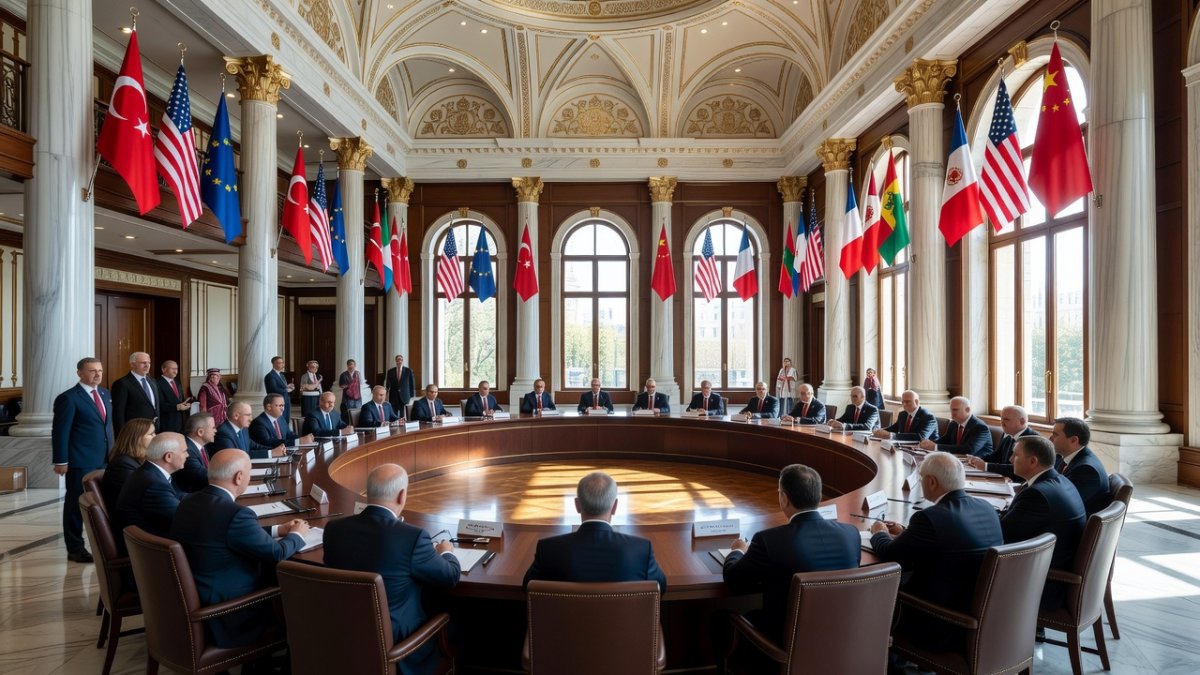
Ankara, Turkey — 9 July 2026 — When President Donald Trump stepped off Air Force One in Ankara this week, he made no secret of why he had come. "Out of respect to President Erdogan," Trump told reporters, in a statement that speaks volumes about how the balance of influence within the North Atlantic Treaty Organization has shifted. The 36th NATO Heads of State and Government Summit has transformed the Turkish capital into the centre of Western strategic decision-making, with Erdogan positioning himself as an indispensable broker between Washington, Brussels, and the bloc's nervous eastern flank.
Erdogan's Strategic Pivot: From S-400 to F-35
Few developments better illustrate Turkey's changing relationship with the alliance than its quiet abandonment of the Russian S-400 air defense system — a purchase that had poisoned Ankara's relations with Washington for years. Under American sanctions and excluded from the F-35 Joint Strike Fighter program since 2019, Turkey now appears to have made a decisive choice. According to defense industry sources, Ankara has agreed to scrap its Russian S-400 batteries in exchange for full reinstatement in the F-35 program, a move that would mark one of the most significant geopolitical realignments since the start of the Ukraine war.
The pivot carries profound implications for Moscow. For the Kremlin, Turkey's S-400 purchase had been a prized trophy — proof that a major NATO member could maintain independent defense ties with Russia despite alliance solidarity. The loss of that leverage represents a strategic setback for President Vladimir Putin, who has cultivated Erdogan as a counterweight to NATO unity. Turkey continues to purchase Russian oil and gas, and Erdogan has maintained cordial meetings with Putin throughout the Ukraine conflict, but the F-35 decision signals that Ankara's long-term security alignment remains with the West.
Turkish Foreign Minister Hakan Fidan has emphasized that this realignment strengthens Ankara's hand inside NATO decision-making circles. The reinstatement opens access to advanced fighter technology that bolsters Turkey's air capabilities along its southern and eastern borders. European allies have welcomed the move as evidence that Turkey prioritizes collective defense commitments over bilateral deals with Moscow. This shift also reduces the risk of technology leakage that previously concerned Washington and other NATO capitals.
The Ankara Summit: A Show of Force and Spending
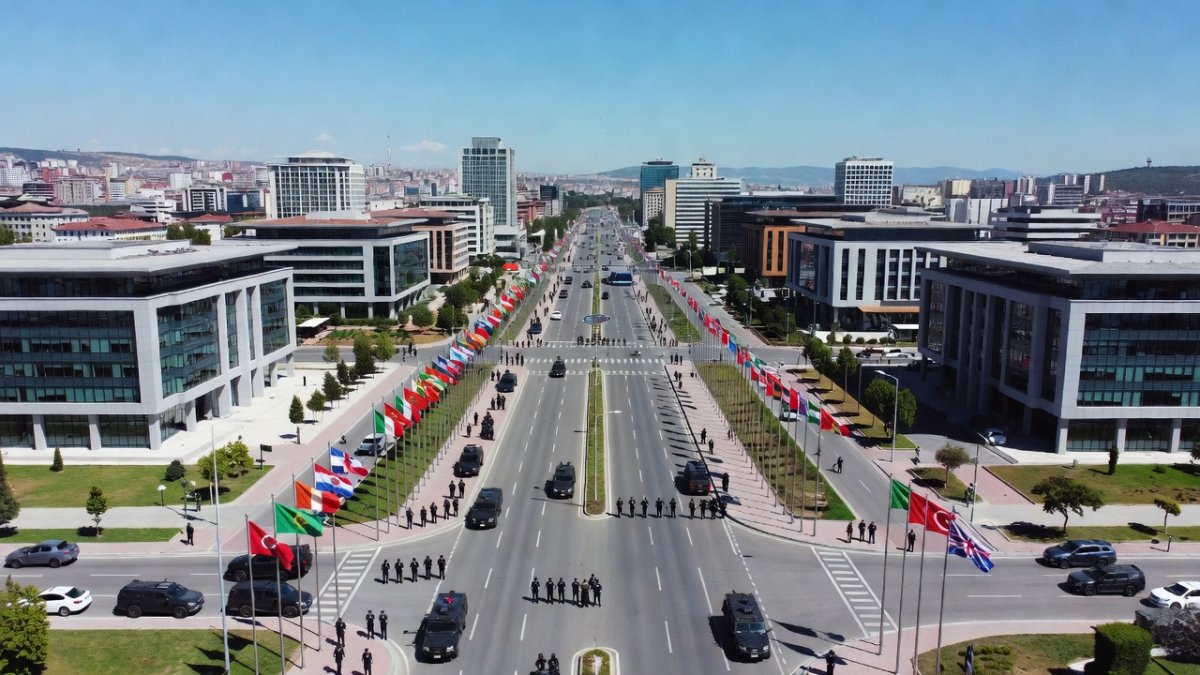
The summit itself delivered concrete outcomes that alliance officials hope will silence critics who question NATO's relevance. NATO Secretary General Mark Rutte declared the message from Ankara unambiguous: "NATO delivers." The numbers support that assertion. Allies pledged €70 billion in military equipment, assistance, and training for Ukraine in 2026, with firm commitments to sustain at least equivalent levels through 2027. Ukraine has faced an estimated €20 billion shortfall in its 2026 defense budget; the NATO pledge effectively closes that gap.
Beyond Ukraine funding, the alliance announced more than $50 billion in new defense procurements, signaling a broad effort to expand defense-industrial production capacity across member states. European allies and Canada, Rutte noted, are assuming greater responsibility for continental security amid Washington's shifting priorities. The summit's final declaration reaffirmed an "ironclad commitment" to collective defense under Article 5, a message aimed as much at Moscow as at nervous NATO members watching the US political landscape.
Mark Rutte highlighted rising defense investment trends among European members and new capabilities now entering service. These include enhanced air defense networks and joint training programs that directly support frontline states. The commitments reflect a pragmatic recognition that sustained support for Ukraine requires predictable, multi-year funding streams rather than ad hoc contributions.
Interpreted in this light, the expanded procurements appear positioned to reinforce NATO's southern flank by channeling resources toward Turkey's domestic defense sector, enabling Ankara to scale up indigenous production of critical systems and reduce external dependencies. This development could allow Turkey to address vulnerabilities along its borders more effectively while contributing specialized capabilities that support alliance objectives in the region, framing a pragmatic evolution in how southern-tier security integrates with broader NATO industrial goals.
Trump's Dominance and Europe's Unease
If the summit's formal outcomes projected unity, its atmosphere was dominated by Donald Trump's characteristic bluntness. The US president did not hide his frustration with European allies over defense spending shortfalls and what he views as insufficient support during the Iran war. Trump's criticism of NATO members who fail to meet the 2% GDP defense spending target has been a recurring theme of his presidency, but in Ankara the tension was amplified by the ongoing US-Iran confrontation and questions about America's long-term commitment to European security.
Yet Trump's relationship with Erdogan stands in sharp contrast. The Turkish president has cultivated a personal rapport with Trump that few other world leaders can claim, and the White House has signaled a willingness to deepen US-Turkey defense cooperation. Turkish Foreign Minister Hakan Fidan told the New York Times that the Erdogan-Trump friendship could serve as a bridge to ease broader NATO tensions — a remarkable statement given that just years ago, Turkey was widely regarded as the alliance's most unreliable member.
European officials present at the summit expressed private concerns that Trump's focus on bilateral ties with Erdogan could sideline multilateral processes. At the same time, they acknowledged that the personal channel has produced tangible results on procurement and Ukraine aid pledges that might otherwise have stalled.
From this vantage, the pattern suggests potential ripple effects on US-Europe relations, where Washington's selective bilateral emphasis may prompt European capitals to intensify efforts toward strategic autonomy in defense planning. Such a shift could foster greater self-reliance among EU members while introducing frictions in alliance coordination, interpreted as a recalibration that balances immediate transactional gains against longer-term questions of collective European agency.
Inside the Crackdown: Dissent Silenced Before the Summit
The summit's display of alliance strength unfolded against a backdrop of intensifying domestic repression. Human Rights Watch documented at least 209 arrests in Ankara alone in the weeks preceding the summit, describing a "ruthless intolerance of freedom of speech and assembly." The crackdown targeted a broad spectrum of civil society: human rights defenders, environmental activists, academics, journalists, and members of leftist political groups were swept up in coordinated police operations across multiple provinces.
For Mark Lowen, the BBC correspondent who anchors this week's Global Story episode, the crackdown carries particular personal resonance. Lowen spent five years based in Istanbul covering Turkey for the BBC before he was detained and subsequently banned from the country while on a reporting trip last year. His experience exemplifies the shrinking space for independent journalism in Turkey — a contradiction that the episode explores alongside Erdogan's growing influence on the world stage.
Public gatherings were banned throughout Ankara, and troops were deployed for security during the summit period. These measures ensured the event proceeded without disruption but drew criticism from international observers monitoring Turkey's internal political climate.
Analysis — What This Means for Russia and the Region
For Moscow, the Ankara summit represents a complicated reality. The Kremlin has invested heavily in cultivating Erdogan as a partner willing to defy NATO consensus, from the S-400 purchase to Turkey's refusal to join Western sanctions on Russia following the 2022 invasion. Turkey's continued purchase of Russian energy and Erdogan's personal diplomacy with Putin have given Moscow a valuable channel into NATO deliberations. But the F-35 deal and Ankara's deepening defense relationship with Washington suggest that Turkey's westward orientation, however pragmatic, remains intact.
The implications extend beyond Russia. Turkey's geographic position — straddling Europe and Asia, controlling the Bosphorus straits, and sharing borders with Syria, Iraq, Iran, and the Caucasus — makes it indispensable for NATO's southern strategy. Ankara's growing defense industry, its battle-hardened military, and its willingness to project power beyond its borders have made it an increasingly valuable partner at a time when the United States is signaling a reduced appetite for foreign military commitments.
For European NATO members, the calculation is equally complex. Turkey's democratic backsliding and domestic repression sit uncomfortably alongside the alliance's stated values. Yet in a world of great-power competition — with Russia waging war in Ukraine and China expanding its global influence — few European capitals can afford to alienate a NATO member with Turkey's military capabilities and strategic location.
Interpreted against this backdrop, China's interest in Turkey as a potential conduit for Belt and Road initiatives and energy corridors may encounter constraints from Ankara's reaffirmed NATO alignment, shaping a cautious dynamic within the Shanghai Cooperation Organisation. This positioning could limit the depth of Sino-Turkish security cooperation while preserving economic avenues, suggesting Ankara's alliance role serves as a moderating factor in its Eastern engagements without fully closing off alternative partnerships.
The question that lingers as leaders depart Ankara is whether Erdogan's transformation from NATO liability to asset is permanent or transactional. The F-35 decision and the summit's outcomes suggest a genuine realignment, but Turkey's history of balancing between East and West — buying Russian weapons while hosting NATO headquarters, criticizing Western policy while collecting alliance security guarantees — leaves ample room for future shifts. For now, however, the message from Ankara is clear: Turkey intends to be indispensable, and for the moment, NATO needs it to be.
By Irina Volkov, Staff Writer
This article was produced with AI-assisted research and editorial support. Reporting is based on sources cited in the article.
What's Your Reaction?
 Like
0
Like
0
 Dislike
0
Dislike
0
 Love
0
Love
0
 Funny
0
Funny
0
 Wow
0
Wow
0
 Sad
0
Sad
0
 Angry
0
Angry
0
Russia/Eastern Europe Correspondent at Global1.News. Covering Russian politics, energy, security, and the shifting dynamics of the post-Soviet space. Provides clear-eyed analysis on one of the world's most opaque regions.











Comments (0)