
Türkiye's Beylikova Rare Earth Deposit and NATO's Strategic Imperative
Türkiye's Beylikova Rare Earth Deposit and NATO's Strategic Imperative The Critical Minerals Gap in NATO's Rearmament Focus The NATO summit in Ankara convened at a time when the alliance's agenda is largely focused on the requirements of rearmament: production capacity, munitions stockpiles and the implementation of the 5% of gross domestic product (GDP) investment pledge adopt
The Critical Minerals Gap in NATO's Rearmament Focus
The NATO summit in Ankara convened at a time when the alliance's agenda is largely focused on the requirements of rearmament: production capacity, munitions stockpiles and the implementation of the 5% of gross domestic product (GDP) investment pledge adopted at The Hague in 2025. However, this debate largely remains one level above where the real vulnerability lies. Modern military systems depend on a narrow set of processed critical minerals, and rare earth permanent magnets in particular are indispensable inputs for precision-guided munitions, unmanned systems, sonar arrays, electronic warfare suites, and fifth-generation aircraft.
Quantifying Defense Dependency on Rare Earth Inputs
A single F-35 contains roughly 417 kilograms (919.33 pounds) of rare earth materials, while a Virginia-class submarine requires over 4 tons. NATO itself acknowledged this reality in December 2024 by publishing a list of 12 defense-critical raw materials, with rare earth elements at its core. In other words, deterrence begins with materials, and the materials question deserves a central place on the Ankara agenda.
China's Control and Recent Export Leverage
This material base is currently controlled to a large extent by NATO's principal long-term competitor. China accounts for roughly 70% of global rare earth elements production and up to 92% of processing capacity, and it controls the extraction or processing of 10 of the 12 materials on NATO's defense-critical list. Beijing has demonstrated its willingness to use this position: the October 2025 expansion of export controls, which extends even to goods containing trace amounts of Chinese-processed inputs, has transformed a commercial chokepoint into a declared instrument of leverage.
Western Recognition and Investment Responses
At April's OECD Critical Minerals Forum in Istanbul, Secretary-General Mathias Cormann noted that export restrictions on critical minerals had risen from 3% of all trade measures in 2017-2019 to 36% by 2024, even as EU rare earth demand is projected to grow sixfold by 2030 and the alliance plans a 130% rise in defense spending by 2035. Western capitals have recognized the significance of this dependency: in July 2025, the Pentagon acquired a direct equity stake in MP Materials, and the EU is mobilizing 3 billion euros for strategic mining projects. In other words, Western capital is now being directed toward precisely the type of resource base that Türkiye possesses.
Beylikova's Geological Scale and Ore Characteristics
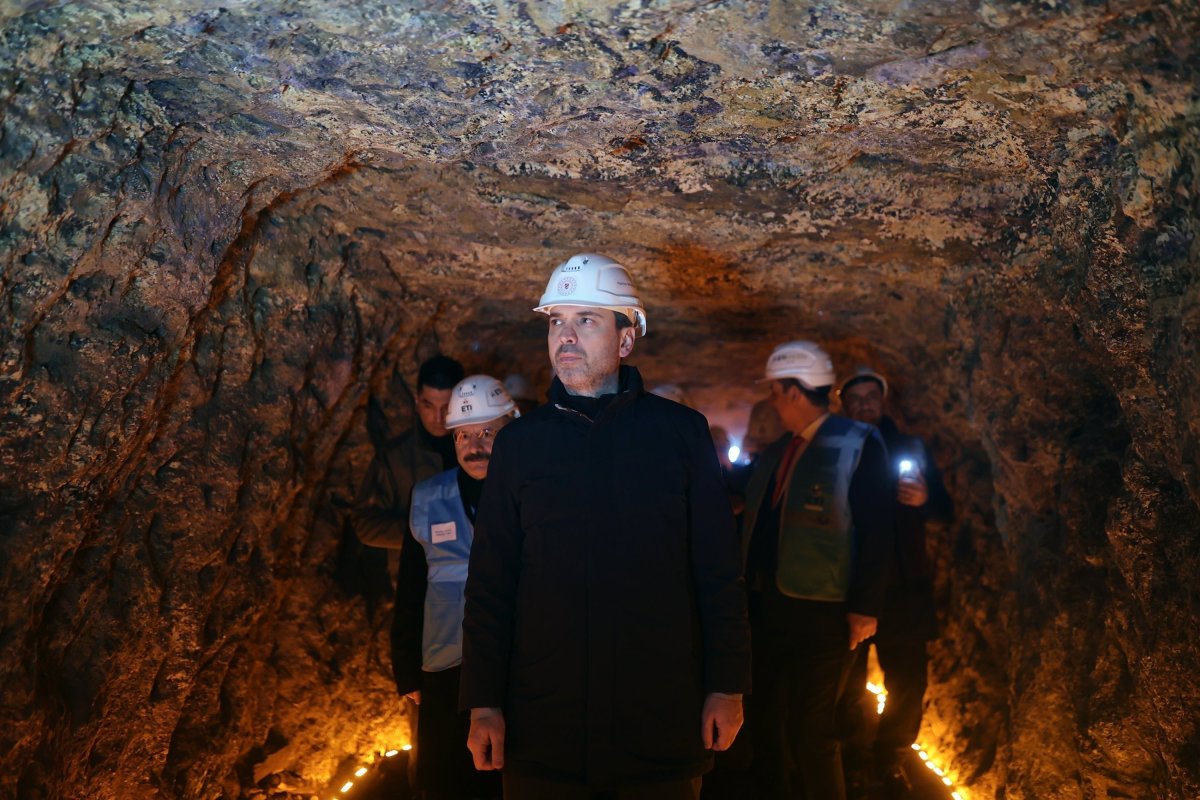
It is in this context that Türkiye's position requires closer attention, not at the level of rhetoric but at the level of geology and industrial capacity. The Beylikova deposit in Eskişehir, identified through more than 125,000 meters (410,105 feet) of drilling across 310 locations and over 59,000 laboratory samples, contains 694 million tons of complex ore hosting an estimated 12.5 million tons of rare earth oxides across 10 of the 17 elements, along with commercially significant fluorite and barite. Ore grades exceed 1% total rare earth oxide, clearing the profitability threshold typical of bastnäsite-hosted deposits. Ankara describes it as the world's second-largest reserve after China's Bayan Obo. Even under conservative estimates, it is one of the most significant undeveloped rare-earth bodies outside China.
Industrial Sequencing and Regulatory Architecture
What matters even more than the geology itself is the sequencing of policy, as Türkiye has moved from announcement to industrial policy. Eti Maden's pilot plant at Beylikova has been operational since 2023, processing 1,200 tons of ore annually. In 2026, the government announced a $600 million industrial complex to process 570,000 tons of ore per year and produce some 10,000 tons of rare earth oxides annually, targeting a place among the world's top five producers. That output roughly corresponds to the production level targeted by the entire Pentagon-backed program in the United States. Energy Minister Alparslan Bayraktar has designated Beylikova the cornerstone of Türkiye's forthcoming Critical Raw Materials Strategy. A detail that is often overlooked abroad is also instructive: because the ore body contains thorium, the project is licensed through Türkiye's Nuclear Regulatory Authority with dedicated radiological waste management, an indication that Ankara is constructing a full-cycle industrial and regulatory architecture rather than a stand-alone extraction project.
Separation Technology and Dual-Track Diplomacy
At this point, the decisive variable should be identified clearly: separation capacity. The solvent-extraction technology required to split individual oxides is 80-90% concentrated in China, and a 2024 memorandum with Beijing stalled precisely over technology transfer. Türkiye's response is dual-track: an accelerated domestic program coordinated by the Turkish Energy, Nuclear and Mineral Research Agency (TENMAK) with leading technical universities, and a widening network of minerals diplomacy, from a January 2026 critical minerals agreement with Uzbekistan to June's formal Energy and Minerals Partnership with Germany. Ankara's governing principle is equally clear.
By Malik Hassan, Staff WriterThis article was produced with AI-assisted research and editorial support. Reporting is based on sources cited in the article.
What's Your Reaction?
 Like
0
Like
0
 Dislike
0
Dislike
0
 Love
0
Love
0
 Funny
0
Funny
0
 Wow
0
Wow
0
 Sad
0
Sad
0
 Angry
0
Angry
0

Middle East Correspondent at Global1.News. Based in Beirut, covering politics, conflict, energy, and society across the Middle East. Brings context and depth to a region often reduced to headlines.













Comments (0)